How to Throw the Ultimate Spooky Halloween Sleepover Kids Will Talk About for Years


Maria asked for a Halloween sleepover last October with four friends, and I said yes before I had any plan for what that actually meant.
Six hours with five children aged ten and eleven, sugar, darkness, and the expectation that something genuinely spooky would happen. No pressure.
What followed was the best evening our house has had in years. The girls are already asking if we can do it again this October. This is the guide I wish I had found before I said yes.
It works for ages eight through thirteen, adjusts easily for smaller or larger groups, and does not require expensive props or elaborate setups. What it requires is a plan, which is what this is.
Step 1: Set the Scene Before Anyone Arrives
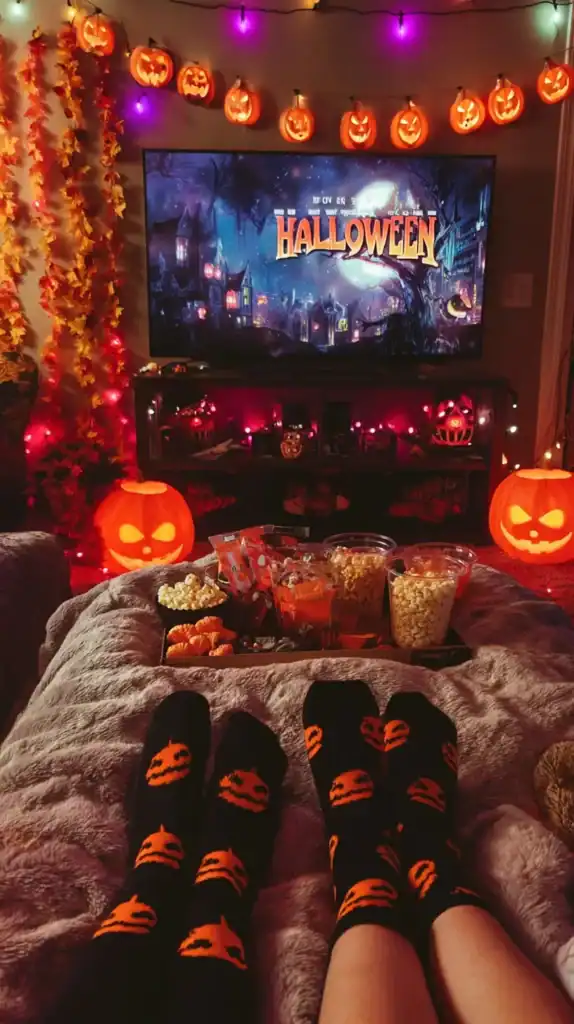
The moment the first guest walks through the door sets the tone for the whole evening.
If the house looks like a normal Tuesday, the sleepover feels like a normal Tuesday. If it looks like something spooky is about to happen, the energy shifts immediately and stays there.
You do not need much. You need the right things in the right places.
The entrance
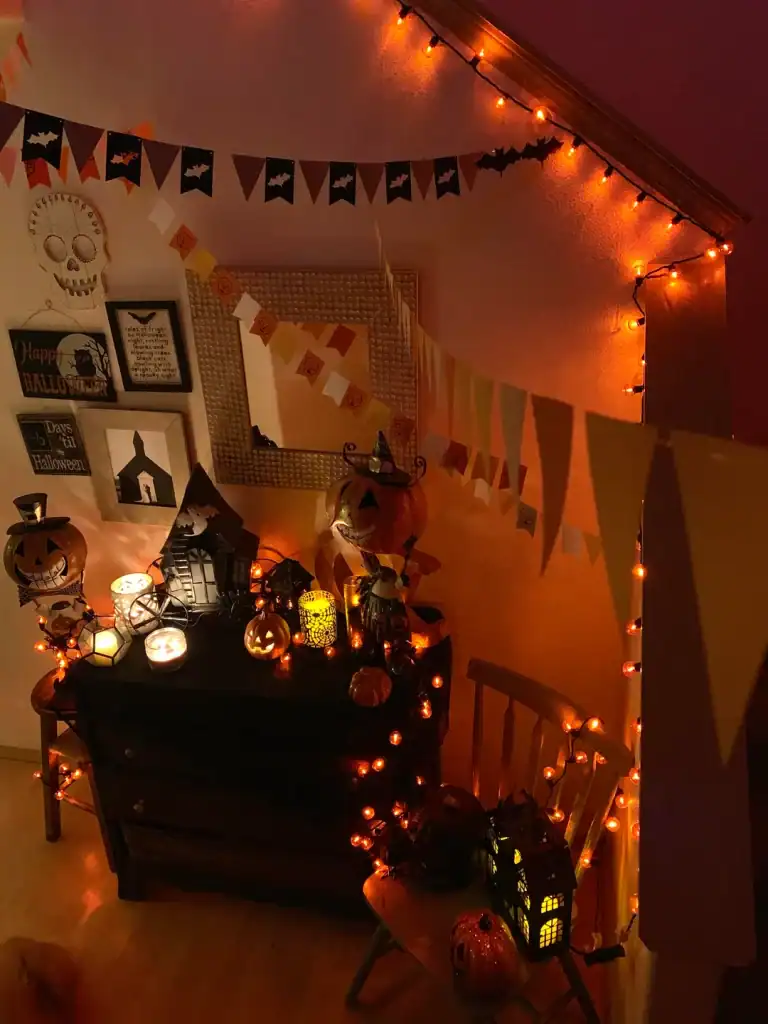
A battery-operated black lantern or two on either side of the front door.
A handmade sign that says something like “Enter if you dare” or simply the guest’s name spelled in dripping letters.
If you have set up a fog machine on the porch (the full tutorial is in our Halloween fog setup guide), turn it on about ten minutes before the first guest is due to arrive.
The main room
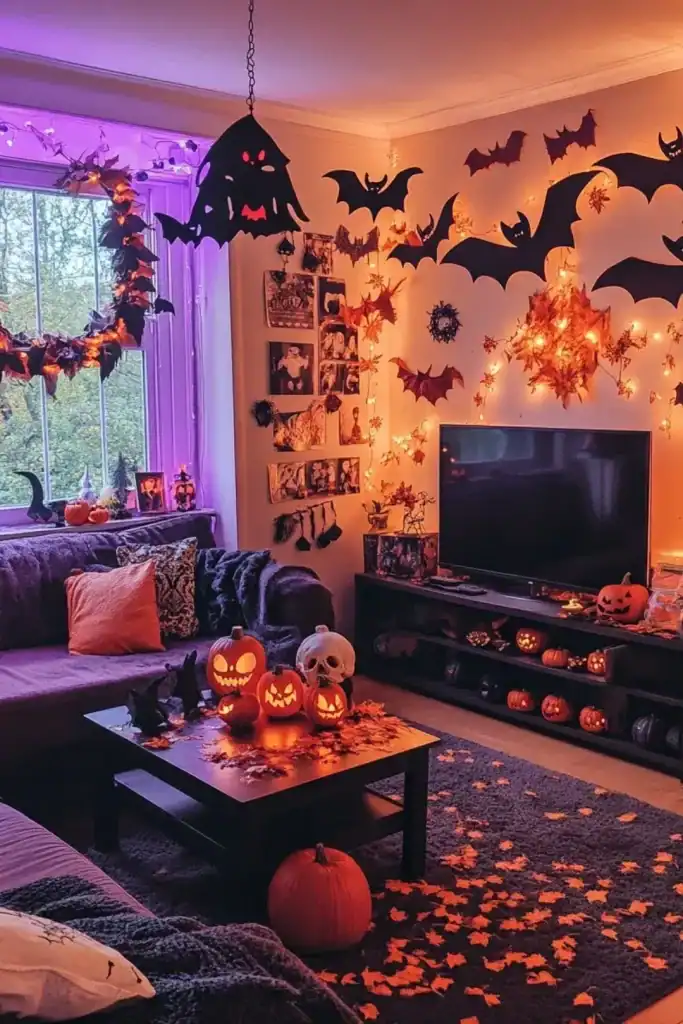
This is where the sleepover will happen, so it needs to feel like a Halloween den rather than a living room. Fairy lights in orange and purple replace the overhead light.
A cluster of black and orange pillar candles (battery if children are young) on the coffee table.
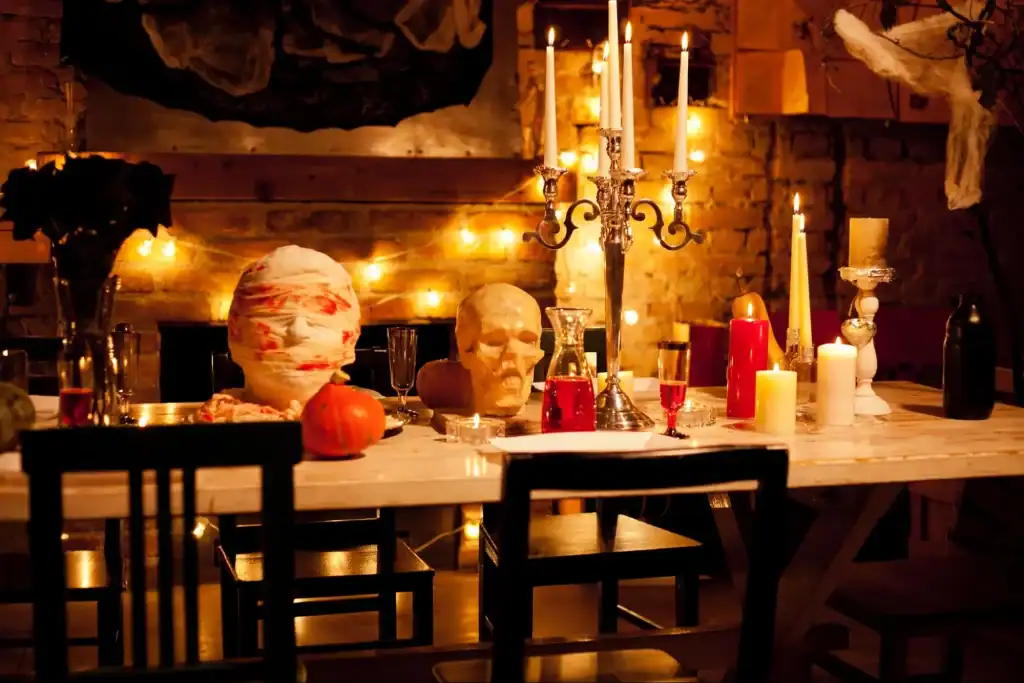
A few well-placed props: a skull on the bookshelf, a jar of something murky on the windowsill, a cobweb stretched across one corner.
Less is more here. Five or six deliberate details look spooky. Twenty random props look like a party supply store.
The sleeping area
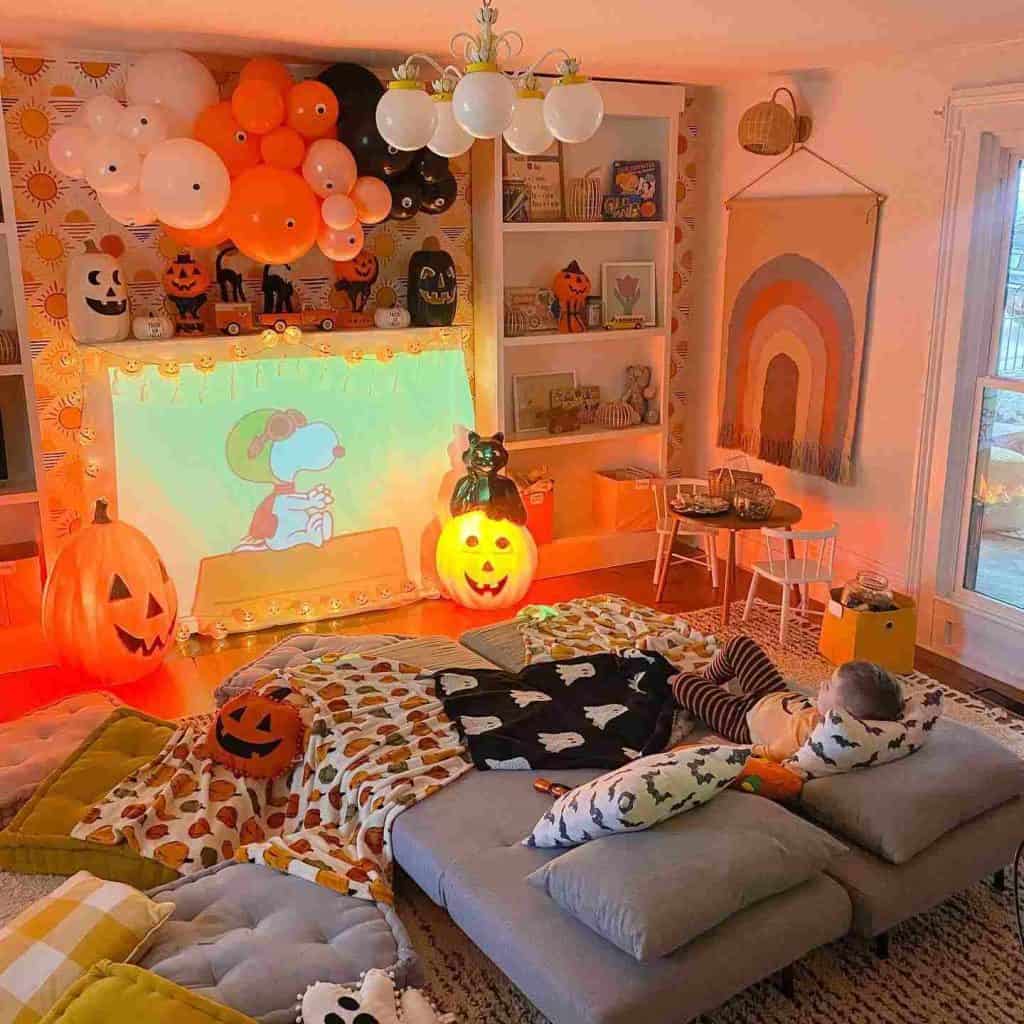
If they are sleeping in sleeping bags in the living room, arrange them in a circle with a small LED lantern in the centre.
If they are using a bedroom, string orange fairy lights around the bed frame and add a few glow-in-the-dark stars to the ceiling.
The transition from the spooky main room to the sleeping area should feel like a cosy retreat after the excitement rather than more of the same energy.

Sound
A Halloween playlist running quietly in the background changes everything. Creaking doors, distant thunder, owls, a slow piano piece.
Spotify and YouTube both have ready-made Halloween ambient playlists.
Set it to play at low volume before anyone arrives and let it run all evening. Most children will not consciously notice it but they will feel it.
Step 2: The Welcome Activity (First 30 Minutes)
The first thirty minutes of any gathering, but especially a sleepover, are the most socially awkward. People arrive at different times, some guests know each other and some do not, and everyone is slightly unsure of what is expected.
The welcome activity solves this by giving every arriving guest something to do immediately.
Halloween Welcome Bags
Prepare a small paper bag for each guest with their name written in drippy Halloween letters.
Inside: a glow stick or two (essential for later), a small bag of Halloween candy, and a printed card with their character name for the evening’s mystery game (more on this below).
When they arrive, hand them their bag and tell them to keep the character card secret until the game begins.
This works because it gives shy guests something to focus on and builds anticipation for the mystery game before the evening has even properly started.
The Potion Station
Set up a table with small clear cups, a few different coloured drinks (orange juice, purple grape juice, green lime cordial, red cranberry juice), and some labelled “ingredient” jars containing normal things presented as something sinister. Cinnamon sticks become “witch fingers,” gummy worms become “earthworms,” and popping candy becomes “dragon eggs.”
Let each guest mix their own welcome potion in whatever combination they like. The combinations are always disgusting and always hilarious and it breaks the ice within minutes.
Step 3: The Main Event (The Spooky Mystery Game)
This is the centrepiece of the evening and the thing the children will talk about afterward.
A Halloween murder mystery or a ghost story investigation game gives the whole sleepover a narrative spine that makes everything else feel connected.
The Setup
Before the guests arrive, write a simple mystery that fits your group. It does not need to be complicated.
Something like: “The Ghost of Hollow House has stolen the witch’s spell book. Each of you has a clue. Work together to find the book before midnight or the spell will be broken forever.”
Each guest’s character card (the one in their welcome bag) gives them one piece of the puzzle. The book (a real old-looking notebook you have hidden somewhere in the house) can only be found by combining all the clues.
Hide the clues around the house in the hour before the sleepover. Make some easy to find and one genuinely difficult. Set a timer for forty-five minutes and let them work.
Why this works better than other games: It gives the children agency and a goal. The collaboration required means they naturally bond with each other in a way that sitting and watching a film does not. The element of searching the house adds movement and genuine excitement. And the discovery of the hidden book at the end, even when they know it is not real, produces a genuine moment of collective triumph that most children will remember.
If a murder mystery feels too complex for the age group: A simpler version is a Halloween scavenger hunt with a narrative. “The witch has left clues around the house. Find them all to unlock the Halloween treasure.” The treasure can be a small prize for each child, a Halloween-themed puzzle, a craft kit, or simply the permission to open the special Halloween snack box you have been building anticipation for all evening.
Step 4: Crafts and Making (Middle of the Evening)
After the mystery game, energy levels are high and everyone is now fully comfortable with each other. This is the moment for a craft activity. It channels the energy into something focused, gives quieter children a chance to shine, and produces something each guest takes home.
The best craft for a Halloween sleepover: Decorating a pillowcase.
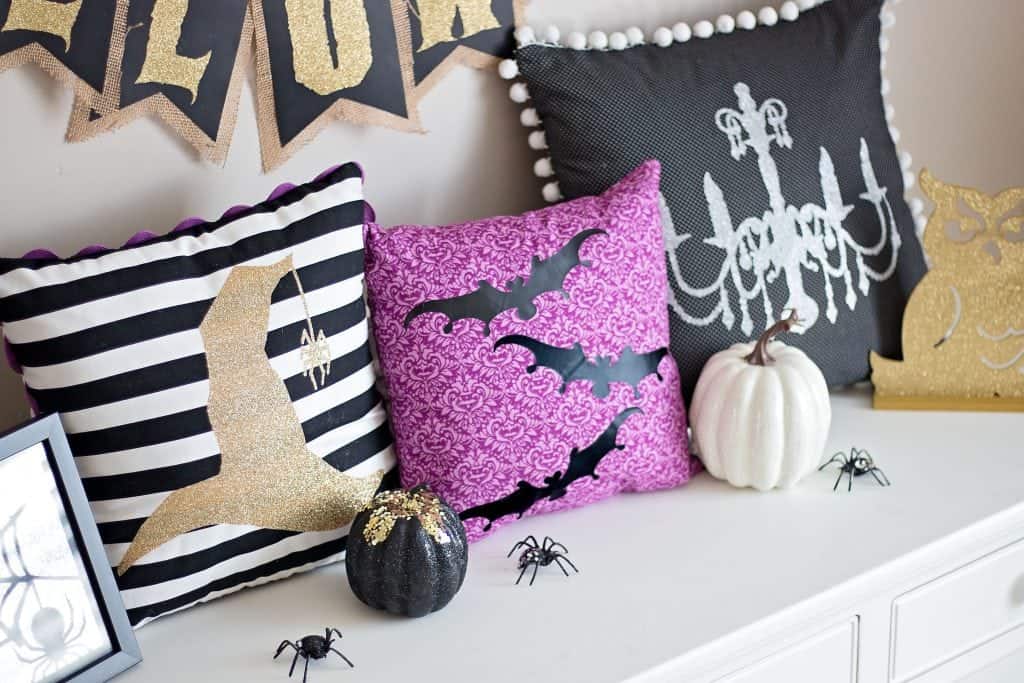
Give each guest a plain white pillowcase and a set of fabric markers or fabric paint in Halloween colours. Let them decorate it however they want, ghosts, bats, their name in spooky letters, a haunted house scene. They use it that night to sleep on and take it home the next morning.
This works on every level. It is simple enough for any age. It is genuinely personal. It costs very little. And it doubles as the sleeping setup for the night, no separate craft supplies left lying around afterward.
Alternative craft if pillowcases do not suit the group: DIY Halloween paper garlands to decorate the sleepover room. Our paper garland tutorial covers twenty-one ideas ranging from five-minute cuts to more detailed projects. Let each child make one garland and hang them all together, so the room is gradually decorated by the guests themselves over the course of the evening.
Step 5: The Movie (Late Evening)
The film is the transition from high-energy activities to winding down.
Choose carefully: the right film keeps the Halloween atmosphere while being genuinely watchable for the whole group without keeping anyone awake with fear at two in the morning.
By age group:
| Age | Film recommendations | Avoid |
|---|---|---|
| 8 to 9 | Hocus Pocus, Casper, The Nightmare Before Christmas, Hotel Transylvania | Anything PG-13 |
| 10 to 11 | Hocus Pocus 2, Goosebumps, Coraline (mild), Beetlejuice | Genuine horror |
| 12 to 13 | Beetlejuice, Goosebumps 2, Scary Stories to Tell in the Dark | R-rated films |
Set up the viewing area as a proper cinema moment.
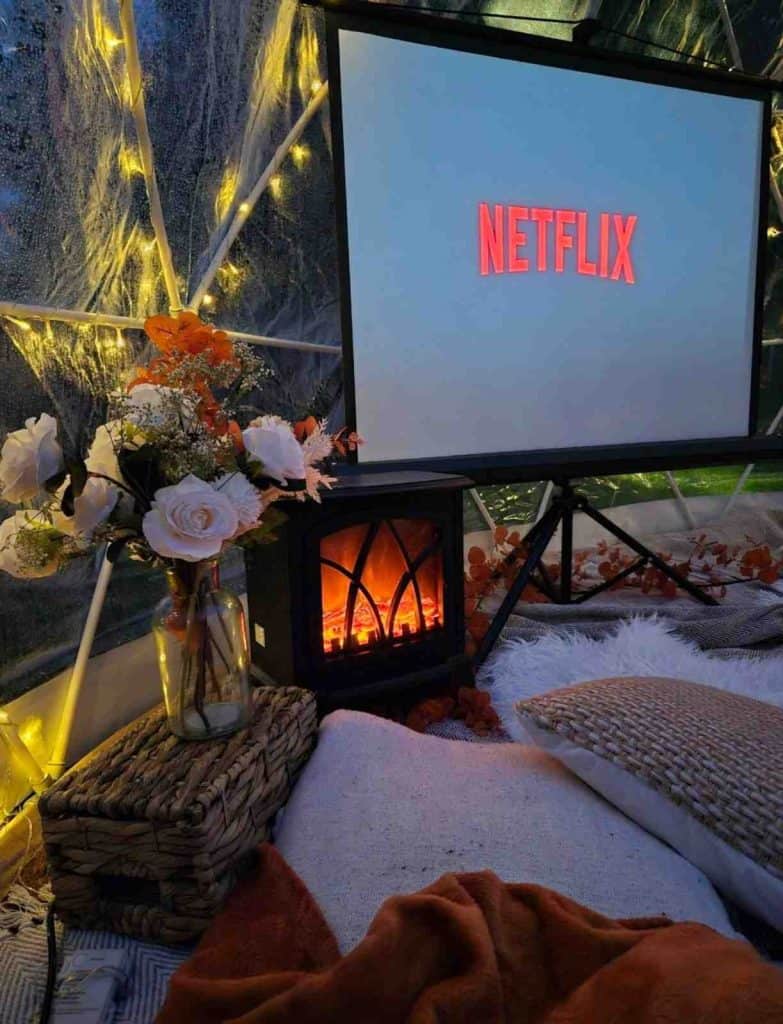
Sleeping bags arranged in a row, pillows propped up, each child with their personalised popcorn box (plain cardboard boxes decorated with Halloween stickers). The transition from craft to film feels like a reward rather than just the next thing on the schedule.
Start the film at around nine pm. By the time it ends, the natural sleepiness that comes after a full evening of activity will do the rest.
🔥 Would you like to save this?
Step 6: The Midnight Snack
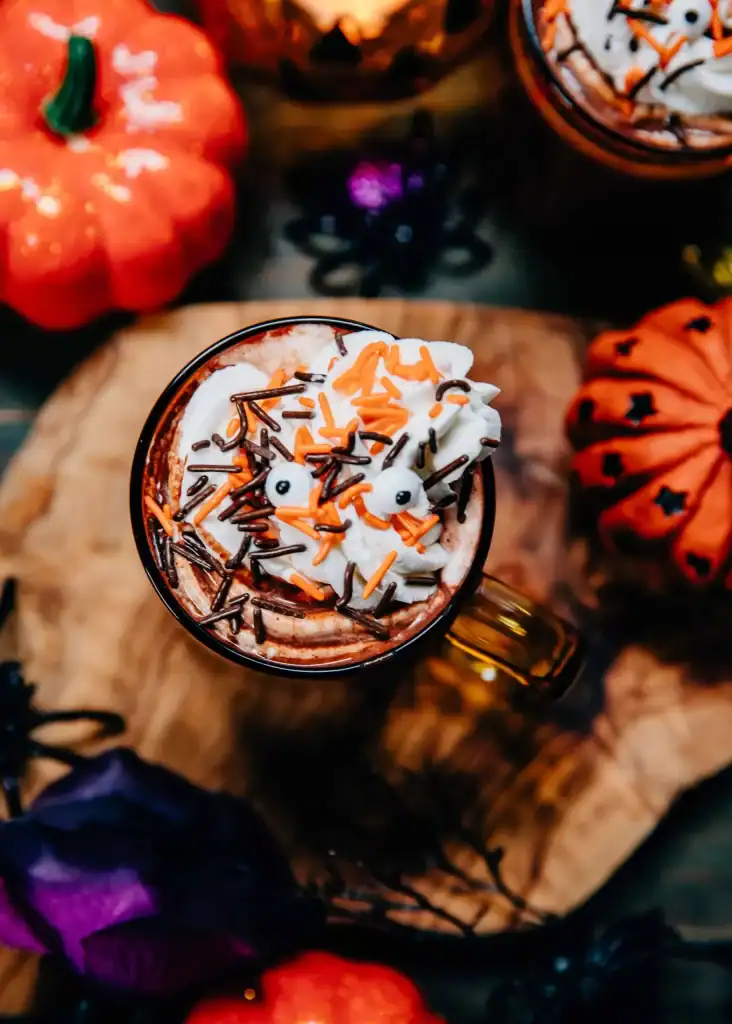
The midnight snack is the last event before sleep and it needs to feel special without overstimulating anyone further.
Time it for about an hour after the film ends rather than actually at midnight, both for practical reasons and because genuine midnight is later than most parents of this age group want.
What works:
- Hot chocolate made in a pan with marshmallows, served in Halloween mugs
- A simple Halloween charcuterie board: orange and black themed, cheese cut into pumpkin shapes with a small cutter, crackers, grapes, dark chocolate
- Popcorn in individual bags decorated with ghost faces drawn in marker
What to avoid: Anything with caffeine (cola, energy drinks), anything very sugary that will spike energy at the wrong moment, and anything that requires cooking or significant preparation at that hour.
The hot chocolate is always the best choice. Something warm before sleep is genuinely effective at settling children down, and making it feel like a ritual (everyone in their sleeping bags, Halloween mugs, the fairy lights dimmed a little further) creates a final cosy moment that closes the evening properly.
Step 7: The Ghost Story
After the midnight snack and before lights out, one ghost story told by an adult (or by a brave older child) in the dark with a torch under the chin.
Keep it short, keep it spooky but not genuinely frightening, and end it with either a resolution or a deliberately ambiguous open ending that leaves everyone slightly wondering.
If you are not confident telling a story from memory, read one from a book. Alvin Schwartz’s Scary Stories to Tell in the Dark is the classic for this age group and works best when read rather than performed. The illustrations alone are famously unsettling even before a word is read.
One story. Not three. The goal is a final frisson of excitement before sleep, not a group of children too frightened to close their eyes.
The Morning After
Breakfast the next morning should be easy, quick, and Halloween-adjacent without requiring much effort from you at ten am after a night of listening to children whisper until two. Our Halloween breakfast ideas covers twenty-one quick options that take under five minutes each and need nothing special from the shops.
Send each guest home with their decorated pillowcase, their potion cup if it survived the evening, and a small bag of leftover Halloween candy. The goodbye ritual matters almost as much as the welcome because it is the last impression they take away.
The Full Evening Timeline
| Time | Activity |
|---|---|
| 5:00 pm | Guests arrive, welcome bags, potion station |
| 5:30 pm | Mystery game or scavenger hunt |
| 6:30 pm | Pillow case craft or paper garland making |
| 7:30 pm | Halloween dinner or pizza |
| 8:30 pm | Halloween film |
| 10:30 pm | Midnight snack (hot chocolate) |
| 11:00 pm | Ghost story |
| 11:15 pm | Lights out (ideally) |
| 8:00 am | Halloween breakfast |
| 9:00 am | Home |
Adjust the start time based on the age of your group. For eight and nine year olds, shift everything an hour earlier. For twelve and thirteen year olds, shift it an hour later.
Frequently Asked Questions
How many children is the right number for a Halloween sleepover? Four to six is the sweet spot. Fewer than four can feel awkward if friendships are uneven. More than six makes the mystery game and craft activity difficult to manage and sleep almost impossible. Maria had four friends and it was exactly the right size.
What if a child gets scared and wants to go home? Have a parent contact number for every guest and a genuinely comfortable space (bright lighting, normal television, a calm adult nearby) available if anyone needs to decompress. Frame the spooky elements as fun rather than frightening throughout the evening and watch for any child who seems genuinely unsettled rather than excitedly scared. The distinction is usually visible.
What do children sleep on?
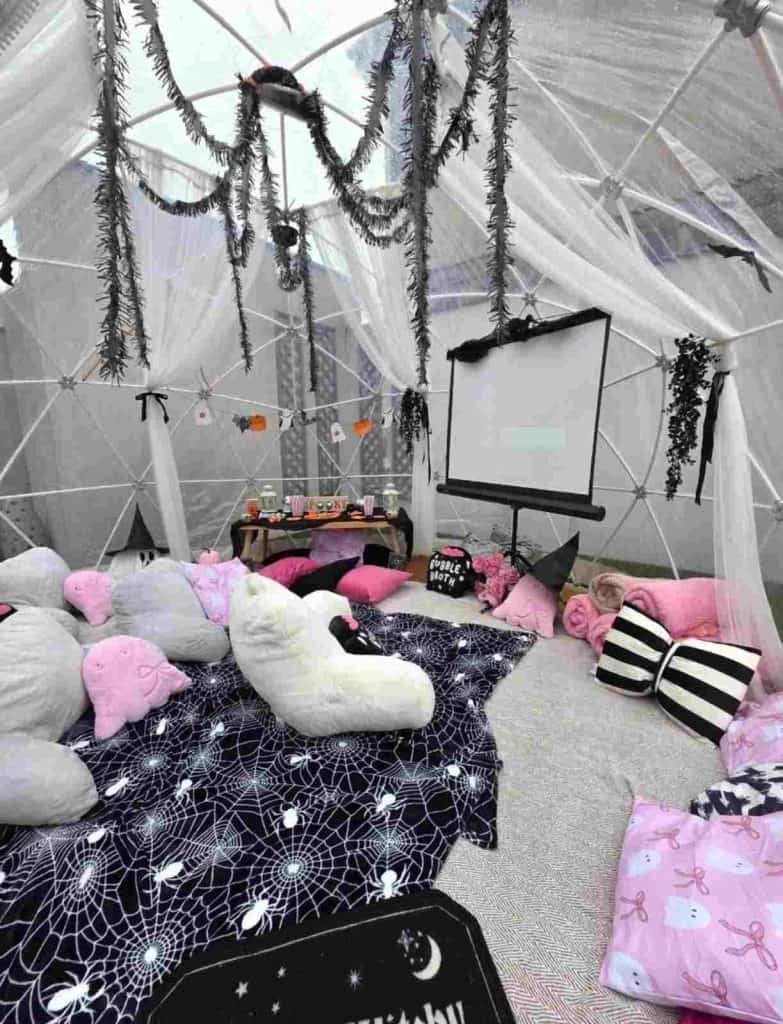
Sleeping bags on the living room floor in a circle is the most fun option and what most children will prefer. Provide a pillow for each child and make sure the floor is carpeted or that you have enough foam camping mats to cushion a hard floor.
How do I handle the sugar without everyone being awake until four am? Front-load the sugar. Candy and sweet snacks in the early part of the evening, savoury or warm foods later. Hot chocolate before sleep is calming rather than stimulating. Avoid anything caffeinated after eight pm.
What if the mystery game falls flat? Have a backup. A Halloween bingo game (printable cards, Halloween images, candy as tokens) takes two minutes to set up and works for any age. A Halloween trivia quiz (who invented jack o’lanterns, what country did Halloween originate in, name three Halloween films) is another simple fallback that requires nothing except questions prepared in advance.
The year we did it, the girls solved the mystery at eleven forty-seven pm, found the spell book behind the radiator in the hallway, and screamed loud enough that Tasos came downstairs thinking something had actually gone wrong.
Nothing had gone wrong. Everything had gone exactly right.
Plan it properly. The children will do the rest.

I’m Anastasios Moulios, co-founder of DIY Cozy Living. I enjoy finding creative, practical ways to make small spaces feel warm, stylish, and lived-in. I started this blog with Katerina to share real ideas that make a home feel a little more personal and a lot more comfortable.
