Call us: +306949885346

How to Organize Your Home Using IKEA Items (Smart & Easy Ways)
IKEA furniture isn’t magical on its own. What makes it powerful is how adaptable it is.
Most IKEA items are designed simply on purpose — so they can be repurposed, reimagined, and quietly turned into organization solutions that fit real life.
This article isn’t about listing IKEA products.
It’s about how to use specific IKEA items in smarter, sometimes unexpected ways to control clutter, simplify daily routines, and create homes that stay organized longer than a weekend.
“The best organization doesn’t look impressive — it feels effortless.”
Let’s start where IKEA shines the most: flexible basics.
Why Most Organization Systems Fail (and why ikea hacks don’t)

Most organization systems are built around categories: shoes here, papers there, toys over there. Real life doesn’t work in categories. It works in habits, movement, and convenience.
Clutter forms where:
- people enter or exit a space
- tasks begin or end
- decisions are postponed
Ikea hacks work when you use items to interrupt clutter at those exact moments. The furniture becomes a silent assistant instead of passive storage.
With that in mind, let’s start with the first hack — and this time, each one will be fully developed.
1. TRONES Shoe Cabinets as Slim, Hidden Daily Storage

TRONES cabinets are often underestimated because they’re shallow. That’s exactly why they work so well as an organization hack. Instead of treating them as shoe storage, use them as hidden drop zones for everyday clutter.
Mounted near an entryway, bathroom, or hallway, TRONES can quietly absorb items that usually end up on surfaces: keys, mail, gloves, hair tools, toiletries, cleaning sprays, or kids’ accessories. Because they don’t stick out far, they don’t visually clutter the room — which makes people more likely to actually use them.
The secret is to assign each cabinet a clear purpose and resist overfilling. When each compartment serves one habit, clutter stops migrating.
Paint them the wall color or keep them matte white so they disappear into the background.
2. KALLAX Shelving Turned Sideways to Control Visual Chaos
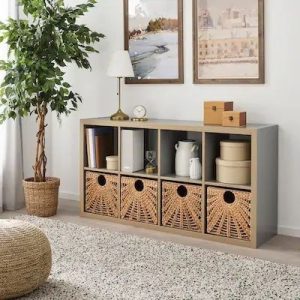
KALLAX shelves are everywhere — but most people use them vertically and overload them. Turning a KALLAX unit horizontally completely changes how it functions.
Used low and wide, KALLAX becomes a storage anchor rather than a storage tower. It visually limits clutter because items can’t stack endlessly upward. This is especially effective in living rooms and kids’ spaces where mess tends to sprawl.
The top becomes a controlled surface for a few intentional items, while the cubes below hold baskets, toys, games, or media. Mixing open and closed storage keeps the unit functional without looking busy.
This hack works because it respects human behavior: when storage feels manageable, people maintain it.
3. RÅSKOG Utility Cart as a Single-Purpose Organizer

The RÅSKOG cart often fails because it becomes a mobile junk drawer. The hack is deciding that each cart gets one job — and only one.
When used intentionally, RÅSKOG becomes incredibly effective. A coffee cart that holds only coffee items stays organized. A bathroom cart that holds only refills and towels stays useful. A kids’ art cart that moves between rooms prevents supplies from spreading everywhere.
The key is placement. These carts work best when they live right next to the activity they support. Styling matters too — containers within the cart prevent visual clutter and make the setup feel permanent rather than temporary.
4. SKÅDIS Pegboard as a Visible Organization System

SKÅDIS pegboards work because they eliminate the “where does this go?” problem. Items that are used daily but constantly misplaced — keys, headphones, scissors, chargers — belong on the wall, not in drawers.
Mounted near entryways, desks, or craft areas, SKÅDIS becomes a visual reminder system. When items are visible, they’re easier to return. When they’re hidden, they pile up.
To keep the pegboard from looking chaotic, limit accessories and leave breathing room. Pegboards succeed when they’re curated, not crammed.
5. TROFAST Storage Used as Habit-Based Organization

TROFAST isn’t just toy storage — it’s habit training. The hack is placing TROFAST units exactly where mess happens, not where space is available.
In kids’ rooms, TROFAST works best near play zones, not walls. In entryways, it can hold shoes, backpacks, and sports gear. The bins should be sized according to the items they hold so nothing gets forced.
When storage matches behavior, cleanup becomes automatic instead of enforced.
6. LACK Shelves Used as Category Shelves Instead of Decor

LACK shelves often fail because they’re styled without intention. The hack is assigning one category per shelf.
Instead of mixing books, decor, and random objects, each shelf gets a purpose: books only, baskets only, art supplies only. This creates visual order even in open storage.
Spacing shelves slightly apart instead of stacking them tightly helps the wall feel lighter and more deliberate.
7. MALM Bed Drawers for Seasonal Rotation Only

MALM drawers are often overfilled, which makes them useless. The organization hack is using them strictly for seasonal or occasional items.
When under-bed storage holds only off-season clothes, extra bedding, or rarely used items, closets stay lighter and easier to manage. This turns the bed into a silent storage partner instead of a clutter trap.
Labeling drawers mentally (even if not physically) helps keep this system intact.
8. IVAR Cabinets as Flexible Storage That Evolve
IVAR works because it’s unfinished. Instead of fighting its raw look, lean into it by customizing it to fit your needs.
In kitchens, IVAR can become a pantry. In laundry rooms, it can hold supplies. In kids’ rooms, it becomes adaptable storage that changes as they grow. Mixing doors and open shelves creates balance.
Because IVAR is adjustable, it can evolve instead of being replaced — which is why it’s such a powerful long-term organization tool.
9. BILLY Bookcases Used for More Than Books

BILLY shelves work best when treated as vertical storage zones, not just bookcases.
Used in bedrooms, offices, or closets, BILLY can hold baskets, boxes, folded clothes, files, or shoes. Adding doors to the lower half hides visual clutter while keeping the upper shelves accessible.
This creates the feeling of built-in storage without the cost or commitment.
10. BESTÅ Units as Disappearing Living Room Storage

BESTÅ works when it blends in. The hack is choosing finishes that match the wall and using push-open doors so handles don’t break the visual flow.
Used this way, BESTÅ becomes nearly invisible — hiding toys, electronics, games, and cables without making the room feel storage-heavy.
Minimal styling on top reinforces the calm.
11. ALEX Drawer Units as Zoned Organization, Not General Storage

ALEX drawers are popular because they look clean and modern, but they often fail because they’re treated as catch-all storage. The hack is turning ALEX into zoned organization.
Each drawer should serve a single function: paperwork, tech accessories, stationery, personal items, or creative tools. Mixing categories is what causes drawers to collapse into chaos.
Using internal organizers is essential here. Without boundaries inside the drawers, items migrate and pile up. When every item has a defined place, the system becomes self-maintaining.
ALEX works especially well in home offices and bedrooms because it hides clutter while staying compact. When used intentionally, it becomes one of the most reliable organization tools IKEA offers.
12. IVAR Cabinets Used as Adaptable Storage That Evolves Over Time
IVAR is often overlooked because it looks basic. That simplicity is exactly why it works so well as an organization hack.
IVAR cabinets and shelving systems are ideal for spaces that change frequently: pantries, laundry rooms, kids’ rooms, and garages. The shelves can be adjusted, removed, or expanded as needs shift.
The hack is not overfilling IVAR at the beginning. Leave space. Let the system evolve. When storage is flexible, you don’t need to replace it every time life changes.
Styling IVAR intentionally — with consistent containers or a coat of paint — prevents it from feeling temporary or unfinished.
13. VARIERA Boxes Used to Create Structure Inside Chaos Zones
VARIERA boxes don’t organize rooms — they organize the places where organization usually fails. Drawers, cabinets, and deep shelves are where clutter hides.
The hack is using VARIERA boxes as internal dividers. Instead of stacking items or letting them roll around, boxes create invisible walls that keep categories separate.
This works especially well in kitchens, bathrooms, and utility cabinets. When items are easy to see and reach, people stop pulling everything out to find one thing.
The key is not filling every inch. Empty space is part of the system.
14. SKUBB Storage Bags as Flexible Closet Categories

SKUBB works because it’s forgiving. Unlike rigid boxes, fabric storage adapts to what you put inside.
The hack is using SKUBB bags to create temporary categories in closets: gym clothes, travel items, seasonal accessories, or work-from-home gear. These categories can change without reorganizing the entire closet.
SKUBB is especially effective on high shelves or under hanging clothes, where rigid boxes feel bulky.
This system works because it allows for change without friction — a crucial part of long-term organization.
15. GODMORGON Bathroom Drawers Made Functional Through Layout, Not Size
Deep bathroom drawers often look great but function poorly. The hack with GODMORGON is not adding more storage, but changing how items are laid out.
Storing items flat instead of stacked prevents daily disruption. When you don’t have to move one item to reach another, drawers stay organized.
Daily-use items should live at the front. Backup items belong deeper in the drawer or in separate cabinets.
This layout-based approach keeps bathrooms functional even with limited space.
16. KUNGSFORS Rails Used Beyond the Kitchen

KUNGSFORS rails are designed for kitchens, but their real strength is vertical organization anywhere clutter forms.
Mounted in bathrooms, laundry rooms, or craft areas, these rails hold baskets, towels, tools, or supplies off surfaces. This instantly clears counters and makes cleaning easier.
The hack is limiting what goes on the rail. When rails are overloaded, they become visual clutter. When curated, they feel purposeful and efficient.
17. KNAGGLIG Wooden Crates for Controlled Open Storage

Open storage usually fails because it lacks boundaries. KNAGGLIG crates solve this by containing bulky items without hiding them completely.
Used in living rooms, kids’ rooms, or entryways, crates keep items grouped and grounded. They work best when placed low and styled consistently.
This hack is especially effective for items that don’t fit neatly into drawers but are used often.
18. BEKVÄM Step Stool Repurposed as Vertical Storage

BEKVÄM stools are surprisingly versatile. When leaned against a wall or lightly modified, they become towel ladders, blanket holders, or plant stands.
This hack uses vertical space without adding bulk. It’s ideal for small bathrooms or bedrooms where traditional storage feels heavy.
Because BEKVÄM is lightweight, it can move as needed without disrupting the room.
19. RIBBA Frames Used to Control Paper Clutter

Paper clutter persists because it’s either ignored or hidden. RIBBA frames turn paper into temporary displays.
Schedules, kids’ artwork, reminders, or important documents can live inside frames until they’re no longer relevant. Once they’ve served their purpose, they’re removed.
This prevents paper from piling up while keeping important items visible.
20. BOAXEL Wall Systems for Utility Spaces That Change Often
BOAXEL works best in spaces that never stay the same: cleaning closets, pantries, laundry rooms.
Because shelves and hooks can be adjusted easily, BOAXEL adapts instead of becoming obsolete.
This reduces the urge to buy new storage every time needs change.
21. FLISAT Shelves Used to Encourage Independent Organization

FLISAT book ledges aren’t just for books. They’re excellent for displaying items kids should access independently.
When items face forward, kids can see what they have — and are more likely to put things back. Visibility reduces mess.
How to Pick the Right IKEA Hack for Your Home
Not every IKEA hack belongs in every home. The goal isn’t to organize everything — it’s to fix the spaces that break down daily. The fastest way to choose the right hack is to follow the clutter, not the trends.
Instead of asking “What storage do I need?”, ask “Where do things keep ending up?” Those locations reveal exactly which hack will actually stick.
Use This Simple Decision Guide
| If clutter keeps showing up here… | The IKEA hack you should try first | Why it works |
|---|---|---|
| Entryway or front door | TRONES cabinets or BESTÅ units | Captures daily-use items before they reach surfaces |
| Living room surfaces | KALLAX used horizontally | Limits visual clutter and controls overflow |
| Kids’ play areas | TROFAST systems | Matches cleanup habits and item size |
| Kitchen counters | VARIERA drawer systems or KUNGSFORS rails | Keeps tools visible but off work surfaces |
| Bedroom chairs or floors | MALM bed storage or SKUBB boxes | Removes overflow without adding furniture |
The best IKEA hack is the one that removes friction, not the one that adds more storage. Start small, let the system work, and only then expand.
Why Some IKEA Organization Hacks Work Long-Term (and Others Don’t)
IKEA hacks fail when they depend on perfection. They succeed when they support real behavior. Long-lasting systems don’t require reminders, labels everywhere, or constant resets — they make the right action the easiest one.
What Makes a Hack Last
| Hacks That Fail | Hacks That Last |
|---|---|
| Require stacking or digging | Store items flat or visibly |
| Hide everything behind doors | Balance open and closed storage |
| Overfill every compartment | Leave breathing room |
| Look good but feel annoying | Feel effortless to use |
| Stay static over time | Adjust as habits change |
If a system feels annoying to maintain after two weeks, it’s not a failure — it’s feedback. IKEA works best when you tweak the setup instead of abandoning it.
Good organization doesn’t look impressive.
It quietly stays out of the way.
I’m Anastasios Moulios, co-founder of DIY Cozy Living. I enjoy finding creative, practical ways to make small spaces feel warm, stylish, and lived-in. I started this blog with Katerina to share real ideas that make a home feel a little more personal and a lot more comfortable.