
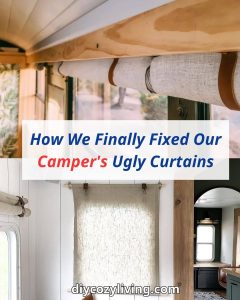
How We Finally Fixed Our Camper’s Ugly Curtains

🔥 Would you like to save this?
Our camper came with beige curtains.
Or at least, we called them that. It was a beige you don’t want to get to know; the sort of colour you end up with when it’s the most you can be had for the price.
They were a bit on the scratchy side and didn’t quite make it to the bottom of the window. As for keeping out the light or prying eyes?
Not in their nature. We put them to the test on our first proper outing and made note of it.
The Three Problems Nobody Warns You About
Our bed was set up to a window that the sun would hit head-on in the morning. The curtains we had were of the factory-issued kind, and they were so flimsy that by 7 a.m. the room was as bright as if a light had been put on over us. Tasos is a heavy sleeper; I’m not. We had a bit of an argument about it one of the first mornings.
Then there was the matter of privacy, which I hadn’t given much thought to before. When you’re at a campsite you’re in with other people in a way you aren’t at home, maybe a couple of metres from another family’s awning and whatever they’re up to. With the way those curtains gaped at the sides, getting dressed was something of a spectacle.
But to be fair, they were also hideous. I only came to terms with that after we’d put the other issues to rights and the place still didn’t have the right feel to it. In a space as compact as a camper, everything has to pull its weight. A pair of ill-fitting beige drapes is all it takes to make a room seem like you’re just passing through.
We put some new ones in. Took a while, and we made our share of mistakes along the way, but we did it.
What Actually Matters Before You Choose Fabric
Here are a couple of things I’d have liked to be put in the know about, to have us from having to make a second trip for fabric.
You don’t realize how much the weight of your material matters until you’re out and about. Sure, a heavy drape has a nice look to it, but in a moving camper it’s going to be flapping and clattering against the window frame. After a while on the road, that noise is hard to get out of your head. Go with something on the lighter side; you’ll have less of a problem and you won’t be lugging around any more than you need to in a vehicle where every pound counts.
Then there’s thermal lining. It does more work than you might think. Put a thermal back on your curtains and you’ve got light and summer heat at bay, and some of the chill on a cold night. It also puts a stop to the condensation you see on the windows in the morning. We made the call to put them in the bedroom and it was the one thing that let us get a good night’s rest.
And for the love of all that is holy, measure the whole opening, not just the glass. RV windows are never quite standard and you can count on there being a crank or a latch or an emergency release in the way. We made the mistake of only measuring the pane and left the handle out of it. You could open the window if you wanted to deal with the curtain getting in the way of it.
Solving the Light Problem
1. Blackout Lined Curtains for the Sleeping Area
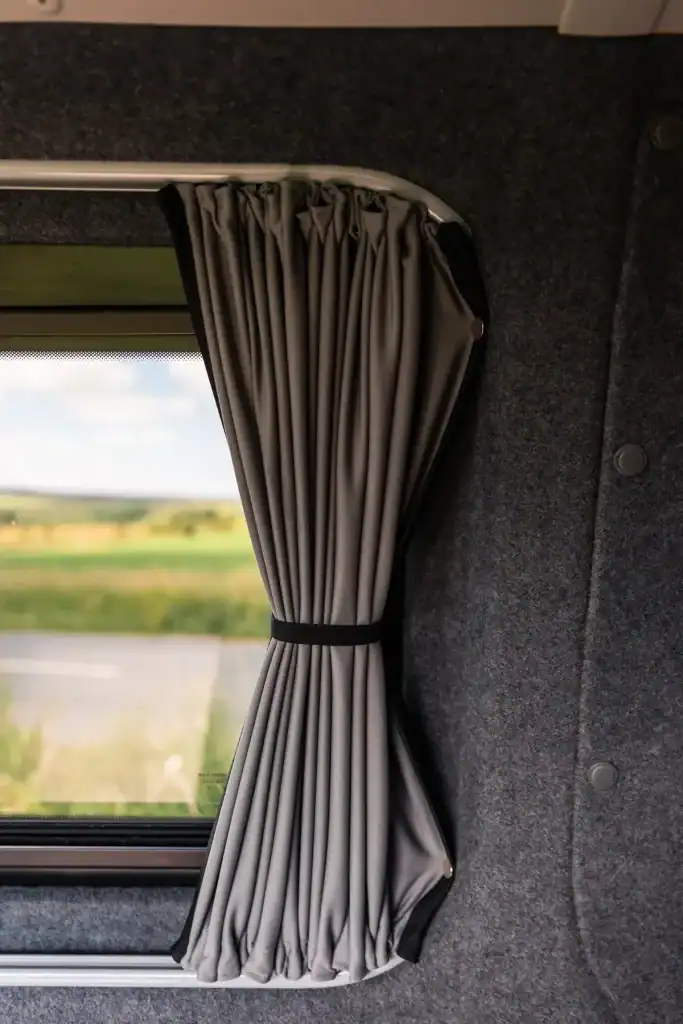
This is where we started and where I’d tell anyone to start.
A blackout lining sewn or fused onto the back of whatever fabric you like solves the seven AM problem completely.
The outer fabric can be anything.
The lining does the actual work.
2. Double Layer (Sheer Plus Blackout)
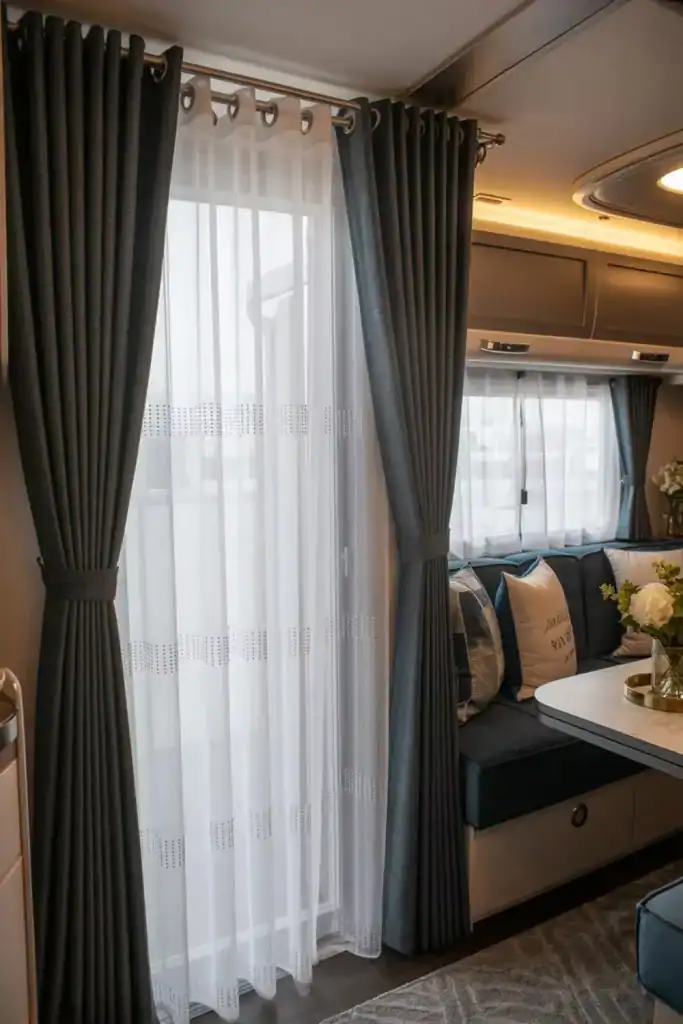
For windows where you want both bright during the day and dark at night, a sheer curtain on one track with a blackout curtain on a second track behind it gives you both. More hardware, more flexibility.
Worth it for the main living window.
3. Roman Shades Instead of Hanging Curtains
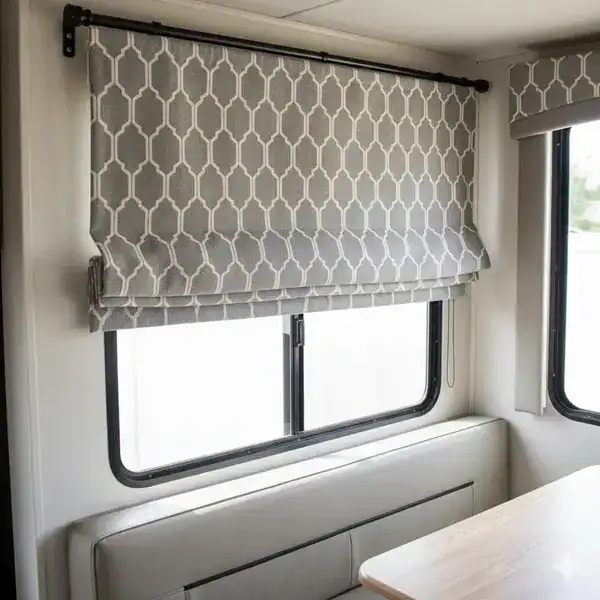
A fabric blind that pulls up rather than side to side takes no extra space when open, which matters when every centimetre counts. It also seals against the window more completely, which helps with both light and drafts.
Solving the Privacy Problem
4. Magnetic Curtain Rods on the Metal Walls
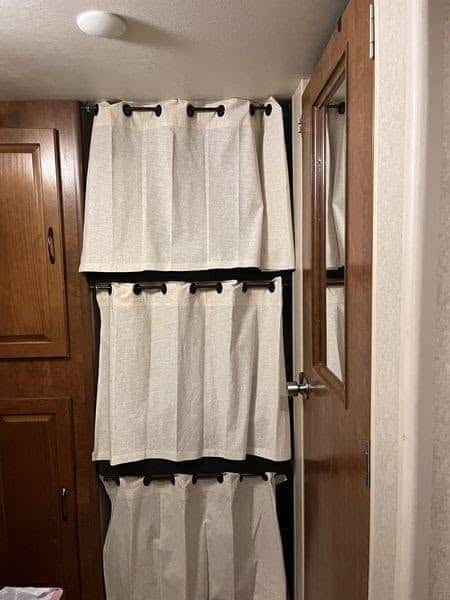
If your camper has metal sections near the windows, magnetic hardware holds well without a single hole drilled.
This fixed a specific problem for us.
The original rods never sat flush against the wall and left a gap. Magnetic rods close that gap completely.
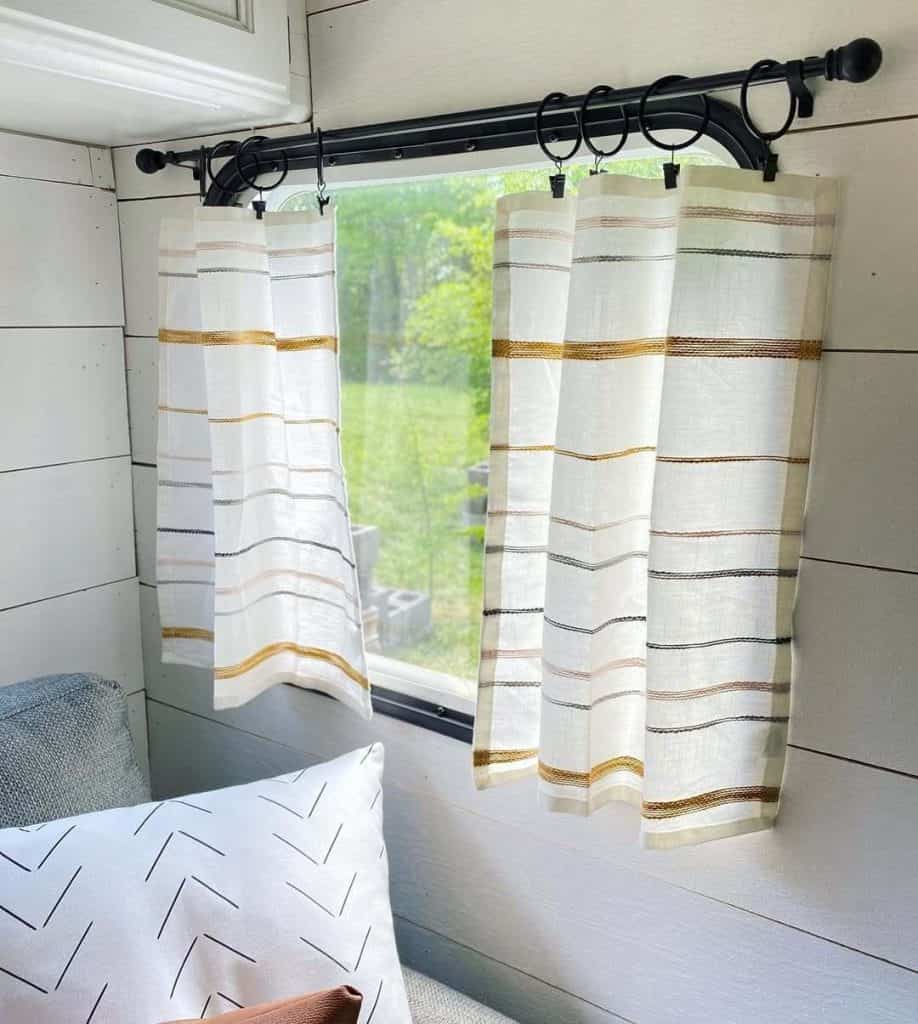
5. Floor to Ceiling Café Style Double Curtains
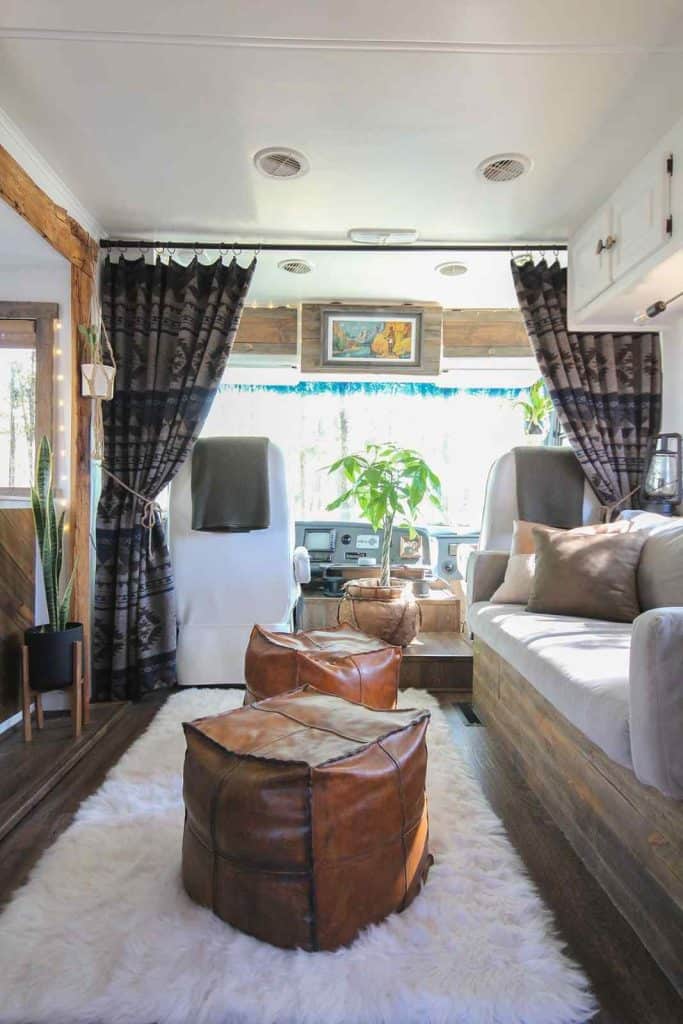
Two curtains per window instead of one. A shorter café curtain covers the lower half permanently for baseline privacy, with a full curtain above that closes when needed. You get privacy at eye level even with the upper curtain open, which is genuinely useful at the table.
6. Tinted or Frosted Window Film as a Base Layer
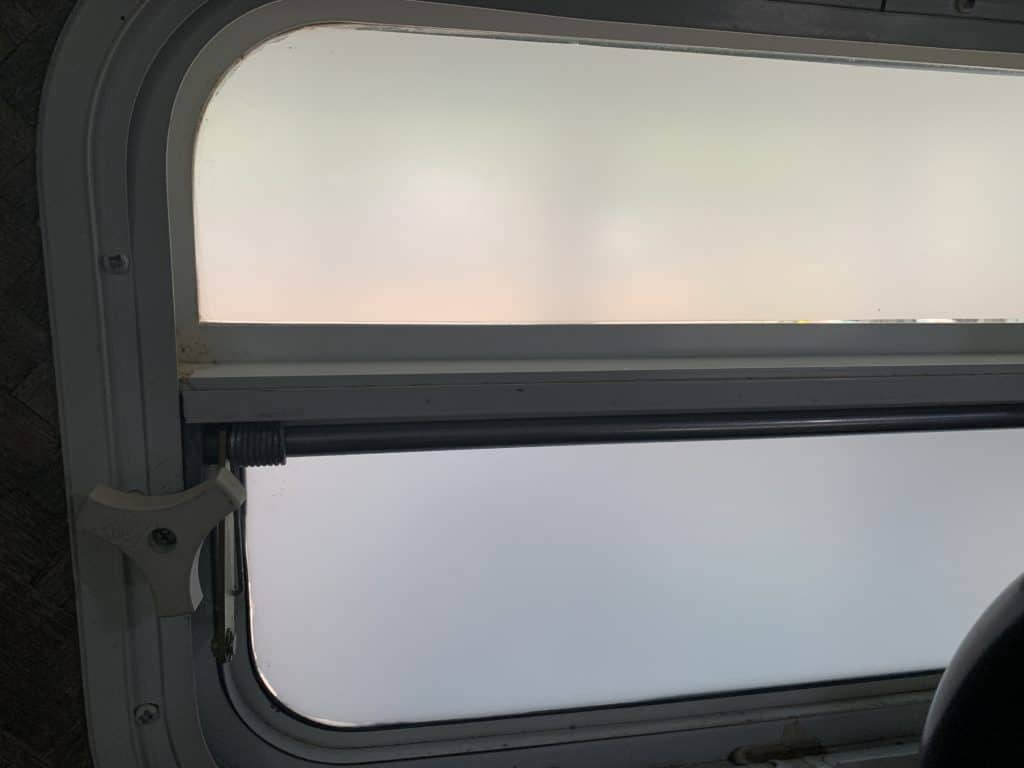
Not technically a curtain but it changes what your curtains need to do. Frosted privacy film on the glass means even a sheer curtain gives meaningful privacy because the film is already obscuring the sightline. We use this on the bathroom window, which is too small for heavy curtains anyway.
7. Snap and Tie Back Closures for Travel Days
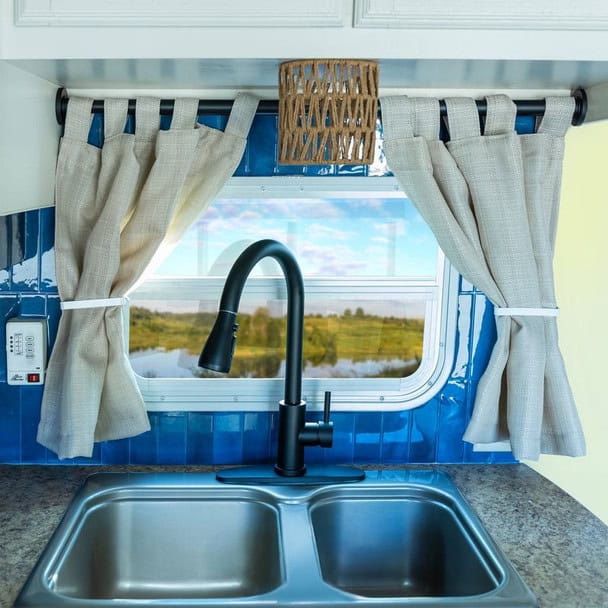
This is about what happens to your curtains while driving rather than the window itself.
Loose curtains swing, tangle and sometimes come off the rod entirely on a rough road.
Simple ties or magnetic snaps that hold the curtain shut during travel save you arriving at a campsite to find them in a heap on the floor.
Making It Actually Feel Like Yours
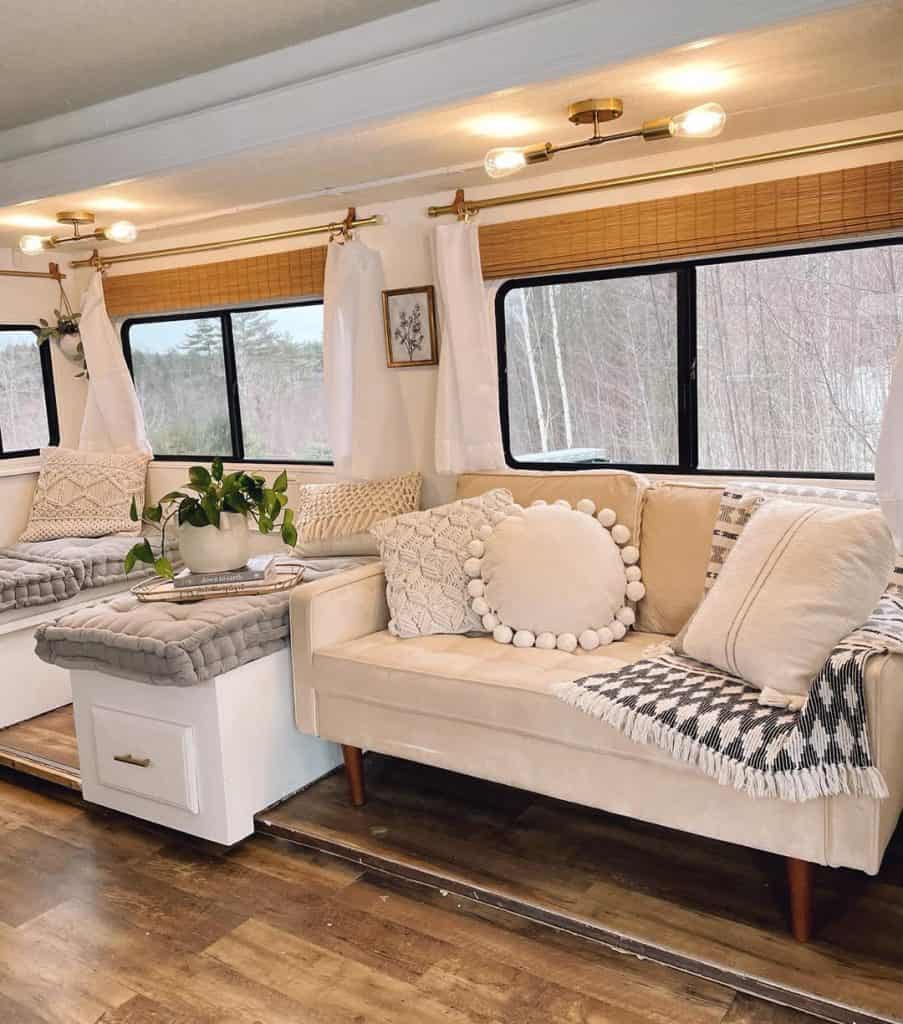
You put in the most time on this one, and for good reason: there’s no hard and fast rule, only what you like to see when you first open your eyes.
Inside a camper it’s already a lot to take in. You’ve got your cabinets, the fixtures, and if you’re in bed you can usually see right into the kitchen. Put in a loud pattern and it starts to look like too much. So we kept it to a plain stripe in a hue that works with the wood of the cabinetry, not against it.
It’s something you’re going to be looking at for as long as you have those curtains. In a place this size, lighter shades will open up the room and let in more of the day’s light.
Go dark and you’ll have a nice, snug vibe at night, but it can make the room feel smaller by day. We made ours a bit on the light side for the main area and a touch darker in the bedroom, to give us a change of pace as the day goes on.
What actually worked for us, by area:
| Area | Fabric Choice | Why |
|---|---|---|
| Bedroom | Blackout lined cotton, navy | Sleep mattered more than light |
| Main window | Light striped linen blend | Brightens the space |
| Bathroom | Frosted film, no curtain | Too small for fabric |
| Kitchen window | Café curtain, cream | Privacy at counter height without blocking light above |
8. Old Bed Sheets Turned Into No Sew Curtains
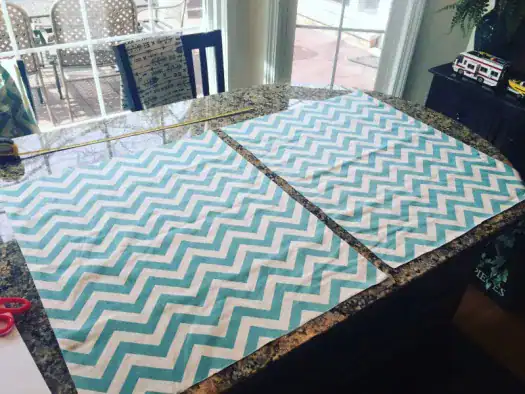
We didn’t do this one ourselves but a couple at a campsite in the Peloponnese showed me theirs and I think about it often.
A beautiful patterned bed sheet, cut to size, hemmed with iron on hem tape instead of a sewing machine.
No sewing skill needed, completely customisable, and considerably cheaper than fabric marketed specifically for RVs.
9. Vintage Scarves as Small Window Coverings
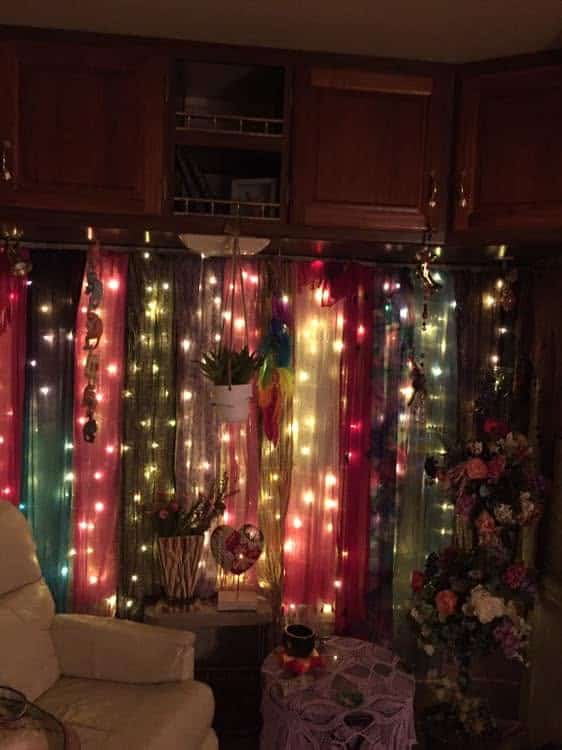
For the smaller windows, the bathroom or above a cupboard, a vintage silk or cotton scarf hung from a small tension rod is often exactly the right size with no cutting or hemming at all.
It also adds a personal collected feel that store bought curtains rarely have.
10. Pom Pom or Tassel Trim Along the Hem
A small detail with a big visual effect.
Sewn or glued along the bottom edge of an otherwise plain curtain, trim adds texture and a handmade quality without requiring much skill at all.
11. Macramé Tiebacks Instead of Plastic Hooks
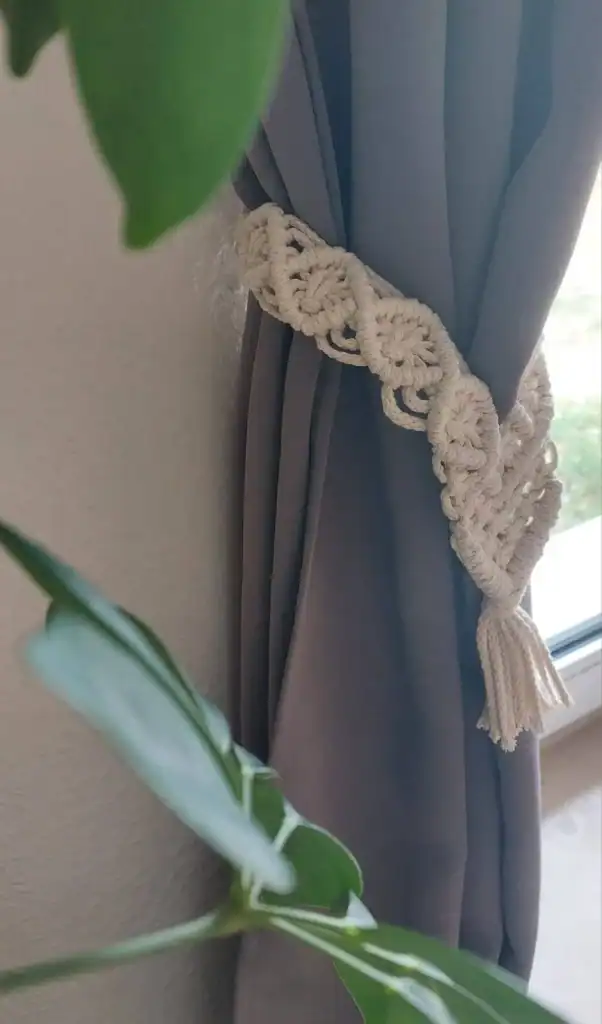
The small plastic hooks that hold curtains open are usually the cheapest, ugliest part of any RV curtain setup. A simple macramé tieback, even a basic one, elevates the whole window in a way that’s disproportionate to how little it costs to make.
The Practical Hardware Question
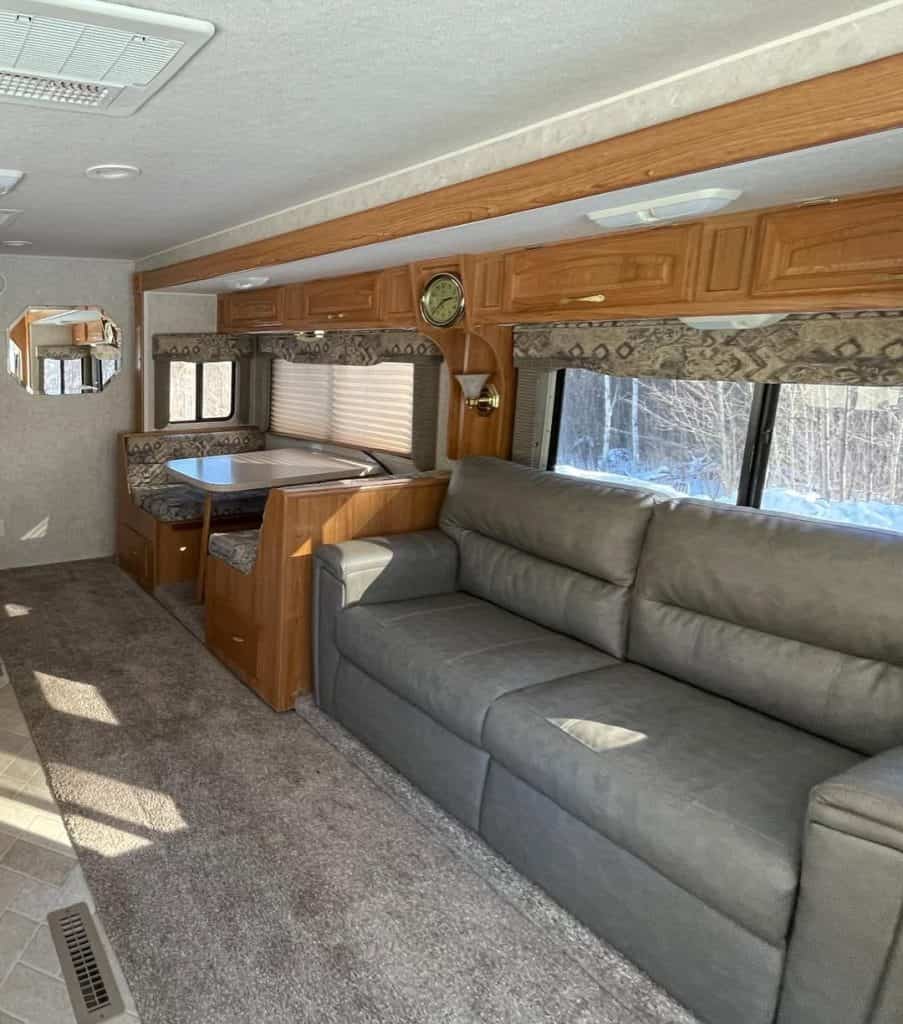
Getting the fabric right matters less than getting the hardware right, because hardware that fails ruins even beautiful curtains.
Tension rods work fine for lightweight curtains on smaller windows. Look for ones with rubber grip tips. Without them, the constant vibration of driving works the rod loose and you arrive somewhere to find the curtains on the floor.
Spring pressure rods hold more weight without sagging, useful if you’ve added a thermal lining or gone with something heavier. They install the same way but with more holding power.
Ceiling track systems are right if you want a curtain to function as a room divider rather than just cover a window. Useful for separating a sleeping area from the rest of the camper, particularly if you travel with people who go to bed at different times.
12. A Sliding Curtain as a Room Divider
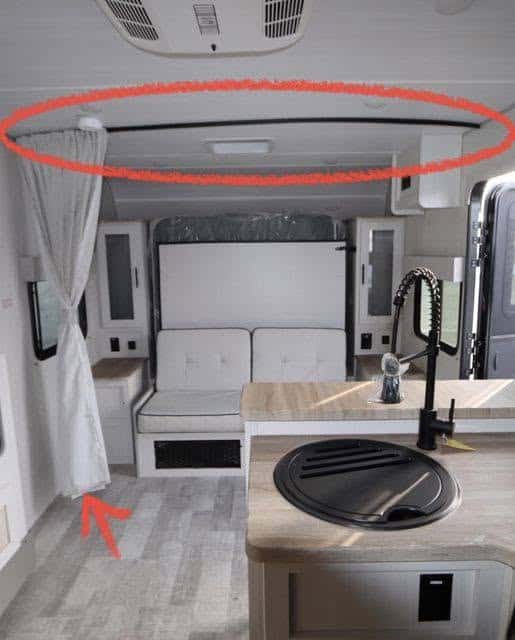
This goes beyond windows entirely.
A ceiling track with a curtain that slides across to separate the bedroom area from the living space gives privacy and a sense of separate rooms in something that technically has none.
Particularly useful with children or guests on board.
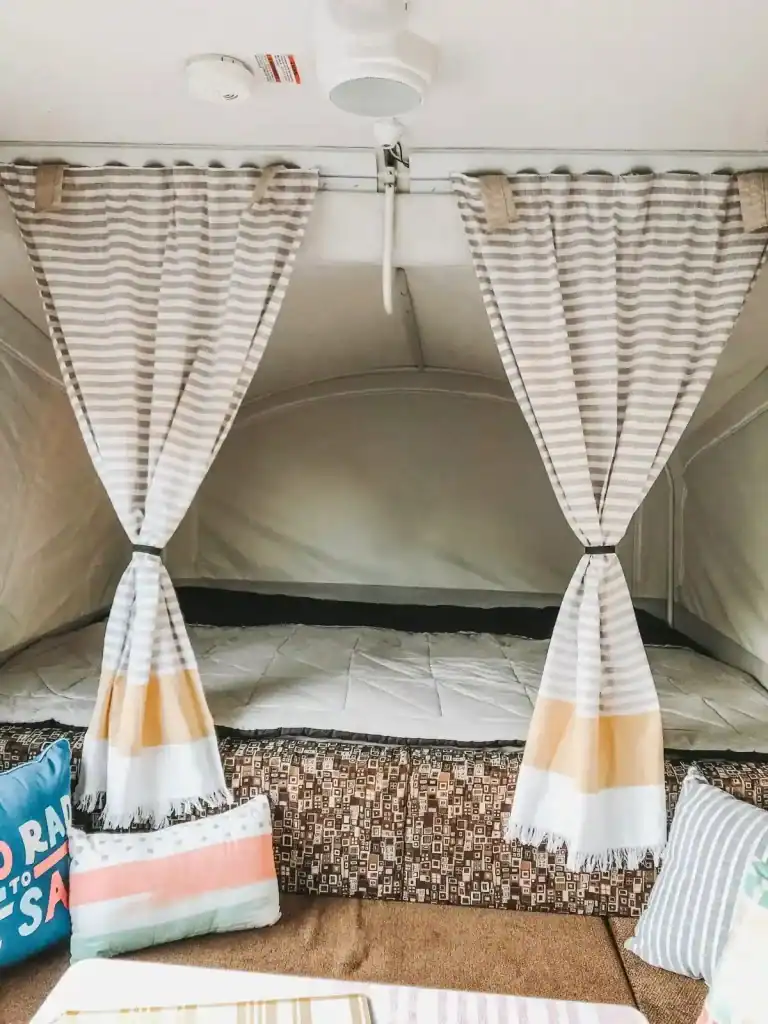
13. Bunk Curtains for Children’s Sleeping Areas
If there’s a bunk or a designated sleeping space for kids, individual curtains around it, even on a small curved track, give a child their own enclosed space within a larger shared camper.
They like this more than you’d expect. It turns a bunk into a small private room rather than just a bed in a shared space.
Budget and Where to Actually Find Things
You don’t need RV specific curtains despite what camping supply shops imply. Standard home curtains often fit with minor adjustments and they’re considerably cheaper than anything marketed specifically for campers.
Thrift Shop and Second Hand Curtain Finds
Vintage curtains from second hand shops are often better quality fabric than new budget options, and the patterns tend to have more character than current mass produced ones.
We found the fabric for our kitchen café curtain at a flea market in Volos. A remnant piece, enough for one small window, cost almost nothing.
Watch for Sales at the Start and End of Camping Season
RV and camping supply shops discount curtains heavily at the start and end of the season when they’re trying to move seasonal stock. If you’re not in urgent need, waiting saves a meaningful amount.
Other Campers Selling Curtains When They Redecorate
This sounds unlikely until you’ve spent time around camping communities and seen how often people update their rigs.
Camper and RV groups online regularly have people selling barely used curtains that simply didn’t suit their redecorated interior. Worth watching if you’re not in a rush.
What We Actually Ended Up With
We put up some navy blackout curtains in the bedroom to put an end to the 7 a.m. wake-up call. In the living room, you’ll find a light striped linen on a spring rod that’s held firm from day one.
For the bathroom, we have a bit of an old scarf and some frosted film on the window. We made do with magnetic rods where we could, sparing us from putting any more holes in the walls than necessary.
All in all, it was cheaper than a name-brand RV set and gives the place a homey feel, like we put it together, not like we were handed a uniform.
My Closing Thoughts
You won’t find the beige curtains any longer. I put it down to Tasos, who has made use of the fabric for a project in the garage. A fitting end, you might say, for some material that never really had the makings of a curtain to begin with.
But what we have put up in their stead is more than an aesthetic choice; it has addressed three real issues. We no longer have to worry about the light or our privacy. And as for the camper, it has taken on the air of a place one would want to put in a week’s time, not just a spot to pass through.
I’ll leave it there for now. Do you have a way of dealing with a particular curtain dilemma in your rig? If you can think of something that has actually done the job, put it in the comments. You don’t get better advice on camper problems than from those who have been living with them.
Until next time,
Stay safe,


I’m Katerina Lithopoulou, co-creator of DIY Cozy Living. I’ve always loved the little things that make a space feel special. With a background in language and a passion for photography and cozy design, I enjoy turning everyday inspiration into simple ideas people can actually use.
My motto: “Cozy isn’t a trend — it’s a feeling.”
