
How to Get the Japandi Look in a Rental (Without Losing Your Deposit)

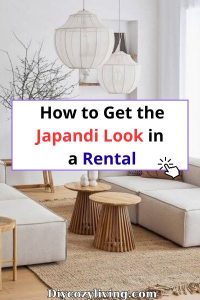
All a renter longs for is a dedicated, organized, and peaceful environment where they can relax easily without feeling stressed by their surroundings.
That’s why decorating with the Japandi style, a beautiful hybrid of Japanese minimalism and Scandinavian functionality, has become immensely popular for modern apartments.
However, many people don’t want to spend hundreds of dollars buying custom wood paneling and expensive light fixtures, only to leave them behind when the lease ends.
Probably you feel that achieving a high-end architectural look is impossible in a rental, or that you will lose your security deposit if you try to change the walls.
There are multiple ways available through which you can carve out a stunning, cohesive lifestyle using this exact design aesthetic.
The ways to utilize this Japandi style are easy to follow, and they won’t cause any harm to your wallet (or your drywall) whatsoever if you understand how to layer the right textures.
But, how exactly can we do it?
Let’s dive in!
Why You Need The Japandi Style
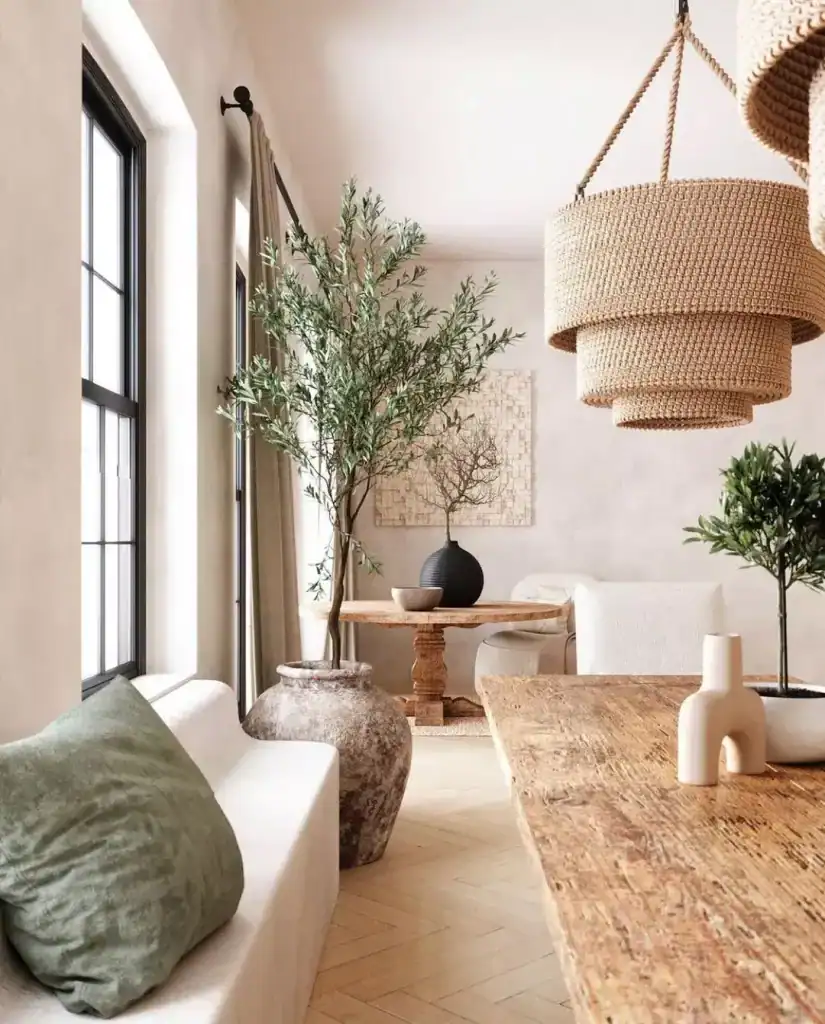
There can be various reasons why you might be looking at this specific interior design trend today.
Some of the most common reasons are needing a peaceful retreat from a busy city, wanting a minimalist space that is easy to clean, and feeling stressed when your current rental feels cluttered and chaotic.
But why should you completely abandon the old habit of settling for a generic, messy apartment?
No matter what your lease terms are, it is always better to choose a dedicated, intentional setup so that your home stays bright, airy, and grounded.
Traditional decorating methods are extremely sturdy, but if you isolate every single space with heavy, mismatched furniture, you are left with a boring layout that completely lacks modern flow.
By using well-engineered Japandi principles, your daily routine will remain safe from feeling cramped, and your weekend relaxation will be completely stress-free.
Read Also: Epic Corner Closet Ideas For Bedrooms: 17+ Designs That Wow!
5 Ways to Achieve Japandi in a Rental
There are many brilliant design details in the Japandi aesthetic. We are going to share the absolute best renter-friendly features, along with exactly how they improve your daily life.
1. The Foundation of Low-Profile Furniture
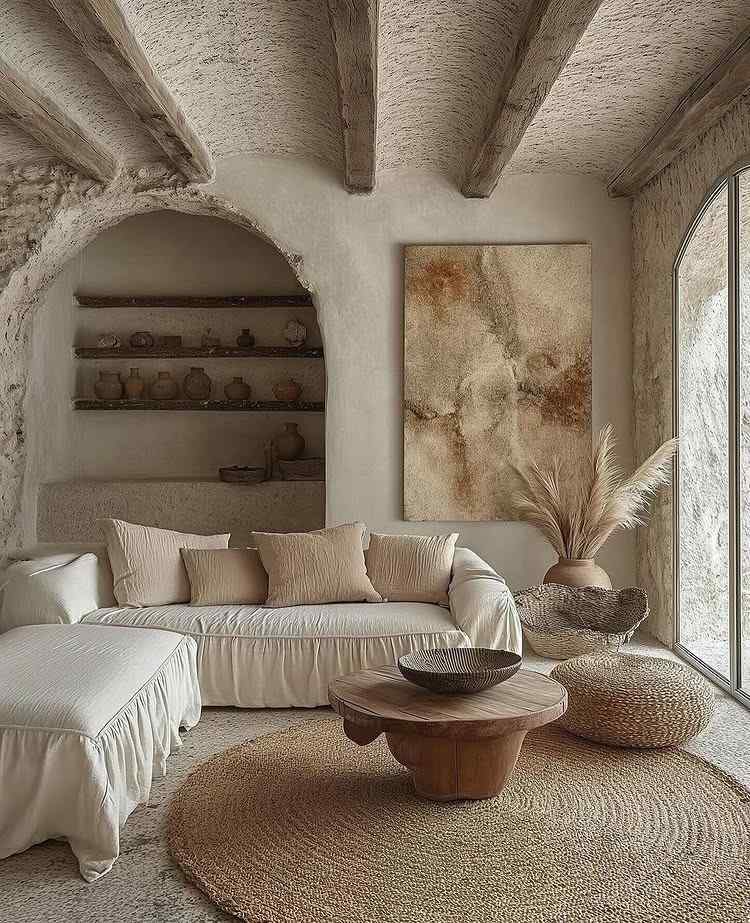
A core pillar of Japanese design is staying close to the earth. In a rental apartment—which often suffers from standard 8-foot ceilings, buying tall, bulky furniture makes the room feel incredibly claustrophobic.
Instead, opt for a low-profile platform bed, a deep floor-hugging sofa, and low wooden coffee tables.
By dropping the visual weight of your furniture down to the lower half of the room, you trick the eye into thinking your ceilings are massive, instantly giving your basic rental a lofty, architectural feel.
2. Damage-Free Wood Slat Walls
Both Scandinavian and Japanese designs heavily feature slatted wood walls (tambour paneling) to bring warmth and texture into a room. You obviously cannot nail wooden planks into your rental walls.
Design Tip: Use peel-and-stick textured wood-slat wallpaper. Modern versions actually have a 3D ribbed texture. Apply a few panels behind your TV console or use it as a faux headboard. When you move out, simply apply heat from a hairdryer and peel it off without pulling the drywall paint.
3. The “No-Drill” Linen Curtain Hack
Nothing ruins a minimalist, serene vibe faster than cheap, plastic vertical rental blinds.
However, removing them and drilling heavy curtain rods into the studs is a quick way to lose your deposit.
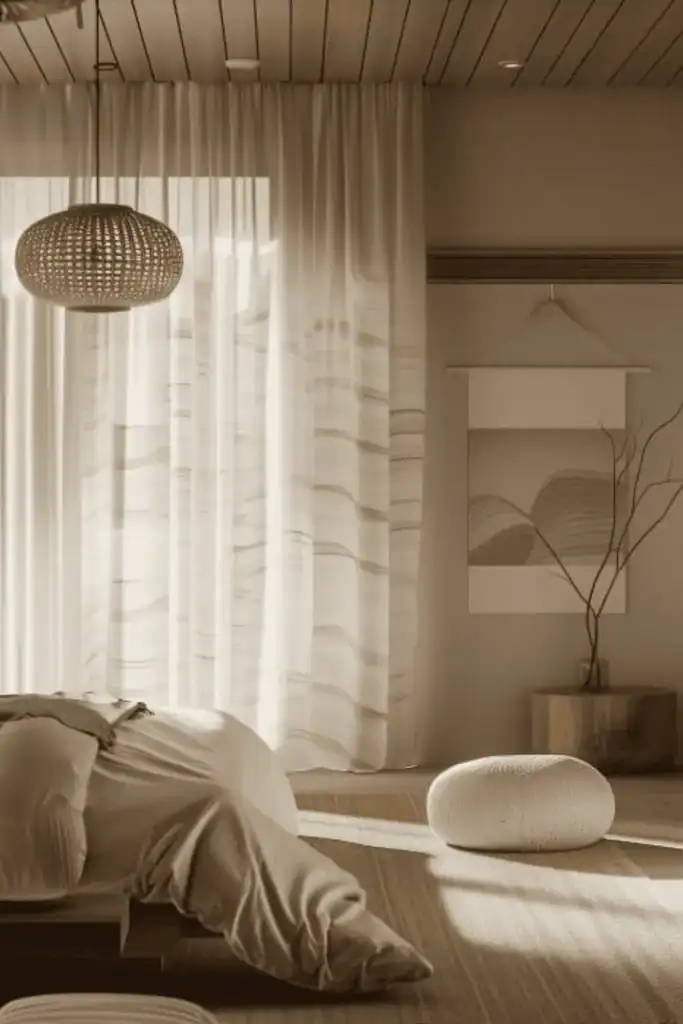
Instead, purchase heavy-duty tension rods (the kind used for shower curtains, but much longer). Wedge them tightly inside the window frame directly in front of the ugly blinds.
Hang crisp, lightweight linen or cotton curtains from the tension rod. This hides the rental blinds completely and diffuses harsh sunlight into a soft, Japandi-approved glow.
🔥 Would you like to save this?
4. Plug-In Paper Lanterns (The Noguchi Effect)
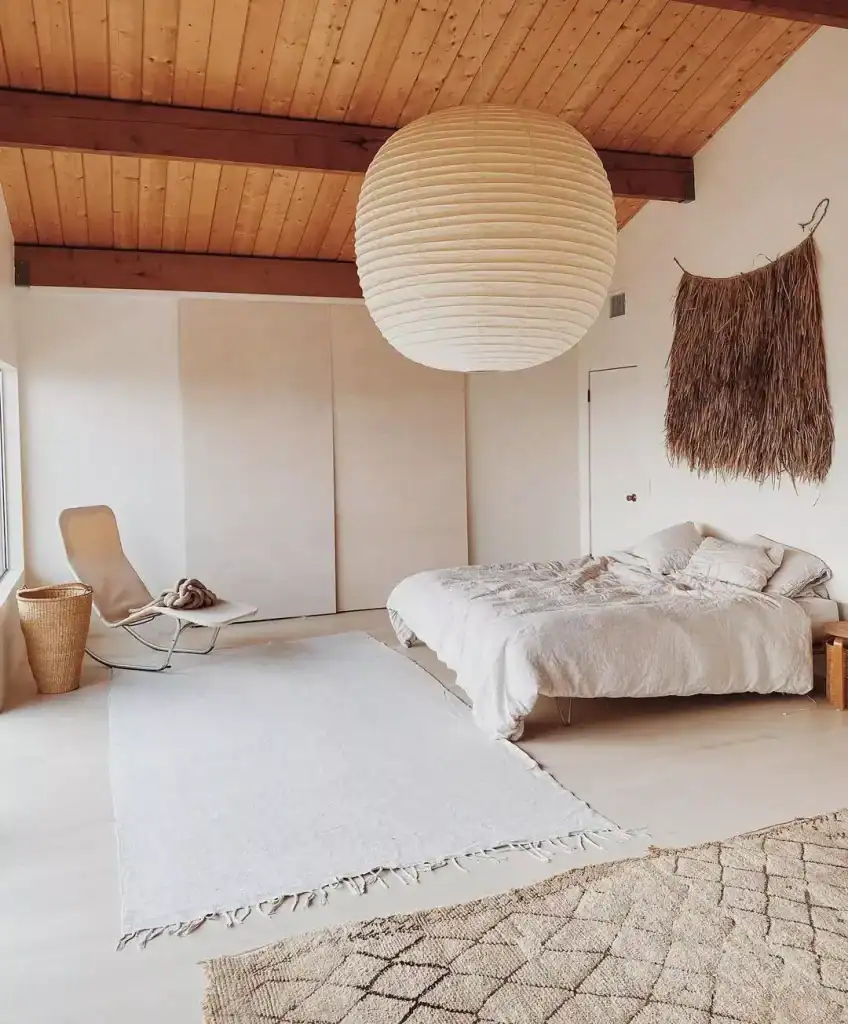
Lighting is everything in Japandi design. You want to avoid the harsh, overhead “boob lights” that come standard in most apartments. You need soft, diffused, sculptural lighting.
| Design Element | Scandinavian Influence | Japanese Influence | How to Achieve in a Rental |
| Color Palette | Cool whites and soft greys | Warm earth tones and deep woods | Use removable command strips to hang large canvas art in beige and charcoal. |
| Lighting | Maximizing natural light | Soft, diffused paper lanterns | Hang plug-in paper pendants from simple ceiling hooks. |
| Textiles | Cozy wool and sheepskin | Crisp linen and smooth cotton | Layer a natural jute rug over standard rental carpeting. |
You do not need an electrician to get stunning ceiling lights. Buy an oversized rice paper lampshade (inspired by Isamu Noguchi) and a plug-in pendant cord.
Screw a small, damage-free Command Hook into the ceiling, drape the cord across it, and plug it directly into the wall outlet.
5. Layering Organic Textures Over Ugly Floors
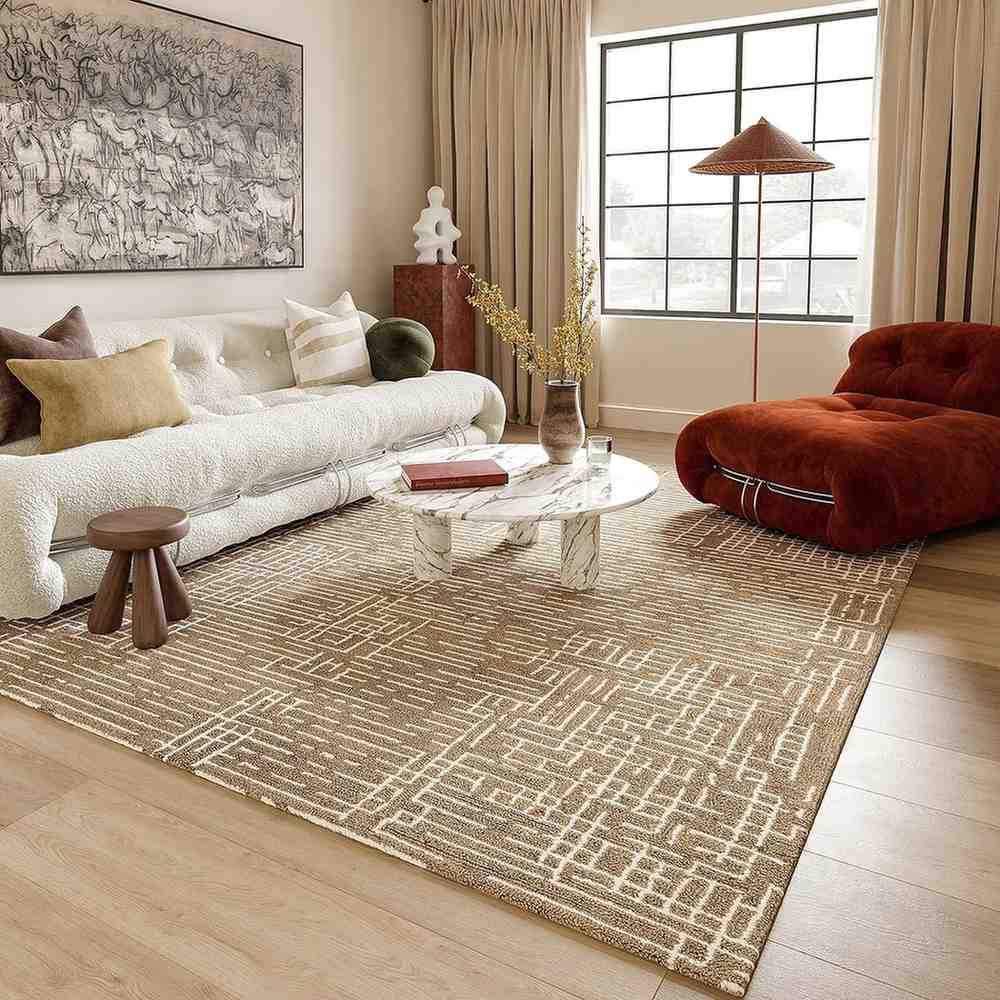
If you are stuck with cheap laminate flooring or a stained beige rental carpet, you have to cover it up to achieve this look.
The secret is organic layering. Buy a massive, room-sized Jute or Sisal rug as your base. These natural fibers are highly durable and scream Japandi minimalism.
If you want to add that Scandinavian coziness, layer a smaller, plush wool or faux sheepskin rug directly on top of the jute, right under your coffee table or beside your bed.
What Kind Of Results to Expect?
The Japandi decorating process is the best way to manage your rental layout because it causes zero harm to your security deposit and keeps your living space highly organized.
Design features, such as low-profile furniture, paper lantern lighting, and natural linen textiles, will make your apartment look beautifully curated and feel professionally designed.
Depending on your interior finish choices, the styling you choose will give you great results.
Obviously, don’t expect miracles.
None of these renter-friendly hacks is able to magically build a perfect house if you refuse to declutter your belongings or if you leave bright neon plastic items sitting on your wooden coffee table.
In short, the aesthetic results for your rental will be ok, but nothing spectacular if you decorate it but refuse to ever put away your messy cables or organize your kitchen counters.
Please remember this because we don’t want you to get disappointed if the apartment feels chaotic during a busy week.
However, you can expect excellent results from these specific design choices because the aesthetic flow is tried, tested, and guaranteed to elevate your daily routine!
To Sum Up
Japandi design ideas can organize and decorate your rental space good enough.
Choose the interior finishes as per your specific budget so that the materials match your specific daily needs. Decorate your layout safely, and set your family free from dark, claustrophobic rooms.
But, remember these techniques will not have impressive results, you won’t see extreme space-saving, and the flow will be ruined if you start randomly mixing in heavy, glossy, or brightly colored furniture that fights the minimalist aesthetic.
This doesn’t mean that you should give up on a custom look if you don’t want to.
But, we have to let you know which are the pros and which are the cons of this specific style so that you form your own opinion on this topic.
Our personal take is that if you just have a standard rental apartment, your budget is tight, and you hate feeling visually overwhelmed after work, go ahead and strictly follow this beautiful minimalist aesthetic.
On the other hand, if you want something massively permanent, or you strictly prefer maximalist, colorful, gallery-wall interiors, then better use a different decorating style altogether.
That’s really it!
We really hope you found our article helpful and that you feel inspired to take the next step in your apartment-decorating journey.
If you have any questions, feel free to write them in the comment section below and we will be more than happy to help.
Until next time,
Stay safe,
Tasos and Katerina

I’m Anastasios Moulios, co-founder of DIY Cozy Living. I enjoy finding creative, practical ways to make small spaces feel warm, stylish, and lived-in. I started this blog with Katerina to share real ideas that make a home feel a little more personal and a lot more comfortable.
