
Crochet for Beginners: The Only Guide You’ll Ever Need

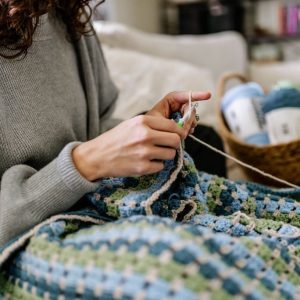
I want to start by saying something I wish someone had said to me when I first thought about learning to crochet:
If crochet looks confusing to you, that doesn’t mean you’re bad at it. It means you haven’t learned it yet.
That might sound obvious, but when you’re staring at photos of neat stitches, perfect blankets, and confident hands moving fast, it’s easy to assume everyone else “just gets it.” I didn’t. Most people don’t. Crochet is one of those skills that looks effortless only after you’ve spent time being awkward with it.
This first part isn’t about stitches or tools. It’s about mindset — because how you start matters more than how fast you learn.
Why Crochet Looks So Intimidating at First

From the outside, crochet can feel overwhelming. You see:
- strange hooks in different sizes
- yarn labels full of numbers
- patterns with abbreviations that look like code
When I first looked into it, I remember thinking, There’s no way I’ll remember all of this. And the truth is — you don’t. Not at once. Not ever, really. You learn what you need, when you need it.
What makes crochet intimidating isn’t the skill itself. It’s the way it’s usually explained. Too fast. Too technical. Too much assumed knowledge.
Crochet is actually very repetitive. It’s the same movements done over and over again. Your hands learn before your brain feels confident.
What Beginners Think Crochet Requires (And What It Actually Requires)

Before I started, I assumed crochet required:
- artistic talent
- perfect coordination
- patience I wasn’t sure I had
In reality, crochet requires:
- willingness to be bad at something new
- time for your hands to adjust
- curiosity instead of pressure
You don’t need to be creative. You don’t need to “have an eye for it.” Crochet is learned physically, not intellectually. Your hands will feel clumsy at first. That’s not failure — that’s learning.
I remind myself of this every time I pick up a new skill.
My First Experience With Crochet (And Why It Matters)

The first time I tried to crochet, I couldn’t even keep the yarn on the hook. It slipped. I tightened it too much. I loosened it too much. Nothing looked like the tutorials I watched.
I stopped and restarted more times than I can count.
What kept me going wasn’t confidence — it was permission. Permission to not be good yet. Permission to waste yarn. Permission to sit there and make something ugly.
Once I stopped trying to “get it right,” my hands relaxed. And once my hands relaxed, things slowly started to make sense.
This is something I see again and again with beginners: tension — physical and mental — is the biggest obstacle.
What You Do Not Need to Worry About Yet
Before we move on to tools and yarn in the next part, I want to be clear about what you can safely ignore for now:
- You don’t need to understand patterns
- You don’t need to know stitch names
- You don’t need perfect tension
- You don’t need expensive supplies
You just need openness.
In the next part, we’ll talk about tools and yarn — slowly, clearly, and without overwhelm. I’ll walk you through exactly what to buy, what to avoid, and why most beginners buy the wrong things at first.
Tools, Yarn, and Setting Yourself Up (Without Overwhelm)

This is usually the part where beginners get stuck before they even start. Too many options. Too many opinions. Too many people saying, “You need this.”
You don’t.
When I first walked into a craft store (and later, when I started browsing online), I felt completely lost. Walls of yarn in every color imaginable, hooks in dozens of sizes, tools I didn’t understand. It made crochet feel complicated before I’d even tried it.
So let’s slow this down and make it simple.
Crochet Hooks: What Actually Matters for a Beginner
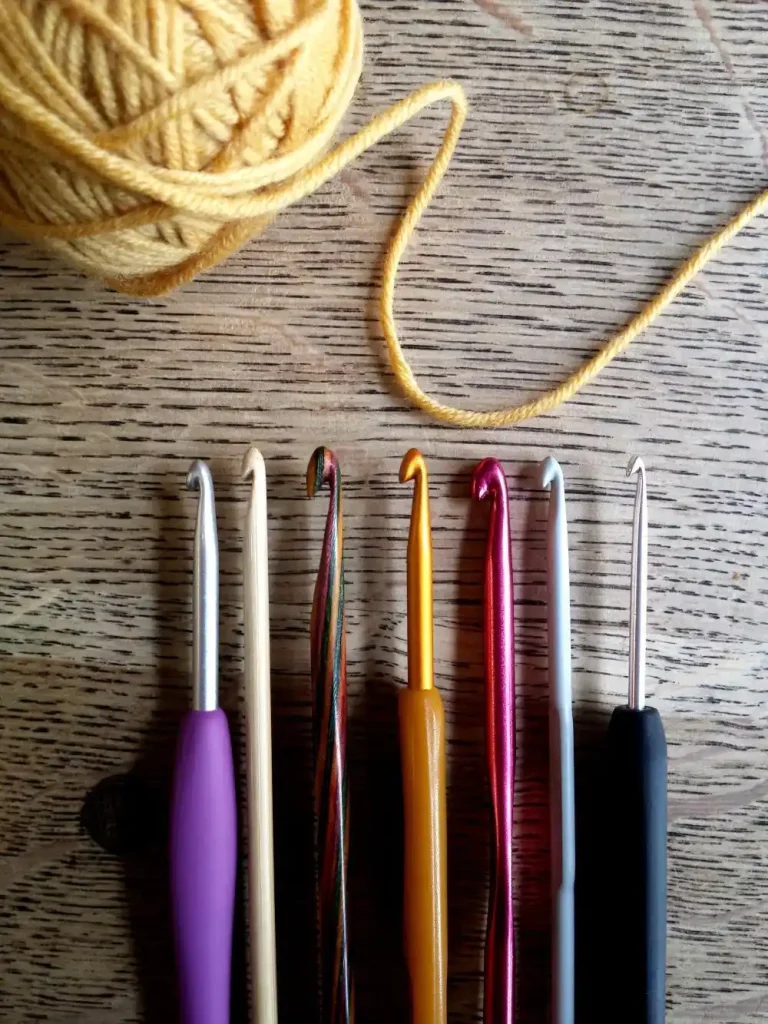
Crochet hooks come in different sizes and materials, but when you’re just starting out, you only need one.
The one hook I recommend starting with
If you buy just one hook, choose:
- 5 mm (also labeled H/8)
This size is forgiving. It works well with common beginner yarn and doesn’t strain your hands. It’s large enough that you can see what you’re doing, but not so large that your stitches feel loose and out of control.
Hook material (keep it simple)
Hooks are usually made from:
- aluminum
- plastic
- bamboo or wood
For beginners, aluminum or plastic is easiest. Yarn glides smoothly, which helps when your tension isn’t consistent yet (and it won’t be — that’s normal).
Bamboo hooks can feel nice later on, but they create more friction, which can be frustrating at the beginning.
You do not need:
- ergonomic hooks
- hook sets
- specialty or luxury hooks
Those can come later, once you know what you like.
Yarn: The One Thing That Can Make or Break Your First Experience

This part matters more than most people realize.
When beginners say, “Crochet is hard,” very often the real issue is the yarn — not their ability.
What kind of yarn to choose
Look for:
- Medium-weight yarn
(Often called worsted weight, size 4) - Smooth texture
No fuzz, no novelty yarn - Light or medium color
Avoid black, navy, or very dark shades
Dark yarn hides stitches. Fuzzy yarn hides mistakes. Both make learning harder than it needs to be.
Fiber type (don’t overthink it)
Good beginner options:
- Acrylic
- Cotton
- Acrylic blends
Acrylic is affordable and forgiving. Cotton is great too, especially for practicing, though it can feel a bit firmer on the hands.
Wool is lovely, but not necessary when you’re just starting.
And no — expensive yarn will not make you better at crochet.
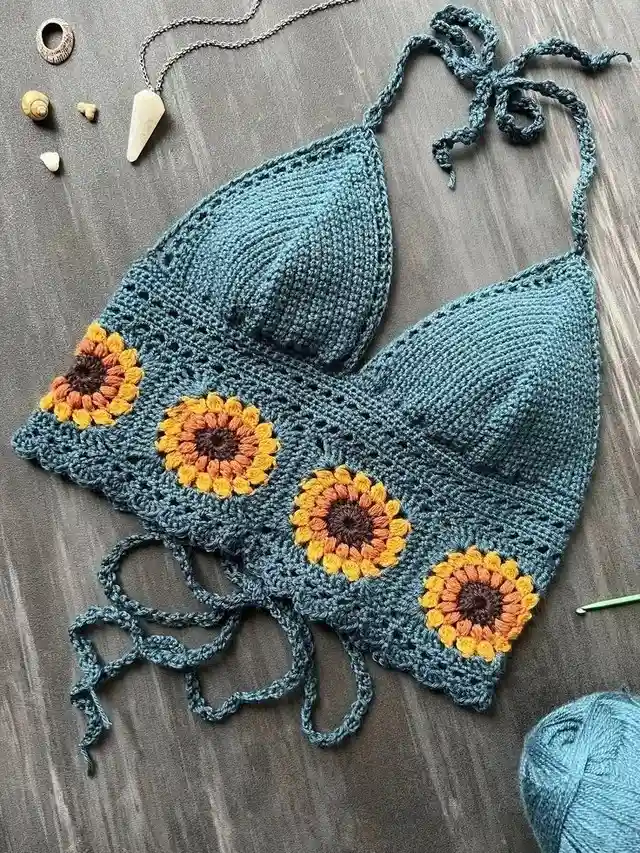
Example: Try making some progress like this. One step at a time.
Yarn Labels: What You Can Ignore (For Now)
Yarn labels are full of information, and most of it isn’t helpful to you yet.
Here’s what actually matters:
- the weight (look for medium / worsted / size 4)
- the recommended hook size (usually around 5 mm)
Everything else — gauge, care instructions, yardage — can wait. You’ll understand those things later, naturally.
How Much Yarn Do You Need to Start?
For learning and practicing:
- one skein is enough
You’re not trying to finish a big project yet. You’re learning how your hands move. One skein gives you plenty of room to practice, undo, and try again.
And yes — you will undo stitches. A lot. That’s part of crochet.
Scissors and Other Tools (Minimal Is Better)
At this stage, you need:
- scissors
That’s it.
You don’t need stitch markers, yarn bowls, project bags, or measuring tapes yet. Those things are helpful later, but right now they add noise.
I’ve seen beginners buy entire kits and then feel overwhelmed before they even start. Simplicity builds confidence.
Setting Up a Beginner-Friendly Crochet Space
Where you crochet matters more than people think.
You don’t need a special room or perfect lighting, but a few small things make learning much easier.
Choose a comfortable spot
Look for:
- good light (natural or a lamp)
- a chair that supports your back
- a surface where yarn won’t roll away constantly
Crocheting on the couch is fine — just make sure your shoulders aren’t hunched and your hands aren’t strained.
Keep distractions gentle
I like having:
- soft music
- a podcast
- quiet background noise
Avoid anything that makes you rush or tense up. Crochet works best when your body feels calm.
Here is an example. Pause it and do it slowly. It’s a process. You are not going to be perfect in the beginning and that’s ok!!
What Your Hands Will Feel Like (And Why That’s Normal)
This is important.
At first, your hands may feel:
- stiff
- clumsy
- tired faster than expected
That doesn’t mean you’re doing it wrong. You’re asking muscles and coordination patterns to do something new.
Think of it like learning to write with your non-dominant hand. It’s awkward before it’s natural.
Short sessions are better than long ones. Ten or fifteen minutes is enough when you’re starting.
Holding the Hook, Holding the Yarn, and Letting Your Hands Learn
This is the part where many beginners quietly think, Maybe I’m just not built for this.
I want to say this clearly before we go any further:
If holding the hook and yarn feels awkward, you are doing it right.
Crochet is physical. Your hands are learning something completely new, and that takes time. No amount of reading replaces the moment when your fingers start to remember what to do on their own.
Let’s slow this all the way down.
How to Hold the Crochet Hook (Without Overthinking It)
There are many videos and diagrams showing “correct” ways to hold a crochet hook. They mean well — but they often make beginners tense.
In reality, most crocheters naturally use one of two grips.
The Pencil Grip
You hold the hook like a pencil, closer to the tip.
This grip:
- feels familiar to many beginners
- offers precision
- works well for smaller, tighter stitches
The Knife Grip
You hold the hook like a butter knife, with your hand over the hook.
This grip:
- feels more relaxed for many people
- uses larger arm movements
- can feel more natural for looser stitches
Here’s the important part:
Neither grip is better.
I personally switched grips several times before settling into what felt comfortable. Many crocheters do. Your grip may even change depending on the project.
If your hand feels tense, that’s your cue to loosen up — not to “fix” your grip.
What Your Non-Dominant Hand Is Doing (And Why It Feels Harder)
Most beginners focus on the hook hand, but the non-dominant hand does just as much work — sometimes more.
That hand:
- holds the fabric
- guides the yarn
- controls tension
And because we don’t usually use that hand for fine motor skills, it often feels confused at first.
This is normal.
Your non-dominant hand is learning:
- how much yarn to feed
- how tightly to hold the work
- how to move in rhythm with the hook
Give it time. This coordination doesn’t come from thinking — it comes from repetition.
Yarn Tension: The Thing Everyone Struggles With
Let’s talk about tension, because this is where many beginners get frustrated.
Tension simply means how tight or loose you hold the yarn.
When you’re starting out, your stitches might be:
- too tight to insert the hook
- so loose they look uneven
- inconsistent from row to row
All of this is expected.
What beginners often do
They grip the yarn tightly, thinking control equals correctness.
In reality, tight tension makes crochet harder:
- your hands get tired
- stitches become difficult to work into
- frustration builds quickly
Instead, aim for relaxed control. The yarn should flow through your fingers, not fight them.
If your hands hurt, loosen up.
How to Wrap Yarn Around Your Fingers (A Gentle Approach)
There are many ways to wrap yarn around your fingers. None of them are mandatory.
A simple beginner method:
- let the yarn run over your index finger
- lightly wrap it around one or two fingers
- allow it to slide freely
If the yarn slips too much, wrap it once more.
If it feels tight, unwrap it.
Adjust as you go. There is no “set it and forget it” method at the beginning.
Why Your Hands Feel Like They’re Working Against You
This part surprised me when I first learned.
At the beginning, crochet feels mentally easy but physically strange. You understand the steps, but your hands don’t cooperate.
That’s because crochet builds muscle memory.
Muscle memory forms slowly:
- through repetition
- through mistakes
- through undoing and trying again
Your brain may understand what to do long before your hands do. That gap is frustrating — but temporary.
Most beginners notice a shift after a few days of practice. Suddenly, movements feel smoother. Your hands stop freezing mid-stitch. That’s muscle memory forming.
How Long You Should Practice (Less Than You Think)
This is where many beginners go wrong.
Long practice sessions lead to:
- sore hands
- stiff wrists
- frustration
Short, regular sessions build confidence.
I recommend:
- 10–20 minutes at a time
- once a day, or every other day
Stop before you feel annoyed. Crochet should feel inviting, not like homework.
What to Do When Something Feels Impossible
At some point, you will hit a moment where nothing works:
- the hook won’t go through
- the yarn splits
- your stitches disappear
When this happens, pause.
Take a breath.
Put the hook down.
Shake out your hands.
Often, the solution isn’t more effort — it’s less tension.
If needed, gently pull out a few stitches. Crochet allows you to undo without punishment. That’s one of its greatest strengths.
Preparing for Your First Actual Stitches
Now that your hands are getting familiar with the hook and yarn, we’re ready to move into the first real crochet skills:
- making a slip knot
- creating a foundation chain
- understanding where stitches live
This is where crochet starts to feel real.
Your First Real Stitch — Single Crochet (Slow and Clear)
This is the moment when crochet finally starts to feel like something.
Up until now, you’ve been preparing your hands. Now you’ll actually build fabric.
The single crochet is usually the very first stitch beginners learn. It’s simple, sturdy, and shows you how crochet really works.
What “working into a stitch” means
Right now, you have a foundation chain. Those little V-shapes are stitches. When a pattern says “work into the chain,” it simply means inserting your hook into one of those stitches.
For single crochet:
- Insert your hook into the second chain from the hook
- Yarn over
- Pull up a loop (you now have two loops on the hook)
- Yarn over again
- Pull through both loops
That’s one single crochet stitch.
The first few will feel slow and awkward. That’s expected.
Where beginners get stuck
Most beginners struggle with:
- finding the right chain
- getting the hook through
- pulling the yarn smoothly
If your hook won’t go in, your chain may be too tight. That’s not failure — it’s feedback. Loosen your grip slightly and try again.
Turning Your Work and Understanding Rows
This is where crochet starts to feel confusing — and where many tutorials lose people.
When you reach the end of a row, you turn your work, just like turning a page in a book.
Before turning:
- you usually make one chain (called a turning chain)
- this gives your row height
Then:
- turn the fabric
- work back across the row in the opposite direction
Crochet builds back and forth, row by row. It’s not circular unless you intentionally make it that way.
Counting stitches (this matters more than speed)
Every row should have the same number of stitches.
If your project keeps getting wider:
- you’re probably adding stitches
If it keeps shrinking:
- you’re likely skipping the first or last stitch
Counting feels tedious at first, but it prevents frustration later.
Learning to Read Your Crochet (A Huge Breakthrough)
This is the moment when crochet clicks.
At first, stitches look like a mess. Over time, your eyes learn patterns.
In single crochet:
- each stitch looks like a small “V” on top
- you usually insert your hook under both loops of that V
Finding the first and last stitch of each row is one of the hardest beginner skills — and one of the most important.
A small tip that helped me:
Pause before starting a new row and look at the fabric. Don’t rush into the next stitch.
Common Beginner Mistakes (And Why They’re Normal)
Let’s be honest — everyone messes this up at first.
“My edges look uneven”
Totally normal. This improves as your tension evens out and you learn where rows begin and end.
“My square isn’t a square”
That’s usually stitch count or tension. Not talent.
“I keep pulling it apart”
Crochet is forgiving. Undoing stitches is part of learning, not a setback.
Mistakes mean you’re practicing, not failing.
Finishing Your Work — Fastening Off and Weaving Ends
This is a step beginners often rush — and regret later.
To finish:
- Cut your yarn, leaving a tail
- Yarn over and pull the tail through the loop
- Gently tighten
Then you weave in the ends using a yarn needle:
- run the yarn through nearby stitches
- change direction once or twice
- trim the excess
This keeps your work from unraveling and makes it look finished.
What to Crochet First (And What to Avoid)
Your first project should:
- be simple
- use one stitch
- allow mistakes
Great beginner projects:
- dishcloths
- scarves
- simple squares
- headbands
Projects to avoid at first:
- fitted clothing
- complex patterns
- thin yarn with small hooks
Starting small builds confidence faster than jumping into something complicated.
A Realistic Timeline (So You Don’t Get Discouraged)
Most beginners:
- feel awkward for the first few days
- feel more confident after a week
- feel comfortable after a few weeks
Progress isn’t linear. Some days feel great. Others don’t. That’s normal.
Final Thoughts (From One Beginner to Another)
Crochet isn’t about perfection. It’s about rhythm, patience, and showing up again.
If your stitches are uneven — you’re learning.
If your hands feel clumsy — they’re adapting.
If you’re frustrated — you care.
And that’s enough.
You don’t need talent to crochet.
You just need time.
Oh Lord, this is a biggg one! I really hope you liked it and found it useful.
If you have any questions, lemme know.
Until next time
Stay safe,
I’m Katerina Lithopoulou, co-creator of DIY Cozy Living. I’ve always loved the little things that make a space feel special. With a background in language and a passion for photography and cozy design, I enjoy turning everyday inspiration into simple ideas people can actually use.
My motto: “Cozy isn’t a trend — it’s a feeling.”

I’ve been crocheting about 15 years now. I only learned (at age 60) because my mom kept bugging me. Now I love it and know she smiles down in me every time I start a new project. I’m currently in a mosaic crochet phase. I wish I had this tutorial back then. It is so well written and so much positive reinforcement! And everything you say is spot on! So thank you!
WOW!!! We are so happy you liked it!!! It means the world to us. (Imagine our smiles reading your comment XD)