
17+ Stunning Backyard Zen Garden Ideas You’ll Wish You Discovered Years Ago

🔥 Would you like to save this?
Having a chaotic outdoor space can be highly annoying, especially when it is just a noisy, cluttered patio and overgrown grass scattered across your yard.
All a homeowner longs for is a dedicated, organized, and peaceful backyard oasis to relax the mind after a long day.
That’s why creating a Japanese-inspired zen garden has become immensely popular.
However, many people don’t want to spend tens of thousands of dollars importing massive boulders or hiring specialized landscape architects.
Probably you feel that your yard is just too small, too loud, or too far gone to ever look good or function properly as a meditation space.
This is a completely logical thought, despite the fact that most zen garden hacks nowadays are incredibly easy and affordable to set up in any outdoor space.
There are multiple ways available through which you can carve out a stunning zen retreat to your desired aesthetic.
The natural ways to organize and upgrade your landscaping are easy to follow, and they won’t cause any harm to your wallet whatsoever if you do the heavy lifting yourself.
But, how exactly can we transform a completely blank canvas into a gorgeous sanctuary?
Let’s dive in!
Why You Need A Zen Garden
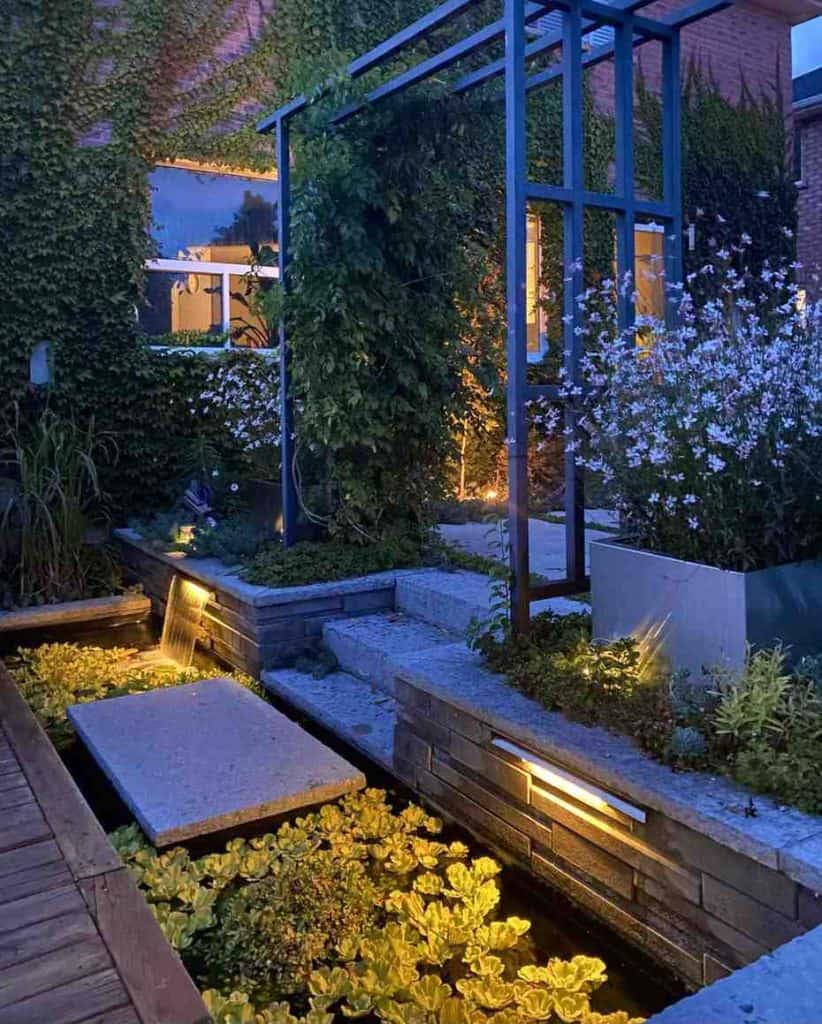
There can be various reasons why you might want to upgrade your outdoor routine today.
Some of the most common reasons are avoiding the stress of daily life, finding a quiet place for morning coffee, and feeling stressed when your house is filled with constant digital noise.
No matter what size your property is, it is always better to choose a dedicated landscaping setup so that your home stays clean, organized, and beautifully connected to nature.
Standard lawns and cracked patios are extremely sturdy, but if you leave them unstyled, you are left with a boring space you never actually want to use.
By using simple zen design principles, your outdoor area will remain safe from heavy visual clutter, and your weekend relaxation routine will be completely stress-free.
Read Also: 21+ Gorgeous Backyard Garden Makeovers (Before & After)
The Ultimate Zen Garden Shopping List
Before you start digging, you need to gather your materials. Having the right tools is the secret to making the transformation authentic and permanent!
- Fine crushed gravel or coarse sand (for raking patterns)
- A wooden, wide-toothed zen rake
- Large, naturally weathered boulders (for asymmetrical groupings)
- Rolled bamboo fencing
- Live moss or creeping ground covers
- A stone water basin (Tsukubai)
- Evergreen shrubs like boxwood or Japanese holly
Having said that, here are the absolute best ideas to inspire your backyard zen makeover.
17+ Backyard Zen Garden Ideas
Instead of just throwing rocks in a pile, we are going to break down exactly how to incorporate authentic Japanese garden elements into your own backyard.
1. The Classic Dry Landscape (Karesansui)
The most iconic zen garden doesn’t use water at all. Instead of a lawn, clear a designated square and fill it with 3 inches of fine, crushed granite.
Use a wooden rake to draw continuous, flowing lines around a few carefully placed boulders. The gravel represents the ocean, and the rocks represent islands. Raking it weekly becomes a deeply meditative practice.
2. The Bamboo Privacy Screen
Design Tip: Zen gardens require a sense of enclosure and separation from the outside world. If you can see your neighbor’s trampoline, the illusion is broken!
Attach rolled bamboo fencing directly over your existing wooden or chain-link fence. Bamboo instantly warms up the space, dampens neighborhood echoes, and provides an immediate visual boundary that feels organic and calming.
3. A Minimalist Water Basin (Tsukubai)
Water is essential for purifying the senses. Set up a low stone water basin in a quiet corner.
| Basin Setup Element | Why You Need It |
| Stone Bowl | Holds the water, blending naturally into the earth. |
| Bamboo Ladle | Used traditionally for washing hands; adds a beautiful wooden texture. |
| River Rock Base | Place smooth black river rocks around the base to catch the splashing overflow. |
4. Stepping Stone Paths (Tobi-ishi)
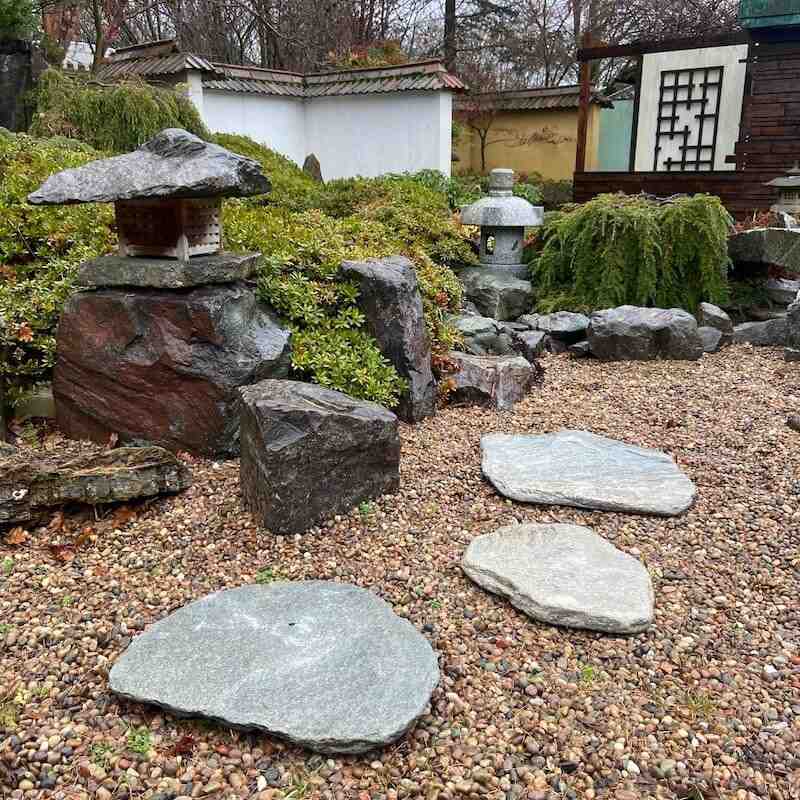
Never use poured concrete paths in a zen garden. Use irregular, flat natural stepping stones.
- Space them out slightly further than a normal stride.
- This forces the walker to look down at their feet, intentionally slowing their pace and bringing their mind into the present moment.
- Plant low-growing creeping thyme or moss between the stones to soften the edges.
5. Sculptural Japanese Maples
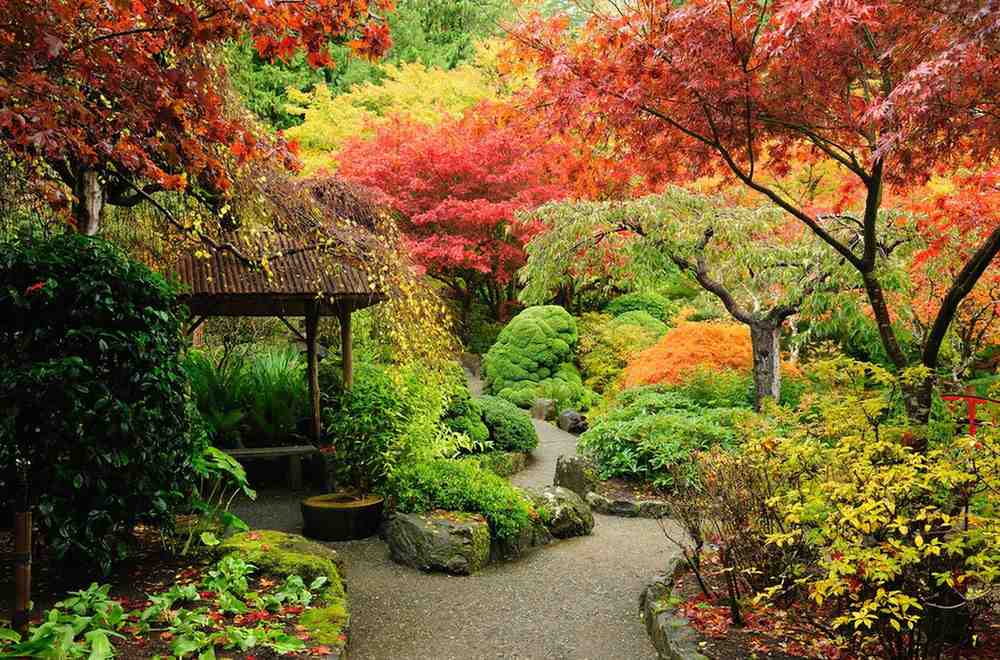
A zen garden relies heavily on evergreens, but it needs one dramatic focal point.
Plant a lace-leaf Japanese Maple (Acer palmatum) near your seating area.
Its twisting, delicate branches and vibrant red autumn leaves provide a stunning contrast against the neutral gray gravel and green shrubs.
6. The “Deer Chaser” Water Feature (Shishi-odoshi)
If you want the ultimate auditory experience, install a bamboo water spout that slowly fills with water, tips over to empty, and knocks against a stone with a sharp, hollow clack.
Originally designed to scare away wildlife in rural Japan, the rhythmic sound is now considered highly hypnotic and relaxing.
7. Cloud-Pruned Evergreens (Niwaki)
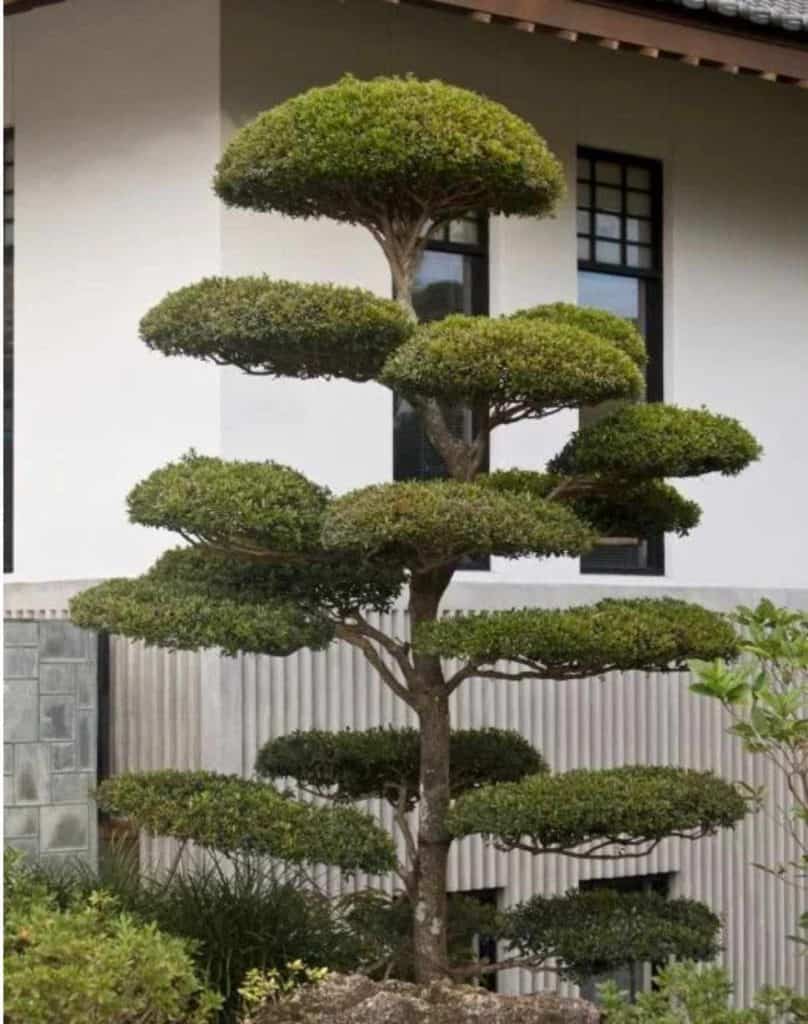
Instead of letting your bushes grow wild, practice the art of Niwaki. Carefully prune your boxwoods or junipers into rounded, cloud-like shapes.
This highly controlled pruning technique makes the plants look like ancient, wind-swept trees scaled down to fit your backyard.
8. Asymmetrical Rock Groupings
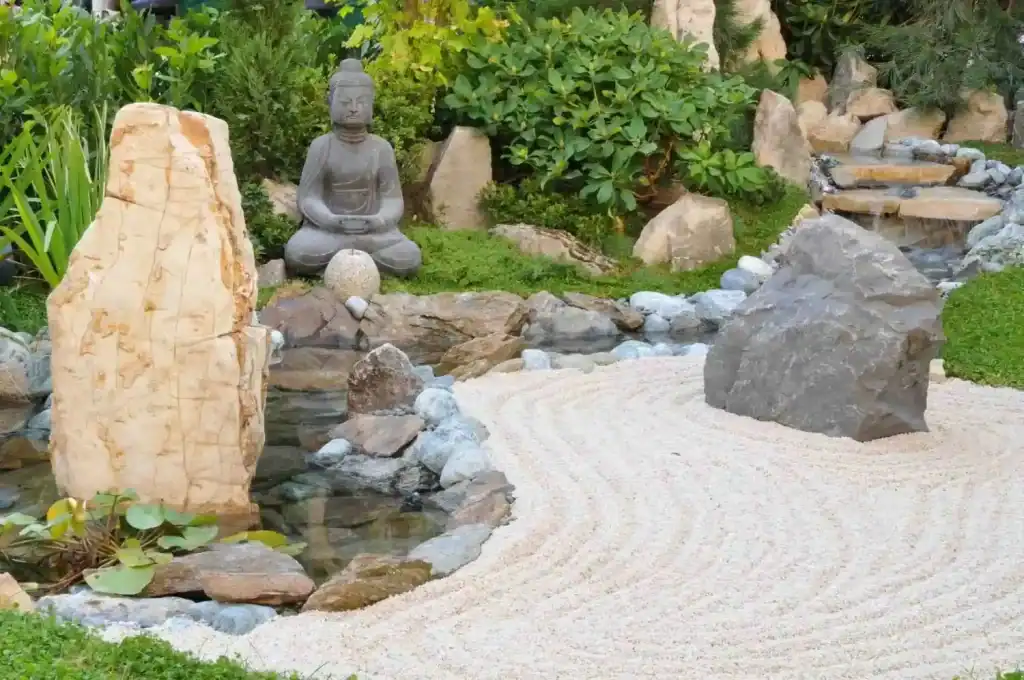
Symmetry does not exist in nature. When placing your boulders, always group them in odd numbers (groups of 3, 5, or 7).
Place one large, tall stone (the anchor), a medium stone leaning toward it, and a low, flat stone at the base. Bury the bottom third of the rocks in the dirt so they look like they are naturally emerging from the earth, not just dropped on top of it.
9. Moss Garden Corners (Kokedera Style)
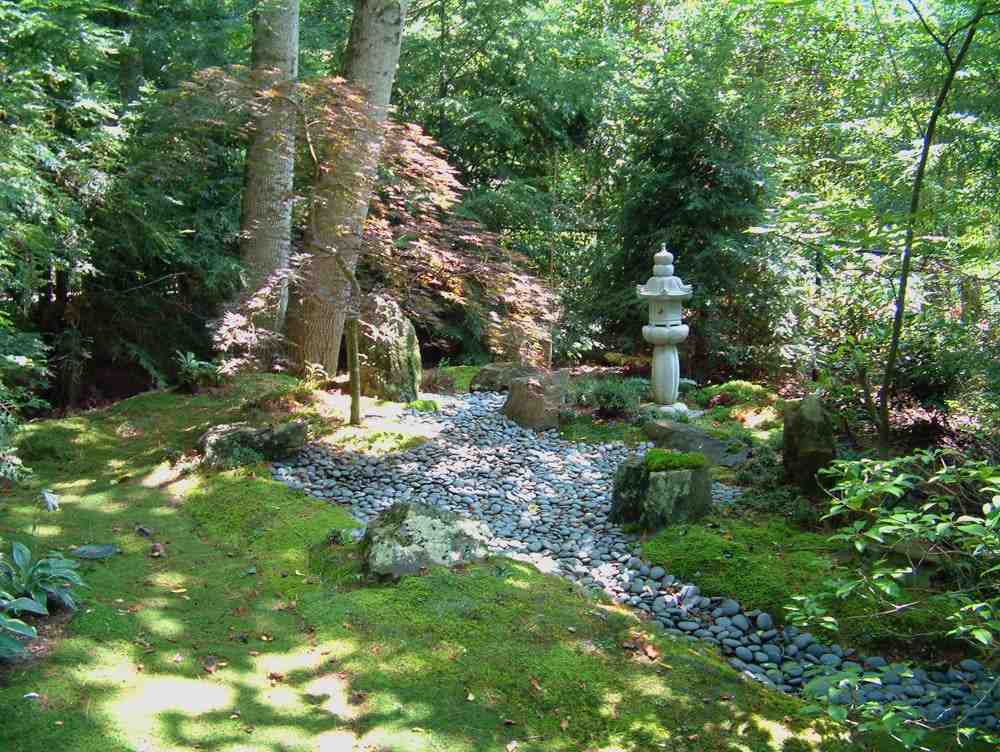
Grass requires loud lawnmowers and harsh chemicals, which ruins a zen atmosphere.
In heavily shaded areas under trees, replace the turf entirely with a patchwork of live moss. Keep the soil acidic and mist it regularly. A carpet of emerald green moss is incredibly soft, quiet, and requires zero mowing.
10. The Enso (Moon Window)

If you are building a wooden privacy screen or a dividing wall, cut a perfectly round hole in the center.
In Zen Buddhism, this circle (the Enso) represents enlightenment, strength, and the universe. It beautifully frames a specific view of a tree or lantern in the garden beyond.
11. Stone Lanterns (Toro)
Avoid harsh, glaring floodlights.
Place traditional Japanese stone lanterns (Toro) strategically along the stepping stone path or near the water basin.
Place a low-wattage warm LED bulb or a simple wax candle inside to provide a soft, gentle glow during evening meditation.
12. A Zen Seating Deck (Engawa)
A traditional Japanese house features an Engawa—a raised wooden border that wraps around the house, serving as a bridge between the indoors and the outdoors.
Build a low, flat wooden platform just outside your back door, completely free of railings or bulky furniture.
Sit directly on the edge with a cup of tea to view your gravel garden.
13. The Sand Meditation Box

If you only have a tiny apartment patio, you can still have a zen garden!
Build a shallow, 3-foot by 3-foot wooden frame. Fill it with pristine white sand, add three beautiful smooth river stones, and keep a small handheld rake nearby.
It gives you the exact same tactile relaxation on a micro-scale.
14. A Pondless Waterfall
If a koi pond is too much maintenance, build a pondless waterfall.
Water cascades down a short arrangement of natural slate rocks and disappears into a hidden underground basin topped with gravel. You get the beautiful, rushing sound of a mountain stream without the stress of cleaning algae or caring for fish.
15. Fern and Hosta Underplanting
To create a lush, ancient feel, the ground should never be bare dirt.
Around the base of your trees and boulders, plant a thick mixture of Japanese painted ferns and variegated hostas.
Their large, architectural leaves add massive texture and thrive beautifully in the shade.
16. The Moon Viewing Platform (Tsukimi-dai)
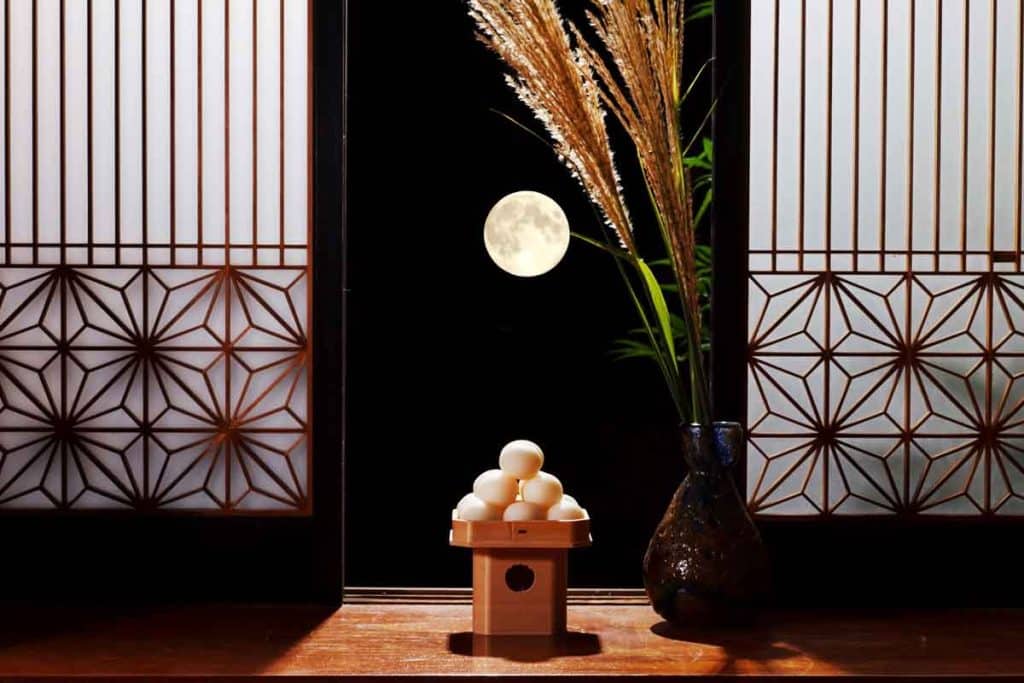
Dedicate a specific corner of your yard simply for looking at the sky.
Build a very small, slightly elevated wooden deck in a spot that gets a clear view of the night sky.
Keep it completely empty except for a couple of floor cushions, dedicating the space solely to stargazing and quiet reflection.
17. The Torii Gate Entrance
Transitioning from the chaotic world into your sanctuary should feel intentional.
Build a simple, wooden Torii gate (often painted vermilion red or left as natural wood) at the entrance of the garden pathway.
Walking under it signifies that you are leaving your daily stress behind and entering a sacred, quiet space.
What Kind Of Results to Expect?
The zen garden makeover process is the best way to manage your outdoor decor because it causes zero harm and keeps your property beautifully peaceful.
Techniques such as raking gravel, adding stone lanterns, and planting moss will make your yard look beautifully curated and professionally designed.
Depending on your daily routine, the makeovers you choose will give you great results.
Obviously, don’t expect miracles.
None of these methods is able to magically turn a deeply flooded, noisy yard next to a highway into a perfectly silent sanctuary if you refuse to install proper sound-dampening fencing first.
In short, the aesthetic results for your landscaping will be great, but nothing spectacular if you refuse to ever rake the leaves off your pristine gravel during the autumn.
Please remember this because we don’t want you to get disappointed if the garden still gets messy during a busy windy season.
However, you can expect excellent results for your everyday routine because these specific ideas are tried, tested, and guaranteed to elevate your mind and your space!
To Sum Up
Backyard zen garden ideas can organize and decorate your house good enough.
Choose the landscaping methods as per your specific yard size so that the materials match your specific environmental needs (shade, sun, space).
Organize your outdoor gear safely, and set your patios free from messy piles and dead plants.
But, remember these techniques will not have impressive results if your family refuses to respect the quiet zones, and you won’t get a stress-free aesthetic if the gravel is constantly kicked around by running dogs.
This doesn’t mean that you should give up on a beautiful garden if you don’t want to.
But, I have to let you know which are the pros and which are the cons of DIY zen spaces so that you form your own opinion on this topic.
My personal take is that if you just have a standard yard, your budget is tight, and you hate a chaotic lawn, go ahead and strictly follow these smart stone and bamboo systems.
On the other hand, if you want something massively permanent, like a fully plumbed koi pond or an authentic imported tea house, then better use a professional contractor to build it safely.
That’s really it!
I really hope you found our article helpful and that you feel inspired to build your retreat.
If you have any questions, feel free to write them in the comment section below and we will be more than happy to help.
Until next time,
Stay safe,
Tasos

I’m Anastasios Moulios, co-founder of DIY Cozy Living. I enjoy finding creative, practical ways to make small spaces feel warm, stylish, and lived-in. I started this blog with Katerina to share real ideas that make a home feel a little more personal and a lot more comfortable.
