22 Victorian Entryway Ideas for a Grand (But Cozy) Welcome

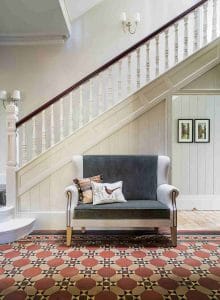
Every summer in Volos, I do the same evening walk. Down toward the sea, past the old neoclassical mansions with their tall doors and their tiled entrances.
Sometimes a door is open, and I slow down. I’m not proud of it. Marina pulls my arm and says “Mama, you’re staring again.” But those entrances! The patterned floors, the carved wood, the colored glass above the door throwing light everywhere.
Our home in Thessaloniki is not a Victorian house, and yours probably isn’t either. But the Victorian style is all about making the very first thing you see feel special. And you can borrow a lot of it, even in a small apartment hallway.
So I gathered my favorite Victorian entryway ideas. Some are big projects, and some cost less than a coffee and a koulouri.
1. Start with a patterned tile floor
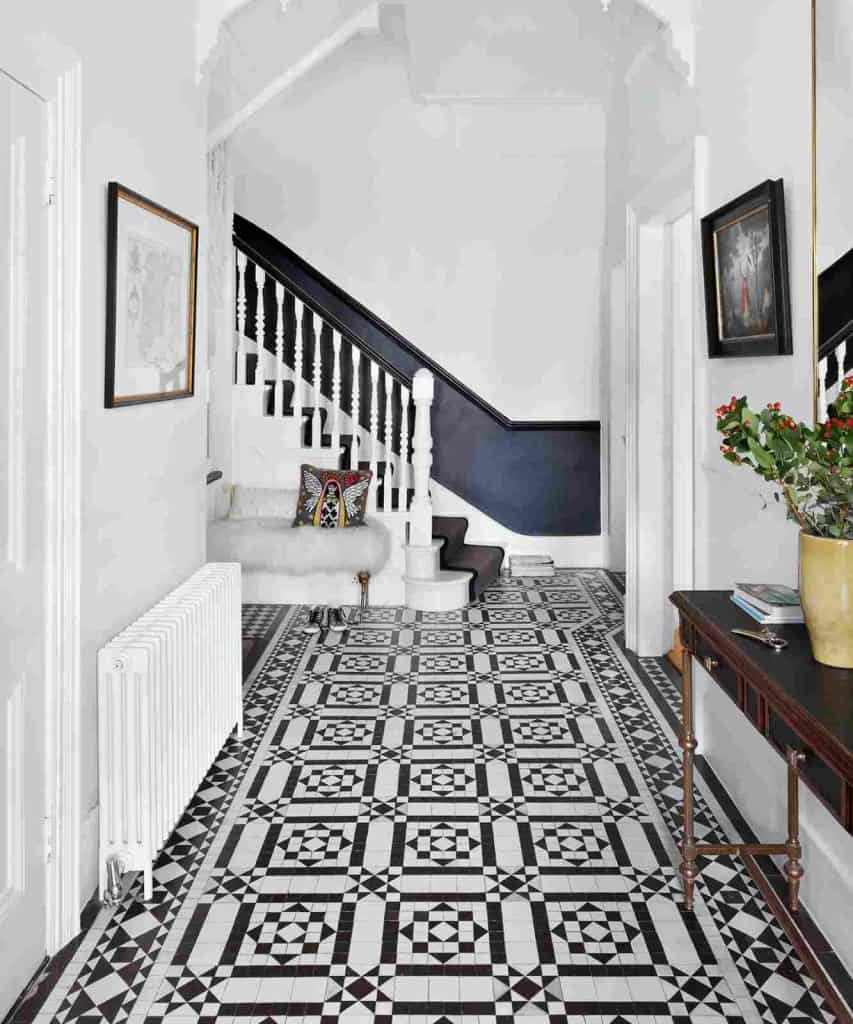
If there’s one thing that says “Victorian,” it’s the floor. Those geometric tiles in terracotta, black, cream and blue were laid in little pieces to make big patterns.
If you’re lucky enough to have original tiles, please, please keep them. Clean them, re-grout them, love them.
Starting from scratch? There are porcelain versions now that look almost like the real thing and are much easier to keep clean.
2. Or go classic black and white
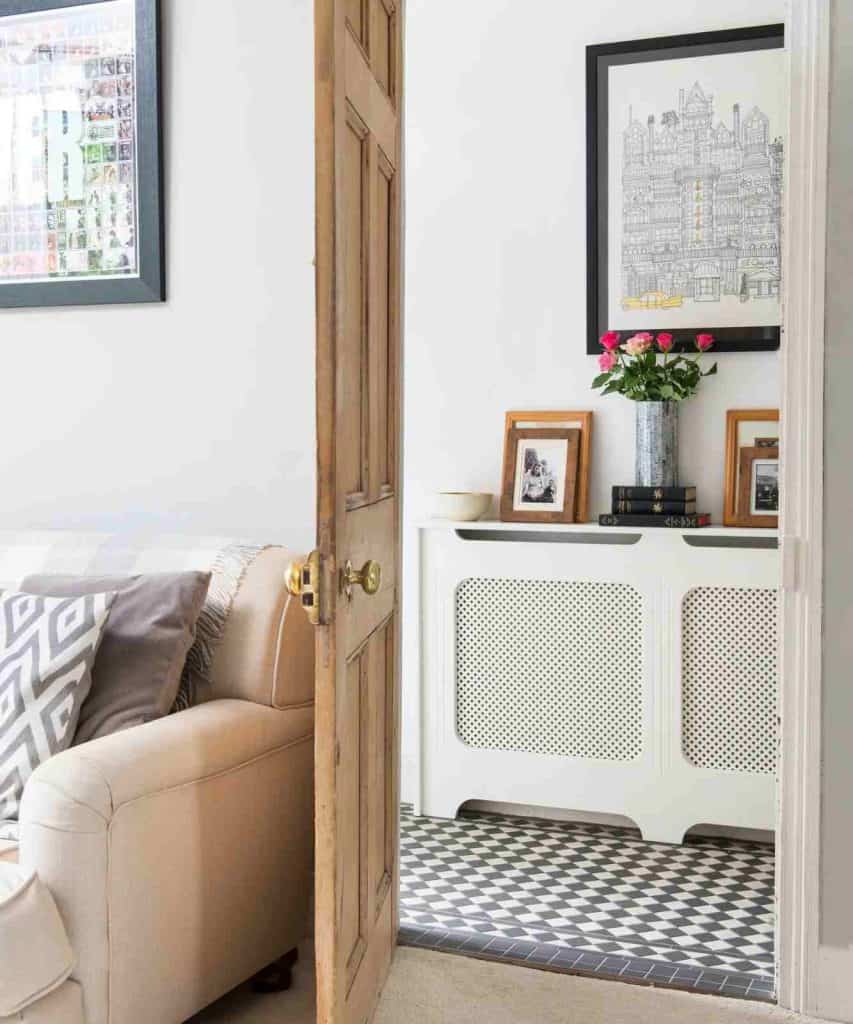
The checkerboard floor is the simpler cousin. Black and white tiles laid on the diagonal make even a narrow hallway look wider.
Marina calls these “chessboard floors,” and she wants one in her future house. She’s eleven, so we’ll see.
3. Make the front door the star
Victorian front doors were tall, heavy, and proud. Think deep paint colors, panels, and big brass hardware.
You don’t need a new door. A coat of deep green, oxblood, or navy plus a new knocker can change everything.
4. Add stained glass (or fake it)
Colored glass in the door, the side panels, or the window above the door is pure Victorian magic. When the afternoon sun hits it, your floor turns into a kaleidoscope.
Real stained glass is expensive. Stained glass window film is not. It peels and sticks right on, and many designs are based on real old patterns. I used a small piece on our bathroom window and nobody believes it’s a sticker.
(Optional image: create one in Ideogram with the prompt “Victorian front door with colorful stained glass panel, sunlight casting colored light on a tiled hallway floor, warm cozy photo”)
5. Let the old woodwork shine
Dark wood paneling, chunky trims, carved banisters. Victorian homes were full of it.
If your trim is wood, consider oiling it rather than painting over it. It adds so much warmth.
6. Go dark green
Deep greens are one of the most Victorian colors there is. Bottle green, forest green, olive. It feels rich and enveloping, like walking into a hug.
Don’t be scared that it’ll make the hallway look small. A hallway is a place you pass through, so it’s the best room to be brave.
7. Colour-drench the whole thing
Want to go all in? Paint the walls, the trim, and even the ceiling the same dark color. It’s called colour-drenching and it looks so cozy and moody.
This dark hallway makeover is the perfect example:
8. Add a dado rail
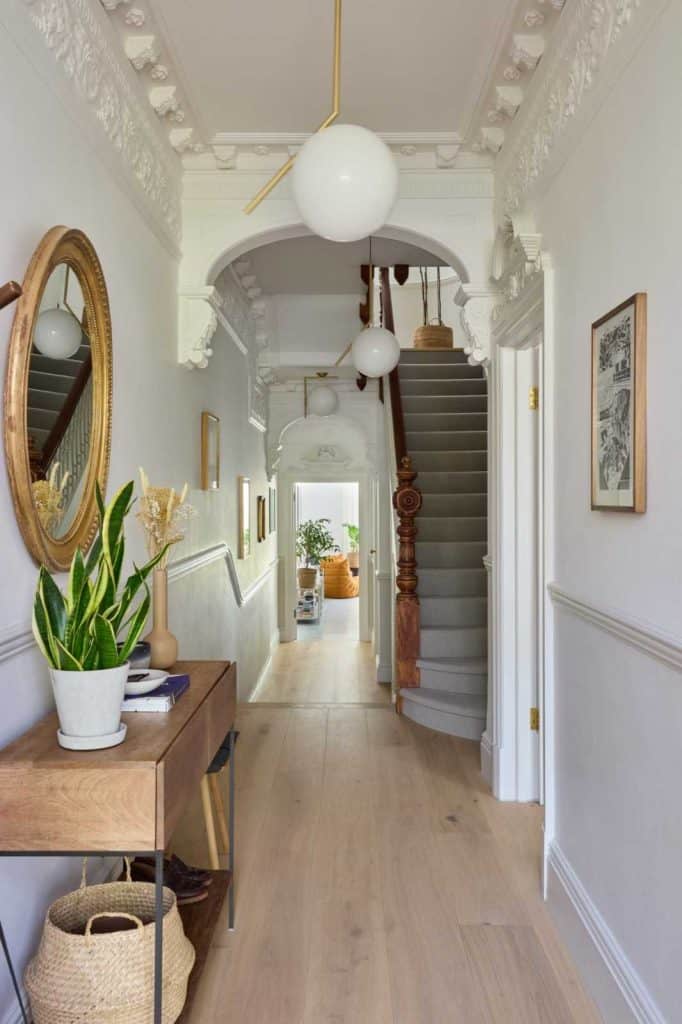
A dado rail is that strip of molding about a third of the way up the wall. The Victorians used it to protect walls from chair backs and swinging bags.
Below it, paint a darker color (or add paneling). Above it, go lighter or add wallpaper. My dad Sakis helped me put one up in our hallway. It took one Saturday and two arguments about the spirit level.
9. Patterned wallpaper
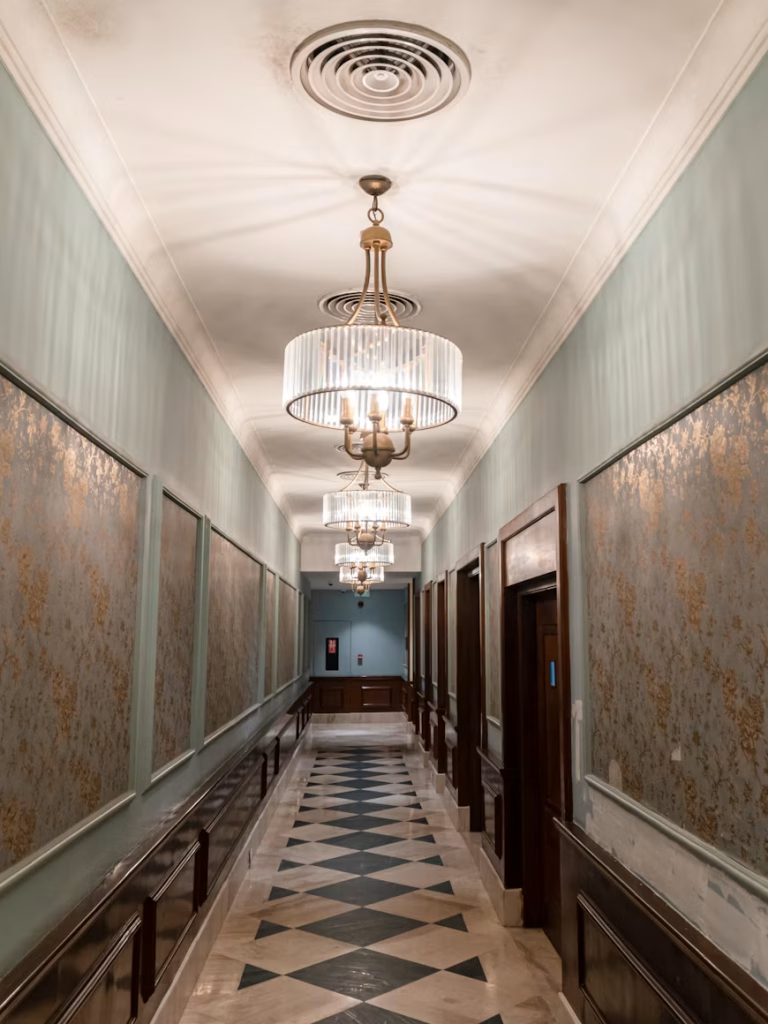
Damask, florals, William Morris-style leaves. Victorians loved pattern on pattern.
If a full hallway feels like too much, try wallpaper only above the dado rail. Or just on the wall where the stairs are.
10. Hang a chandelier
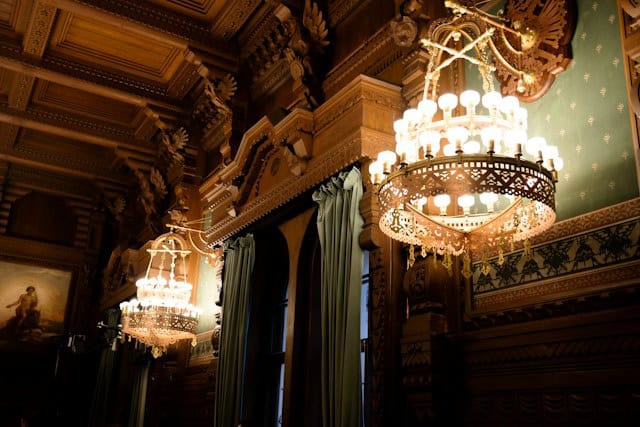
A hallway with a chandelier immediately feels grand. It doesn’t have to be crystal. Brass, glass, or even a secondhand one from a flea market will do the trick.
Add a plaster ceiling rose above it if you want the full look. They’re cheap and they hide old messy ceilings beautifully.
11. Brass wall sconces
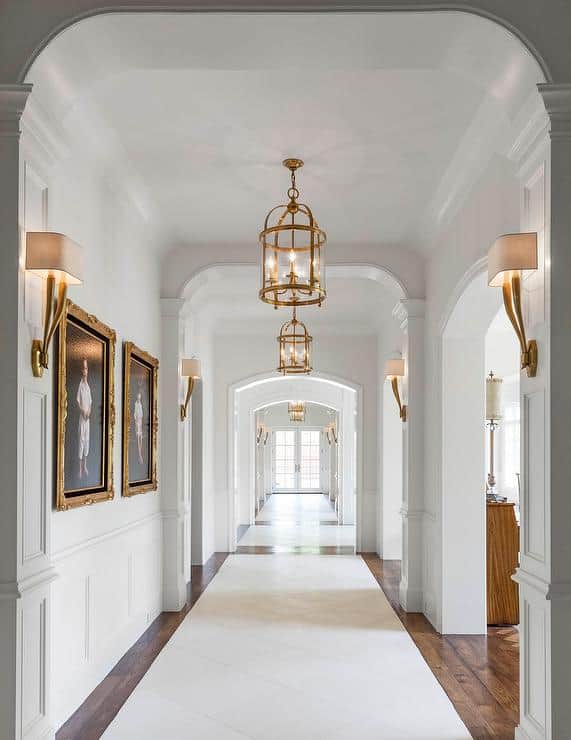
Two brass sconces on either side of a mirror. Instant Victorian.
They give a soft warm light, which is so much nicer than one harsh ceiling bulb when you get home at night. Plug-in sconces exist too, so no electrician needed.
🔥 Would you like to save this?
12. Give the staircase some love
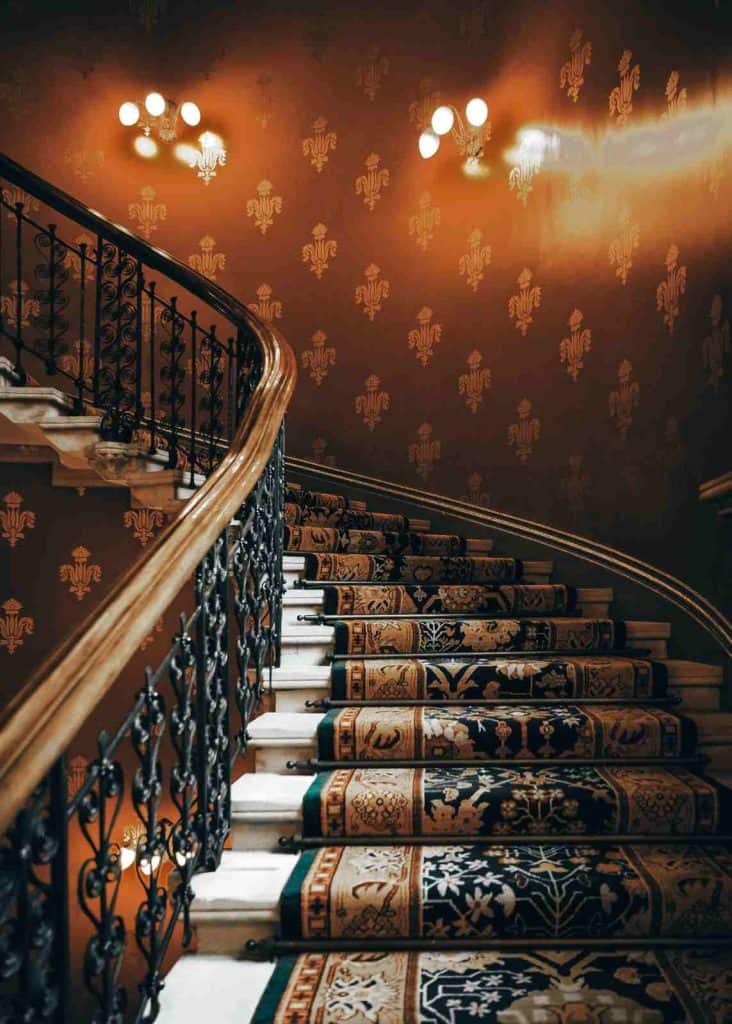
If your entryway has stairs, they’re probably the most dramatic thing in it. Ornate iron or carved wood banisters, a curved handrail, a big newel post at the bottom.
13. A patterned stair runner
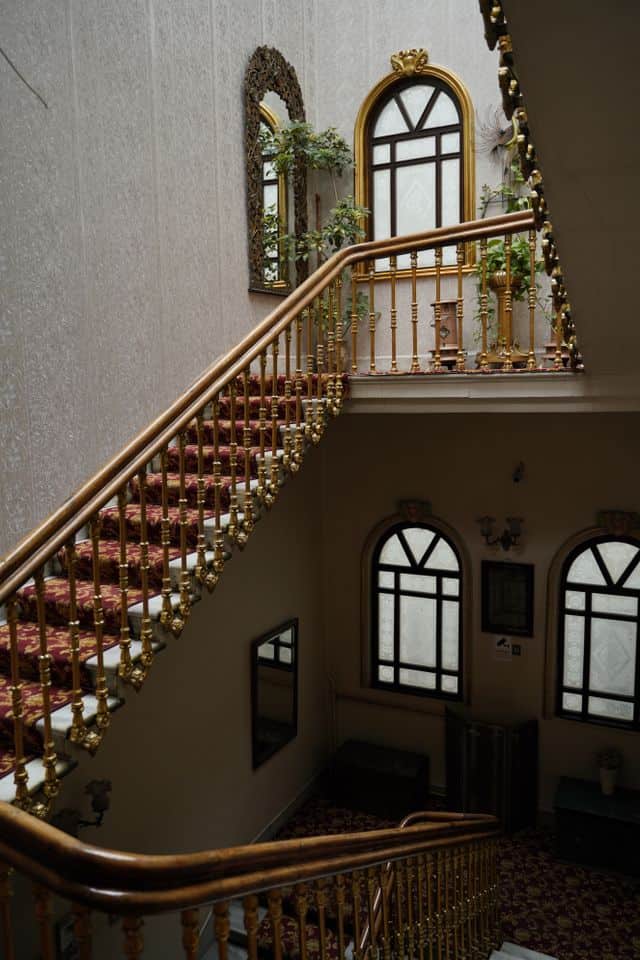
A runner with a border or a pattern softens the steps and makes them quieter (a big plus with kids running up and down).
Hold it in place with brass stair rods for that old-house detail.
14. Or keep it light and let the sun do the work
Victorian doesn’t have to mean dark! A light staircase with sunlight pouring in can feel just as charming.
15. A big, beautiful mirror
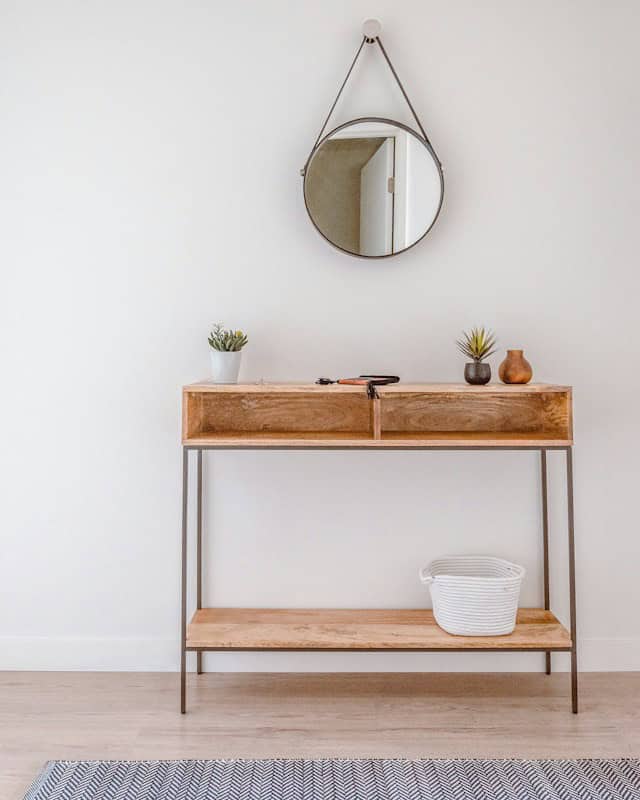
Gilded, carved, or dark wood. Hang it above a console or prop it against the wall.
A mirror bounces light around a dark hallway and gives you one last look before you leave the house.
16. A hall table
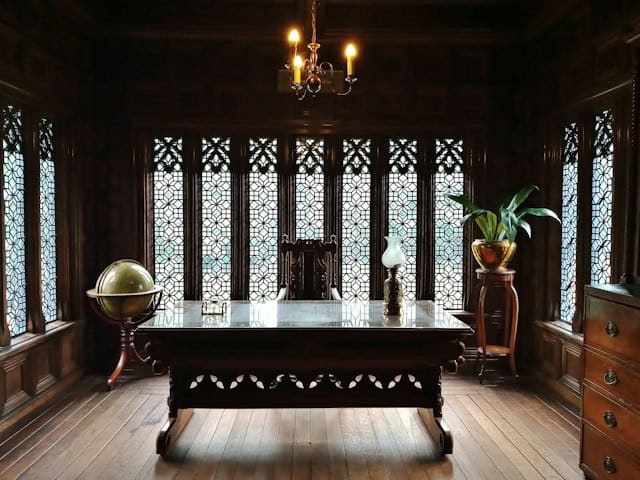
A wooden console or a small round table gives you a spot for keys, mail, and a vase of flowers. Look for turned legs or a marble top for the Victorian feel.
Flea markets are full of these. I found ours at the Sunday bazaar for €30, and Tasos carried it home on his shoulder through the whole street.
17. Somewhere to sit
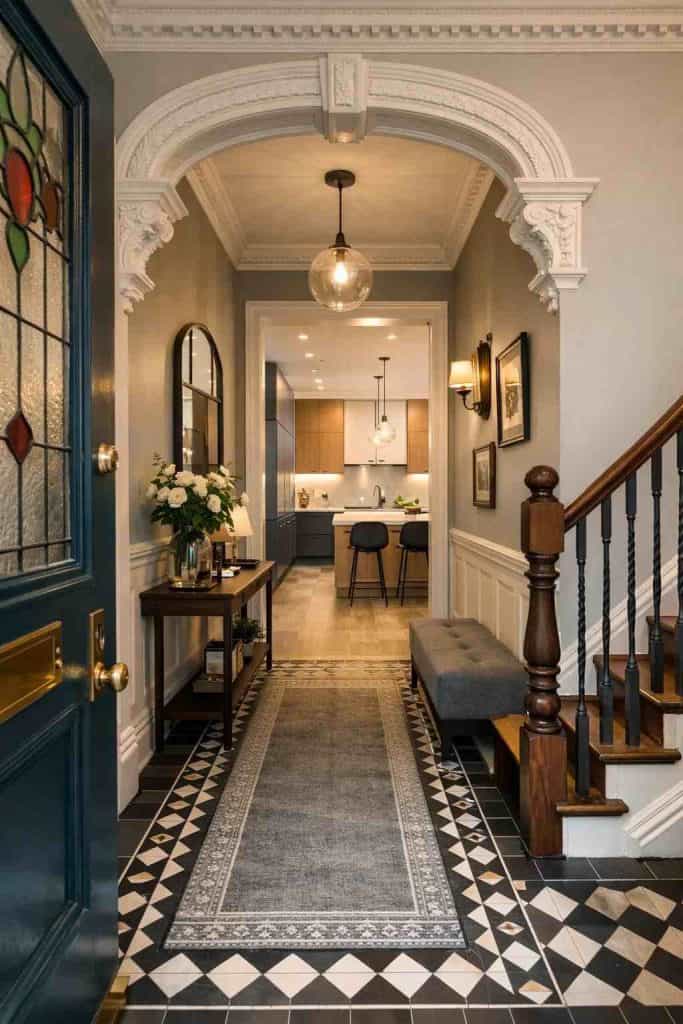
A hall chair, a little bench, or a pair of chairs. Victorians had hall chairs mostly for show (and for waiting visitors).
We use ours for putting on shoes, which is far less romantic.
18. Velvet and rich fabrics
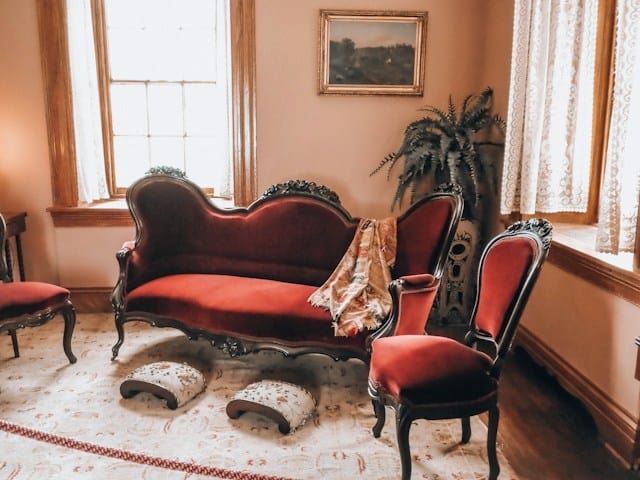
A velvet cushion on the hall bench, a fringed lampshade, heavy curtains on a door. Deep reds, golds, and greens.
You only need one or two touches. A little goes a long way.
19. A gallery wall of old frames
Mix old paintings, family photos, and little mirrors in mismatched gold and wood frames. Hang them close together. The Victorians never met a bare wall they liked.
I have a photo of my grandparents’ wedding in ours. Every guest stops to look at it.
20. A grandfather clock
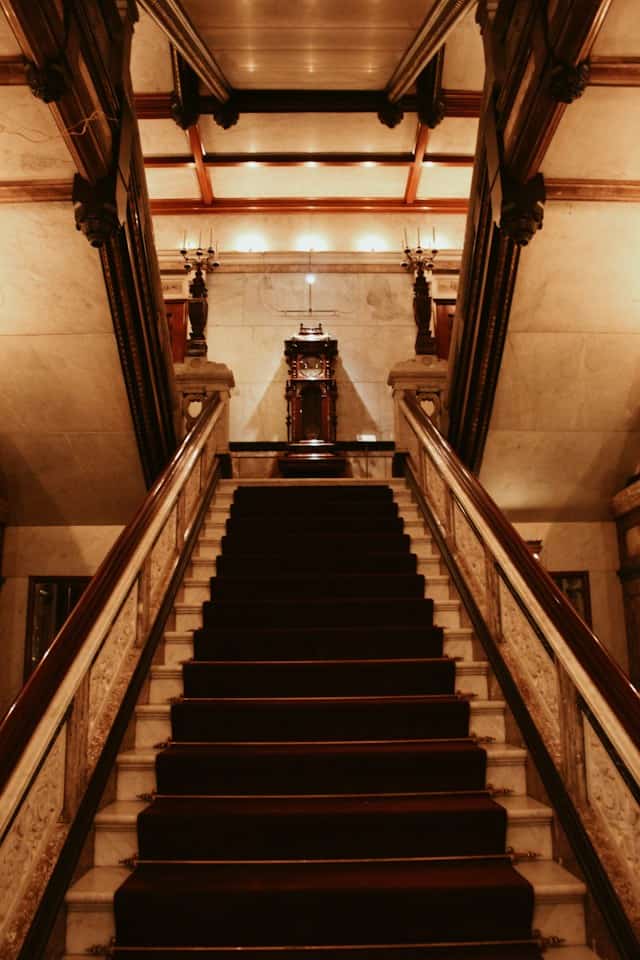
If you have the height, a tall clock in the hallway is wonderfully old-fashioned. If you don’t, a vintage wall clock gives the same feeling.
21. Smart storage that looks old
Coats, shoes, bags, umbrellas. The hallway has a job to do. Victorian-style coat hooks, a ceramic umbrella stand, or built-in cupboards under the stairs keep the clutter from taking over.
I love this hallway makeover plan with boot-room storage and a burgundy runner:
22. A big plant
Victorians were obsessed with houseplants. Potted palms, ferns, aspidistras on little stands.
A Boston fern in a pretty pot near the door feels so welcoming. Ferns like a bit of humidity and indirect light, so a hallway is often perfect.
Bonus: Getting the look in a small apartment
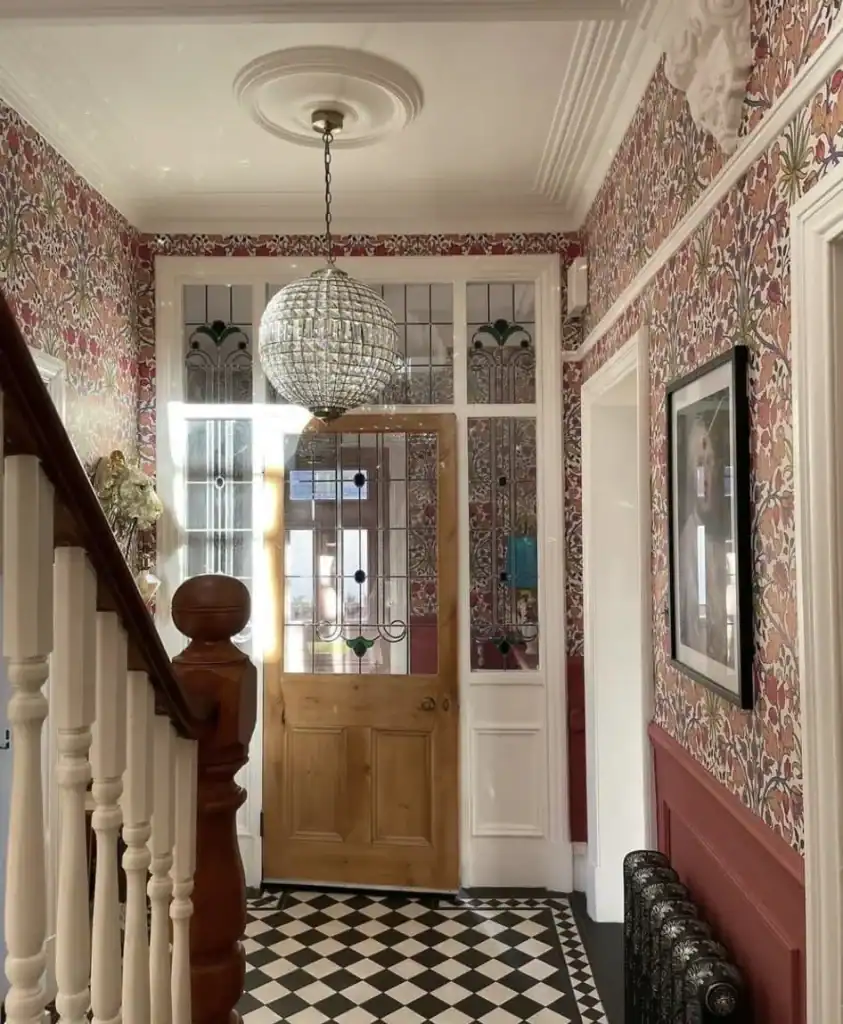
Most of us are working with a tiny entry, not a grand hall. Here’s what I’d do with a small space and a small budget:
- One dark wall instead of the whole hallway (€25 to €40 for paint)
- Stained glass window film on any glass door (€15 to €30)
- A secondhand mirror in a gold or wood frame (€20 to €50)
- One brass plug-in sconce (€30 to €60)
- A patterned runner rug (€40 to €80)
- A fern (€10)
That’s a whole new entryway feeling for under €200.
The thing I love most about Victorian entryways is that they say “welcome” before anyone says a word. They’re a little dramatic, a little over the top, and full of care.
You don’t need a mansion in Volos for that. Even one patterned rug and a warm lamp by the door can do it.
Which idea would you try first? I’m still working up the courage for the full dark green. Tasos says “maybe next year,” which in our house means “convince me.”

I’m Katerina Lithopoulou, co-creator of DIY Cozy Living. I’ve always loved the little things that make a space feel special. With a background in language and a passion for photography and cozy design, I enjoy turning everyday inspiration into simple ideas people can actually use.
My motto: “Cozy isn’t a trend — it’s a feeling.”
