
21 Modern Victorian Cozy Foyers with Contemporary Style

The foyer is the first thing anyone sees when they walk into your home.
And yet it’s one of the most neglected rooms in the house — usually a bare hallway with a coat hook and a forgotten pile of shoes.
I’ve been obsessed with Victorian foyer design for the past year, and what I love most about it is how naturally it blends with contemporary style. The dark walls, the pattern floors, the ornate mirrors — none of it feels dated when you pair it with clean lines and modern restraint.
These 21 ideas prove you can have the warmth and character of Victorian design without living in a museum. Every single one has been updated for the way we actually live today.
Window Seat Nook with Wrought Iron Console Table
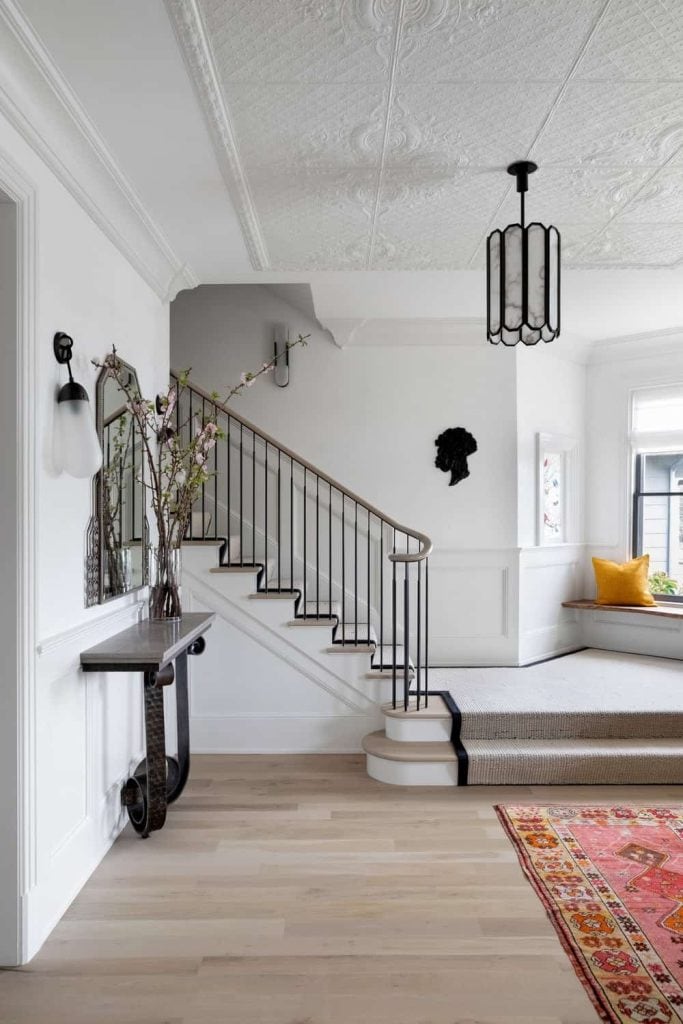
A window seat nook in a foyer is one of the most charming Victorian details you can have — and one of the most practical.
It gives guests somewhere to sit while removing shoes, and it gives you a dedicated spot to style with cushions, a throw, and a few books.
The wrought iron console table alongside it grounds the space in Victorian character without feeling heavy. Keep the cushion simple and the styling minimal so the architectural detail does the work.
People always ask: Can I add a window seat nook to an existing foyer? A simple wooden bench built into a shallow alcove — even a freestanding one positioned in front of a window — achieves the same effect without construction.
Variations:
- Add a Roman blind in a botanical print above the window seat
- Style the console table with a single lamp and one large ceramic vase
- Use a cushion in a deep Victorian jewel tone — forest green, navy, or burgundy
Black Tufted Bench by the Staircase
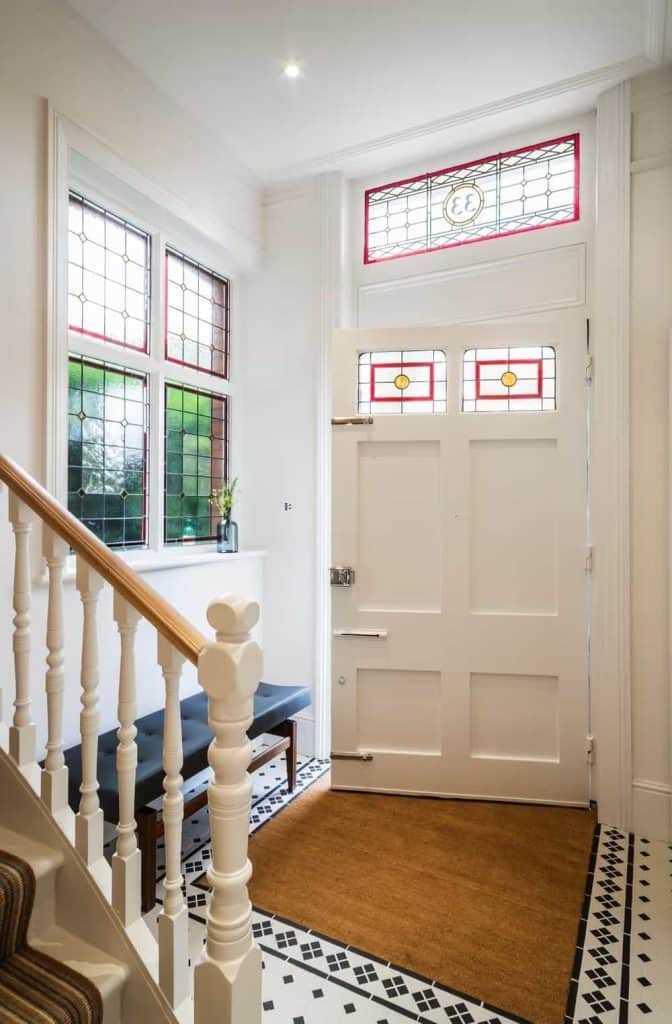
A tufted bench at the foot of the staircase is pure Victorian warmth — and in matte black, it reads as completely contemporary.
The tufting is the period detail. The matte black finish is what stops it from feeling like a period-drama film set.
Place it perpendicular to the staircase so it faces the front door, creating a natural landing spot the moment you walk in.
People always ask: What size bench works best in a foyer? Aim for a bench that’s roughly the same width as your staircase, or slightly narrower. Anything wider starts to block the flow of the hallway.
Variations:
- Try deep navy velvet tufting for a softer look
- Add a small woven basket underneath for shoes or scarves
- Place a single framed print above the bench to anchor the vignette
Blue Patterned Floor Tiles
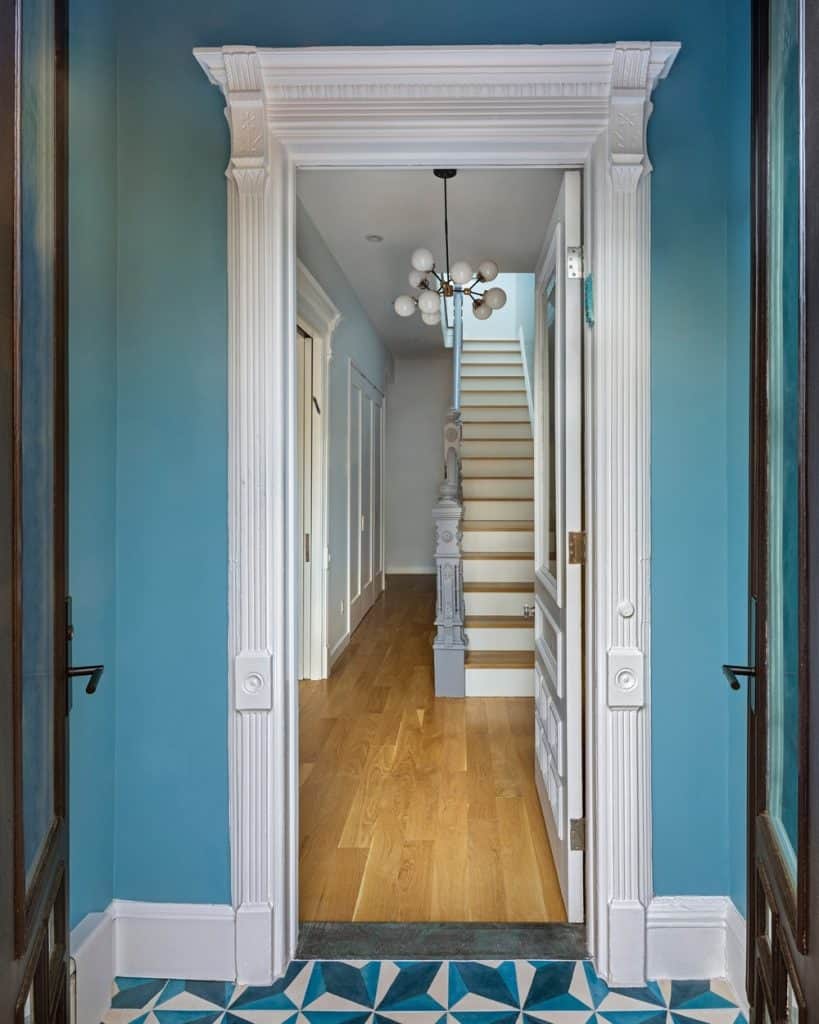
Blue patterned floor tiles make a Victorian foyer feel simultaneously historic and completely fresh.
The key is letting the floor be the statement and keeping everything else restrained. White walls, a simple mirror, nothing competing.
The cool blue tones work especially well in foyers that receive natural light from a front door window or sidelights.
People always ask: Can I tile over existing flooring? In many cases yes — but it’s a renovation. For a non-permanent version, large format peel-and-stick vinyl tiles in a similar pattern achieve a convincing result.
Variations:
- Navy and white classic Moroccan-inspired tile pattern
- Pale blue and cream geometric encaustic style
- Deep indigo and terracotta for a warmer, more eclectic take
Seating Area Under a Chrome Framed Mirror
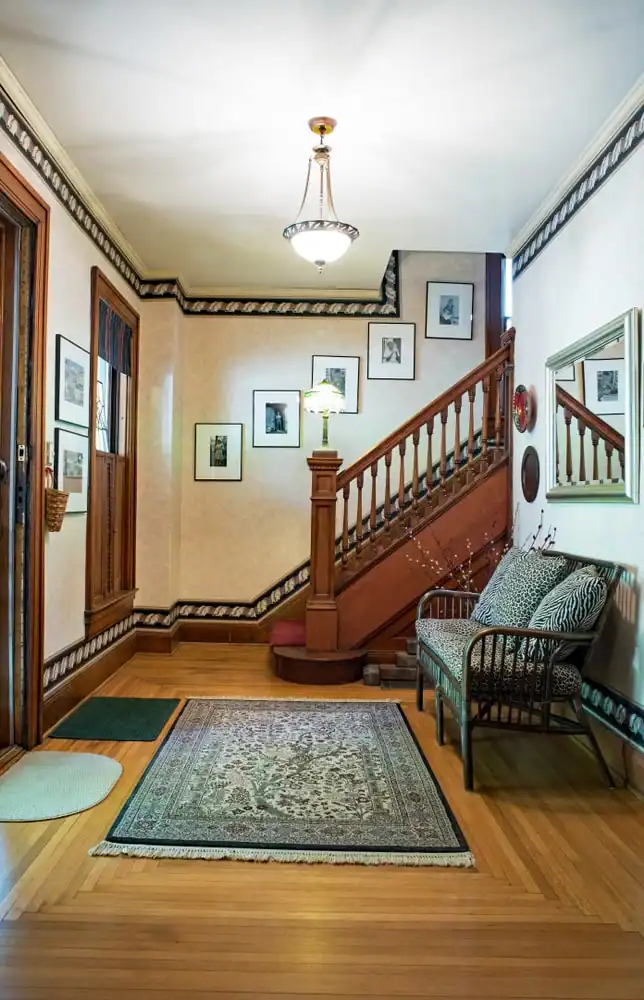
An oversized mirror is essential in any Victorian foyer — it reflects light, creates depth, and signals that this space has been thought about.
Chrome framing instead of gold keeps the look contemporary. The reflective finish does the same work as gilt but without the period heaviness.
Place a small upholstered bench or a pair of chairs beneath the mirror to create a proper seating moment. Even a foyer that’s too narrow for chairs can usually accommodate a slim bench.
People always ask: How high should I hang a foyer mirror? The center of the mirror should sit at approximately eye level — around 145–150cm from the floor. In a foyer with high ceilings, you can go higher to emphasize the vertical space.
Variations:
- A leaning oversized mirror for a more relaxed contemporary feel
- A round chrome mirror for a softer, more modern Victorian look
- Add a slim console table below the mirror for keys, a candle, and a small plant
Wooden Console Table with Round Floral Rug
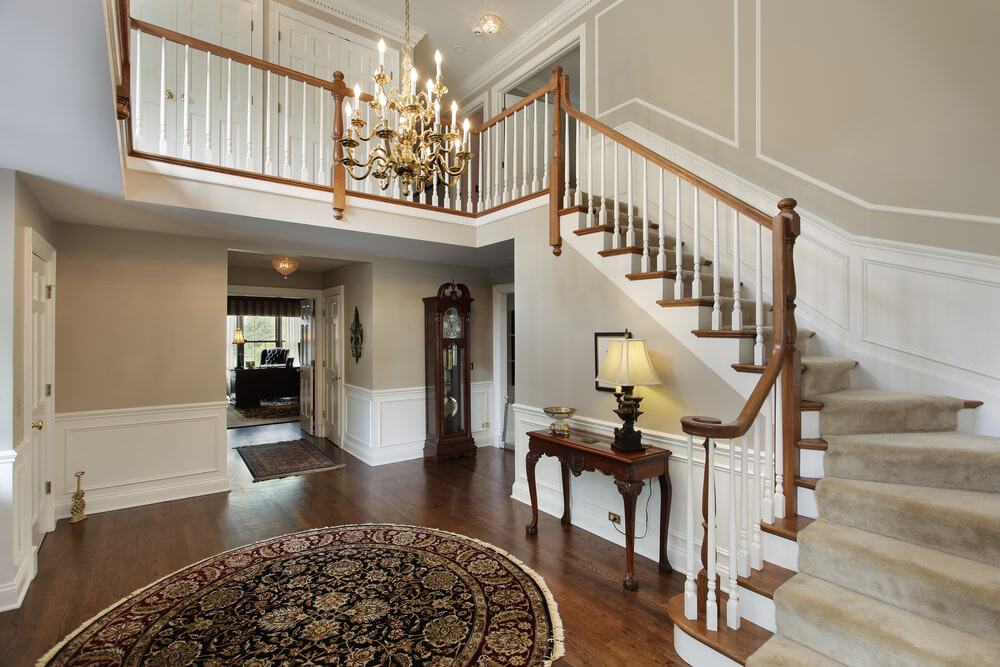
A warm wooden console table paired with a round floral rug is one of the coziest Victorian foyer combinations there is.
The round rug softens the hard lines of the hallway and introduces pattern in the most natural way. The wooden console brings warmth and practicality.
Style the console simply: a lamp, a small ceramic bowl for keys, and one trailing plant. The rug does the decorative work — the console just needs to hold its own.
People always ask: What size round rug works in a foyer? In a typical hallway, a 120–150cm diameter rug works well. Large enough to feel intentional, small enough not to crowd the space.
Variations:
- A deep botanical print rug in forest green and cream
- A blush and terracotta floral for a lighter, more feminine feel
- A Victorian-style Persian medallion rug if the foyer is wider
Grand Gilded Chandelier
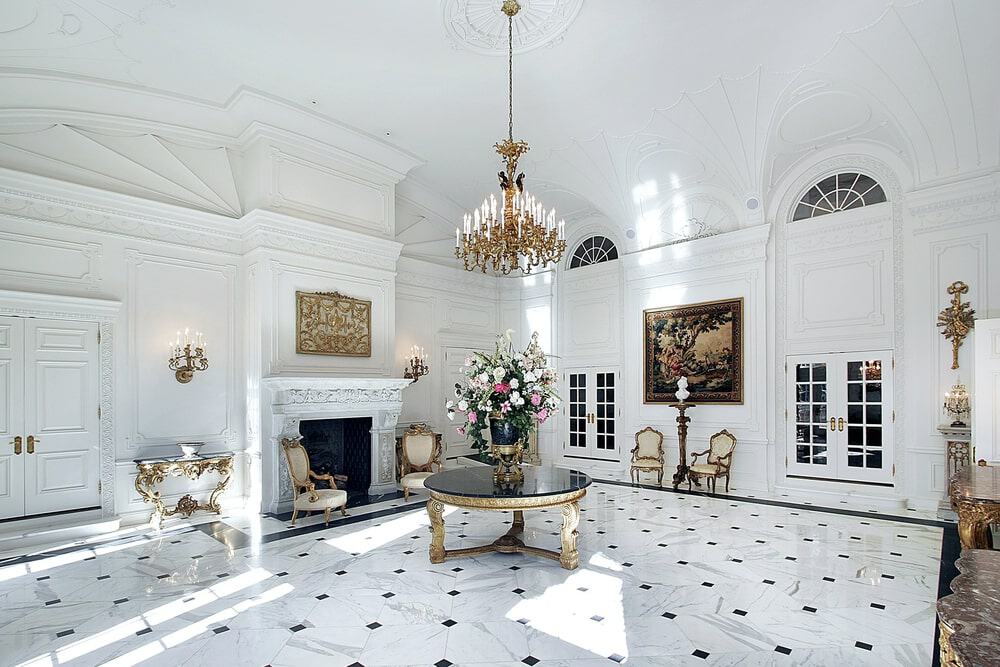
A grand gilded chandelier in a foyer is the most powerful Victorian statement you can make — and it works in contemporary homes too.
The trick is scale. A chandelier that’s proportional to the ceiling height looks elegant. One that’s too small for the space looks like an afterthought.
In a modern home with clean white walls, a gilded chandelier becomes the one ornate element in an otherwise restrained room — which makes it look very intentional.
People always ask: How do I choose the right chandelier size? Add the room’s length and width in feet. The result in inches is roughly the right diameter for your chandelier. A foyer with 8-foot ceilings needs a fixture with at least 50cm of clearance beneath it.
Variations:
- A candle-style gilded chandelier for the most traditional Victorian feel
- A modern gilded ring chandelier for a contemporary update
- An antique brass finish instead of bright gold for more subtlety
Unique Glass Pendant Light
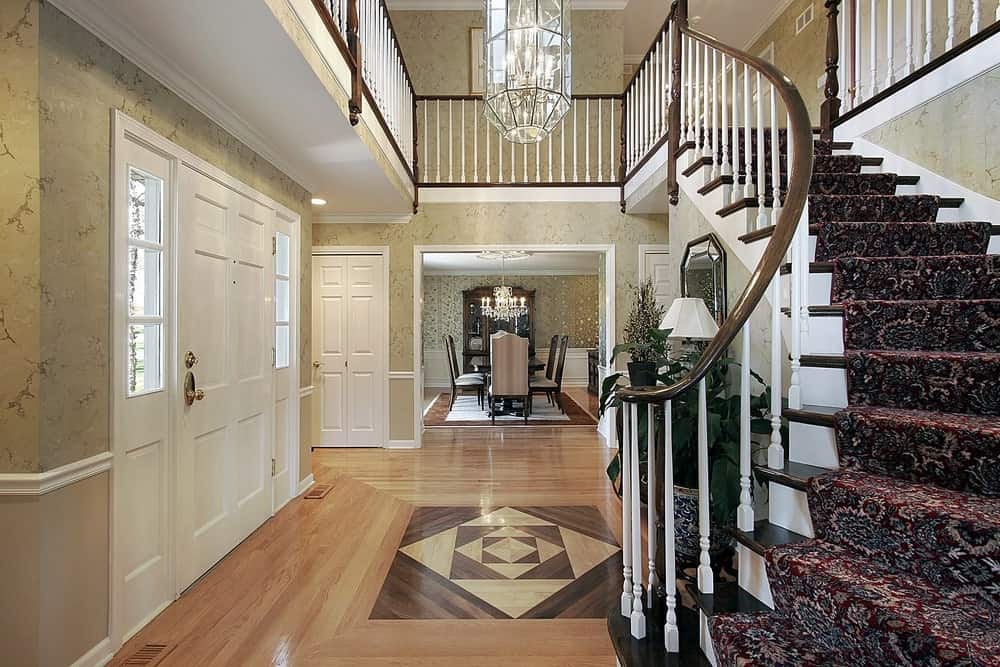
A single glass pendant light in a Victorian globe or lantern form is one of the most versatile foyer lighting choices.
It bridges Victorian and contemporary beautifully — the form is traditional, the clear glass keeps it light and modern.
Hang it low enough to feel like a piece of furniture rather than a ceiling fixture. In a foyer with standard ceiling height, aim for the bottom of the pendant at around 210–220cm from the floor.
People always ask: Can I use a pendant light in a foyer with a low ceiling? Choose a flush-mount or semi-flush fixture in a Victorian lantern style instead. The shape reads the same; the scale fits the space.
Variations:
- A black iron lantern pendant for a moodier Victorian feel
- A milk glass globe pendant for soft, diffused light
- A cluster of three smaller globe pendants hung at different heights
Checkered Flooring in a Beige Foyer
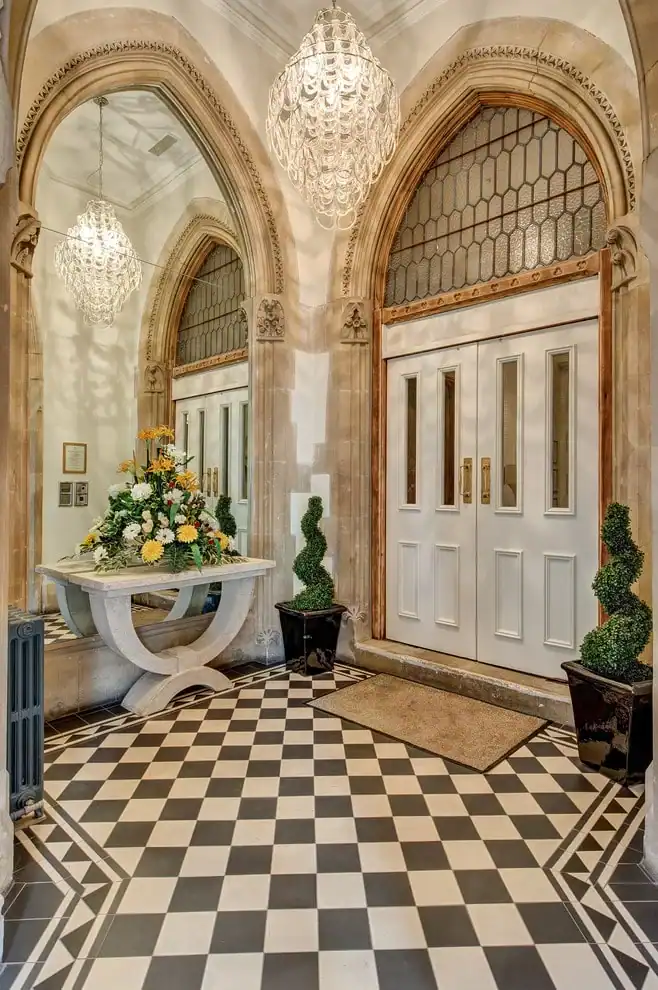
Black and white checkered flooring in a Victorian foyer is one of those classic combinations that never actually goes out of style.
The beige walls are what makes this contemporary. Warm neutral walls with a graphic black and white floor creates a balance that feels curated rather than costume.
Keep accessories in warm tones — brass hardware, a wooden console, a cream runner on the staircase — to prevent the floor from making the space feel cold.
People always ask: What size check works best in a foyer? Larger tiles (30x30cm or bigger) read as more modern. Smaller tiles (15x15cm) read as more traditionally Victorian. Choose based on the ceiling height — taller ceilings can handle smaller pattern repeat.
Variations:
- Black and white marble checkerboard for a more luxurious version
- Navy and white for a softer, less stark contrast
- Dark charcoal and cream instead of true black and white for a warmer feel
Frosted Glass Chandelier over Round Center Table
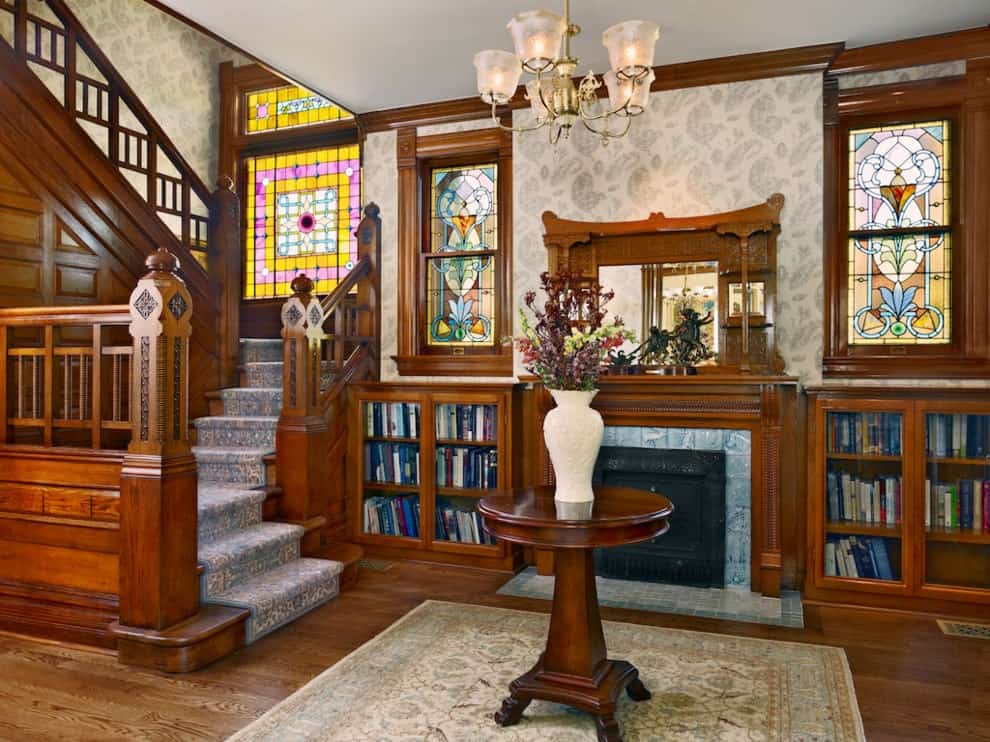
A round center table in a foyer is a Victorian grand-house detail that works surprisingly well in contemporary homes.
It gives the foyer a sense of ceremony — a destination rather than just a passageway. Style it with a single large vase of flowers or a sculptural object.
The frosted glass chandelier directly above it creates a soft, diffused light that’s warm and flattering. Unlike a crystal chandelier, frosted glass reads as quietly elegant rather than overtly traditional.
People always ask: Do I need a large foyer for a center table? A round pedestal table with a 60–70cm diameter works in most foyers. Keep the table slim and avoid anything with legs that spread wide.
Variations:
- A marble-topped center table with a brass base
- A simple wooden drum table for a more relaxed feel
- Style the table seasonally — flowers in spring, dried botanicals in autumn
Pattern Tiled Flooring with Yellow Walls
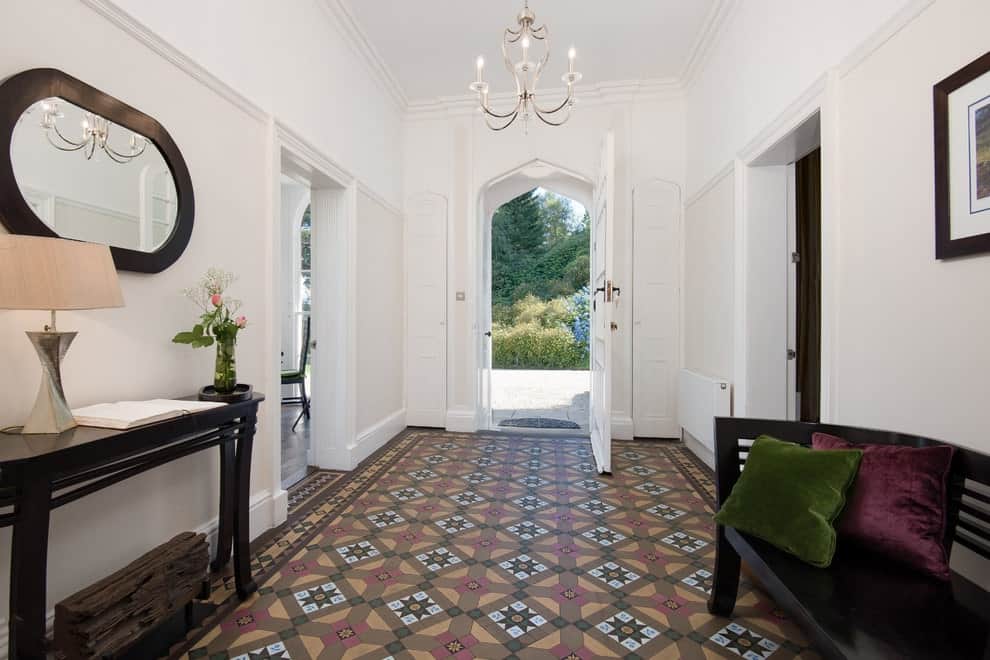
Yellow walls in a Victorian foyer might sound bold, but paired with a patterned tile floor, it looks genuinely beautiful.
The yellow brings warmth and a sense of welcome that most foyers completely lack. It reads as generous and a little unexpected — exactly the right first impression.
Choose a warm, deep yellow rather than a bright primary tone — think mustard, ochre, or the warm yellow of aged parchment.
People always ask: Won’t yellow walls make a foyer feel smaller? Warm colors like yellow and ochre actually make small spaces feel cosier rather than smaller. It’s cool colors that can make a narrow hallway feel like a corridor.
Variations:
- Deep ochre walls with a black and white encaustic floor
- Pale primrose yellow for a lighter, more airy version
- Combine with dark wood furniture for a rich, warm contrast
🔥 Would you like to save this?
Striped Bench and Semi-Circular Console Table
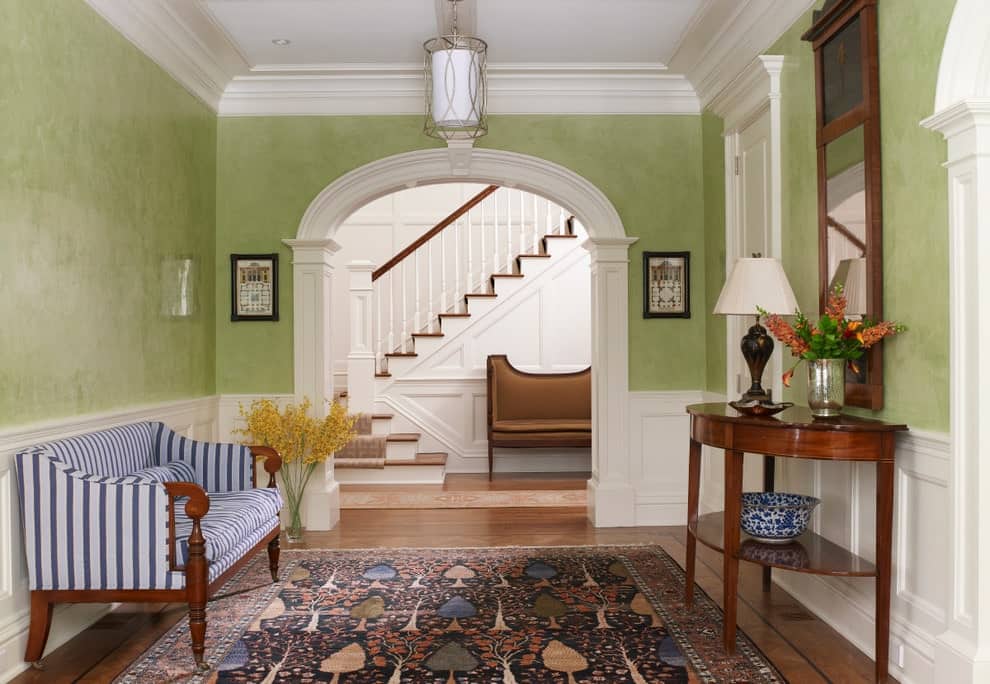
A striped cushioned bench paired with a semi-circular console table is a very particular Victorian combination — and it looks completely at home in a modern foyer.
The curved console table echoes the architecture of Victorian entrance halls without needing ornate carving or heavy detailing. A clean semi-circle in painted wood or marble is elegant and contemporary at the same time.
The striped bench in front of it adds pattern without adding visual complexity.
People always ask: Where do I find a semi-circular console table? Look for “demi-lune console table” — this is the correct furniture term. They’re widely available in everything from very ornate carved wood to simple painted MDF.
Variations:
- Stripe the bench cushion in black and white for a graphic, modern feel
- Try a marble-topped demi-lune with a painted base
- Add a round mirror above the console to echo the curved shape
Gold Patterned Wallpaper with Red Carpet
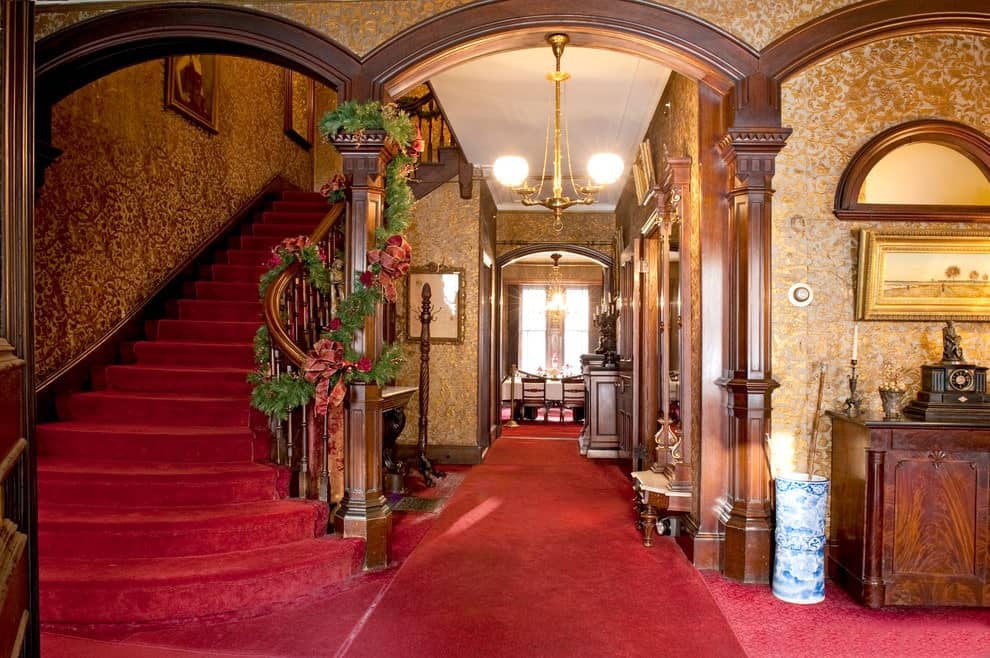
Gold patterned wallpaper and a red stair carpet is one of the most dramatically Victorian combinations on this list — and one of the most beautiful.
The gold wallpaper creates warmth and richness on every surface. The red runner on the staircase adds energy and movement upward through the house.
This look needs confidence to execute. Commit fully and keep everything else simple: white woodwork, clear glass lighting, minimal accessories.
People always ask: How do I stop gold wallpaper from looking dated? Choose a graphic or botanical pattern rather than a floral damask. The pattern scale and style is what determines whether wallpaper reads as contemporary or period.
Variations:
- Deep bronze and cream geometric wallpaper for a more subtle version
- Swap the red runner for a deep emerald green for a richer, more contemporary feel
- Use the gold wallpaper on one wall only as an accent if full coverage feels too much
Brass Framed Artwork
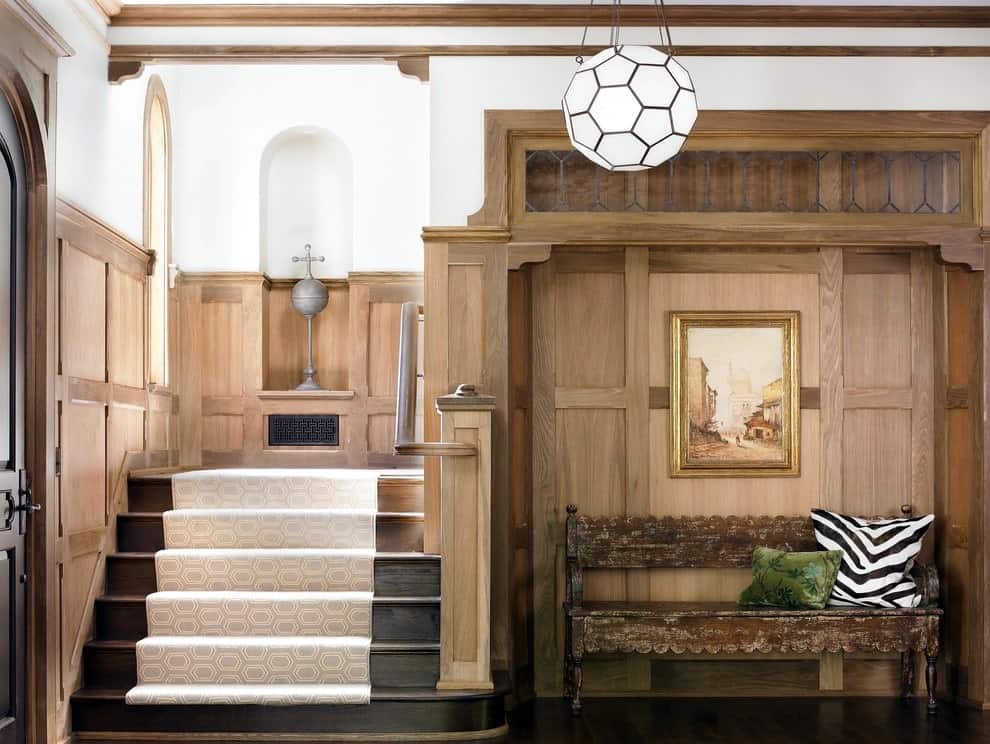
A foyer wall hung with brass-framed artwork immediately signals that someone with taste lives here.
The brass frames are the Victorian detail. The artwork itself can be completely contemporary — abstract prints, photography, modern illustration all look beautiful in antique brass frames.
Group three or five frames together in different sizes for a gallery wall feel, or hang one large piece as a single statement.
People always ask: Does all the artwork need to be in matching frames? For a cohesive Victorian look, yes — all brass or all dark wood. Mixing frame materials in a gallery wall creates a more casual, collected feel that works less well in a formal foyer.
Variations:
- Large-format botanical print in a single oversized brass frame
- A gallery of five brass-framed family photographs for a personal touch
- Mix in one ornate antique frame with simpler modern ones for contrast
Green Velvet Stair Runner
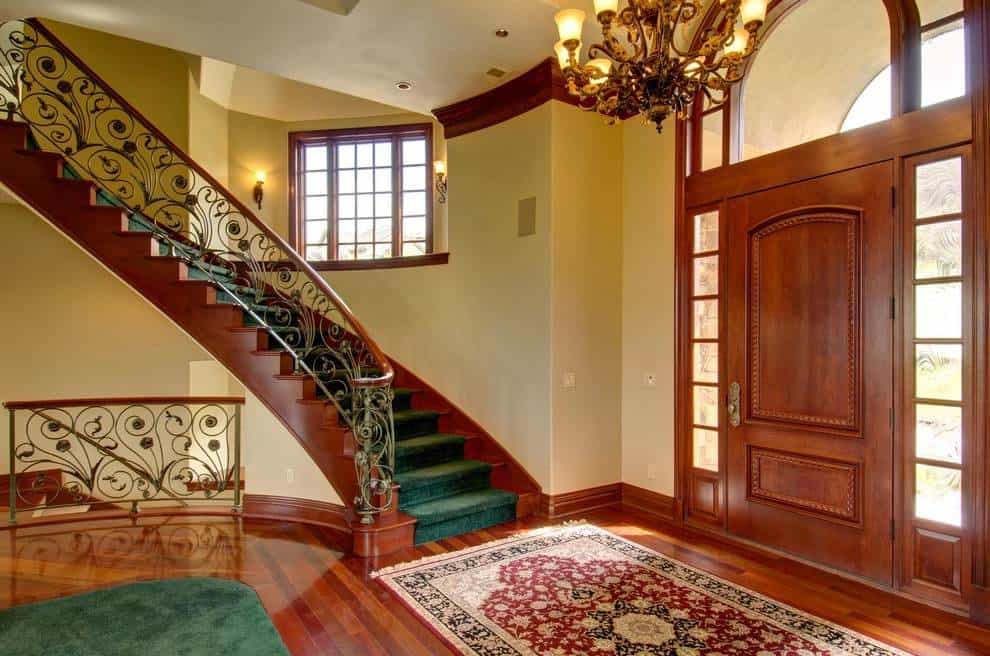
A deep green velvet stair runner is one of the most luxurious Victorian details you can add to a home — and it’s completely removable.
The velvet pile catches light differently with every step, creating movement and richness going up the staircase. Deep jewel green — hunter, forest, or emerald — works best.
Pair it with brass stair rods for the authentic Victorian installation method. The rods hold the runner in place and add another layer of period detail.
People always ask: Is velvet practical for a stair runner? Cut-pile velvet is more durable than loop pile and handles foot traffic well. Look for a velvet runner with a natural or synthetic backing for stability on the stairs.
Variations:
- Deep navy velvet for a cooler, more contemporary feel
- Burgundy or wine red for the most traditionally Victorian look
- A velvet runner in forest green with a gold border for maximum detail
White Wainscoting with Yellow Floral Wallpaper
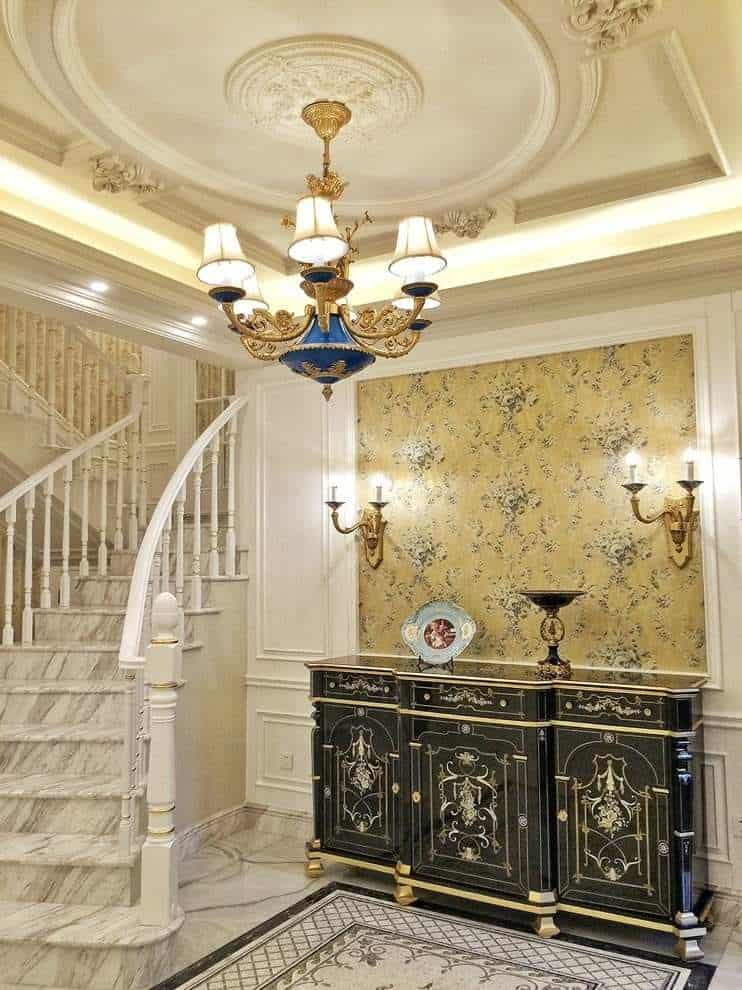
White wainscoting with yellow floral wallpaper above it is the most cheerful version of the Victorian foyer — and the coziest.
The wainscoting provides the architectural structure that Victorian interiors are built on. The floral wallpaper above it brings color, pattern, and warmth.
This combination works in any foyer size. In a narrow hallway it makes the space feel like a proper room rather than a corridor.
People always ask: How high should wainscoting go in a foyer? Traditionally, wainscoting sits at chair-rail height — roughly 90–100cm from the floor. In a foyer with high ceilings, you can push it to 120cm for a grander feel.
Variations:
- White wainscoting with a deep botanical wallpaper in forest green
- Painted wainscoting in sage green with a cream floral above
- Add a picture rail at ceiling height for the full Victorian wall treatment
Velvet Red Stair Runner in a White Foyer
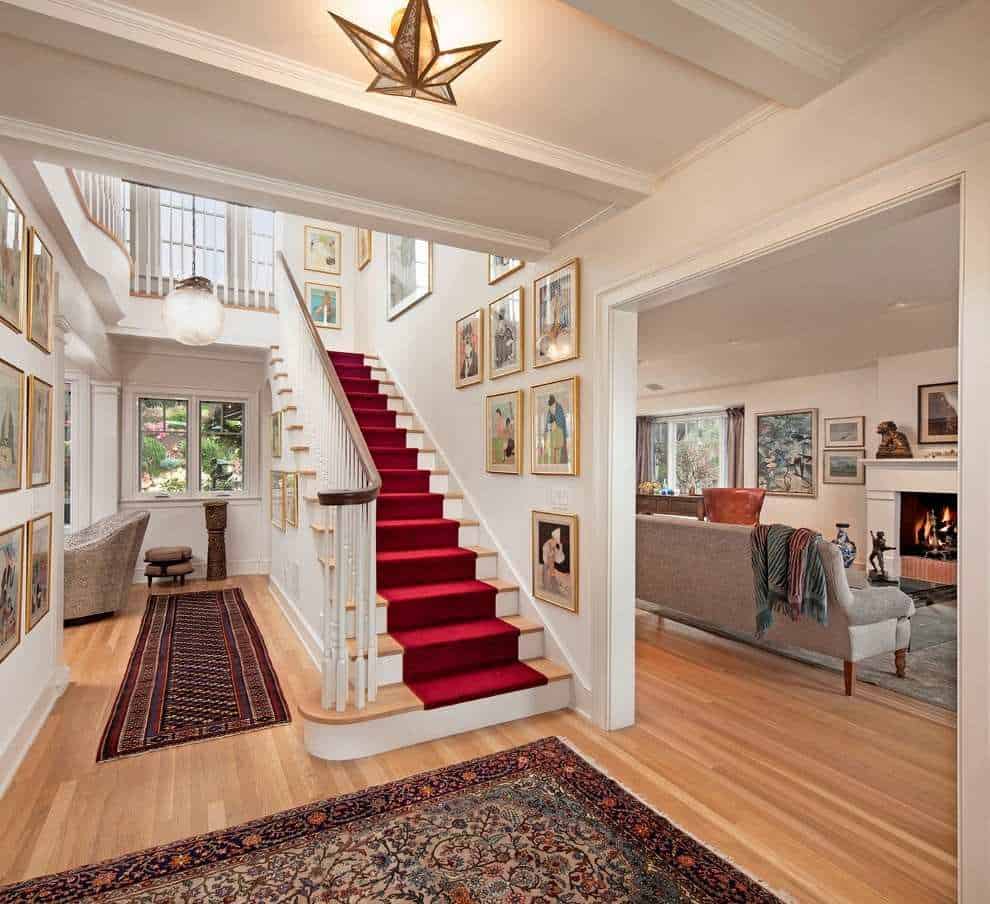
A velvet red stair runner in an all-white foyer is the most dramatic contrast on this list — and it is extraordinary.
Everything else white: walls, woodwork, balusters, ceiling. Then the red runner running up the center of the staircase like a declaration.
This is the foyer that makes people stop at the bottom of the stairs and look up.
People always ask: Won’t a red runner look too Christmas-like? A deep, saturated red — think crimson or claret rather than bright holly red — reads as grand and Victorian rather than seasonal. The key is choosing the right shade.
Variations:
- Add brass stair rods for the authentic period finish
- Use a narrow runner (rather than wall-to-wall) to show the stair wood on either side
- Pair with a single large artwork in a gold frame on the landing wall
Classic Green Wallpaper Foyer
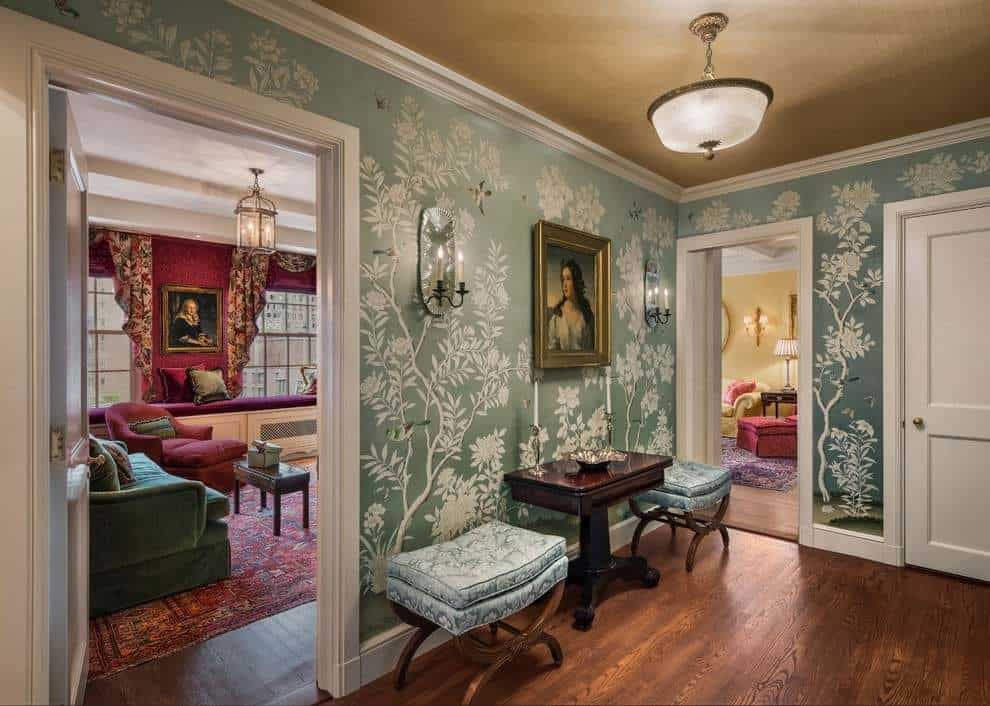
A foyer clad entirely in deep green wallpaper is one of the most confident design decisions you can make.
Dark green was one of the most beloved Victorian interior colors — rich, botanical, and deeply elegant. In a contemporary home with clean trim and simple furniture, it feels completely current.
The green walls make everything else in the room look better: brass fixtures glow, wooden furniture warms, white woodwork sharpens.
People always ask: Is dark wallpaper a mistake in a small foyer? No — dark colors in small spaces create intimacy rather than claustrophobia. A small foyer with deep green wallpaper feels like a jewel box. A small foyer with white walls just feels small.
Variations:
- Deep bottle green with a subtle texture for a contemporary feel
- A botanical print in dark green for maximum Victorian character
- Forest green with a gold leaf or fern motif for a more elaborate version
Luxurious Marble Flooring
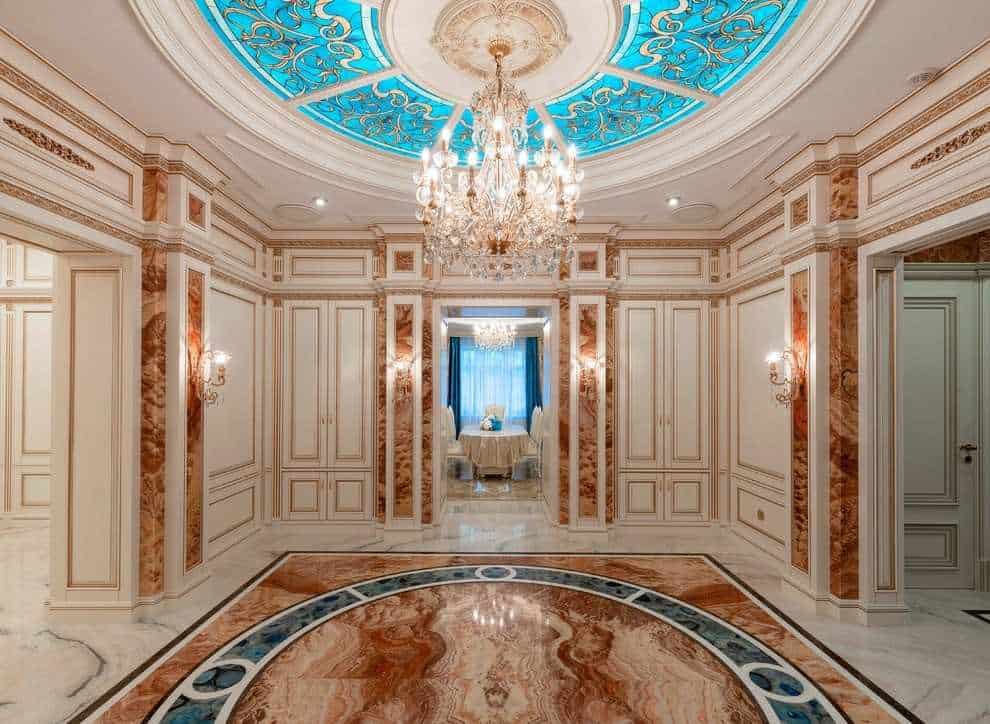
Marble flooring in a Victorian foyer is pure grandeur — and it works just as beautifully in a contemporary home.
The cool stone underfoot, the natural veining, the sense of permanence — marble delivers all of this without any styling effort at all.
Pair it with warm elements elsewhere to prevent the space from feeling cold: a wooden console, a richly colored runner on the staircase, warm-toned lighting.
People always ask: Is marble flooring practical in a foyer? Marble is durable but requires sealing and careful maintenance — it marks with acidic liquids and can scratch. For a busy family foyer, consider marble-effect porcelain tiles: the look is virtually identical and the maintenance is minimal.
Variations:
- Calacatta marble in cream and gold veining for a warm, luminous look
- Nero Marquina black marble for a more dramatic Victorian feel
- Marble-effect large format tiles for a budget-friendly version
Stained Glass Panels Around the Front Door
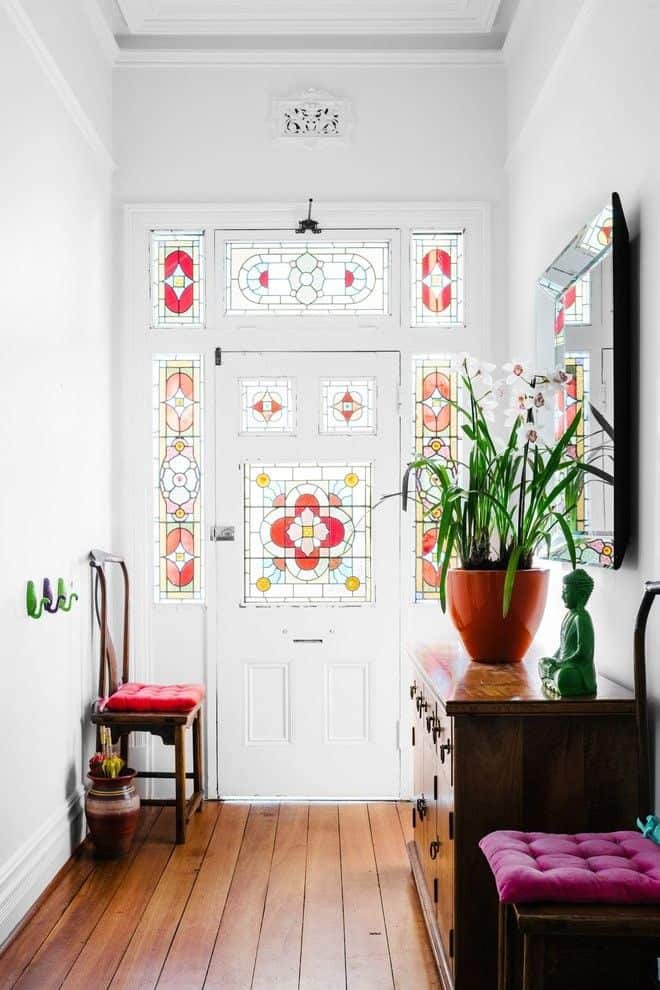
Stained glass panels around a Victorian front door are one of the most beautiful original architectural details a house can have.
If your home already has them, treat them as the centrepiece of the foyer and design everything else around them. Let the colored light they cast onto the floor inspire your palette.
If your home doesn’t have them, stained glass film applied to existing sidelights achieves a similar effect at very low cost.
People always ask: Can I add stained glass to an existing front door? Yes — many glaziers can replace plain glass panels in an existing door with stained or leaded glass. It’s one of the most impactful and permanent Victorian updates you can make to a foyer.
Variations:
- Classic red, blue, and amber Victorian floral stained glass
- Simple geometric leaded glass for a more contemporary feel
- Frosted glass with a small colored border for a subtle period reference
Marble Checkered Flooring
Marble checkered flooring is the most luxurious version of the classic Victorian checkerboard pattern.
The natural variation in marble — the veining, the slight tonal shifts between tiles — gives a warmth and depth that ceramic checkerboard simply can’t replicate.
In a foyer, this floor does all the work. Everything else — walls, lighting, furniture — can be completely simple and the room still looks extraordinary.
People always ask: What colors work best with marble checkered flooring? Warm whites and creams for the walls, brass for the fixtures, and dark wood for any furniture. Avoid cool grays and chrome — they fight with the warmth of the marble.
Variations:
- Carrara white and black absolute marble for the classic combination
- Cream and dark grey marble for a softer contrast
- Herringbone pattern in two marble tones as an alternative to checkerboard
Lovely Floral Wallpaper Backdrop
Full-wall floral wallpaper in a Victorian foyer is the warmest, most welcoming first impression a home can make.
The key is choosing a floral that has depth and detail rather than a flat graphic print. Victorian botanical florals — with leaves, stems, berries, and layered flowers — have a richness that simpler patterns lack.
Hang a single ornate mirror and a simple console table against it. The wallpaper is the art. Everything else is just framing it.
People always ask: Won’t floral wallpaper make a foyer feel dated? A Victorian botanical floral in a deep, rich colorway — dark green, navy, or charcoal — feels completely contemporary. It’s pale, fussy florals in pastel tones that can read as dated. Go bold in both color and scale.
Variations:
- Deep navy botanical wallpaper with gold leaf detailing
- Forest green with blush pink florals for a feminine-meets-Victorian feel
- A large-scale tropical leaf print for a more maximalist interpretation

I’m Katerina Lithopoulou, co-creator of DIY Cozy Living. I’ve always loved the little things that make a space feel special. With a background in language and a passion for photography and cozy design, I enjoy turning everyday inspiration into simple ideas people can actually use.
My motto: “Cozy isn’t a trend — it’s a feeling.”
