
The Victorian Bedroom Ideas That Are Coming Back and Looking Better Than Ever


I’ve always been drawn to Victorian bedrooms — but for a long time I didn’t know how to make one work without crossing into costume territory.
There’s a version of Victorian style that feels like you’ve walked into a museum. Heavy, dusty, and committed to excess in all the wrong ways. And then there’s a version that feels like the most beautiful, considered bedroom you’ve ever slept in.
The difference is almost always restraint.
Victorian style is built on layers — but knowing which layers to add and which to leave out is what separates a room that feels romantic from one that feels overwhelming.
I spent a long time studying the rooms I actually wanted to be in.
Here is everything I learned.
What Makes a Bedroom Feel Victorian
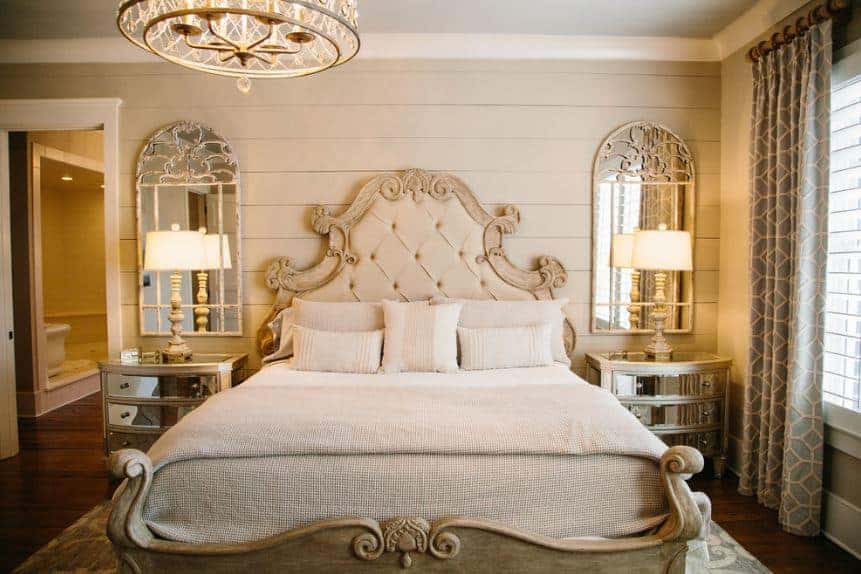
Victorian design is often misunderstood as simply “dark and heavy.” That’s only part of the story — and honestly not the most interesting part.
The Victorian era had an obsession with beauty, craft, and detail. Every object was expected to be decorative as well as functional. Patterns appeared on everything: wallpaper, textiles, carpets, ceiling moldings, furniture legs.
But it also had a deeply romantic quality. Soft blush tones, floral wallpaper, candlelight — the Victorian bedroom was designed for intimacy and comfort as much as for drama.
The key elements are rich textiles in velvet, silk, and heavy cotton. Ornate furniture with carved details and turned legs.
Pattern layered on pattern within a shared palette. And warm, directional lighting — the kind that makes everything glow rather than simply illuminate.
Get those four things right and the rest follows naturally.
The Softer Side: Romance Without the Drama
The most accessible entry into Victorian style is through its softer palette. Blush, cream, dusty rose, and sage.
These are rooms that feel romantic without feeling dark — and they’re usually the ones people can imagine actually sleeping in every night.
The Rosy Reverie Suite
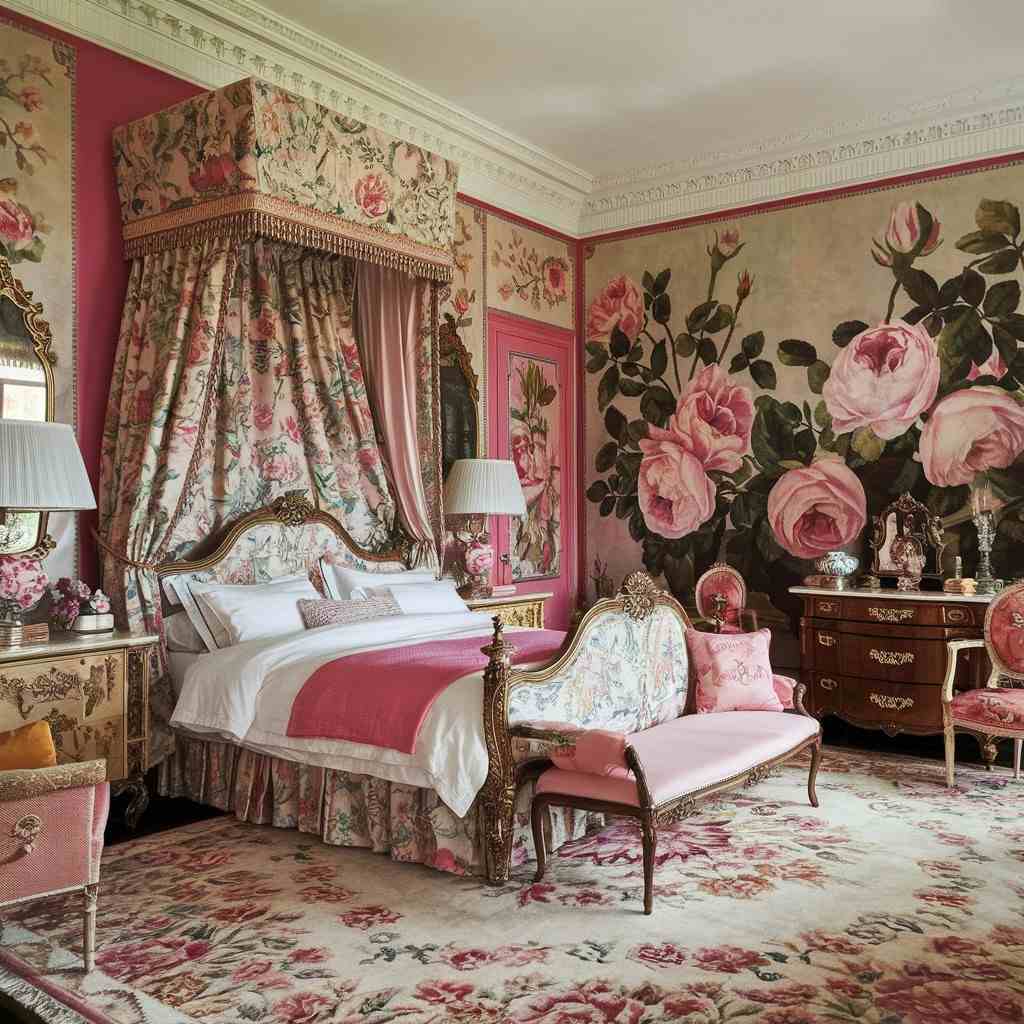
A rosy Victorian bedroom starts with the walls and works outward.
Soft dusty rose paint or wallpaper creates the base. Layer in cream linens, a carved antique-finish bed frame, and curtains in a slightly deeper rose tone for depth.
The key is ensuring nothing is too bright. Dusty, muted rose reads as Victorian. Hot pink does not.
Variations:
- Dusty rose walls with cream bedding and a carved mahogany bed frame
- Rose wallpaper with a blush velvet headboard and antique brass lighting
- A single rose-toned canopy over a white bed for color without full commitment
The Heirloom Canopy Moment
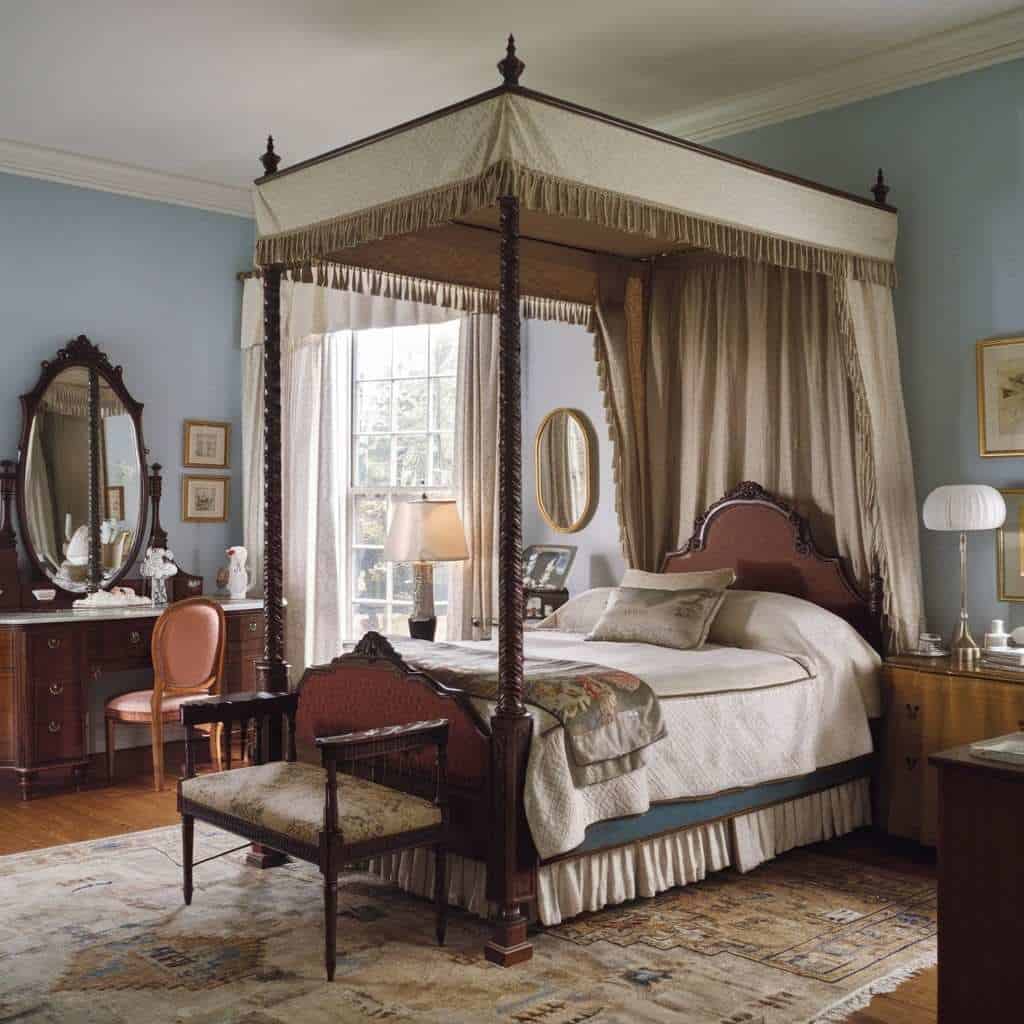
A canopy bed is the single most transformative piece of furniture you can add to a Victorian bedroom.
It changes the proportions of the entire room, creates a sense of enclosure and intimacy, and signals Victorian style more clearly than almost anything else.
It doesn’t need to be fully draped. Even a simple frame with sheer panels at the corners reads as deeply romantic.
Variations:
- A full canopy with heavy velvet drapes for a maximalist approach
- Sheer white linen panels on a simple four-poster frame for a lighter version
- A half-canopy mounted on the wall above the headboard — dramatic look, no frame required
Gold-Dipped Dreams
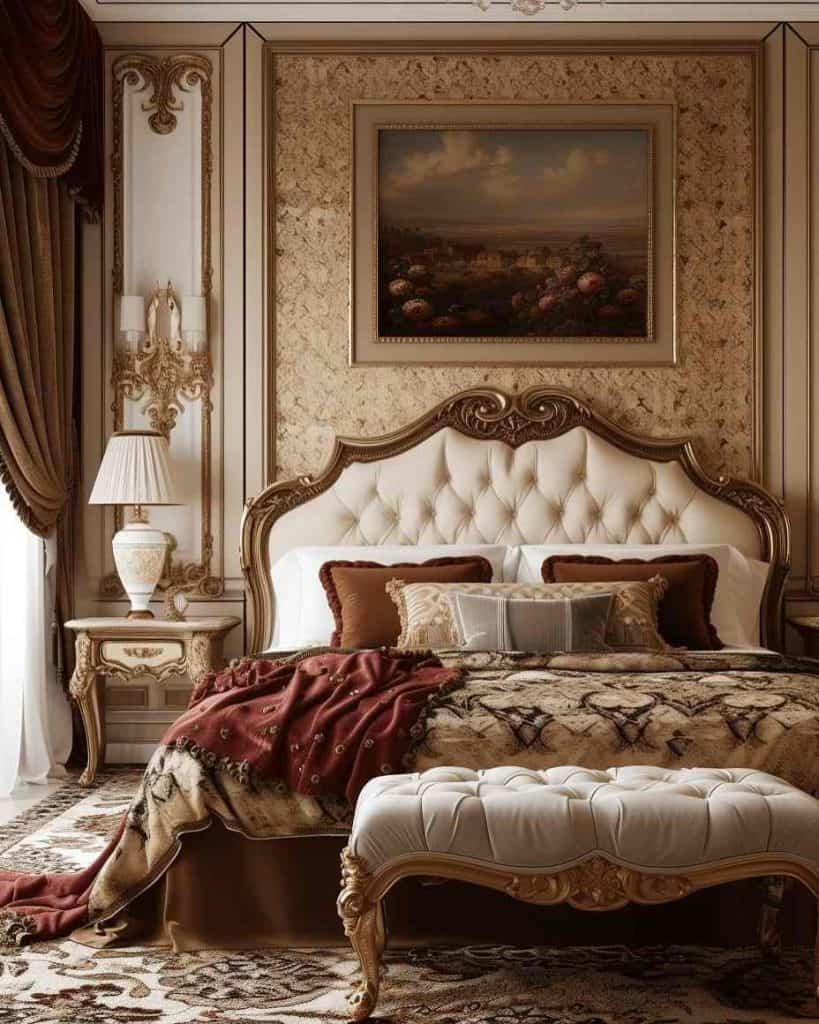
A gold Victorian bedroom is unabashedly luxurious.
Gold-toned fabrics, ornate gold-frame mirrors, warm brass lighting, champagne-colored walls. The room feels like light itself has been woven into the textiles.
The secret is avoiding anything too shiny or contemporary-looking. Brushed gold, antique brass, and warm champagne keep the palette grounded in the right era.
Variations:
- Champagne walls with antique gold bedding and a carved gilded mirror above the bed
- Deep cream and gold tone-on-tone layering with a carved gold-finish bed frame
- Warm gold velvet headboard with ivory linen bedding and brushed brass lighting
Royal Lilac Dreams
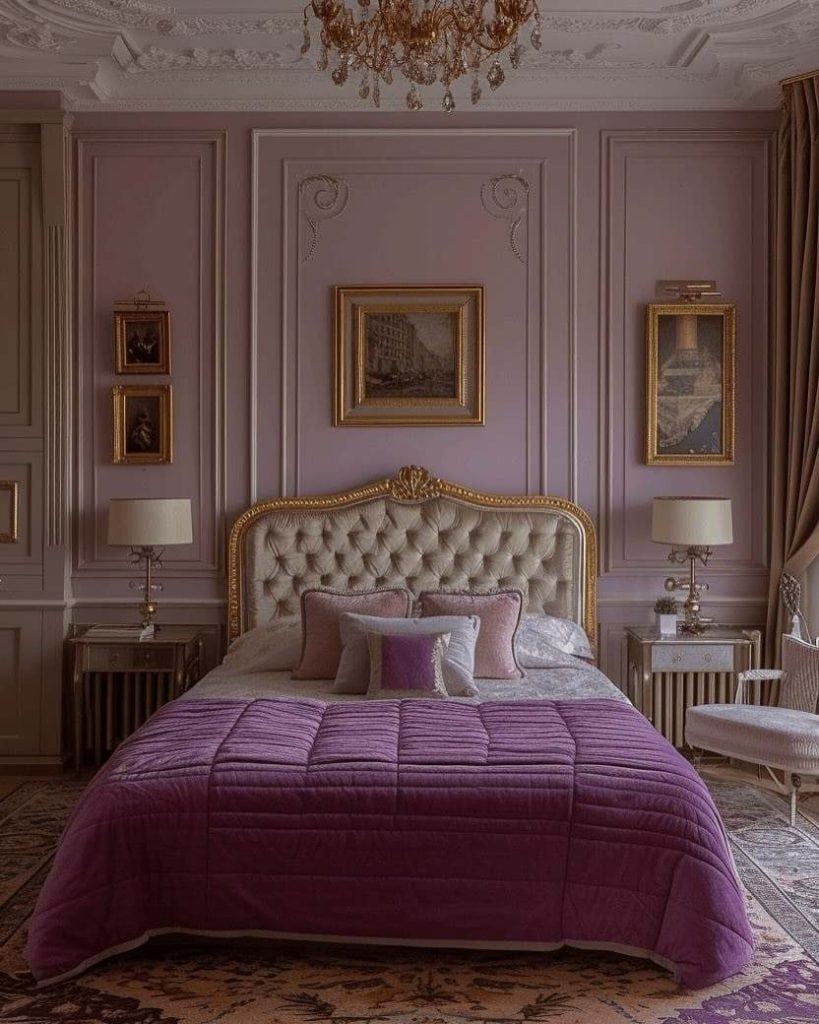
Lilac is one of the most underused colors in Victorian-inspired interiors — which is surprising, because the Victorians loved purple.
It was the color of royalty and luxury, and they used it in all its tones from soft lavender to deep amethyst. A lilac bedroom in a Victorian context feels both historically grounded and completely unexpected.
Variations:
- Lilac wallpaper with a deep plum velvet bedspread and dark wood accents
- Soft lavender walls with ivory bedding and an ornate gold mirror
- A lilac and cream striped canopy with a tufted lilac headboard for a maximalist take
Victorian Cottage Bloom
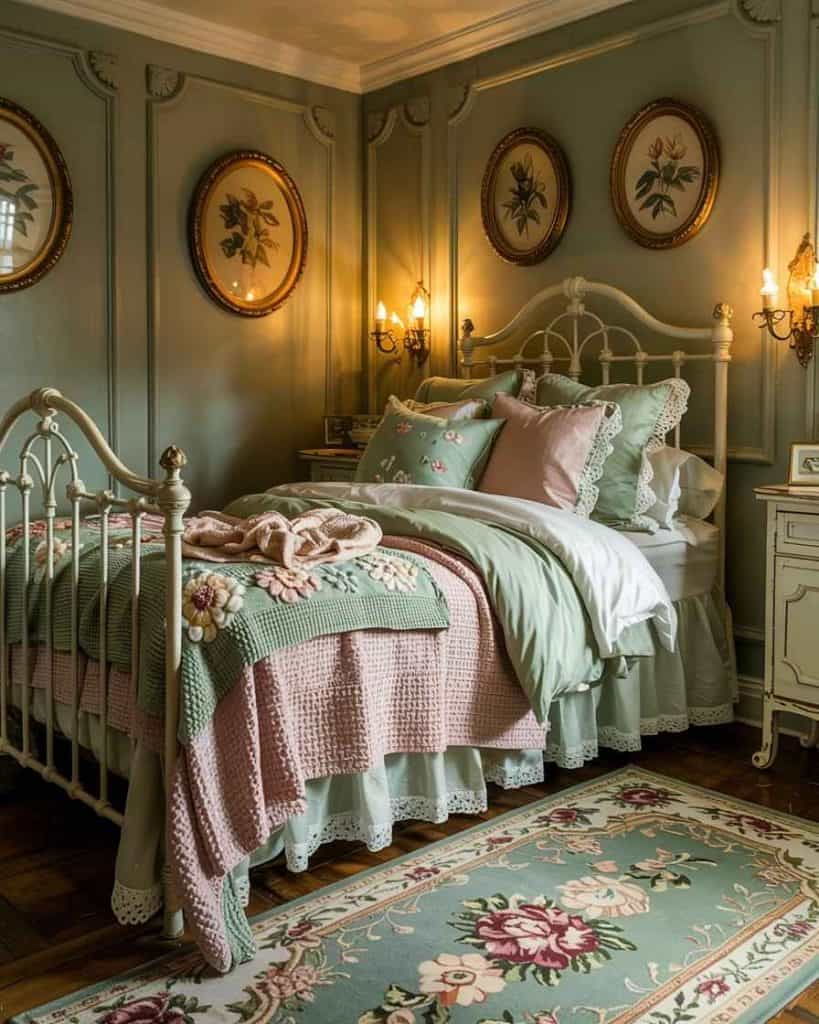
The cottage interpretation of Victorian style is the most relaxed — and often the most livable.
Floral wallpaper, painted furniture in cream or sage, a wrought iron or painted wood bed frame, and small botanical details throughout. Nothing is too formal, nothing too grand.
This is the version that works in a small bedroom, a spare room, or any space where you want warmth and personality without full dramatic commitment.
Marina helped a friend decorate her spare room this way last year. She said it became the room every guest asked to sleep in. That tells you everything.
Variations:
- Floral wallpaper with painted sage green furniture and white cotton bedding
- A wrought iron bed frame with a patchwork quilt and mismatched botanical cushions
- Small botanical prints clustered in a gallery wall for cottage charm without full wallpaper commitment
The Dramatic Side: Dark Walls, Rich Velvet, Full Commitment
The other side of Victorian style is its appetite for drama. Rich crimson, deep velvet, heavy gold, moody walls. These are rooms that feel like they belong to a specific house and a specific century — and that quality is exactly what makes them so memorable.
Victorian Drama & Decadence
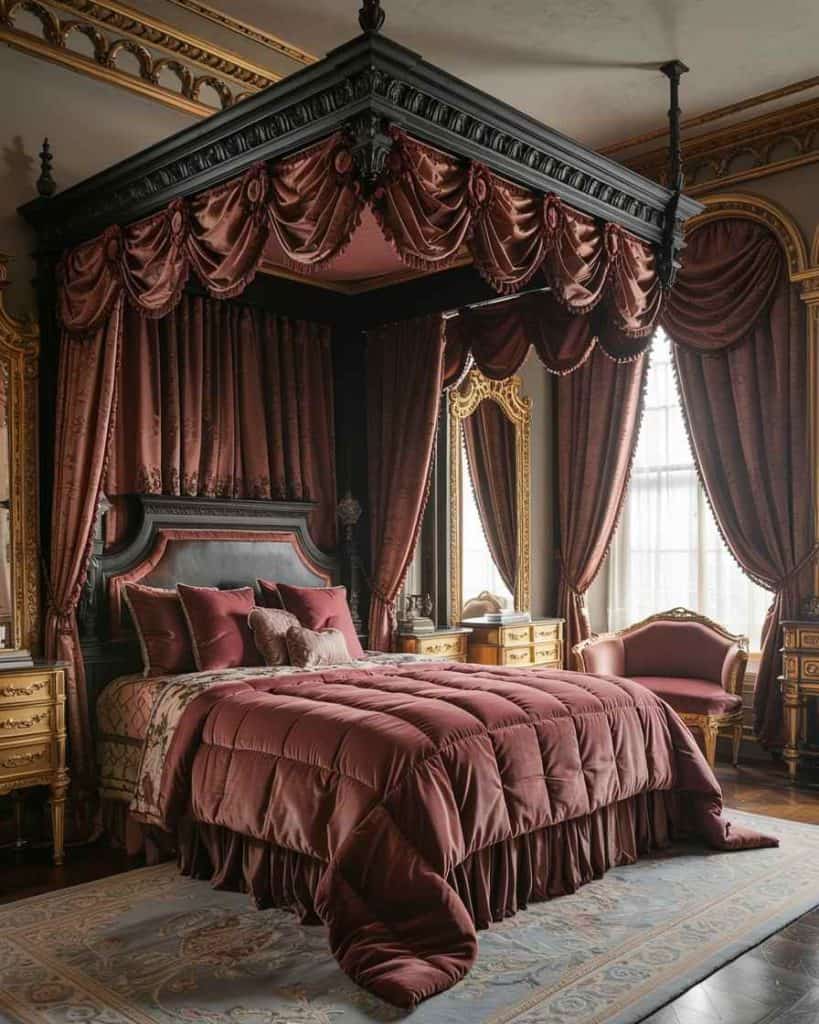
This is Victorian style at full volume.
Dark walls — deep plum, forest green, or burgundy — a carved bed frame in dark walnut, velvet in multiple deep tones, heavy curtains pooling on the floor, a crystal chandelier overhead.
The drama works because everything is committed. A half-committed dark Victorian room looks like an unfinished renovation. A fully committed one looks extraordinary.
Variations:
- Deep plum walls with burgundy velvet bedding and dark wood furniture
- Forest green walls with gold accents and a carved mahogany bed frame
- Charcoal walls with deep teal velvet and antique brass — moody without feeling heavy
Candlelit Romance in Crimson & Gold
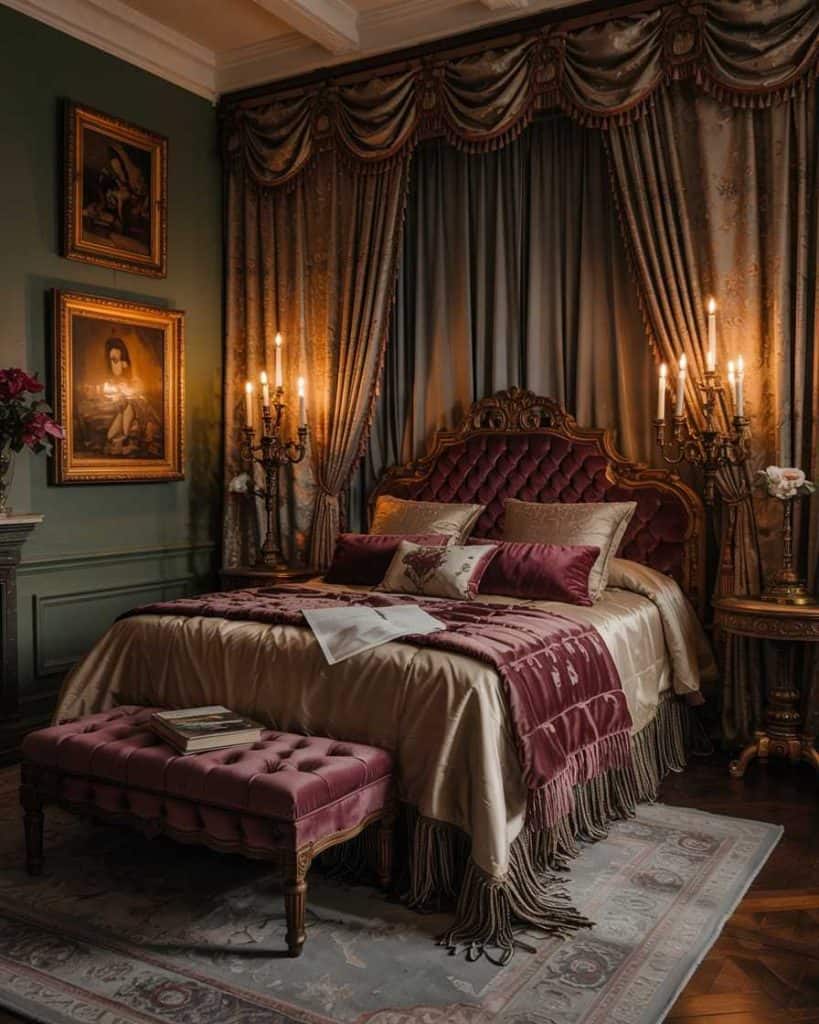
Crimson and gold is the most theatrical Victorian combination, and it’s also one of the most beautiful.
A crimson bed throw, gold-toned furniture, warm amber candlelight, and dark wood accents — this room looks like it was designed for long winter evenings.
Tasos and I once stayed somewhere with a room close to this palette. Neither of us wanted to leave in the morning. That’s the effect it has.
Variations:
- Crimson velvet bedding with dark walnut furniture and a gold-frame mirror
- A crimson canopy on a dark wood four-poster frame for a theatrical centrepiece
- Deep rose-red walls with gold ceiling detail and ivory bedding for a softer version
Moody Elegance with a Side of Cozy
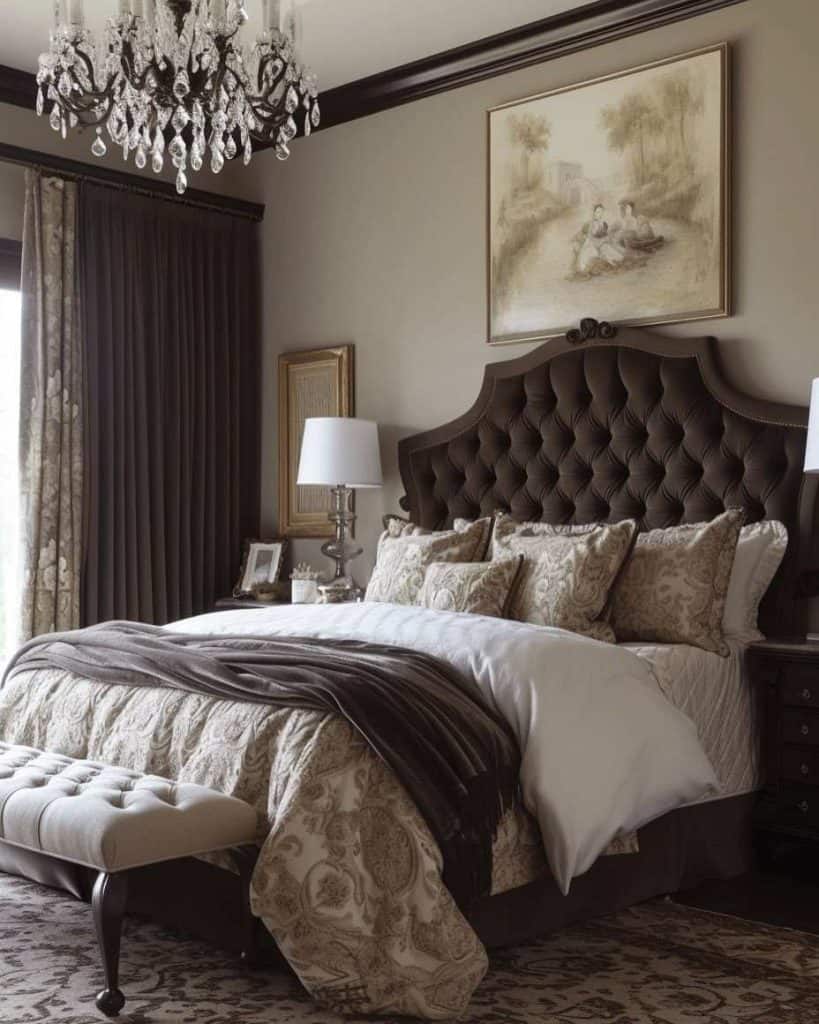
Not all dark Victorian bedrooms are formal. This version prioritizes warmth and comfort alongside the drama.
Deep walls — a warm charcoal or tobacco brown — layered with soft textures: a knitted throw, a fur-effect cushion, wool curtains rather than silk. The room feels like it wants to be lived in, not just admired.
People always ask: How do I make a dark bedroom feel cozy rather than gloomy?
Texture is the key distinction. Gloom comes from smooth, cold surfaces in dark colors. Coziness comes from the same dark palette in tactile, layered textures. Add a rug, a throw, fabric lampshades, and heavy curtains — the room shifts from dark to enveloping.
Variations:
- Warm charcoal walls with a mustard yellow throw and copper accents
- Tobacco brown walls with deep navy velvet bedding and brass lighting
- Dark taupe with burgundy accents for a muted version of the dramatic Victorian bedroom
Velvet Reverie
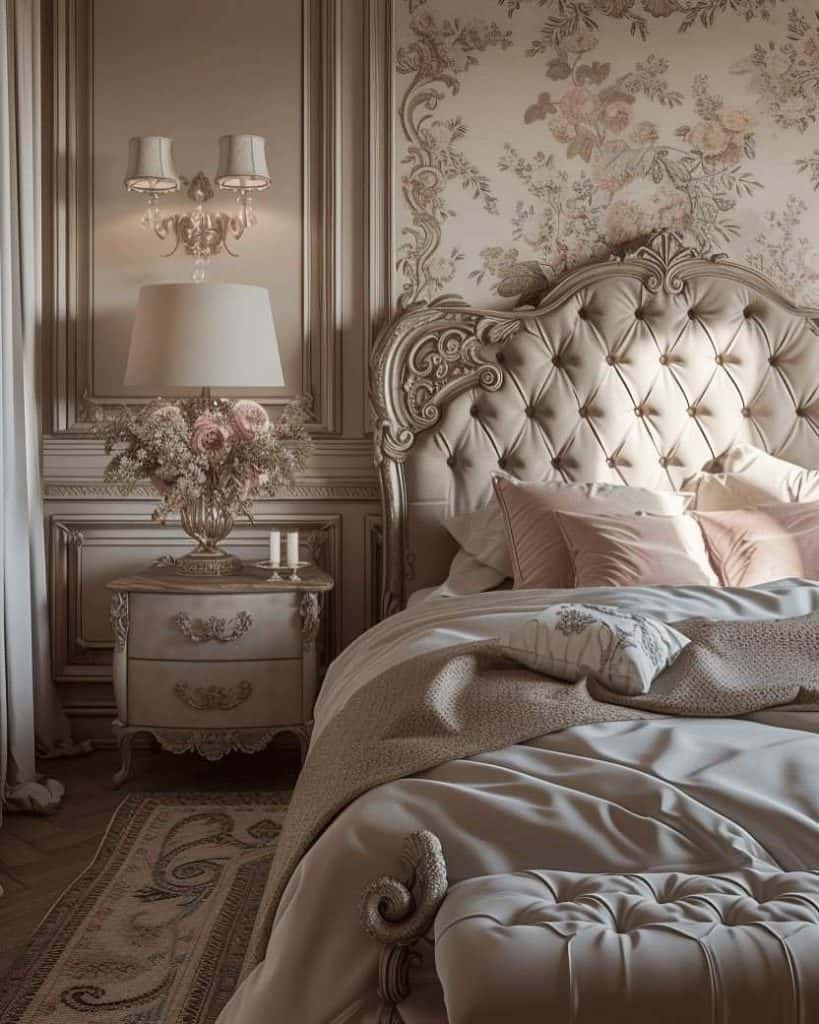
Velvet is the material most associated with Victorian bedrooms — and for good reason. Nothing else has quite its combination of richness, depth, and warmth.
This bedroom uses velvet as its main material story: a velvet headboard, velvet cushions, velvet curtains. The walls stay plain — the velvet does all the work.
Variations:
- Deep teal velvet headboard with navy cushions and a white linen duvet
- Dusty pink velvet throughout for a softer, more romantic version
- Emerald green velvet with gold trim for a deeply Victorian jewel-tone bedroom
Tassels & Timelessness
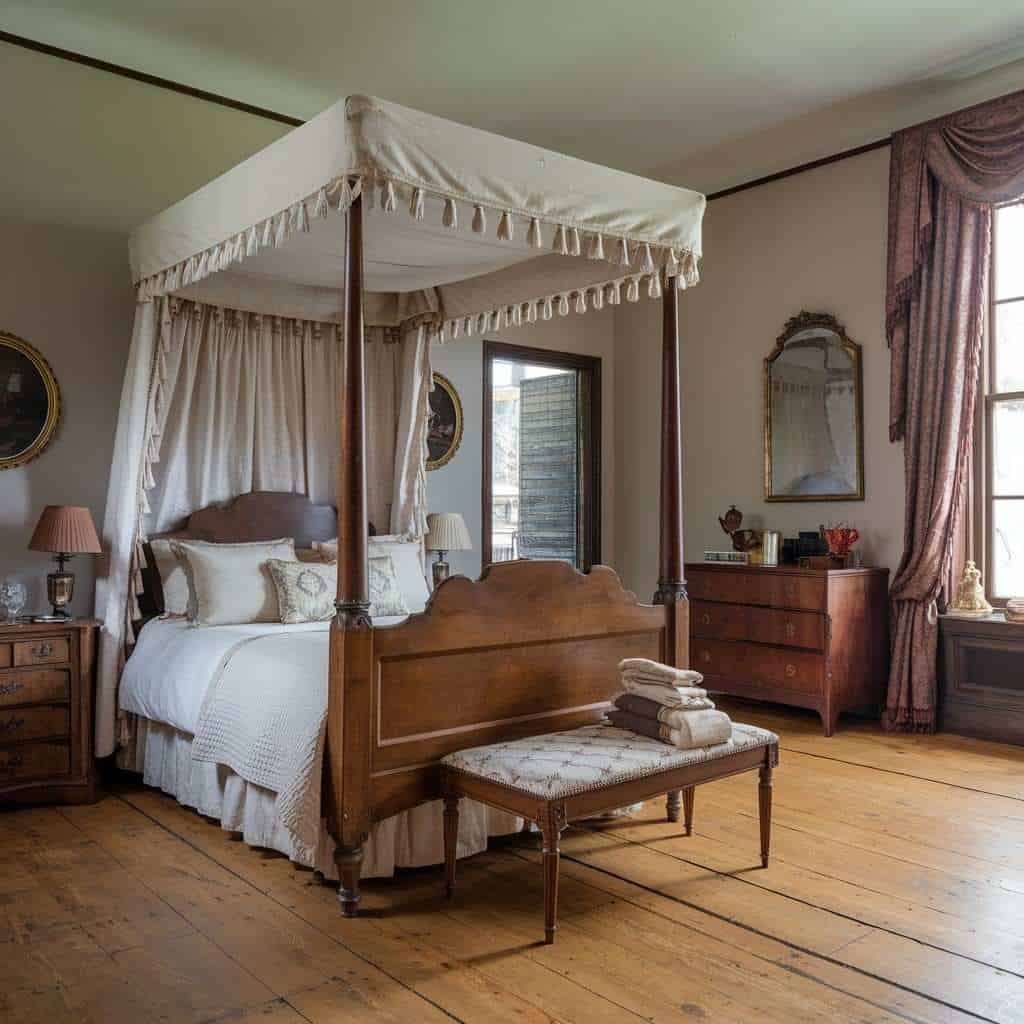
Decorative details — tassels on curtain tiebacks, fringe on cushion edges, embroidered pillowcases, beaded lampshades — are the Victorian touches most people underestimate.
They’re also the most accessible and affordable way to introduce Victorian style. A plain cream bedroom can be transformed by tasseled tiebacks, fringe-trimmed cushions, and a lampshade with a beaded trim.
Zina has always said that the small things in a room are what you notice when you’ve stopped looking. She’s right about everything.
Variations:
- Tassel tiebacks on plain linen curtains for a Victorian touch without full commitment
- Fringe-trimmed velvet cushions in a neutral bedroom as the key Victorian accent
- A beaded lampshade on a simple bedside lamp — one accessory, immediate atmosphere
The Furniture and Details That Define the Style
Beyond color and textiles, Victorian bedrooms are defined by specific pieces and architectural details. These are the elements that make a room feel genuinely rooted in a period rather than just inspired by it.
Show off the Fireplace
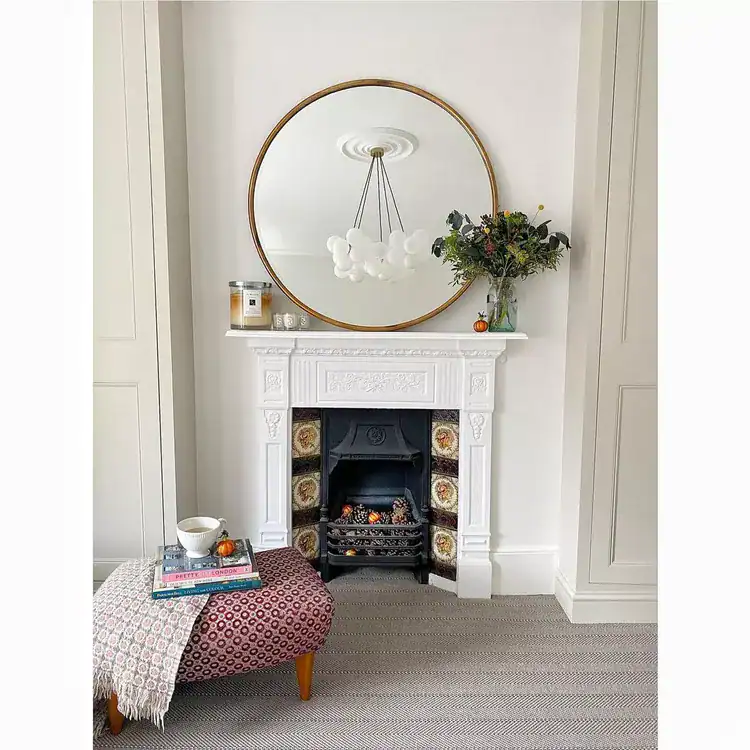
Most Victorian bedrooms had a working fireplace — and it was always the centrepiece of the room.
If you have one, even a non-working one, make it the focal point. Hang a statement mirror above the mantel so the eye goes straight to it the moment you walk in.
I grew up visiting my grandmother’s house in the village, and her bedroom had a fireplace with an enormous mirror above it. The whole room organized itself around that corner. I didn’t understand interior design then, but I understood that.
Variations:
🔥 Would you like to save this?
- A white marble mantel with a gilded mirror above and candles arranged in the hearth
- A dark carved wood surround dressed with dried botanicals and a cluster of brass candlesticks
- A painted cast iron fireplace with a tiled hearth for a more cottage-style Victorian look
Add a Chandelier
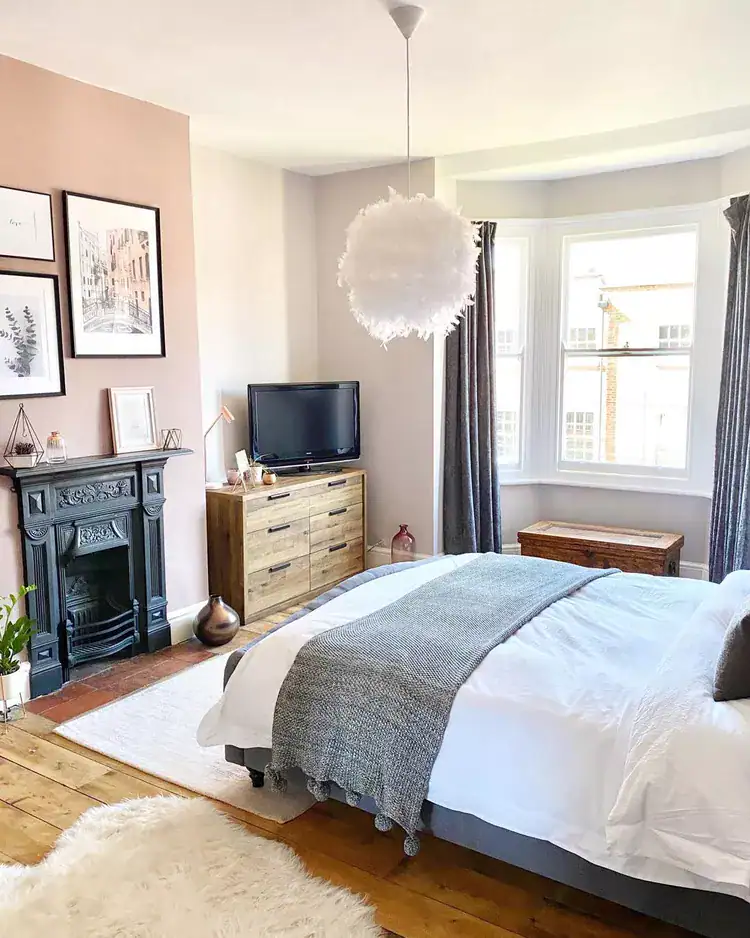
Many Victorian bedrooms featured a chandelier as the centrepiece of the ceiling — and there’s a reason the tradition lasted.
A chandelier changes the quality of light in a room entirely. Warm bulbs through crystal or glass scatter light across the ceiling and walls in a way no recessed fitting ever can. It also makes an empty ceiling feel finished and intentional.
Variations:
- A full crystal chandelier above the bed on a dimmer switch
- Smaller crystal pendant lights flanking the bed in place of table lamps
- A more modern chandelier shape in an antique brass finish to contrast with traditional elements
Add Sconces
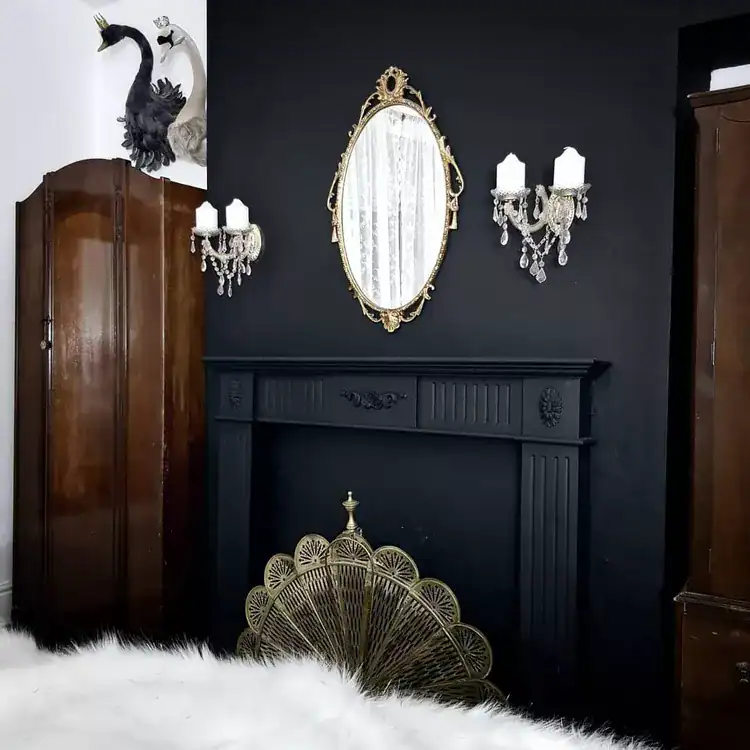
There is something about vintage wall sconces that no other light source quite replicates.
Frame the sides of your bed or flank your fireplace with delicate sconces in Victorian-style glass, jeweled, or hand-cut designs. They cast warm directional light that reads as intimate rather than functional — exactly the quality a bedroom needs after dark.
Variations:
- Glass-globe sconces on either side of the bed for soft, diffused light
- Jeweled brass sconces flanking a fireplace mirror for a formal Victorian look
- A single ornate sconce beside a reading chair as a focused accent light
Add Statement Art
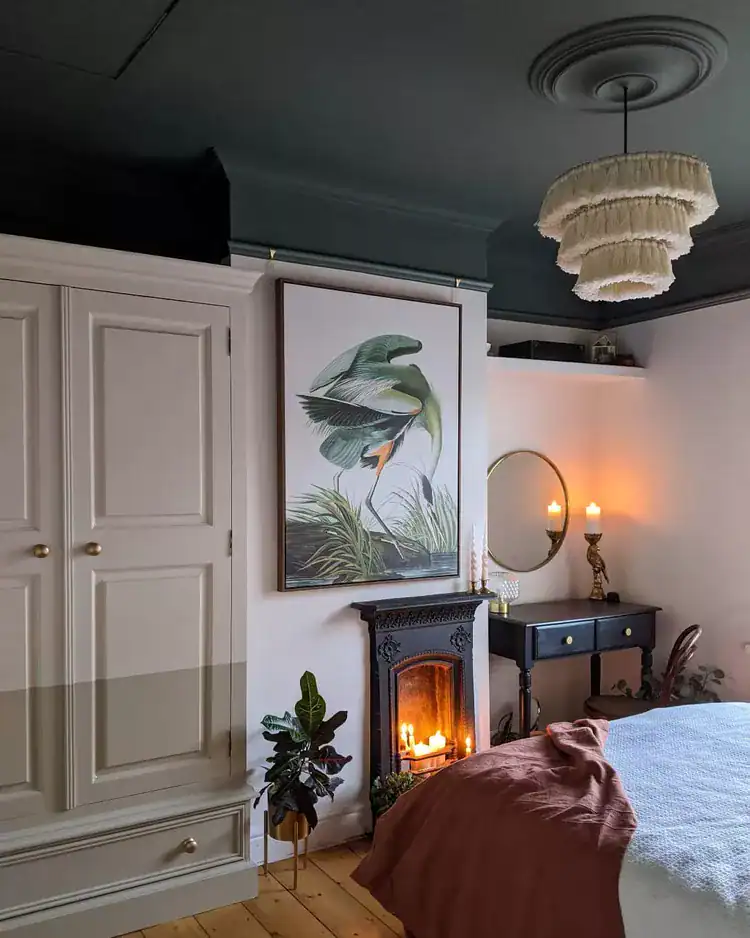
Victorian spaces were never without artwork — and they were never shy about it.
You don’t need 19th century oil paintings. A single large-scale piece of statement art on the main wall — a botanical print, an oversized portrait, a framed textile — creates the kind of sophisticated, elevated quality that Victorian interiors always carried.
Maria came back from a trip with a large botanical print she’d found rolled up in a market. We framed it and hung it above the guest bed and it immediately became the room’s whole personality. That’s what good art does.
Variations:
- A large framed botanical print as the wall’s centrepiece above the bed
- A cluster of smaller framed prints in matching dark frames, salon-hung
- A framed antique textile or embroidery piece as an alternative to traditional wall art
Hang Ornate Mirrors
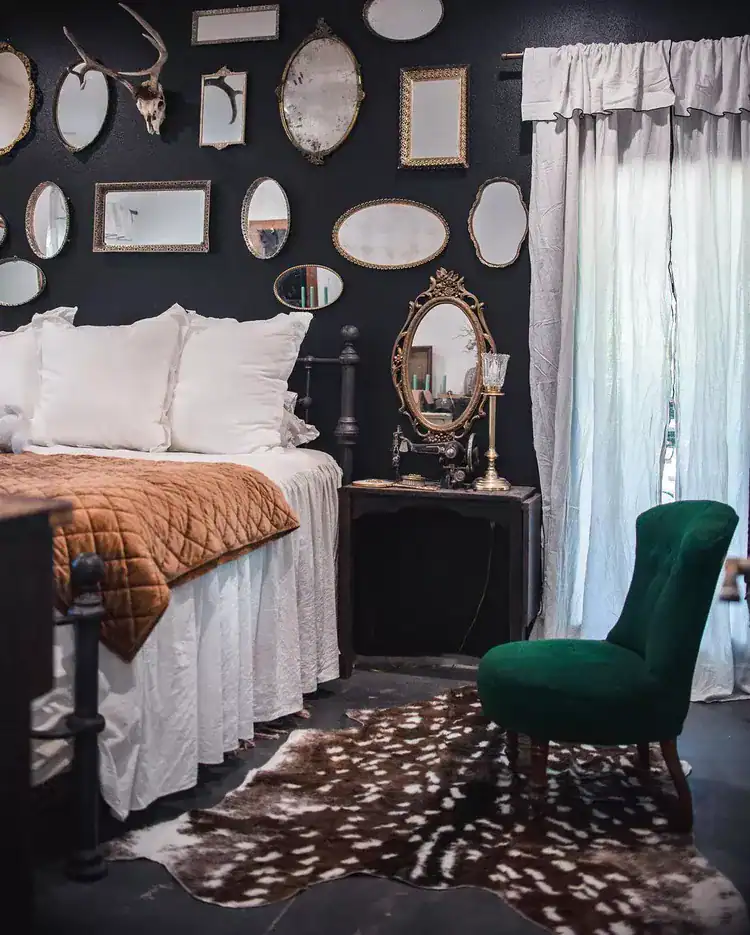
A room with ornate mirrors has a quality that’s hard to explain and impossible to ignore.
Even a few well-placed gilded or carved mirrors do what no other accessory can: they reflect light, create depth, and make the room feel considered from every angle.
They also reference the Victorian obsession with surfaces, reflection, and decorative metalwork in the most direct way possible.
Variations:
- A pair of ornate gilded mirrors flanking the bed or a sconce
- A collection of mismatched vintage mirrors in a loose salon arrangement
- One large carved mirror as the room’s only decorative accent on an otherwise plain wall
Go Big With the Mirror
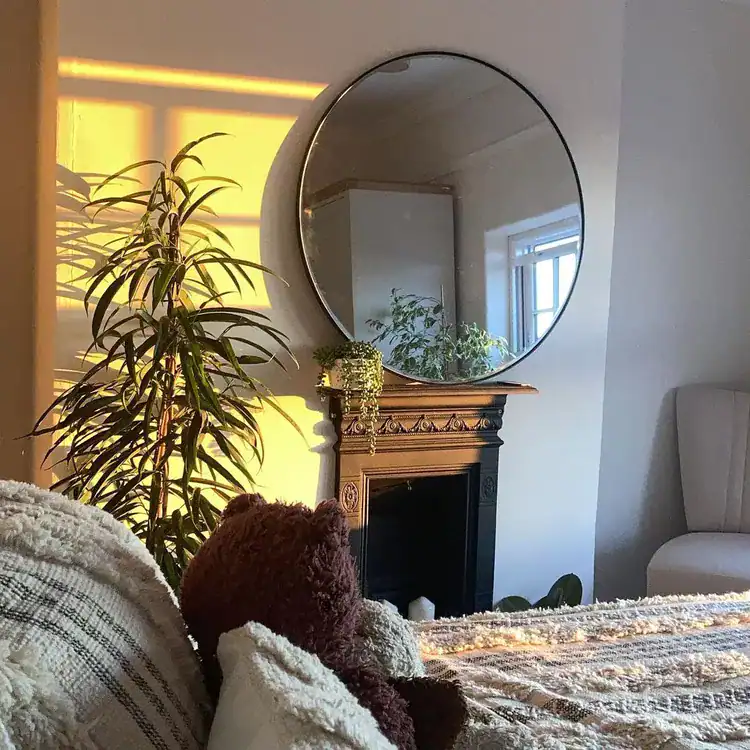
If you’re going to hang one mirror, hang the biggest one you can find.
An oversized statement mirror stops the eye as soon as you enter the room. It expands the space, draws in natural light, and creates the kind of presence that makes a room feel designed rather than decorated.
The Victorians understood this instinctively. Their mirrors were never modest.
Variations:
- A large ornate gold mirror leaning against the wall beside the bed
- An oversized arched mirror above a low dresser as the room’s focal point
- A full-length ornate mirror in a corner, angled to reflect the best part of the room
Pick Brass Accents
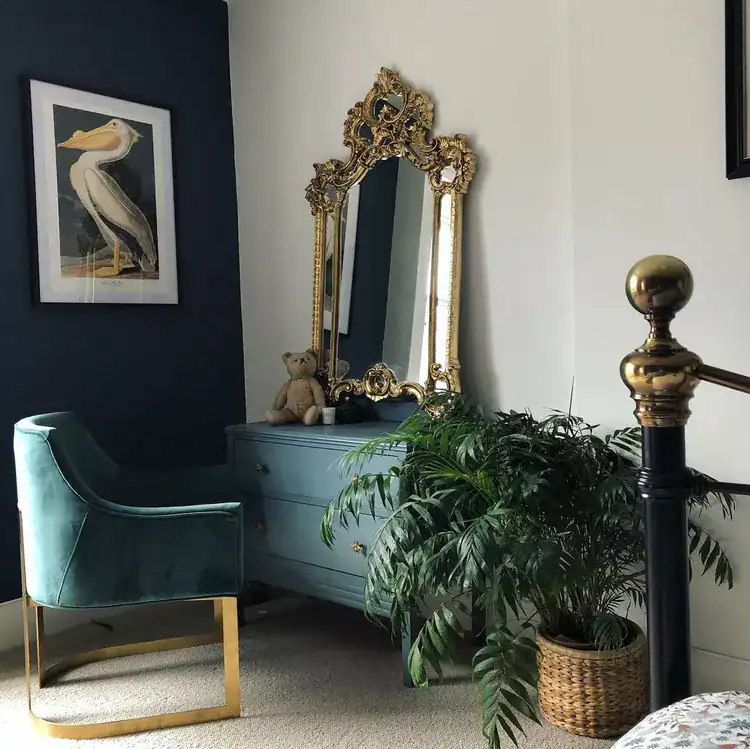
Chrome and brushed nickel are modern metals.
Brass and gold belong to the Victorian era — and swapping one for the other is one of the most effective and affordable upgrades you can make.
Door handles, curtain rings, lamp bases, picture hooks, drawer pulls. None of these individually costs much. Together, they shift the room’s entire register toward warm, period-appropriate luxury.
Variations:
- Antique brass curtain poles and rings replacing chrome or black alternatives
- Brass drawer pulls on dark wood dressers and bedside tables
- A brass-based bedside lamp as a single accent in an otherwise neutral bedroom
Display Dried Flowers
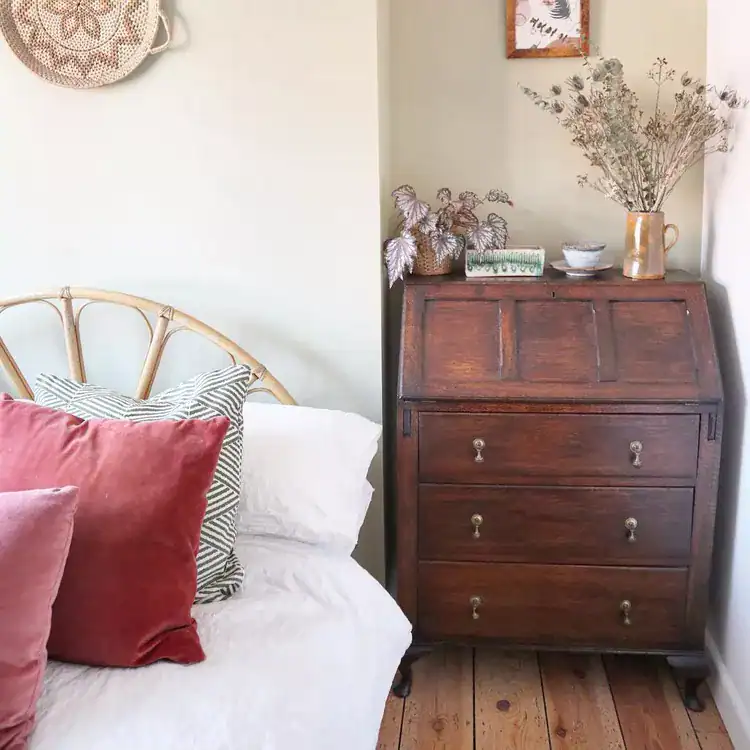
Dried flowers are one of the most underestimated Victorian touches — and one of the most beautiful.
A bouquet of dried lavender, pampas, lunaria, or garden roses on a dresser or secretary desk adds texture, fragrance, and a quietly romantic quality that fresh flowers actually can’t match.
Zina always kept a bunch of dried herbs hanging in the bedroom window. She said it was practical — the lavender kept moths away — but I always thought she just liked how it looked. I think she did too.
Variations:
- A large bunch of dried pampas grass in a tall ceramic vase on the dresser
- Dried lavender in a small earthenware jar on the bedside table
- A wreath of dried botanicals hung on the wall or above the bed as a decorative piece
Hang Heavy Curtains
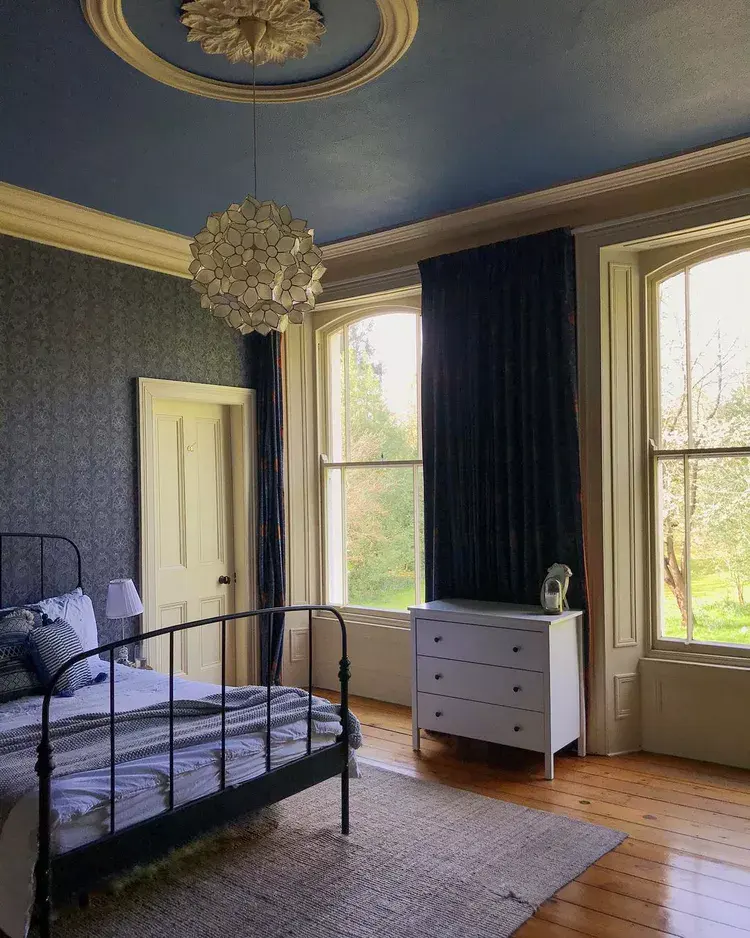
Heavy curtains are one of the most practical and most visually impactful changes you can make to a Victorian bedroom.
They regulate temperature, absorb sound, and block light more effectively than anything else — but more than that, they make a room feel finished, anchored, and unmistakably period-appropriate.
Hung close to the ceiling with enough length to pool slightly on the floor, they make any wall look taller and grander.
Variations:
- Deep rust or terracotta velvet curtains hung from ceiling to floor on brass poles
- Heavy forest green linen curtains with a cream lining and brass ring heading
- Burgundy woven cotton curtains with a tasseled tieback for a simple, classic Victorian look
Head to the Flea Market
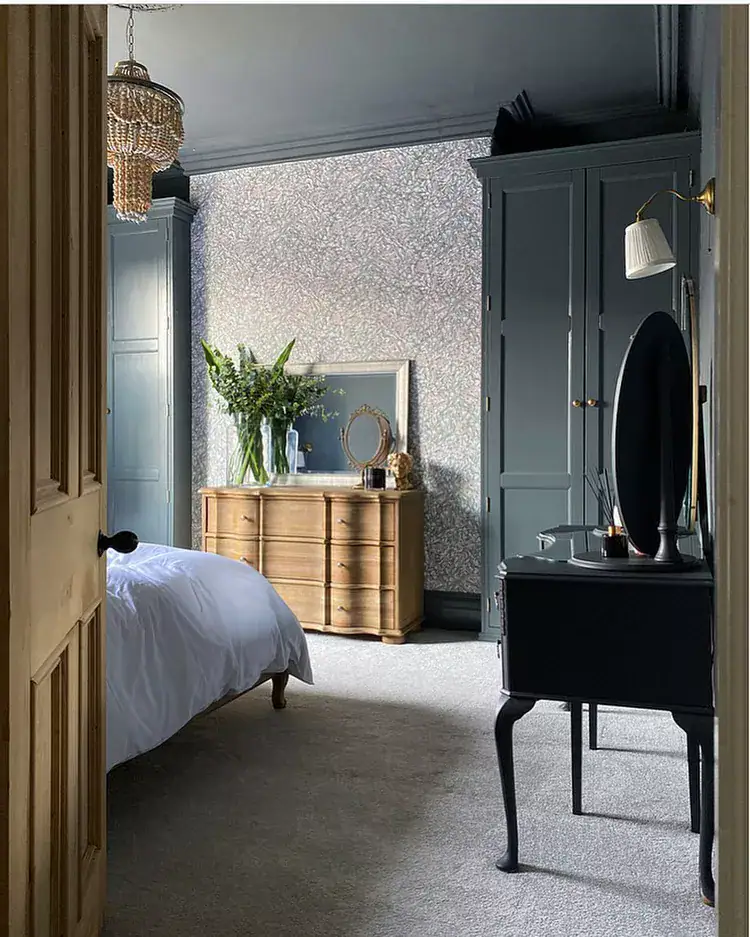
The single best decision you can make for a Victorian bedroom is to stop buying everything new.
Victorian furniture — real carved wooden pieces, ornate mirrors, ceramic lamp bases, iron bed frames — exists in enormous quantities in flea markets and antique shops, usually at prices well below equivalent new reproductions. And it has a quality of material and craft that new versions rarely match.
Tasos and I found a carved dark wood wardrobe at a market outside Thessaloniki years ago that changed the whole feel of our bedroom. It would have cost four times as much new and been half as beautiful.
Variations:
- A single antique carved piece — a wardrobe, a dressing table, a mirror — as the room’s anchor
- Vintage candlestick holders, ceramic vases, and framed prints gathered over time from markets
- A secondhand iron or wooden bed frame repainted or refinished to refresh it for a contemporary setting
Frequently Asked Questions About Victorian Bedrooms
Is Victorian bedroom style too dark for everyday living?
Only if you commit to the full dark-palette version — and even then, good lighting solves most of it. Victorian style spans everything from pale cream and blush to deep crimson and charcoal. There are versions of it that are light and airy and versions that are deeply dramatic. Most people are drawn to one end of the spectrum, and both are genuinely livable.
How do I start decorating a Victorian bedroom on a budget?
Start with what you’re sleeping under and looking at. A new duvet cover in a rich tone or floral print, a pair of velvet cushions, and a thrifted ornate mirror will take a room further toward Victorian than almost any other combination. Furniture can come later — the textiles and accessories are what read the style first.
Do I need original Victorian furniture for this look?
Absolutely not. Victorian-inspired furniture — carved bed frames, ornate mirrors, decorative bedside tables — is widely available new at all price points. The best Victorian bedrooms often mix original vintage pieces with new versions, creating the layered, accumulated feeling that defines the style far more authentically than a perfectly matched set ever could.
What’s the most important thing to get right?
Lighting. Every Victorian bedroom, regardless of palette, depends on warm, layered lighting. Table lamps with fabric shades, a chandelier on a dimmer, candle-style wall sconces — get this right and even a partially decorated room will feel like it’s working. Get it wrong and the most beautiful furniture and textiles will look flat.
Where to Start
The easiest entry point is the bed itself.
A carved bed frame — even an inexpensive painted one — immediately signals Victorian style. Add velvet cushions, a textured throw, and bedding in a rich tone or floral print. Then add one ornate mirror and one proper lamp per side.
You have a Victorian bedroom. Everything else — wallpaper, canopy, fireplace, chandelier, heavy curtains — can come later.
The style rewards accumulation, not completeness. Start with what you love and let the room grow into itself.
That is how the best Victorian bedrooms have always been made.

I’m Katerina Lithopoulou, co-creator of DIY Cozy Living. I’ve always loved the little things that make a space feel special. With a background in language and a passion for photography and cozy design, I enjoy turning everyday inspiration into simple ideas people can actually use.
My motto: “Cozy isn’t a trend — it’s a feeling.”
