

Hi, Tasos here – and welcome to diycozyliving!
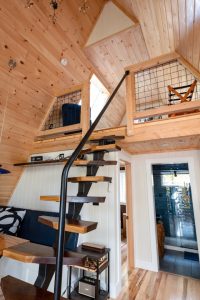
I’ve been noticing little houses and campervans all over the place recently, and honestly, it makes sense; the thought of a more basic, environmentally friendly way to live is really appealing.
Though, I’m the first person to say that the problem of ‘not much room’ is a problem. It’s difficult to remain tidy when you’re essentially in a conundrum.
With experience, I’ve come to understand that it isn’t only about having fewer possessions but also about getting stuff that does more than one thing. The moment I work out ways to get the most from every inch, my area actually begins to feel airy and comfortable, instead of restricted.
I’ve collected ten of the space-saving ideas I like best, to help you make your small house or camper into a useful, neat, and nice place!
Excited like me? Let’s get started!
How To Make The Most of What You’ve Got
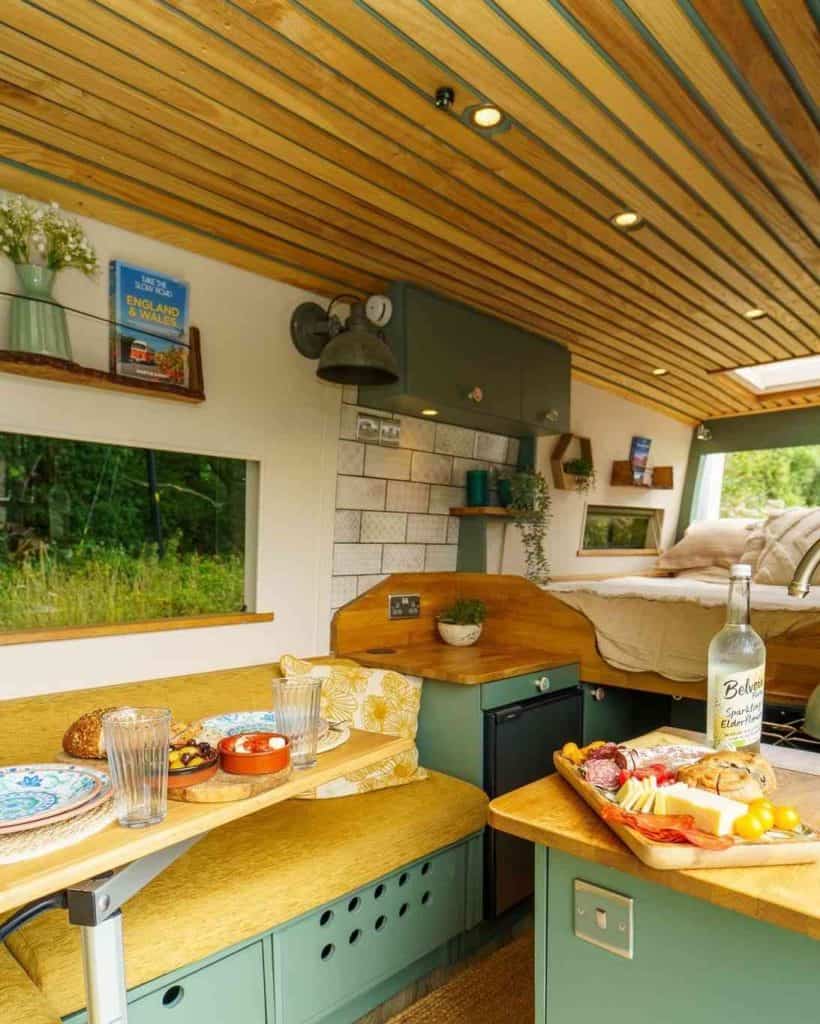
Prior to looking at clever fitted furniture or pricey things, the best thing to do is be extremely strict with the possessions you have.
After all, there’s little use arranging things you don’t require – that’s only an attractive mess. Begin by dividing items in 3 categories such as things to retain, to give away, to dispose of.
It’s simple, but it saves many problems in the future.
Having got rid of what isn’t necessary, consider areas. The kitchen is for cooking, the bedroom for sleeping, and so on. Even in a very small caravan, defined “no-mess” areas – such as a small worktop or a bedside ledge – give a sense of peace. Also, don’t ignore light – excellent light-emitting diodes or fairy lights can make a restricted area seem twice as roomy without using any space.
Here’s a simple starter checklist to avoid overwhelm:
- Declutter one category at a time (clothes first, then kitchen, etc.)
- Measure everything before buying organizers—nothing worse than bins that don’t fit.
- Test setups for a week—move things around till it flows.
- Label stuff (yeah, even if its “just me”—memory fails on the road).
Do this foundation work and your 10 genius hacks will land way better.
Related Posts You May Like
Quick Wins That Make Tiny Feel Bigger (Without Major Reno)
Things that work well in small houses and RVs? You’re usually able to test nearly all the space ideas without having to do any big building. A lot of these aren’t costly, can be undone, and offer quick results.
For example, mirrors to reflect light, or using Command strips for hooks all over – easy, yet very useful.
Colour is important as well – pale walls and a few touches of one similar, calm colour will stop the room from seeming cluttered. And air movement; a little fan or opening windows will get rid of stuffy air, and people feel as if the room is more spacious.
Some other uncomplicated, no-trouble things people really like:
| Quick Win | Why It Works | Approx Cost | Tiny Home or Camper? |
|---|---|---|---|
| Large wall mirror | Reflects light & doubles visual space | $20–$80 | Both |
| Command hooks/strips | Hang anything without drilling | $10–$30 | Both (great for renters) |
| Light-colored rugs/curtains | Brightens & softens hard edges | $15–$50 | Both |
| LED strip under cabinets | Extra glow without floor lamps | $15–$40 | Especially campers |
| Clear stackable bins | See what you have, no digging | $20–$60 | Both |
10 Genius Hacks For Tiny Homes and Camper You”ll Absolutely Love!
1. Multi-Functional Furniture
In not-very-large homes, furniture doing more than one thing is really useful. Items – for instance a settee becoming a bed, or a table also used as a desk – can give you more use, but won’t need any more room. Some suggestions are:
- Storage footstools: these work as seats, a low table, and a place to put things.
- Folding tables: tables fixed to the wall, which fold down, give you a flat place when you want it.
- Convertible Sofas and Murphy Beds: beds which fold into the wall, or settees turning into beds, are good ways to sleep at night and live during the day.
- Nesting Furniture: furniture which “goes inside” each other, like stools going under tables or chairs you put on top of each other, is best for small houses.
2. Maximize Vertical Storage
Because small homes, or campers, don’t have much room, your walls have lots of storage that you aren’t using. Getting good use out of wall height is able to cut down on mess, and make more room on the floor. Here I am giving you some examples!
- Wall floating shelves and wall hooks: Put shelves as high as you can on walls to keep things that aren’t used every day. Hooks in walls are really good for hanging up coats, hats, bags – or even things for cooking.
- Magnetic bands: These are really good for holding metal things – like knives when you’re cooking, or tools in a garage – safely, and without taking up room on a shelf or in a drawer.
- Pegboards: You can change these to hold pots, pans and other things in a kitchen, or tools and things you need in a place where you do work.
3. Choose Collapsible and Stackable Items
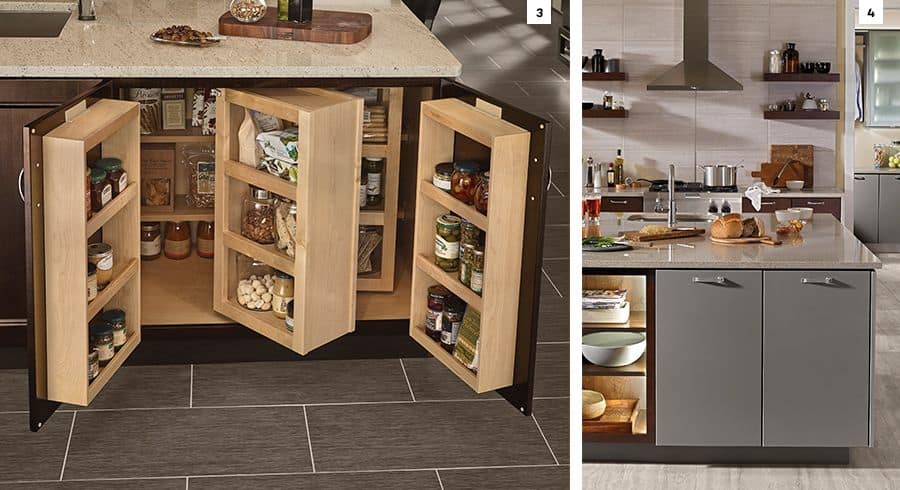
Put money into things which lie flat or come down small, so you’re able to keep them easily when you aren’t using them. In a small house or recreational vehicle, these can truly help:
- Kitchen things which fold down: Bowls, measuring cups, strainers, and boxes to keep food in, which fold down, conserve valuable cupboard space.
- Seats and surfaces to eat at which fold: Furniture of this type is able to be kept by a wall or beneath other furniture, giving you more room.
- Boxes to put things in, able to be piled on top of each other: These are able to make things tidier, particularly in wardrobes and food stores. Ones which are clear, and pile on top of each other, also let you look at what is inside without looking through everything.
4. Optimize Your Closet with Custom Organizers

Because storage areas in very small houses, or in recreational vehicles, are normally not large, it is very important to utilise every single centimetre of space. Think about fitted wardrobe systems created for very limited areas:
- Double Railing Bars: An additional bar is able to twice the amount of room available for hanging garments, creating space for additional clothing.
- Shelf Separators: Separators assist in making distinct sections for things like hand-towels, knitted garments, or footwear, making certain everything is where it should be.
- Drawer Fitting-Outs: Fitting-outs within drawers help keep more diminutive items arranged, and easily obtainable.
5. Use Under-Bed Storage Solutions
Beds – usually one of the biggest things in a small house or camper – can really give you a lot of room to put things away, should you plan for it:
- Flat containers or drawers which slide out, are good for clothes, footwear, or things you only use at certain times of the year.
- Bed frames that lift up give simple access to the place under the mattress; some of these even have sections already in them, to keep your possessions tidy.
- If you are able, raising the bed a little will let you put containers or bags under it, so you can easily get at what you need.
6. Prioritize Wall-Mounted Lighting and Accessories

In tighter areas, lamps that go on the floor or tables can make those surfaces seem messy. Rather, choose lights fixed to the wall:
- Wall sconces, don’t use floor or table space, yet they give off a nice, warm light.
- Lights that clip on: these attach to shelves, bed frames, or other things that are strong enough, and they let you put light where you need it.
- Mirrors mounted on the wall – mirrors can make a room look bigger, and also brighter and more airy, without actually using any of the floor.
7. Invest in Over-the-Door Storage

Doors are spaces people don’t often think of for storage, however, in a small house or a camper, they can be really important to have – to keep things you need close, but also not in the way.
- Shoe Organisers: They will, of course, hold shoes, but can also manage kitchen things, cleaning supplies, or wash kit.
- Pantry Hanging Storage: Should your kitchen be on the small side, over-the-door organisers can contain spices, small pots, and other food items you regularly use.
- Bathroom Storage: Attach a storage holder to your bathroom door to keep wash things, towels, and other items for the bathroom.
8. Design a Foldable Kitchen Setup
Because camper and tiny house kitchens are generally quite small, getting the most from the space, and all the surfaces, is really important to make them work. Things like countertops that fold up – or shelves that pull out – can help a lot.
- Drop-leaf counters are very useful. They give you more room for work when it’s needed, but fold away when you don’t.
- A sink cover, or something to put in the sink, will give you a cutting board, or just some more room to get things ready.
- If you aren’t always cooking, a stovetop cover makes a bit more counter, so you’re able to do more than one thing at once in a small kitchen.
9. Organize with Clear Containers and Labels
In a small area, being organised and being able to see what you own are both very important. Transparent containers, and making sure they’re labelled, will help you know what you have, and stop you from buying the same thing twice.
- Transparent containers for food in the cupboard: in a small kitchen, it saves a lot of time to be able to tell – quickly – what’s in each container; use containers for things you use a lot, like rice, macaroni and biscuits.
- Small, labelled containers for the bathroom and for cleaning things: small containers, with labels, will keep cleaning products, things to wash with, and other necessities neat and easy to get at.
- Small bottles for things to wash with when you go away: instead of big bottles, use small ones and label each one, to make them easier to store.
10. Use Space-Saving Gadgets and Tools
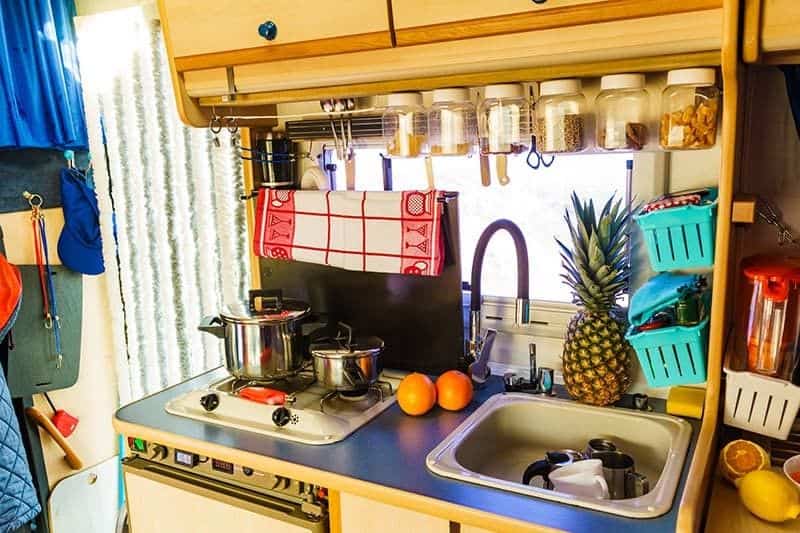
Really useful, all-purpose devices are very helpful when you’re in a small house or camper; a few which are especially good in limited areas are listed below.
- Nesting cookware – pots and pans – will stack into each other and so don’t need as much room to be put away.
- Spice containers with magnets on them can stick to a fridge or metal wall covering, meaning more space in cupboards.
- A small vacuum sealer will make clothes or duvets much smaller – ideal for things for a particular season which you won’t use all the time.
- A vacuum cleaner which doesn’t need a cable and which can be put on the wall is best when you want to move about easily in a small space and don’t want to be bothered with leads.
Conclusion – Space-Saving Hacks for Tiny Homes
Living in a tiny home or camper presents unique challenges, but with the right space-saving solutions, you can create a clutter-free, organized environment that feels spacious and comfortable.
Whether through multi-functional furniture, creative storage solutions, or compact gadgets, these ten tips will help you optimize every square inch and turn your small space into a well-organized haven.
Read Also: How To Renovate Your RV On A Budget
These space-saving techniques give you the freedom and flexibility of living large in your small space! So…take advantage!
And that’s all I have for today! I really hope you found this article useful and interesting! If you have any questions or comments you wanna share freel free to leave em down below and I will be more than happy to get back to you!
Until next time,
Stay safe,
Tasos

I’m Anastasios Moulios, co-founder of DIY Cozy Living. I enjoy finding creative, practical ways to make small spaces feel warm, stylish, and lived-in. I started this blog with Katerina to share real ideas that make a home feel a little more personal and a lot more comfortable.
