

I’ve dedicated years to thinking about little areas.
My first flat was only about 490 square feet – a small living-room, a thin bedroom, and a kitchen where two people couldn’t stand together.
But with the passage of time, I found out that the amount of floor space isn’t the only thing that counts. With the correct techniques, the most confined room can appear open, breezy, and unexpectedly roomy.
You won’t have to pull down walls or employ an architect.
Here are 7 tried-and-true methods that interior designers consistently employ – and that you can begin to implement right now, even if you’re on a limited budget!!!
Let’s dive in!
Quick Overview
| Strategy | Difficulty | Cost | Impact |
|---|---|---|---|
| Use mirrors | Easy | $ | ⭐⭐⭐⭐⭐ |
| Paint walls light colors | Medium | $$ | ⭐⭐⭐⭐⭐ |
| Hang curtains high & wide | Easy | $ | ⭐⭐⭐⭐ |
| Declutter & edit furniture | Easy | Free | ⭐⭐⭐⭐⭐ |
| Use vertical storage | Easy | $ | ⭐⭐⭐⭐ |
| Choose multi-functional furniture | Medium | $$$ | ⭐⭐⭐⭐ |
| Improve lighting | Easy | $$ | ⭐⭐⭐⭐⭐ |
Use Mirrors Wisely
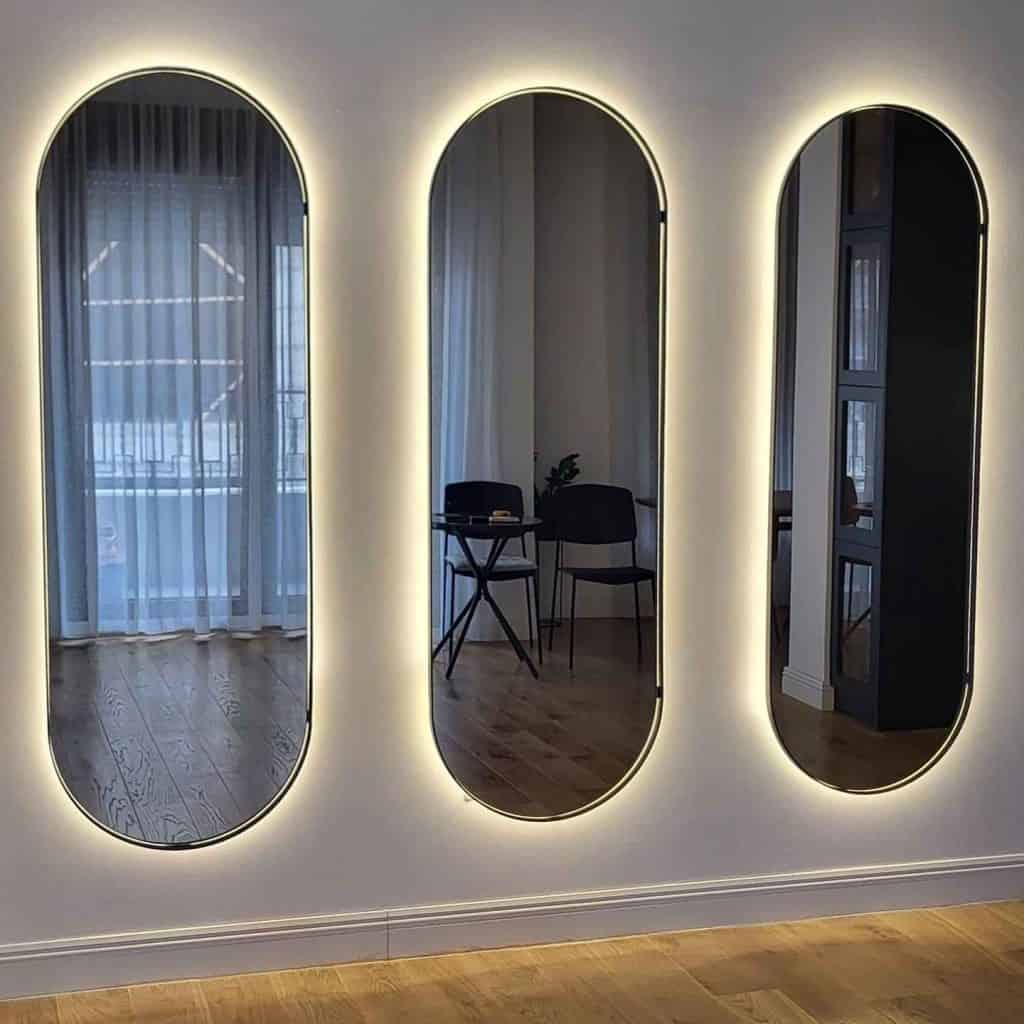
If I had to choose one trick I believe in, it would be mirrors. They are the interior designer’s most favoured weapon – and with good reason.
Mirrors reflect both light and the room itself, effectively doubling a space’s apparent depth. When placed correctly, a mirror can cause a wall to “vanish.”
How to use mirrors effectively:
- Put a large mirror on the wall opposite a window to reflect natural light back into the room
- Use a floor-to-ceiling mirror in a bedroom or hall to substantially stretch the space
- Lean a large mirror against a wall for a relaxed style which nevertheless adds depth
- Don’t put mirrors where they reflect mess – they’ll amplify the untidiness, not the area
Pro Tip: Instead of one large mirror, combine three smaller mirrors of varying shapes. You receive the same depth effect with a more carefully chosen, gallery-wall aesthetic.
Select the Appropriate Paint Colours
Lighter colours reflect more light, making walls appear further away. Darker colours absorb light, making walls appear closer.
Knowing how colour affects perception – rather than merely defaulting to simple white – is the key.
- Soft white / off-white Any room Opens up space dramatically
- Light grey Living-rooms, bedrooms Modern and breezy
- Pale blue or green Bathrooms, bedrooms Fresh and expansive
- Warm beige / cream Living areas, corridors Cosy yet spacious
- Bold dark colours Accent wall only Adds depth – use sparingly
Extra painting advice:
Paint the ceiling the same colour as the walls (or a little lighter) to remove visual breaks which make a room feel boxed in
Use a satin or eggshell finish rather than matte – the subtle sheen reflects more light
Paint skirting and mouldings the same colour as walls for a smooth, expansive appearance
Hang Curtains High and Wide
The majority of people hang curtains just above the window frame – this makes both the window and the room appear smaller.
Instead, hang your curtain pole as near to the ceiling as possible (10–15 centimetres below the ceiling line) and extend the pole 20–30 centimetres on each side beyond the window frame.
This makes the window seem significantly larger and draws the eye upwards, making ceilings appear higher. I made this change in my bedroom and the room genuinely seemed 30% bigger overnight.
The curtain rules for small spaces:
- Always hang poles close to the ceiling, not just above the window
- Choose floor-length curtains which just touch the floor
- Use light, breezy fabrics like linen or thin cotton – they filter light instead of blocking it
- Match curtain colour to wall colour for a smooth, elongated appearance
Pro Tip: Thin white curtains hung floor to ceiling transform a room on their own – even without blackout layers behind them.
Remove Clutter and Reduce Your Furniture
This is the tip no one wants to hear, but it is also the most effective: less is more. In a small room, every extra piece of furniture and needless object makes the space feel more restricted.
Being deliberate about what you bring in – and ruthlessly reducing what is already there – is the quickest way to make any space feel bigger.
Furniture reduction principles:
- Choose furniture with legs – sofas, chairs, and beds on legs allow light to pass underneath, making the floor seem more open
- Scale matters – a huge sectional sofa can overwhelm a small living-room; choose smaller-scale pieces which fit in proportion
- Leave clear routes so you can move through the room without squeezing around obstacles
- Remove the coffee table entirely – replace it with a storage ottoman or small side tables.
Use Height for Storage and Decoration
When you don’t have much floor space, think upwards.
Upright shapes and tall items will get the eye going up, so ceilings seem higher and rooms feel larger. Consider all of your walls – right up to the ceiling – as good places to put things.
Ways to make the most of vertical space:
- Put in floor-to-ceiling bookshelves – they give you the most storage and also make ceilings appear taller;
- Hang pictures and decorations a little above where you normally would, to draw the eye upwards;
- Choose tall, narrow furniture rather than shorter, wider pieces;
- Add tall plants – fiddle leaf fig and monstera are good – in corners; they will soften the room and give it vertical appeal.
Helpful Hint: A set of floating shelves in a corner, going all the way to the ceiling, doesn’t use any floor space, offers lots of storage and will immediately make the ceiling seem higher.
Pick Furniture That Does Multiple Things
In small rooms, every item of furniture must be worth the space it takes up – ideally by doing two jobs. Rather than four things, each doing one job, get two things each doing two.
The best furniture that does more than one thing:
- An ottoman which stores things – coffee table, footrest, a bit of seating, and storage all in one;
- A bed with drawers built in – you won’t need a separate chest of drawers;
- A dining table which can be extended – small for everyday, bigger when you have people over;
- Nesting tables – three tables in the space of one;
- A Murphy bed – the best for saving space; the whole bed folds into the wall;
- A wall-mounted desk which folds down – a proper workspace that goes away when you aren’t using it.
Pro tip: When you are shopping for furniture for a small room, make your first question “does it have hidden storage?” That one change in how you think will really cut down on mess in the long run.
Have Layers of Light
A well-lit room will always feel larger than a dark one – whatever its actual size. Still, a lot of people only use one light in the ceiling and leave it at that.
What you want is to combine different light sources at different heights, to get rid of dark areas and make the room shine evenly.
The three kinds of lighting:
- General light – your main ceiling light (the base);
- Task lighting – lamps which give light for particular things you are doing;
- Atmospheric lighting – wall lights, LED strips, candles for a mood.
Specific advice for small rooms:
- Use warm-white bulbs (2700K–3000K) – warm light makes rooms feel larger and more comfortable;
- Put dimmer switches in wherever you can;
- Use wall lights instead of floor lamps, to free up floor space;
- Put a lamp in a dark corner – this gets rid of the ‘dead zone’ which makes rooms feel smaller;
- Add LED strip lights along the tops of cupboards or under a wall-mounted TV unit for a lovely, deep glow.
A lamp put behind a sofa, shining up to the ceiling, makes the ceiling feel higher and the whole room more spacious. It’s a trick from top hotel design.
Final Thoughts
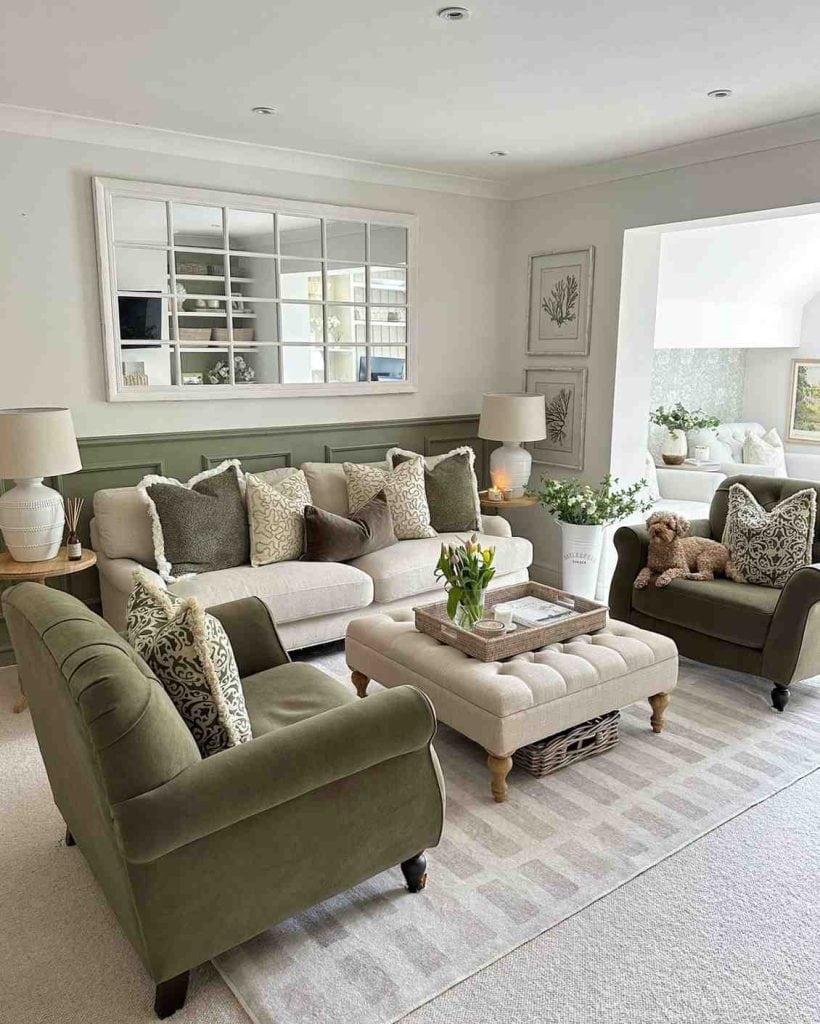
Making a small room look bigger isn’t about spending a lot of money or doing a complete re-do. It’s about being clever with what you have.
Light, reflection, colour, vertical space and well-thought-out furniture can totally change how a room feels – and often without costing very much.
Start with just one or two of these ideas. Add a large mirror, paint with a lighter colour, or move your curtain rail. Then build from there.
You will be amazed how quickly the changes add up to a home which genuinely feels spacious!
And that’s it for today’s article! If you have any questions or you just wanna share your thoughts, write them in the comment section below and we will be more than happy to get back to you!!
Until next time,
Stay safe,


I’m Katerina Lithopoulou, co-creator of DIY Cozy Living. I’ve always loved the little things that make a space feel special. With a background in language and a passion for photography and cozy design, I enjoy turning everyday inspiration into simple ideas people can actually use.
My motto: “Cozy isn’t a trend — it’s a feeling.”
