
How I Finally Figured Out Indoor Plants (And What Made the Difference)


I said goodbye to a cactus once.
I want to be upfront about this before I start recommending plants to anyone. A cactus. The plant that exists specifically for people who forget to water things. The plant that lives in deserts. I managed to overwater it — apparently this is possible, I did not know this at the time — and it quietly collapsed over the course of about two weeks while I assumed it was fine.
Tasos said nothing about the cactus. He never says anything about the plants. They are entirely my domain, which means the victories are mine and so are the failures, and the cactus was a significant failure that I think about more than is reasonable.
After the cactus I did some research. I bought a Sansevieria — the tall architectural plant with the stiff upright leaves, sometimes called a snake plant — because everything I read said it was nearly impossible to kill. I put it in the corner of the living room. I watered it occasionally, less than felt right, because the research said to err on the side of less.
It is still alive. It has been alive for four years. It has grown three new leaves and produced a small offshoot that I’ve since repotted and given to my mother, who has also managed to keep it alive.
The Sansevieria restored my confidence. It showed me that the problem with the cactus was not that I was incapable of keeping plants alive — it was that I had started with the wrong plant.
That’s what this article is about. Starting with the right plant.
Before You Buy Anything: The One Question That Changes Everything
Most people choose houseplants based on how they look. Which makes sense — you want something that works in the room. But the more useful question, especially if you’re just starting out, is how much light does this space actually get?
Not how much light you think it gets. How much it actually gets.
A room with one north-facing window gets significantly less light than a room with south-facing windows and no obstructions outside. A plant that needs bright indirect light will struggle in the first and thrive in the second. This single factor determines whether a plant lives or dies more than almost anything else, including how often you remember to water it.
Stand in the room at midday. If you can read comfortably without a lamp, you have reasonable light. If you’re squinting at a screen and the room feels dim, you have low light. Choose accordingly.
What Indoor Plants Actually Do for You
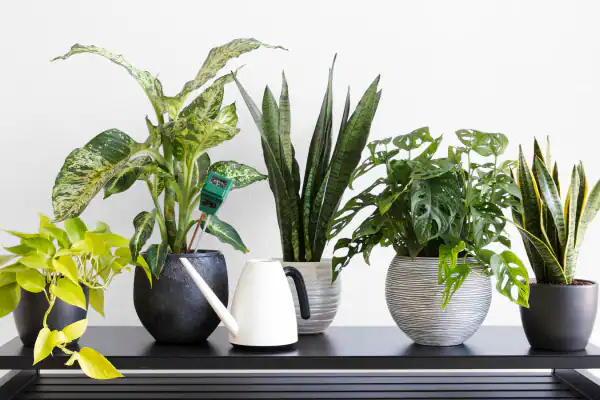
This is the part I didn’t expect when I started.
I bought plants because I wanted the room to look better. What I didn’t anticipate was how much the presence of something living and growing in a space changes how the space feels to be in.
There is research behind this — plants filter certain toxins from the air, improve humidity in dry interiors, and reduce stress in measurable ways. The Sansevieria specifically is one of the few plants that releases oxygen at night rather than during the day, which makes it particularly well suited to a bedroom. The Peace Lily is consistently listed among the most effective air-purifying houseplants available.
But beyond the research, there is something simpler. A room with plants in it feels inhabited in a different way than a room without them. Not decorated — inhabited. Like the space is alive rather than just arranged.
That is worth something that no study has quite managed to quantify.
The Ones to Start With
These are the plants that will survive a missed watering, an imperfect spot, and the general uncertainty of someone who is still learning. They are not boring plants — they are smart starting points.
Sansevieria (Snake Plant)
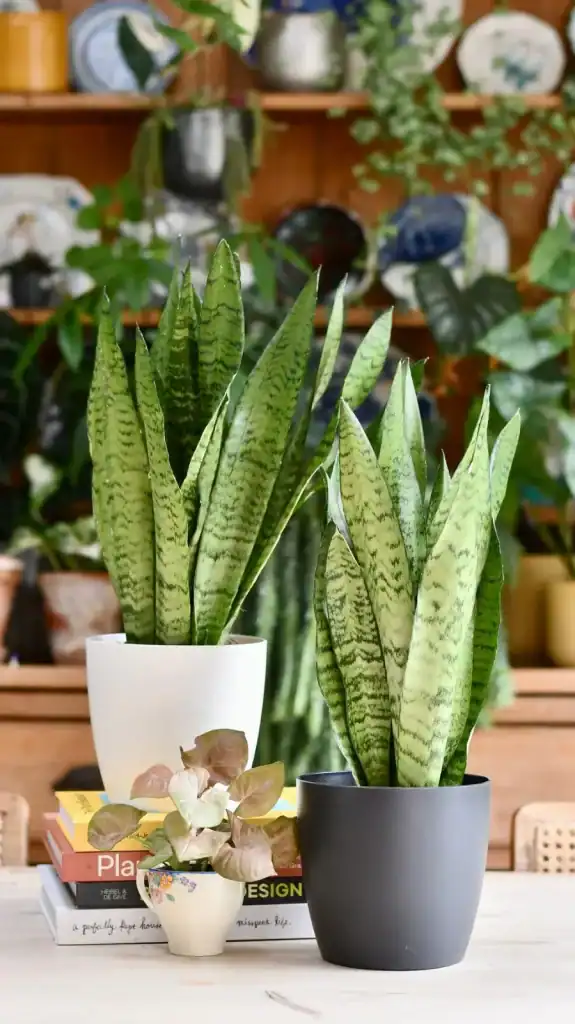
Start here. Just start here.
The Sansevieria tolerates low light, irregular watering, and general neglect with a serenity that no other houseplant quite matches. It stores water in its leaves, which means forgetting to water it for two or three weeks is not a disaster — it is, in fact, closer to what it prefers.
It also looks genuinely beautiful. Tall, architectural, with stiff upright leaves in dark green banded with lighter green or yellow edges depending on the variety. It works in a corner, beside a sofa, in an entryway. It photographs well. It doesn’t need to be fussed over or moved seasonally.
Light: Low to bright indirect. Will survive in a dim corner, will thrive with more light. Water: Every 2-6 weeks depending on season. Less in winter. When in doubt, wait another week. Why beginners love it: You can almost ignore it and it stays alive. I say almost because you still need to water it occasionally. Just much less than you’d think.
The Sansevieria was my starting point and it remains my most reliable plant. Four years. Three new leaves. One successful offshoot. Zero drama.
Pothos
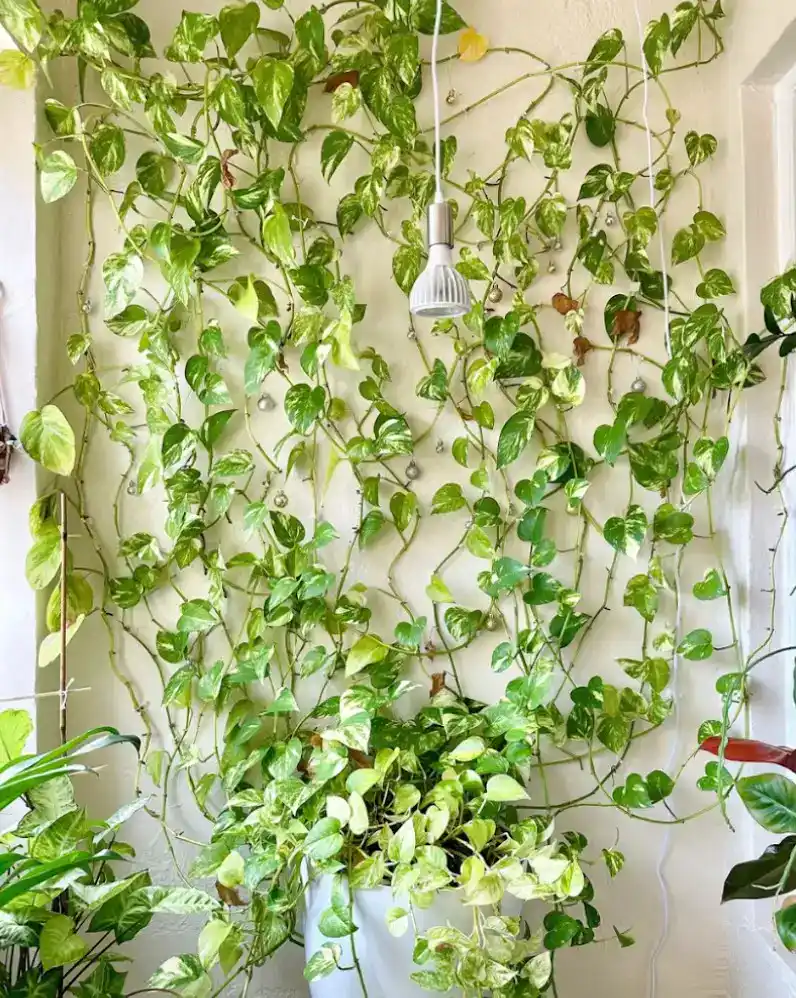
If the Sansevieria is the reliable one, the Pothos is the enthusiastic one.
It grows. Constantly, visibly, in a way that feels encouraging rather than alarming. Long trailing vines that cascade over the edge of a shelf or drape from a hanging planter, with heart-shaped leaves in green or variegated green and white depending on the variety. It roots in water — you can cut a stem, place it in a glass of water, and watch it develop roots over a couple of weeks before planting it — which makes it the most satisfying plant to propagate once you’re ready to try.
Light: Low to medium indirect. Will lose some of its variegation in very low light but won’t die. Water: When the top layer of soil is dry to the touch. More forgiving than most — it wilts dramatically when thirsty but recovers quickly once watered. One thing to know: Pothos is toxic to cats and dogs. If you have pets that eat plants, choose something else.
ZZ Plant (Zamioculcas Zamiifolia)
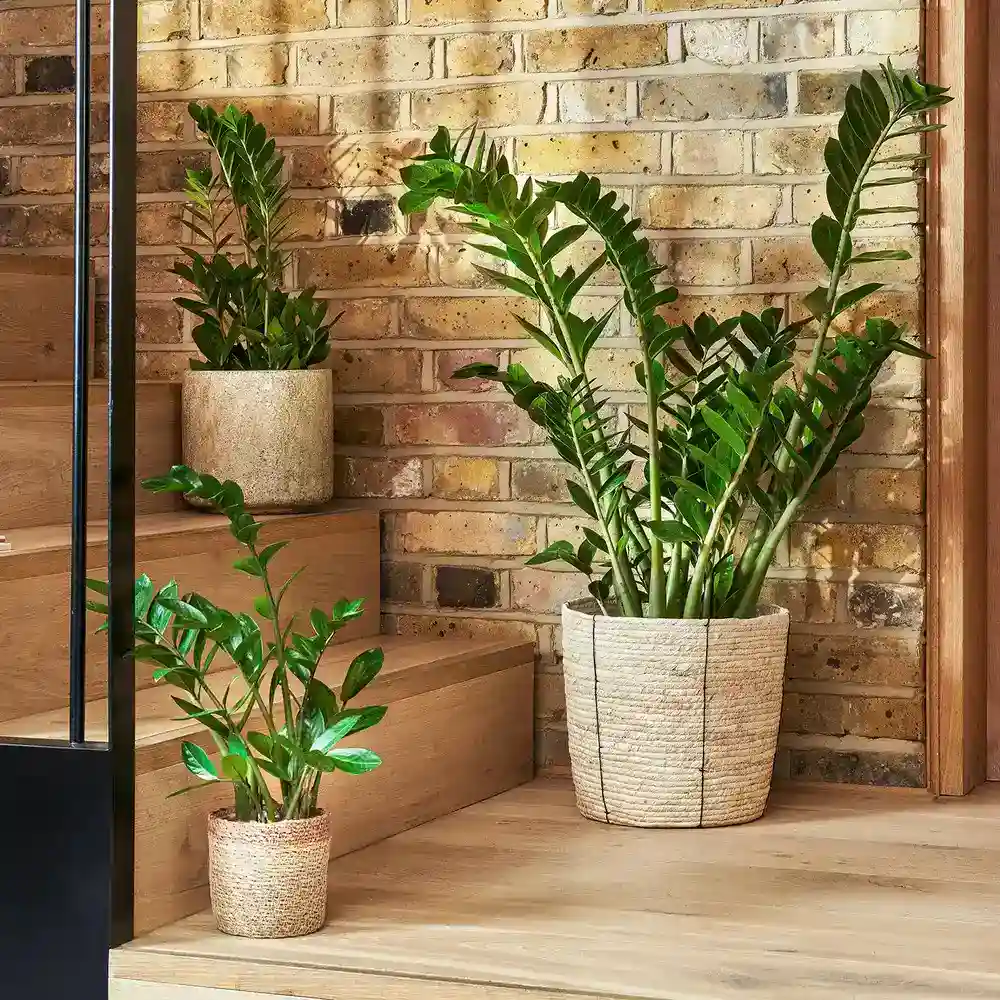
The ZZ plant looks expensive. Glossy dark green leaves on arching stems — the kind of plant that appears in design magazines in minimalist apartments. It also happens to be one of the most indestructible houseplants available.
It grows from underground rhizomes that store water, which means it handles drought conditions the way the Sansevieria does — without complaint and without visible suffering. It is slow-growing, which means it won’t outgrow its pot quickly, and it needs repotting infrequently.
Light: Low to bright indirect. One of the few plants that genuinely does well in a dark corner. Water: Every 2-3 weeks in summer, less in winter. Overwatering is the main risk — the rhizomes rot if kept consistently wet. Why it’s worth having: It looks like it requires expertise. It doesn’t.
Peace Lily (Spathiphyllum)
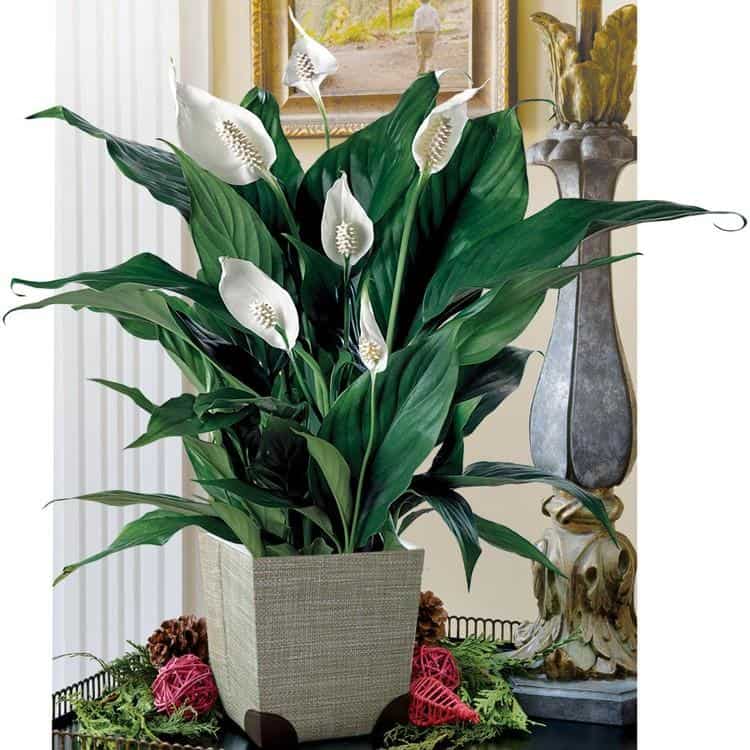
The Peace Lily tells you when it’s thirsty. The leaves droop — clearly, dramatically, unmistakably — when it needs water. Then you water it and within a few hours it stands back up as if nothing happened.
This communication makes it one of the most beginner-friendly plants available. You don’t need to remember a schedule or check the soil. You wait for the droop and then you water. It’s a system.
It also flowers — white sail-shaped blooms that appear a few times a year without any special treatment — which makes it feel more rewarding than foliage-only plants.
Light: Low to medium indirect. Avoid direct sun — it scorches the leaves. Water: When it droops. Then thoroughly. One thing to know: Like Pothos, it’s toxic to cats and dogs.
Spider Plant (Chlorophytum Comosum)
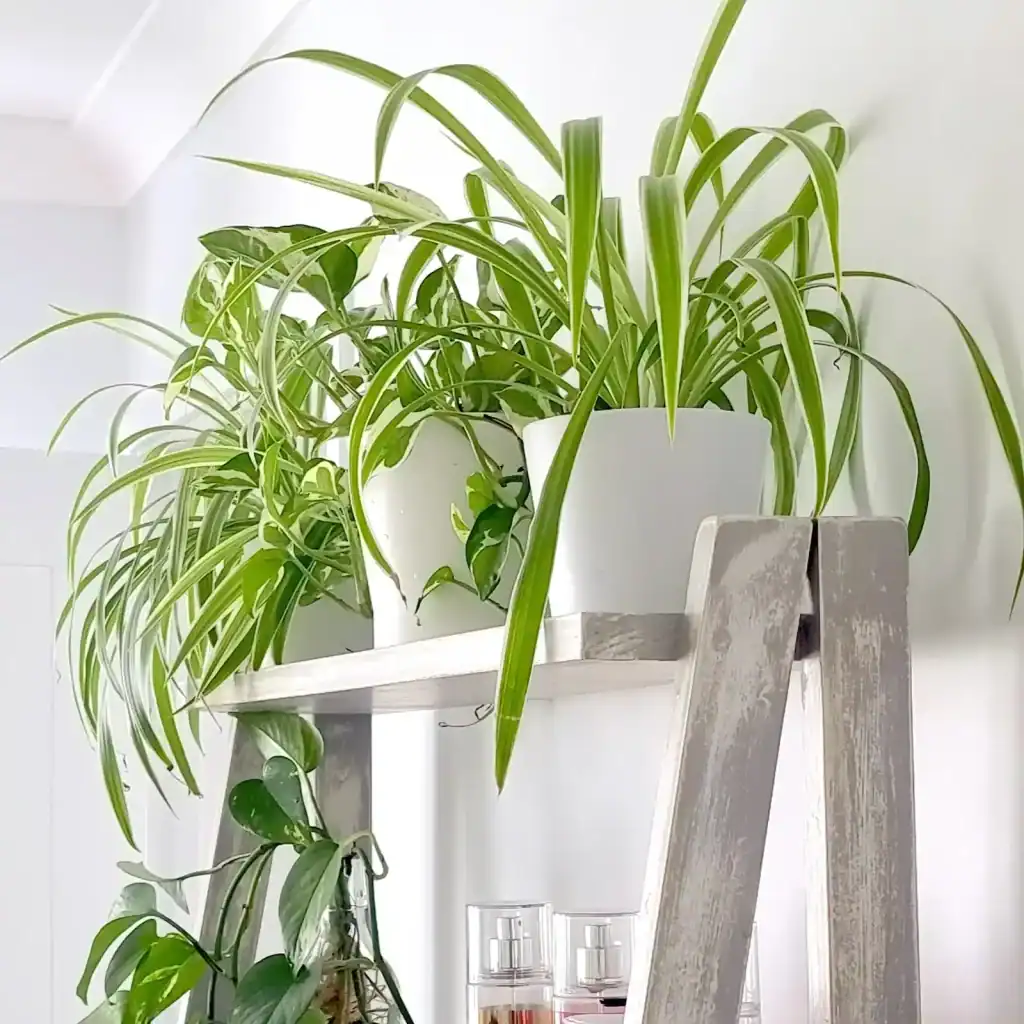
Cheerful, fast-growing, and almost aggressively easy to keep alive. The Spider Plant produces long arching leaves with a pale stripe down the centre, and once it’s established it sends out long runners with small plantlets — miniature versions of itself — that you can cut off and pot separately.
This makes it one of the most generous plants you can own. Within a year of buying one, you’ll have enough offshoots to give to everyone you know. Maria has already claimed future offshoots from ours for her room.
Light: Bright indirect to medium. Tolerates lower light but grows more slowly. Water: Moderately — let the soil dry slightly between waterings. Very forgiving. Extra detail: The leaf tips sometimes go brown. This is usually caused by fluoride in tap water. Switching to filtered water or leaving tap water to sit overnight before using it usually solves it.
When You’re Ready for More
Once you’ve kept a plant alive for six months and your confidence has grown, these are worth trying. They’re not difficult — just slightly more specific in what they need.
Monstera Deliciosa
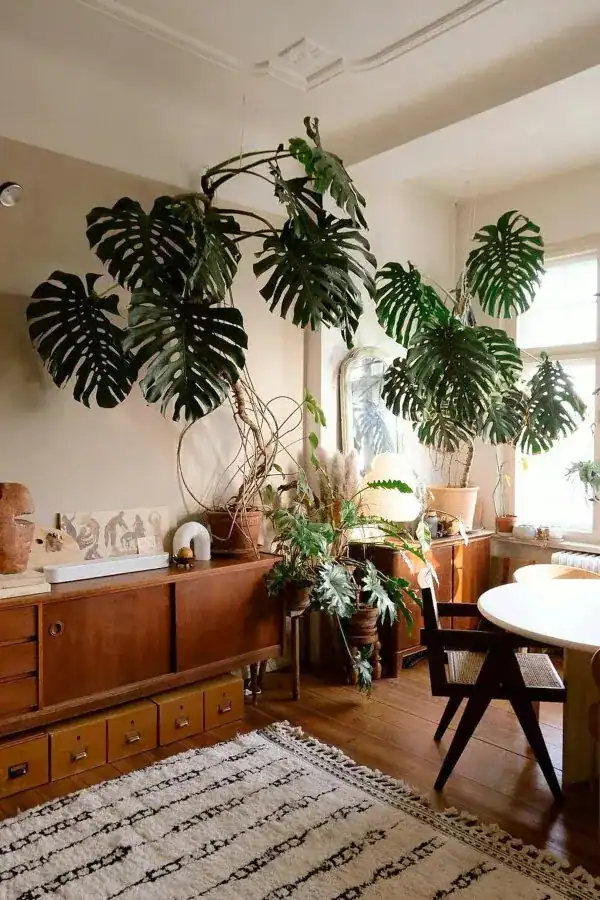
The plant everyone wants. Large, dramatic, with the distinctive split leaves that appear on every design blog and Pinterest board in existence. It grows quickly once established, tolerates most indoor conditions, and looks genuinely spectacular in a large room.
Light: Bright indirect. A few feet from a window rather than directly in front of one. Water: When the top 3-4cm of soil are dry.
About once a week in summer, less in winter. What to know: It gets large. Buy it knowing that the 30cm plant you bring home will eventually become a 1.5 metre plant that takes up a corner of the room. This is not a warning — it’s a promise.
Rubber Plant (Ficus Elastica)
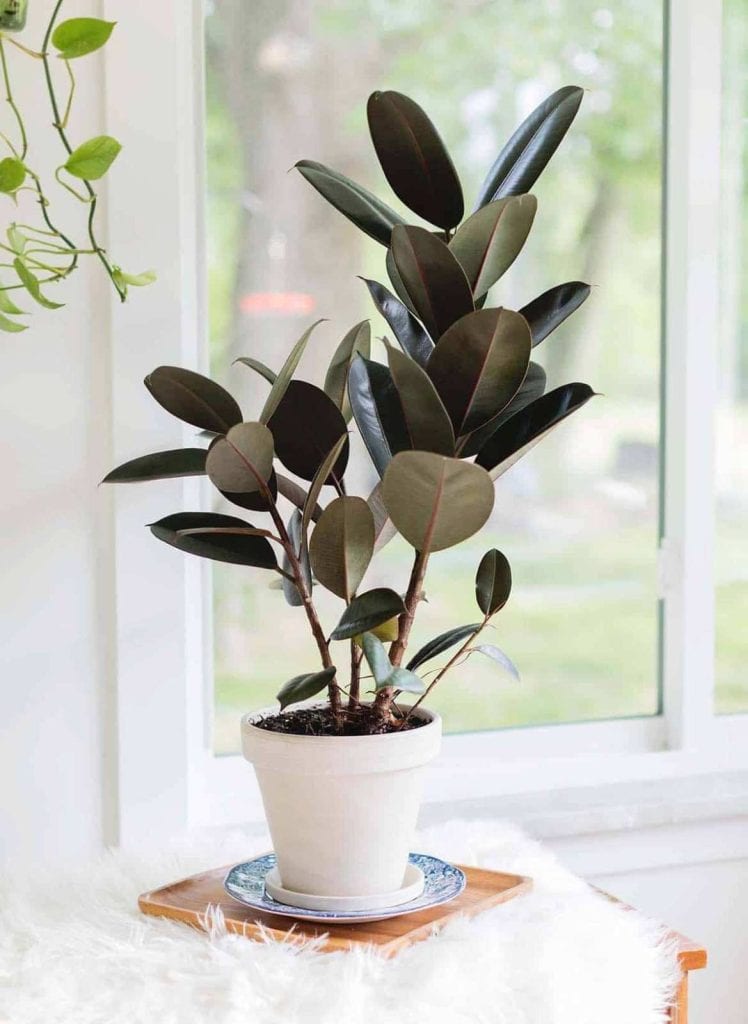
Architectural and striking, with large glossy leaves in deep burgundy or dark green depending on the variety. It grows upright and tall, making it one of the best plants for adding height to a room without taking up much floor space.
Light: Bright indirect. More light = more growth and better leaf colour. Water: When the top layer of soil is dry. Let it dry out more in winter. One rule: Don’t move it once you’ve found its spot. Rubber plants drop leaves in protest when relocated. Find a position it likes, put it there, and leave it.
String of Pearls (Senecio Rowleyanus)
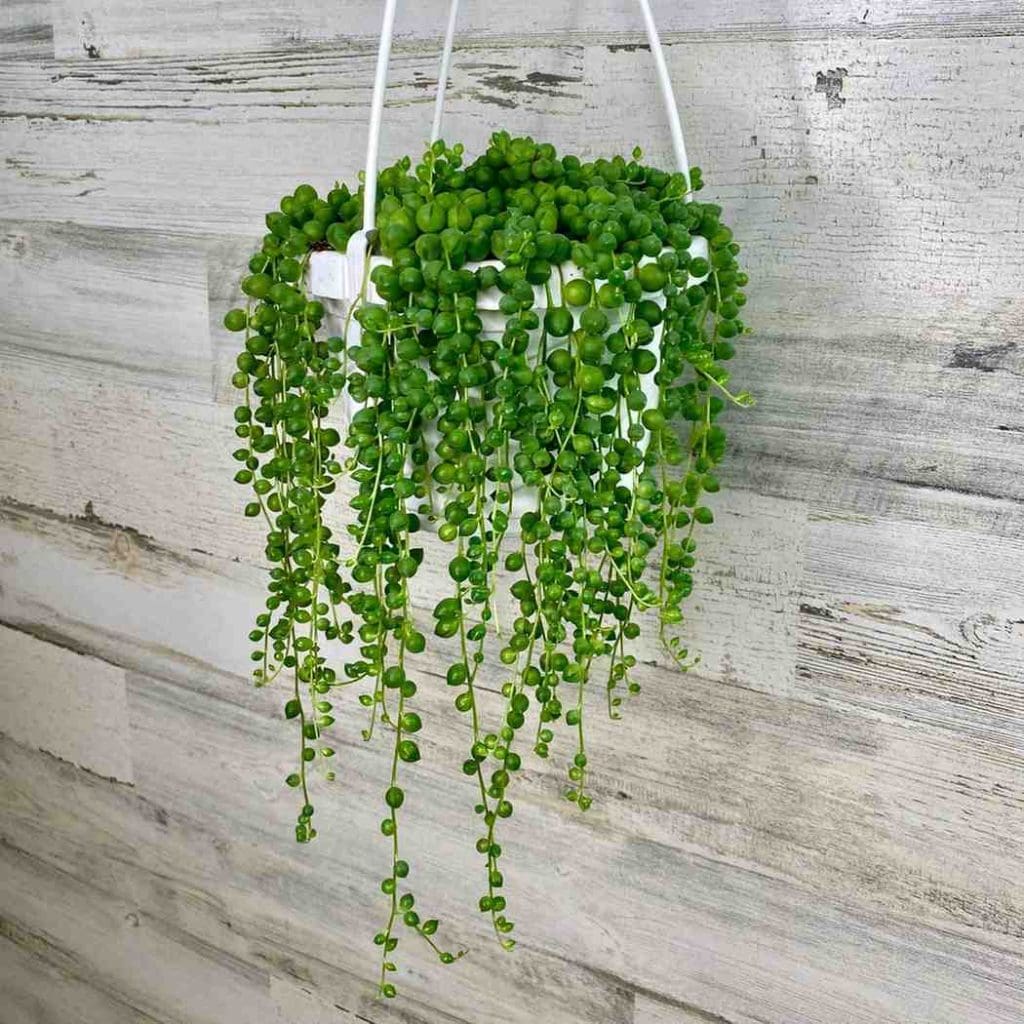
Small round leaves on long trailing stems — exactly as the name suggests. It’s a succulent, which means it stores water and prefers to dry out between waterings. In a hanging planter near a bright window it looks otherworldly.
Light: Bright indirect to some direct morning sun. Water: Every 2 weeks in summer, much less in winter. The most common mistake is overwatering — the pearls go mushy and fall off. Why it’s worth the slight extra attention: There is nothing else that looks quite like it. Once you have it in the right spot it grows long and trailing and requires very little intervention. The payoff is significant.
Calathea
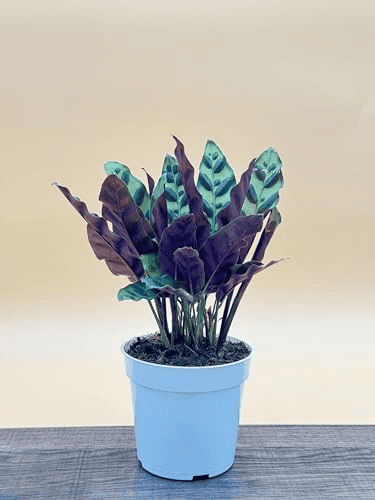
This is the one I recommend only once you’ve developed some confidence, because Calathea is the plant that taught me that not every plant and not every home are right for each other.
It has spectacular patterned leaves — dark green with pale markings, sometimes with a deep purple underside — and it is genuinely beautiful. It is also particular about humidity, sensitive to tap water, and will drop leaves dramatically if conditions aren’t right.
Light: Medium to low indirect. No direct sun. Water: Regularly, with filtered or room-temperature water. It dislikes fluoride and cold water. Humidity: Needs it. A pebble tray with water beneath the pot, or a room with natural humidity like a bathroom, helps significantly.
The honest version: If your home is warm, reasonably humid, and has consistent medium light, Calathea will reward you with some of the most beautiful foliage of any houseplant. If your home is dry and bright, it will frustrate you. Know your home before you buy one.
A Few Things Nobody Tells You At the Beginning
The pot matters more than people say. A pot without drainage holes is almost always a mistake — water sits at the bottom and roots rot. If you fall in love with a pot that has no drainage hole, use it as a decorative outer pot and keep the plant in a plain nursery pot inside it.
Most plants die from overwatering, not underwatering. This was my cactus lesson and it applies more broadly. When in doubt, wait another few days before watering. The soil should be dry before you water most houseplants — not bone dry, but not still damp from the last watering either.
Dust the leaves. This is the thing nobody mentions and it makes a real difference. Dusty leaves can’t absorb light as efficiently as clean ones. A damp cloth once a month on the larger-leaved plants keeps them healthy and makes them look considerably better.
Repot in spring, not when you notice the plant is struggling. By the time a plant looks root-bound — roots coming out of the drainage holes, soil drying out within a day of watering — it’s already been too crowded for a while. Check annually in spring and repot into the next size up if needed.
A Final Thought
The Sansevieria in our living room has been there for four years. It is the first thing I see when I walk in from the hallway. It doesn’t demand anything — no specific humidity, no particular schedule, no anxiety when I forget it for a week. It just grows, slowly and steadily, in its corner.
That’s what a good houseplant does. It makes the room feel more alive without asking too much in return. Start with the ones that are generous with beginners. Learn what your home offers in terms of light. Water less than feels right. And don’t overwater the cactus.
That’s all I have for today. I’d love to know which plant you started with — or which one you’ve been too afraid to try. Leave it in the comments. And if you have a Calathea success story, please share it. I need the encouragement.
Until next time,
Stay safe,


I’m Katerina Lithopoulou, co-creator of DIY Cozy Living. I’ve always loved the little things that make a space feel special. With a background in language and a passion for photography and cozy design, I enjoy turning everyday inspiration into simple ideas people can actually use.
My motto: “Cozy isn’t a trend — it’s a feeling.”
