
How to Get a Victorian Bathroom Without a Full Renovation

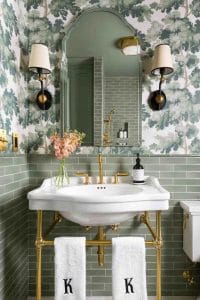
Our bathroom is small, dated, and — at least for now — not going anywhere.
When we moved into our current home, the bathroom was one of those rooms I kept telling myself we’d deal with “eventually.” Plain white tiles, a basic vanity, builder-grade everything. Not offensive, just completely without personality.
I didn’t want to wait for a renovation that might be years away. So I started looking at how to layer in a Victorian feel without touching a single tile.
What I found surprised me. The Victorian bathroom look is actually one of the most achievable styles through accessories, textiles, and small swaps — because it’s built on specific details rather than specific materials. And most of those details are completely portable.
Here is everything I changed, in the order I’d recommend doing it.
| Element | What to Look For | Approximate Cost |
|---|---|---|
| Victorian floor runner | Black and white geometric or floral pattern | $30–$80 |
| Pedestal sink cover | Skirt in white or cream linen | $20–$50 |
| Brass fixtures | Faucet, towel bar, robe hooks | $40–$150 per piece |
| Wainscoting panels | Peel-and-stick beadboard panels | $50–$120 |
| Framed botanical prints | Vintage-style art in gold frames | $10–$40 per print |
| Clawfoot tub caddy | Brass or antique-finish bath tray | $30–$70 |
| Apothecary accessories | Glass bottles, ceramic soap dish | $15–$60 |
| Victorian mirror | Ornate gold or black framed mirror | $40–$200 |
| Deep jewel-tone textiles | Towels, bath mat in forest green or navy | $20–$60 |
| Vintage-style lighting | Sconce with exposed bulb or globe shade | $30–$100 |
Start With the Floor: A Victorian-Style Rug or Runner
The floor is the first thing that reads as “Victorian” — and also the first thing you can change without touching anything permanently.
Victorian bathrooms are known for their black and white encaustic or geometric tile floors. You can’t lay new tile without a renovation, but you can replicate the look with a cotton runner or bath mat in a black and white geometric pattern.
Look for a flat-woven cotton rug with a diamond, hexagon, or small floral repeat pattern. Avoid plush pile — Victorian bathrooms were known for their hard-wearing, practical surfaces.
Variations:
- Black and white diamond geometric runner
- Navy and cream vintage floral bath mat
- Monochromatic white cotton fringed rug for a softer look
Swap Your Fixtures for Brass
This is the single change that will do the most work.
Modern chrome fixtures immediately read as contemporary. Swap them for brushed brass or antique bronze and the entire room shifts in tone.
Start with what you use most: the faucet. A Victorian-style cross-handle faucet in brushed brass is one of the most transformative swaps you can make, and it’s a DIY-level job in most bathrooms.
Next, replace your towel bar and robe hooks. Antique brass towel rings, ornate double-hook coat hooks, and carved towel bars are all easy to find and install with just a screwdriver.
Variations:
- Unlacquered brass (develops a natural patina over time — very authentic)
- Oil-rubbed bronze for a darker, moodier feel
- Matte black with brass accents for a Victorian-meets-modern look
Add Wainscoting With Peel-and-Stick Panels
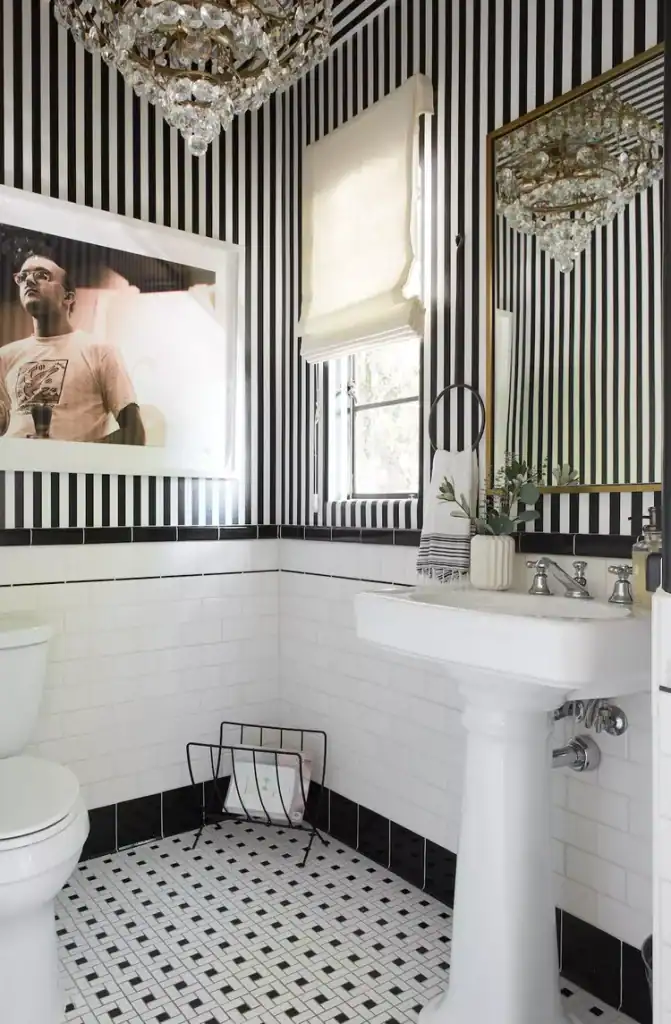
Wainscoting — the panelled lower half of a bathroom wall — is one of the most recognizable elements of Victorian interior design.
You don’t need to install real wood paneling to get this look. Peel-and-stick beadboard panels are available in most DIY stores and apply directly to painted or tiled walls.
Install them on the lower third of the wall, up to around 90–100cm height. Paint them in a period-appropriate color: bright white, cream, or a very pale sage green.
Add a chair rail strip along the top edge to finish the look properly. This one step changes the perceived architecture of the entire room.
Variations:
- Tongue-and-groove beadboard in vertical stripes
- Flat recessed-panel wainscoting for a more formal Victorian look
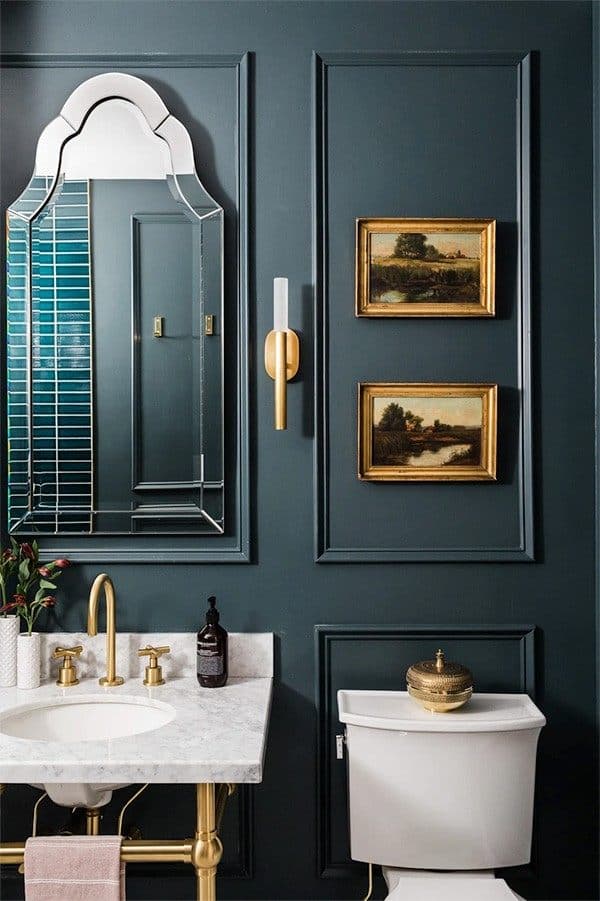
- Paint the paneling in a deep color (dark navy, forest green) for a dramatic effect
Hang a Victorian-Style Mirror
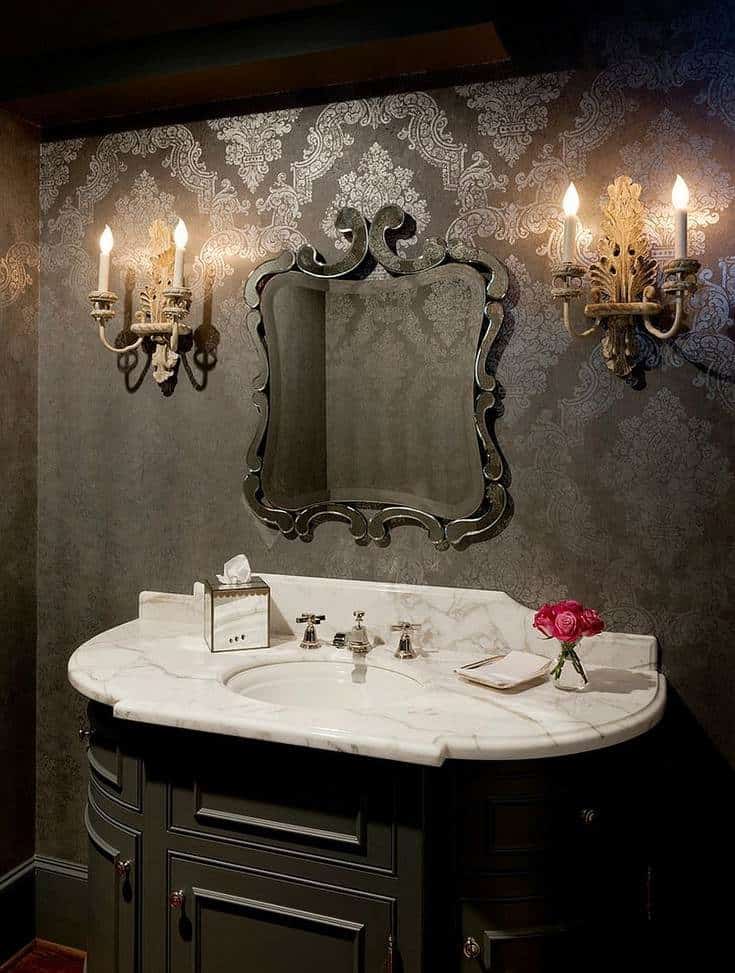
The mirror is the room’s focal point — and in a Victorian bathroom, it should be ornate, oversized, and framed.
Replace a plain frameless mirror (or builder-grade framed mirror) with something that has presence: an ornate gold frame, a carved black wooden frame, or an arched mirror with a decorative surround.
The frame style matters more than the size. A genuinely ornate frame — one with flourishes, carved details, or a distinctive arch — signals Victorian immediately.
Hang it slightly higher than you might think natural. Victorian mirrors were often positioned to reflect light from high windows, which created a sense of height in the room.
Variations:
- Arched gold ornate mirror above a pedestal sink
- Dark mahogany-framed rectangular mirror for a more masculine Victorian feel
- A pair of smaller ornate mirrors flanking a central sconce
Layer In Deep Jewel-Tone Textiles
🔥 Would you like to save this?
Color is one of the fastest ways to signal a Victorian aesthetic.
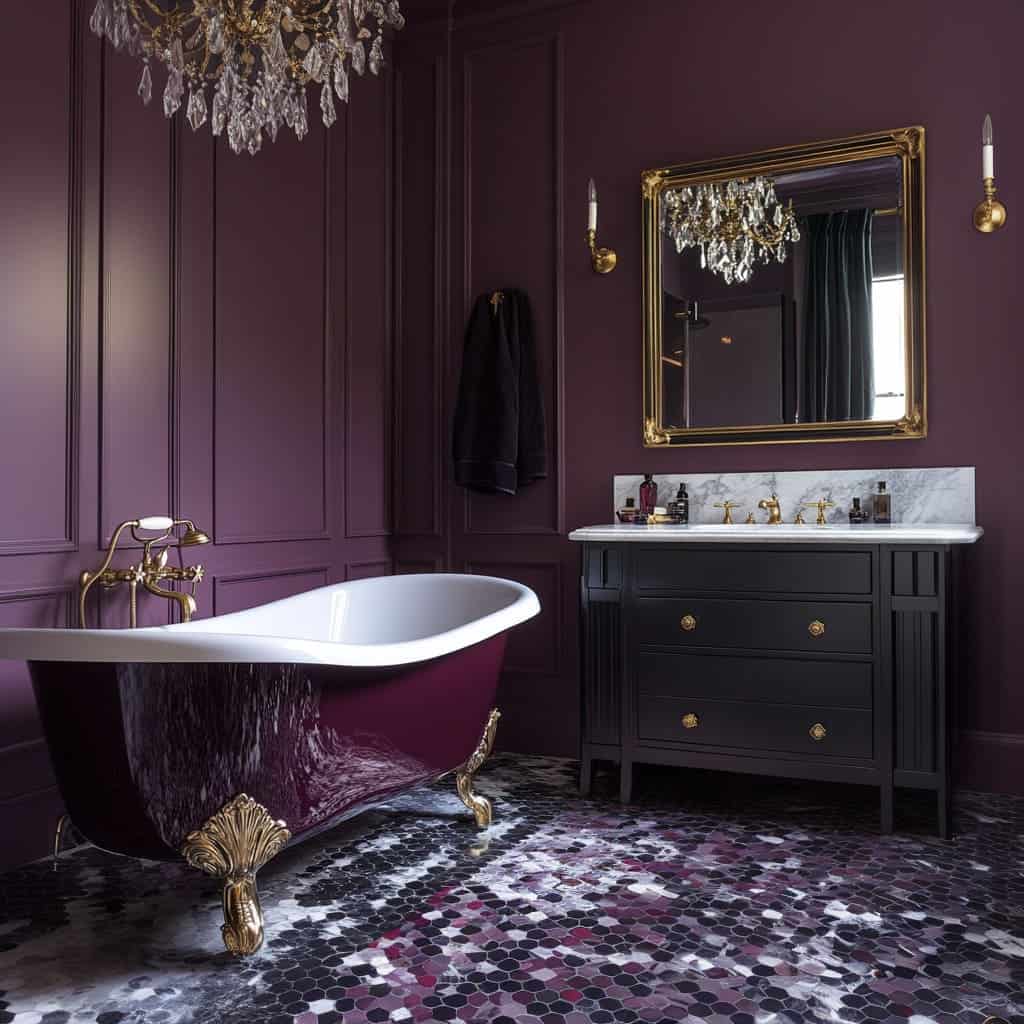
Victorian bathrooms used deep, rich tones: forest green, navy blue, burgundy, dark teal. Introducing these colors through towels, a bath mat, and a small window curtain is completely non-permanent and immediately transformative.
Swap your white or grey towels for deep forest green or navy. Choose thick, hotel-weight cotton — Victorian bathrooms were associated with abundance and quality, and thin towels undercut that immediately.
Add a small cafe curtain on a tension rod in the window — a simple white cotton or linen panel with a small print brings in that period-specific softness.
Marina stayed with us last spring and said our bathroom felt like a boutique hotel. I didn’t tell her it was mostly just green towels and a new mirror.
Variations:
- Forest green and antique white combination
- Burgundy and brass for a deeply Victorian feel
- Navy and cream with gold accents
Fill the Shelves With Apothecary-Style Accessories
Victorian bathrooms were functional rooms — and that function was beautifully displayed rather than hidden.
Replace your plastic pump dispensers and modern bottles with glass apothecary jars, ceramic containers, and wooden trays. Decant your soap, cotton balls, and bath salts into proper vessels.
A clear glass jar with a cork lid. A white ceramic soap dish. A small wooden tray holding your perfume bottles. A silver-plated toothbrush holder.
None of this costs much. All of it shifts the feeling of the room completely.
Variations:
- Amber glass apothecary bottles for a warmer, more aged look
- A silver or chrome tray with a monogrammed soap dish for formal Victorian style
- A small potted fern or trailing ivy to bring in the Victorian love of plants
Hang Framed Botanical or Anatomical Prints
Wall art in a bathroom feels indulgent — which is exactly why it reads as Victorian.
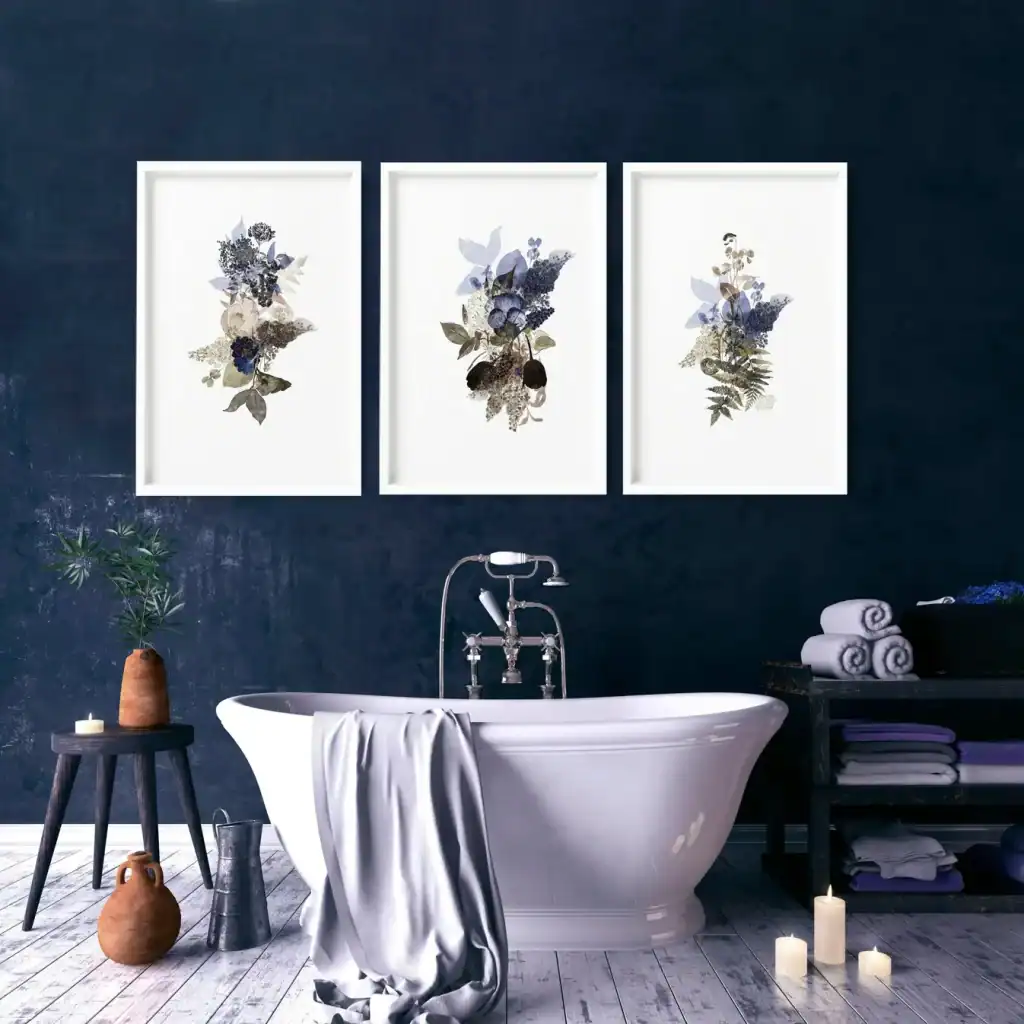
The Victorians were obsessed with natural history: botanical illustrations, shell studies, anatomical drawings, and insect prints were all common in domestic interiors. Framed prints in gold or dark wooden frames grouped in a small gallery wall bring this sensibility directly into your bathroom.
Find vintage botanical prints on Etsy, at antique markets, or print them for free from public domain archives like the Biodiversity Heritage Library.
Frame them in matching gold frames in different sizes and cluster them on one wall, above the toilet or alongside the mirror. The effect is layered and genuinely beautiful.
Variations:
- Black and white anatomical drawings for a dramatic, editorial feel
- Victorian-era fashion plates for a more feminine look
- Hand-coloured shell or butterfly prints for maximum period authenticity
Upgrade Your Lighting
Nothing ages a bathroom faster than a single overhead fluorescent strip.
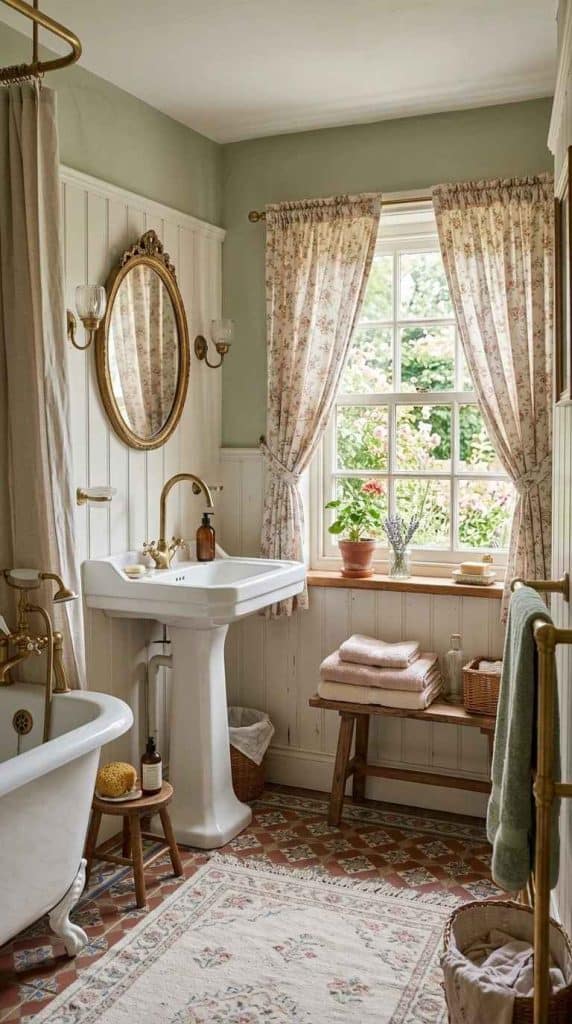
Victorian lighting was warm, directional, and decorative. Wall sconces on either side of the mirror — rather than overhead lighting — is the most period-appropriate approach and also the most flattering light for a bathroom.
If you’re renting or can’t hardwire anything, battery-operated sconces have become genuinely convincing in recent years. Look for globe-shaped or exposed-filament bulb styles in a brass or antique finish.
Even swapping a plain ceiling fixture for one with a fabric shade or a globe glass diffuser makes an immediate difference. Warm-toned bulbs only — 2700K or lower.
Variations:
- Brass wall sconces with globe white glass shades
- A single antique-style pendant above the bath or sink
- Battery-operated picture lights above framed prints for layered warm light
The Order to Do It All In
If you’re working on a budget and can only do one thing at a time, this is the order I’d recommend:
Start with the mirror — it changes the room’s personality immediately.
Next, swap your fixtures to brass. Even just the towel bar and hooks make a visible difference.
Then add the textiles: deep-toned towels and a patterned floor runner.
After that, layer in the accessories: apothecary bottles, framed prints, a wooden tray.
Wainscoting panels come last — they’re the most involved step, but they take the look from “Victorian-inspired” to “genuinely Victorian.”
None of these steps require a contractor. None of them are permanent. And done in the right order, they build on each other in a way that makes the whole room feel completely transformed — without a single tile being touched.
Thanks for reading,


I’m Katerina Lithopoulou, co-creator of DIY Cozy Living. I’ve always loved the little things that make a space feel special. With a background in language and a passion for photography and cozy design, I enjoy turning everyday inspiration into simple ideas people can actually use.
My motto: “Cozy isn’t a trend — it’s a feeling.”
