

Lemme guess.
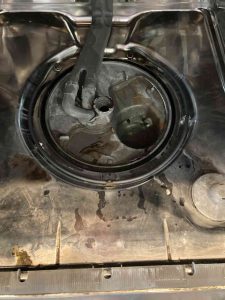
You use your dishwasher pretty much daily. You put dishes in, you get dishes out, you put more dishes in. And you likely haven’t bothered to clean the dishwasher itself – ever.
Me, too.
Until the day I opened mine and was met with an odour best put as “damp dog and very old lasagne.” And the dishes? They were coming out covered in a strange layer that no amount of rinse aid could fix.
That was the moment I realised I needed to do something.
The fact is that nobody ever tells you that your dishwasher is one of the most-used appliances in your house – and needs to be cleaned like any other. Perhaps even more. All the food, grease and soap remains must end up somewhere – and, just so you know, it doesn’t simply go down the drain by itself.
The good thing is, giving your dishwasher a really thorough clean is far easier than you’d think. And when you’ve done it once, you’ll ask yourself why you didn’t do it before.
What You’ll Need
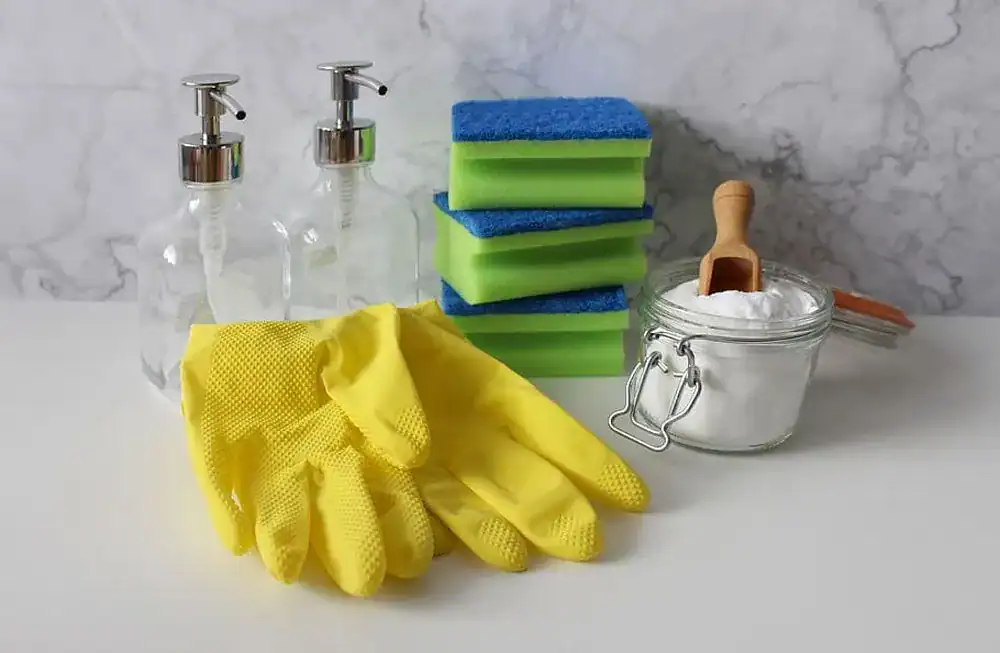
Nothing special. You probably already have it all.
- White vinegar
- Baking soda
- Washing-up liquid
- A scrubbing brush or old toothbrush
- A microfibre cloth or sponge
- A toothpick (for anything really stuck on)
That’s it. No special cleaning products needed – though I will mention one product at the end that I really like for monthly upkeep.
Step One: Get Out and Clean the Filter
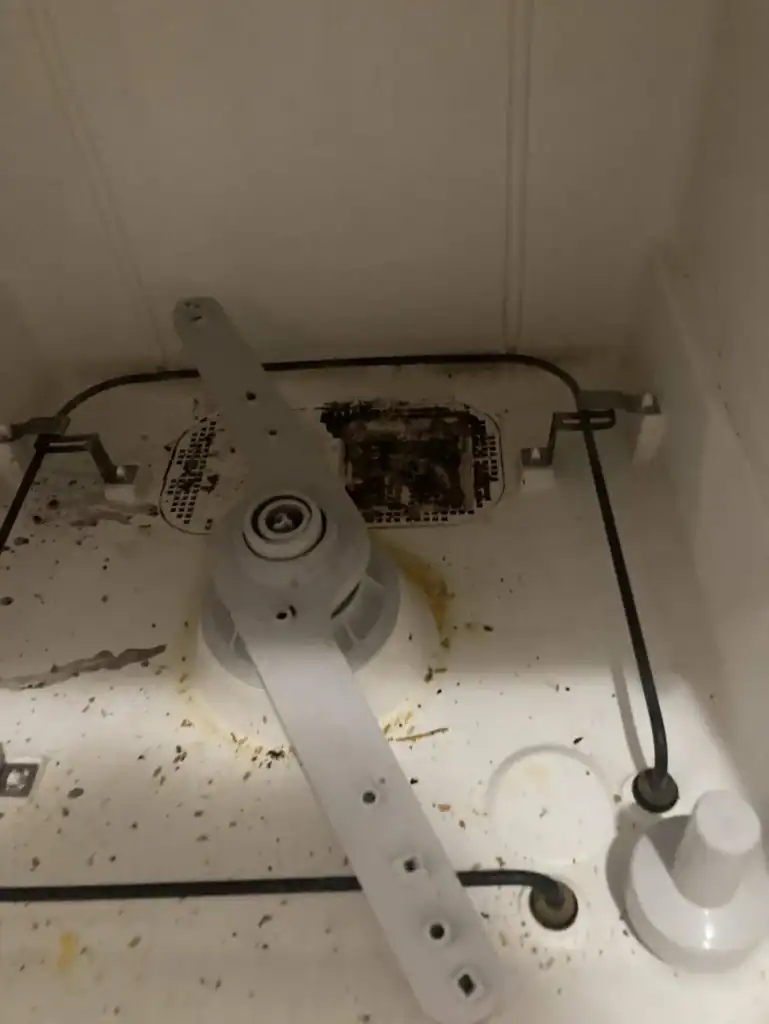
This is the step most people skip. And it’s also the most important.
At the base of your dishwasher is a filter. It collects all the food bits that come off your dishes during a wash. And if you’ve never cleaned it? I won’t make it sound nicer – it’s going to be awful.
Turn it anti-clockwise and lift it straight out. Take it to the sink, hold it under hot water, put in a little washing-up liquid, and scrub it with your brush. Get into all the little gaps. Rinse until the water is clear.
While you’re down there, look at the drain area too. Remove any food or bits you can see. And check the spray arms – the spinning bits that spray water on your dishes. Each tiny hole needs to be clear. If any are blocked, use a toothpick to poke through them. It takes two minutes and makes a big difference to how well your dishwasher cleans.
Useful tip: Check your dishwasher’s manual – some newer models have self-cleaning filters that work differently. It’s worth a quick look before you start taking things apart.
Step Two: Clean the Seal and the Inside
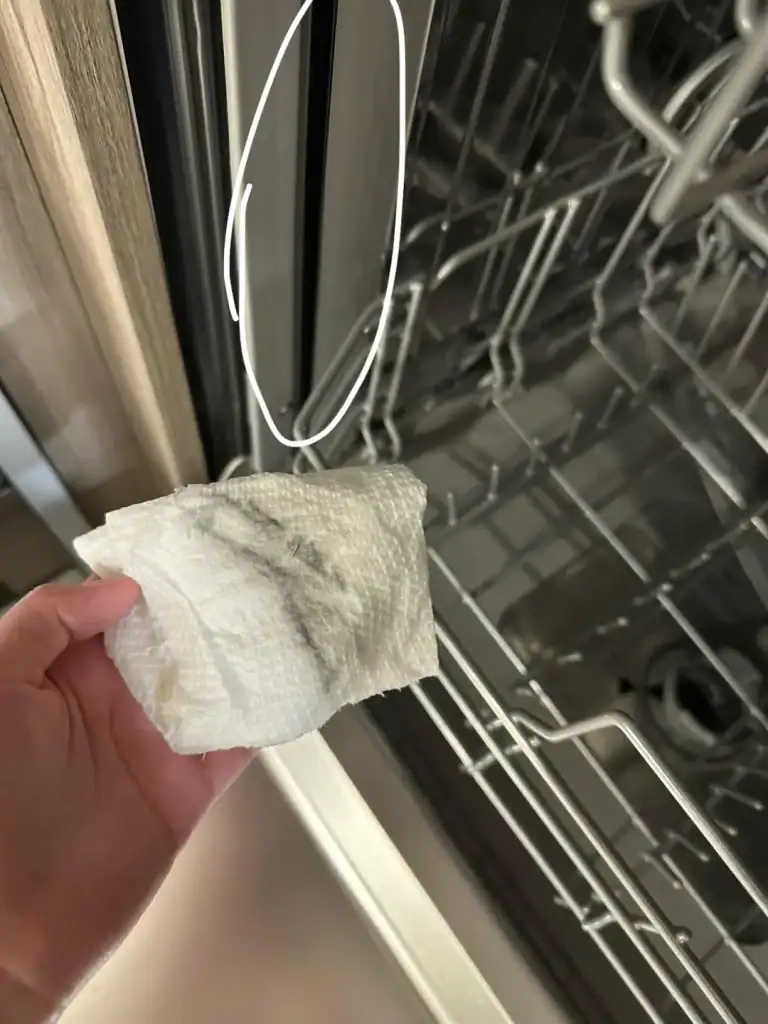
With the filter out, take a moment to look around the inside of the dishwasher before you start any washes.
The rubber seal around the door is a good place for grime to build up. Dirt collects in the folds and it doesn’t take long before it starts to affect both the smell and the way the door works. Mix equal amounts of white vinegar and water in a spray bottle, spray the seal well, and leave it for a few minutes. Then scrub with your toothbrush and wipe clean with a cloth.
Do the same for the spray arms inside the dishwasher and anywhere else you notice soap scum or residue building up.
If the inside walls are really bad, mix two cups of baking soda with three tablespoons of hydrogen peroxide into a paste. Spread it around the inside of the dishwasher and scrub before you start any washes. It breaks down grease and scum better than anything.
Step Three: Run a Vinegar Wash
Now comes the good bit.
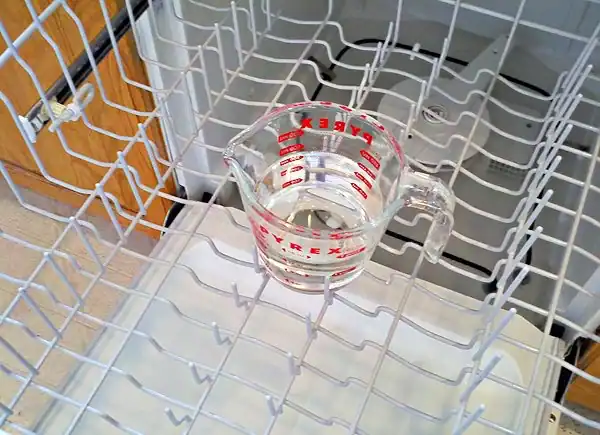
Fill a dishwasher-proof bowl or measuring jug with one cup of white vinegar. Put it on the bottom shelf of your completely empty dishwasher. No washing-up liquid. No dishes. Just the bowl of vinegar.
Run the hottest wash your dishwasher can do.
The vinegar works through the whole inside, breaking down grease, dissolving mineral deposits and getting rid of smells. When the wash is done, everything will look and smell much, much better.
Step Four: Do a Baking Soda Cycle
Nearly there.
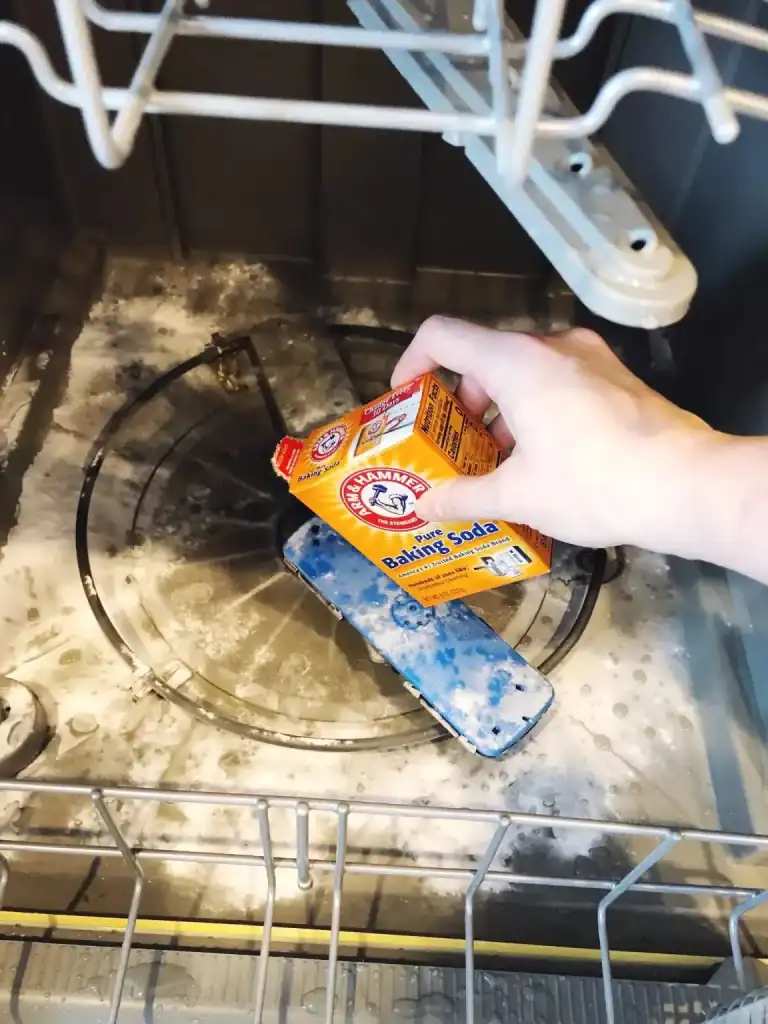
After the vinegar cycle is done, pour around half a cup of baking soda onto the dishwasher floor and then start a quick, hot wash.
Baking soda gets rid of any leftover marks and smells the vinegar didn’t, and will make the inside of your machine look and feel a lot brighter and cleaner.
About bleach: Some people are sure a bleach cycle is good too. However, if your dishwasher’s inside has any stainless steel – and most do – don’t use it. Bleach slowly ruins stainless steel, and you may not see the harm it does until it’s too late; vinegar and baking soda work just as well, and aren’t a risk.
Step Five: Don’t Miss the Outside
The inside is bright now, so turn your attention to the outside.
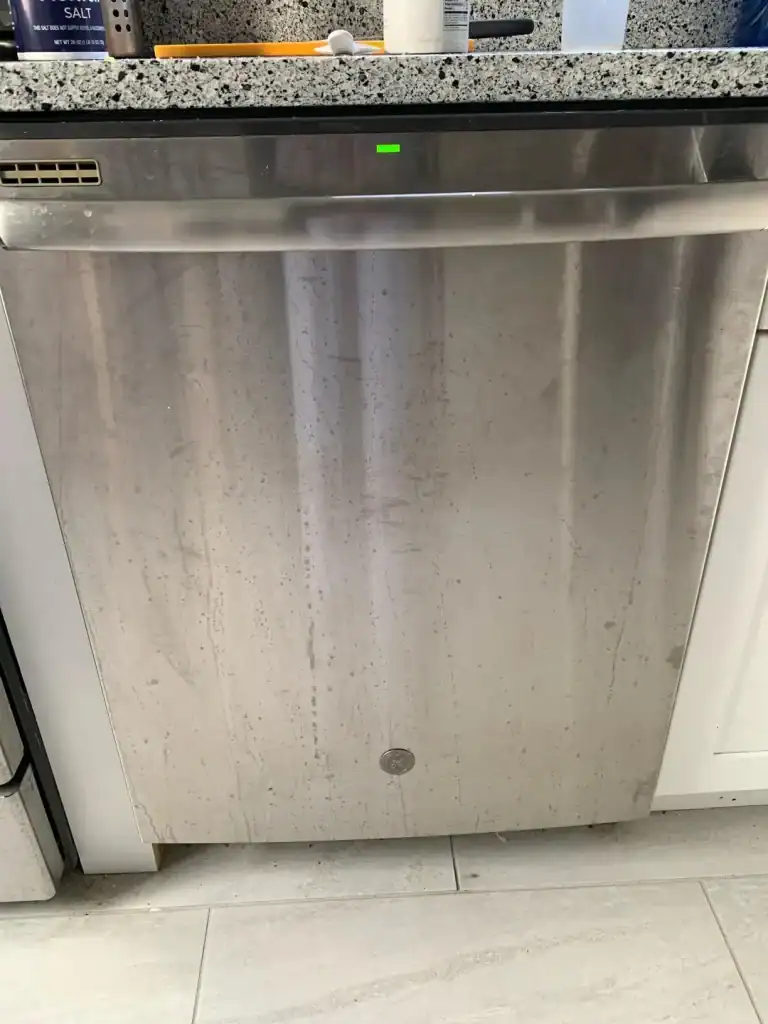
Water, washing-up liquid and a little white vinegar mixed together is good for most dishwasher exteriors. If yours is stainless steel, a stainless steel appliance cleaner will give you a finish with no streaks and which looks as if it’s new.
Wipe over the control panel, the handle and the edges of the door. People touch these parts lots of times a day, and it shows.
How Often Should You Really Do This?
To be honest, a really good deep clean like this every four to six months is enough. Life is busy. No one has the time to be up to their elbows in their dishwasher every couple of weeks.
But a lighter clean each month? That’s worth fitting into your usual things to do.
My best quick fix for monthly care is Affresh dishwasher cleaning tablets.
You put one in the detergent area, run a normal wash with no dishes in, and it deals with the soap scum and mineral build-up before it gets bad. It takes no effort and keeps things fresh between the deep cleans.
You can also use a cup of lemon juice on the top shelf once a month as a more natural choice. Same idea, different smell – and to be honest it makes the whole kitchen smell wonderful.
A Few Extra Tips Which Are Good to Know
These don’t all fit neatly into the steps above, but they really do make a difference:
Turn on your waste disposal before you start the dishwasher. Both your dishwasher and your sink drain into the same pipe. If that pipe is blocked, your dishwasher won’t drain properly and you’ll get water left in the bottom. A quick run of the disposal clears the way.
Let the hot water run in your sink for 30 seconds before you start a wash. This means your dishwasher starts with water that is already hot instead of waiting for it to heat up, which makes the whole wash more effective.
Stop rinsing your dishes before you put them in. This one surprises people. Modern dishwashers are made to work with some food on the dishes – the sensors really set the wash based on how dirty things are. When dishes are too clean going in, the dishwasher doesn’t work as well. Take off large bits of food, yes. But don’t wash everything spotless first.
Check your temperature settings. Your dishwasher should be running at a minimum of 120 degrees Fahrenheit for good cleaning. If you’re not sure, look at the settings or your instructions.
The Bottom Line
A clean dishwasher means cleaner dishes, less smell, fewer repairs and a longer life for a machine which works hard for you every day.
It took me far too long to find this out.
Don’t make the same mistake as me. Get out the filter, get your vinegar, and give your dishwasher the refresh it has been asking for. The whole thing takes less than an hour – and most of that time you are just waiting for washes to run.
Your dishes will be grateful to you. And honestly? So will your nose.
Until next time,
Stay safe,


I’m Katerina Lithopoulou, co-creator of DIY Cozy Living. I’ve always loved the little things that make a space feel special. With a background in language and a passion for photography and cozy design, I enjoy turning everyday inspiration into simple ideas people can actually use.
My motto: “Cozy isn’t a trend — it’s a feeling.”
