How to Create Easter Crochet Designs That Truly Match Your Decor

Hello!!! Katerina here!
Each March, I get to wanting to put away the thick winter yarn and start with something a bit lighter.
Easter crochet is what does it for me – it isn’t so much about rabbits and eggs, although I have done quite a few rather odd ones! It’s the change: softer shades, kinder feels, not as much fuss as the Christmas rush.
What I find happens – and I’ve fallen for it – is going after “pretty” lists; a little chicken, a carrot, a hamper, and you’re finished. Most of these wind up halfway through in a drawer.
The designs I still have, the ones I do over every year, are the peaceful ones that simply fit in the home, and aren’t only for the holiday spread.
Are you ready? Let’s start!!!
Before the Patterns: How to Think About Easter Crochet as an Adult
This is more important than what sort of yarn you choose.
Easter crochet for grown-ups tends to work best when it has three calm principles:
- Seasonal. If it’s good for just one weekend, it likely won’t be made once more.
- Symbolic. Eggs, ears, blooms – better than faces, drawings, or odd forms.
- Textural. Texture gives class. Colour ought to help it, not be too loud.
15 Crochet Easter Patterns You Will Fall In Love With!
1. Modern Crochet Easter Bunny Plush
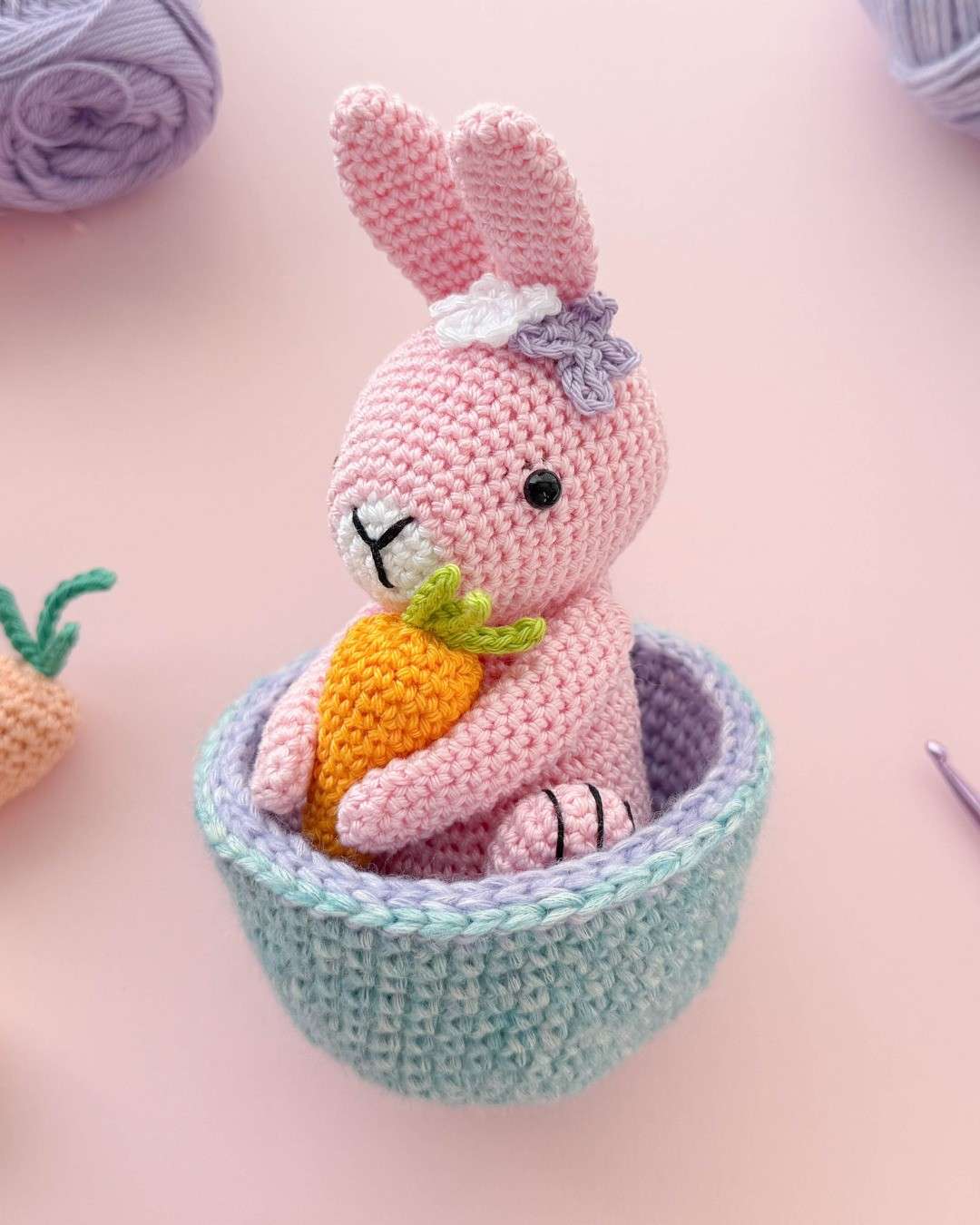
The most searched-for Easter crochet pattern is, without a doubt, the bunny toy. Though, the ones doing well presently aren’t at all similar to the plushies a lot of us remember from childhood.
What Characterises a Beautiful Crochet Bunny?
Not sweetness, but simplicity.
These bunnies will generally have:
- longer, or somewhat droopy, arms and legs
- very plain heads – frequently egg-shaped or round, rather than carefully formed
- few facial details – sometimes only the eyes, and occasionally no face at all
They should give off:
- peacefulness
- an ornamental quality
- a sense of being classic
I don’t like a lot of detailed stitching of the face; the more you do, the quicker it looks old-fashioned.
Level of ability and how they’re made
In terms of crochet, these bunnies are easy to do:
- mainly single crochet stitch
- basic shaping using increases and decreases
- The difficulty is keeping your yarn at the same tightness, not the method
Because of this, people who’ve only just started crochet can often make these – and people who are very good at crochet like to make them even better.
The Reason This Pattern Lasts for Long
This bunny doesn’t loudly say “Easter.”
It gently suggests the season of spring.
And so you can keep having it as a part of your decor even after the holiday has ended.
2. Crochet Easter Egg Covers
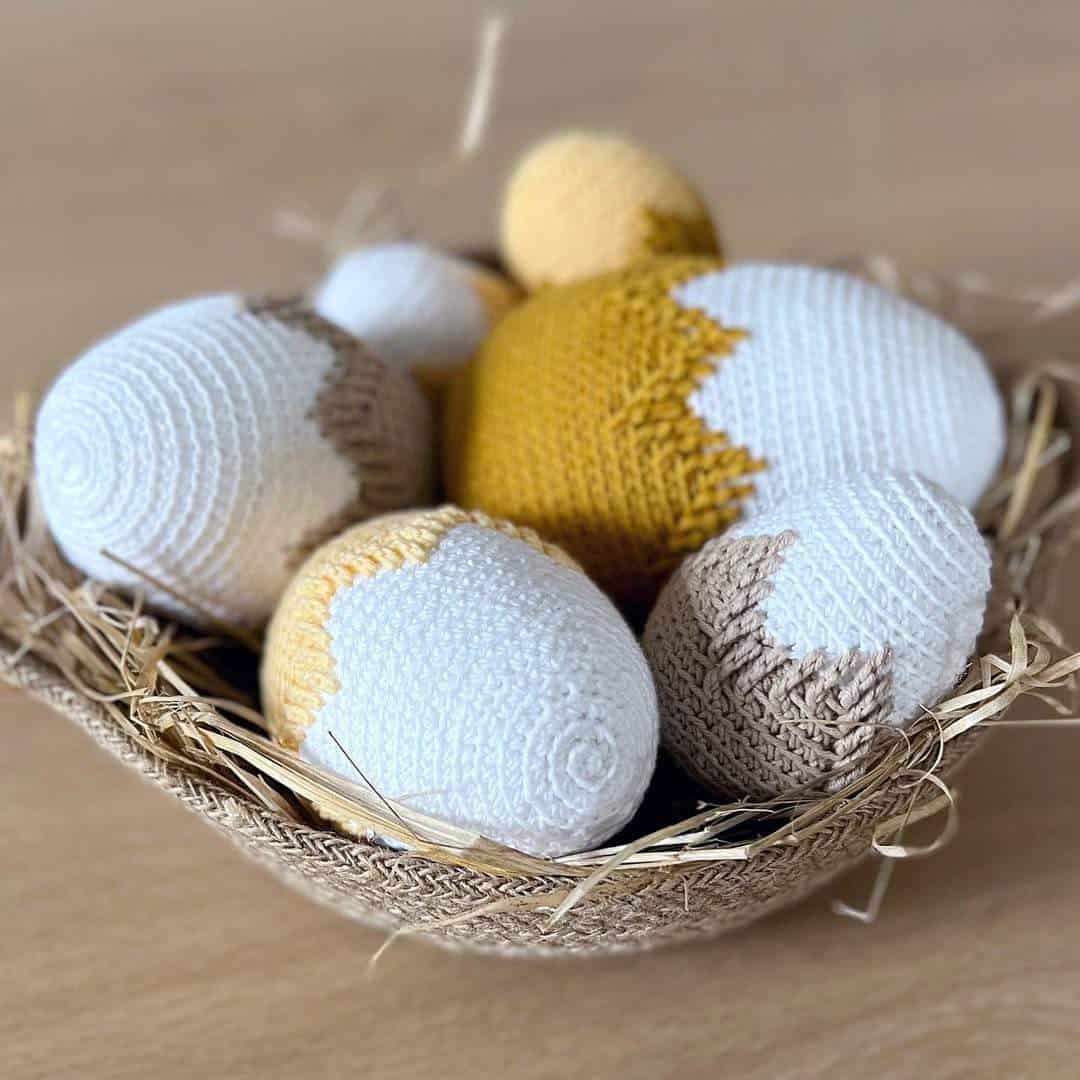
Small Pattern + Huge Impact= Perfect combo
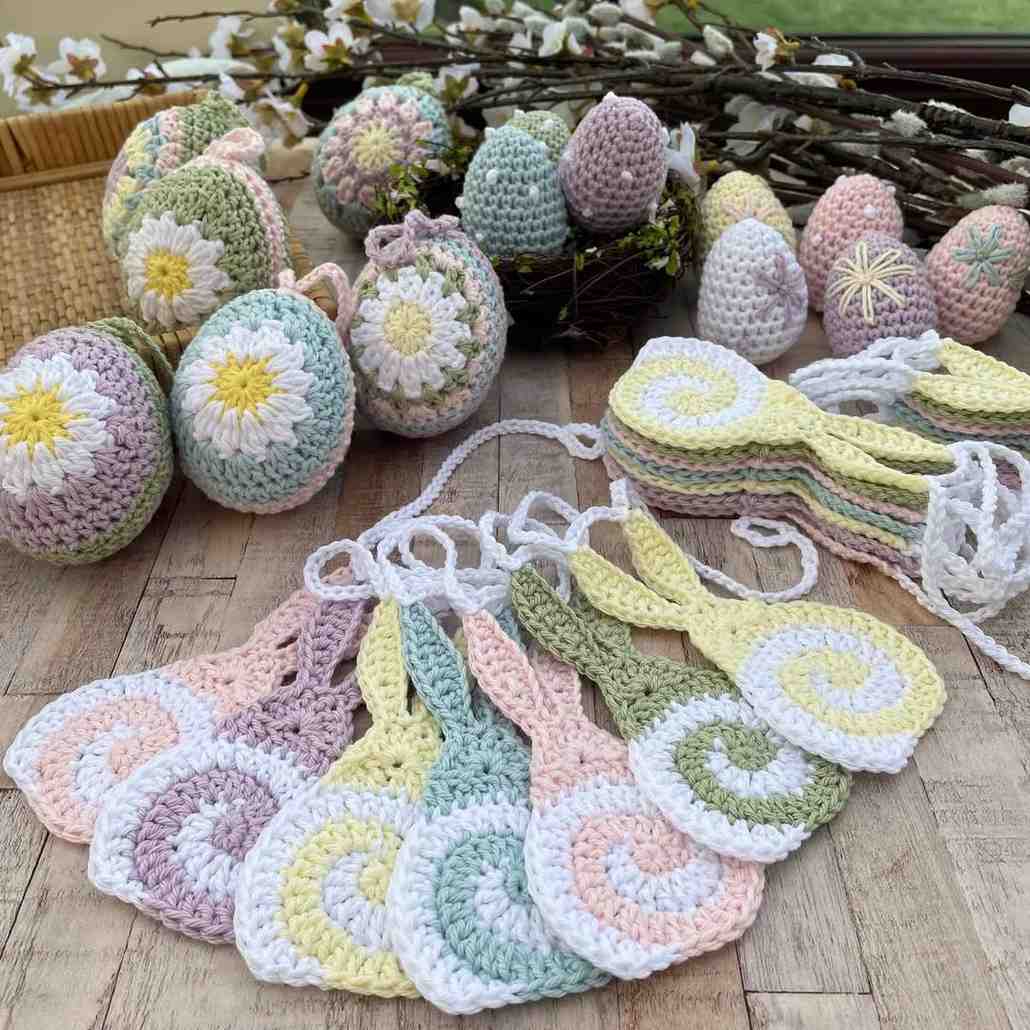
Egg covers seem straightforward – and, really, are – but they’re surprisingly effective.
Basically, they’re little crocheted covers for eggs – proper, wooden, or plastic ones – and the good thing about them is the opportunity they give you to try things out.
Reasons people enjoy making them:
- They don’t take long.
- Mistakes aren’t a disaster.
- They use up bits of yarn.
You could create five in a night and yet still have a sense of getting something done.
Types of patterns you’re likely to encounter:
Egg covers aren’t all the same; their character is in the feel (texture) of them:
- lace or shell stitch = smart, good to put on a table;
- bobbles or puff stitch = fun, you can feel the texture;
- ribbing or linen stitch = up-to-date, simple.
The shape is easy to get right, so they’re simple even for people who’ve never crocheted before; it doesn’t matter if they’re a bit wonky, as eggs aren’t a regular shape themselves.
Best Use For Egg Covers
Egg covers shine in groups:
- in bowls
- in baskets;
- as part of a table layout.
A single egg cover is odd. A dozen is decoration.
A Brief Crochet Truth (Particularly for Newbies)
If you’re just starting crochet, something to bear in mind:
With Easter crochet, the shape takes care of most of it.
Your stitching doesn’t have to be spot-on.
It’s this that makes Easter projects such a good way to grow in skill.
3. Bunny Ear Napkin Rings

This pattern is a perfect example of doing less and getting more.
A bunny ear napkin ring is exactly what it sounds like:
- a simple crochet ring
- two soft ears attached
No face. No body. No fuss.
Why this works so well
It interacts with something people already use: napkins.
That makes it:
- practical
- temporary
- low-commitment
You’re not decorating a shelf. You’re enhancing a moment.
Crochet-wise
These patterns usually involve:
- working flat for the ears
- a small ring made in the round
They’re excellent for:
- practicing shaping
- experimenting with yarn texture
And they’re easy to customize — longer ears, floppier ears, stiffer ones.
4. Crochet Easter Egg Garland
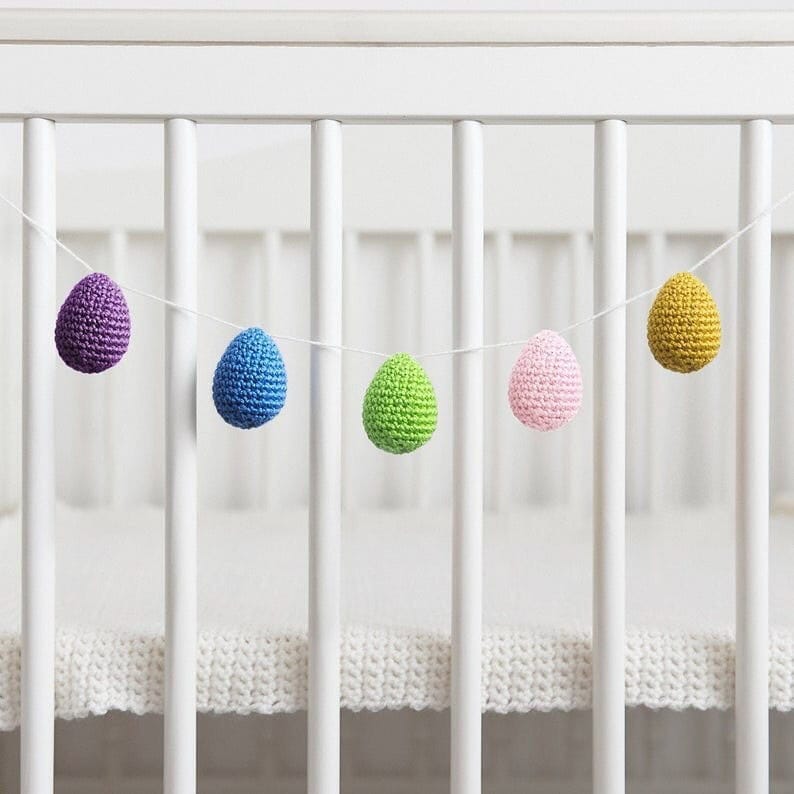
Crochet garlands are among the easiest things to do – and that’s really the reason they’re used so much at Easter.
What is it about this design that makes it easy?
Because every egg is a little bit on its own, if one doesn’t come out quite right, it doesn’t matter; it blends into everything else.
Garlands are able to deal with:
- not quite even stitches
- slight changes in size
- gentle changes in shade
And, instead of making the design look bad, those things are what give it the look of being made by hand.
How it is put together
Usually, it includes:
- lots of little egg shapes
- stitched or crocheted on to a chain or rope.
If you enjoy:
- doing the same thing a lot
- not having to think too much
- being able to see how much you’ve done
this is a good project.
Where they look best
Over fireplaces, on shelves, on the handrails of stairs – places where you look at the line of it, and not at the small bits.
5. Crochet Chick Figures
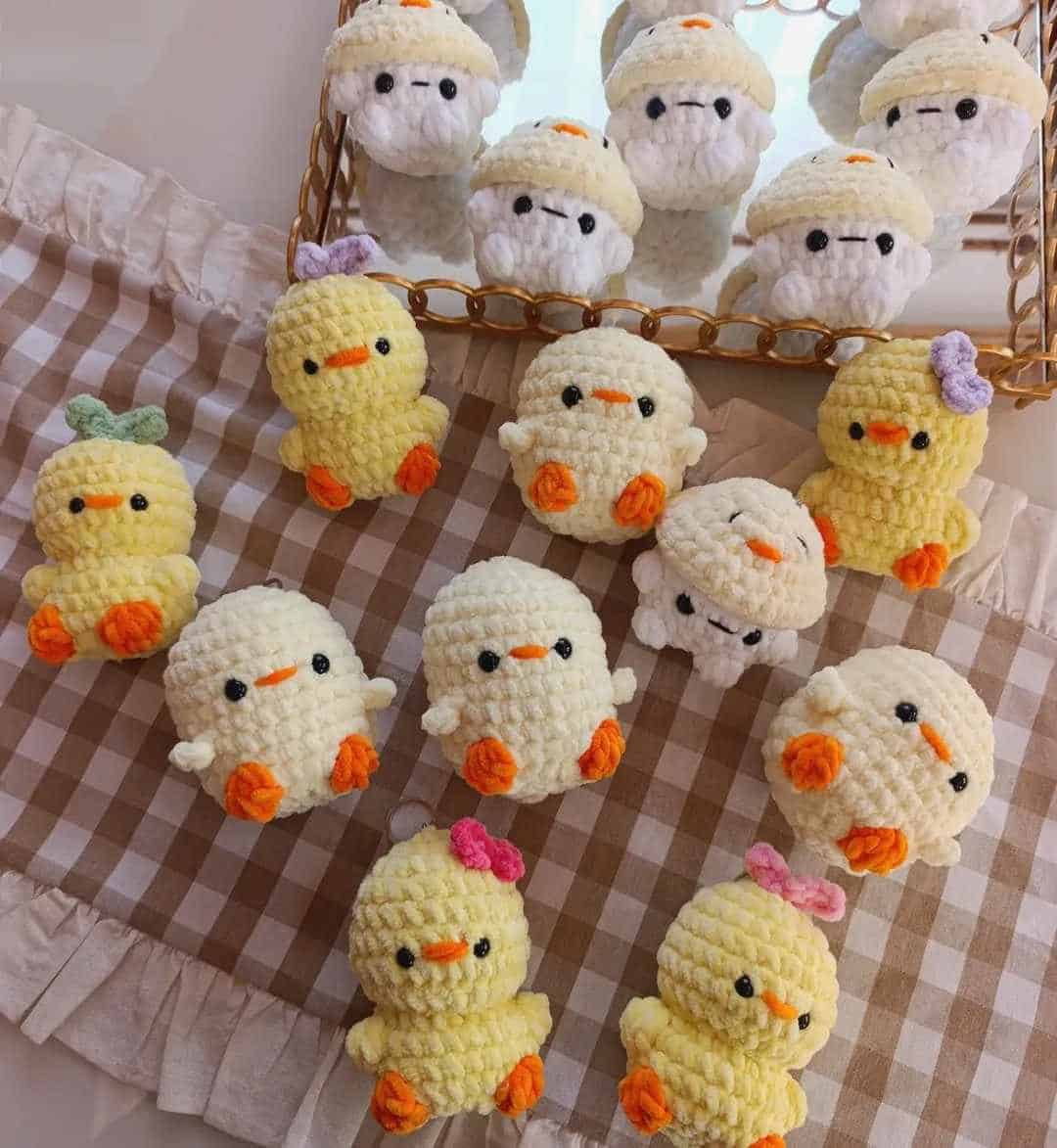
Baby chickens have lasted through every Easter fad – and with good cause.
They mean something, and aren’t for kids.
However, the ones people make now are plain.
What makes a good crocheted chick?
- a round form
- little wings
- very little on the face
When you give them too much of a personality, they become a gimmick.
How they’re most often shown
Not on their own.
Chicks look best:
- in dishes
- put in containers
- with eggs or plant material
They’re a feeling of comfort for the eyes, and not great as focal points. Use them accordingly!
6. Crochet Flower Coasters
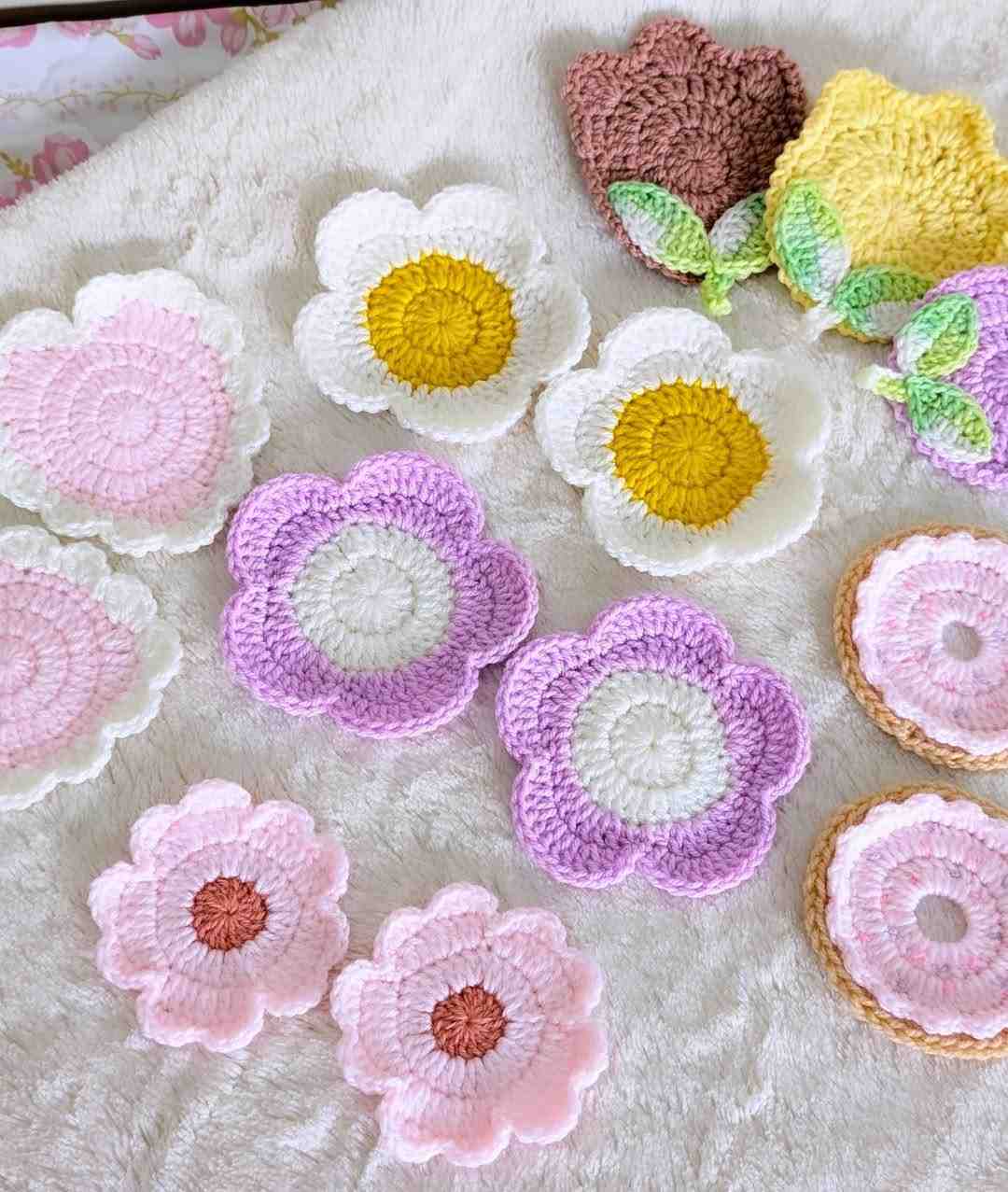
Easter crochet is really neat when it’s done well. Coasters shaped like flowers suit the Easter feeling, yet don’t need it. They are:
- pretty, with flowers
- not heavy
- useful, as coasters
And so they give a lot of pleasure when you get to the end.
If you are learning (still a beginner), these are good for getting practice at:
- crocheting in circles
- altering how tall your stitches are
- doing simple increases
Beginners like them because they show you what to do, but aren’t too much.
If you’re thinking about how they look, they move nicely:
- from Easter, to spring, to summer
meaning they are good value!
7. Crochet Bunny Basket
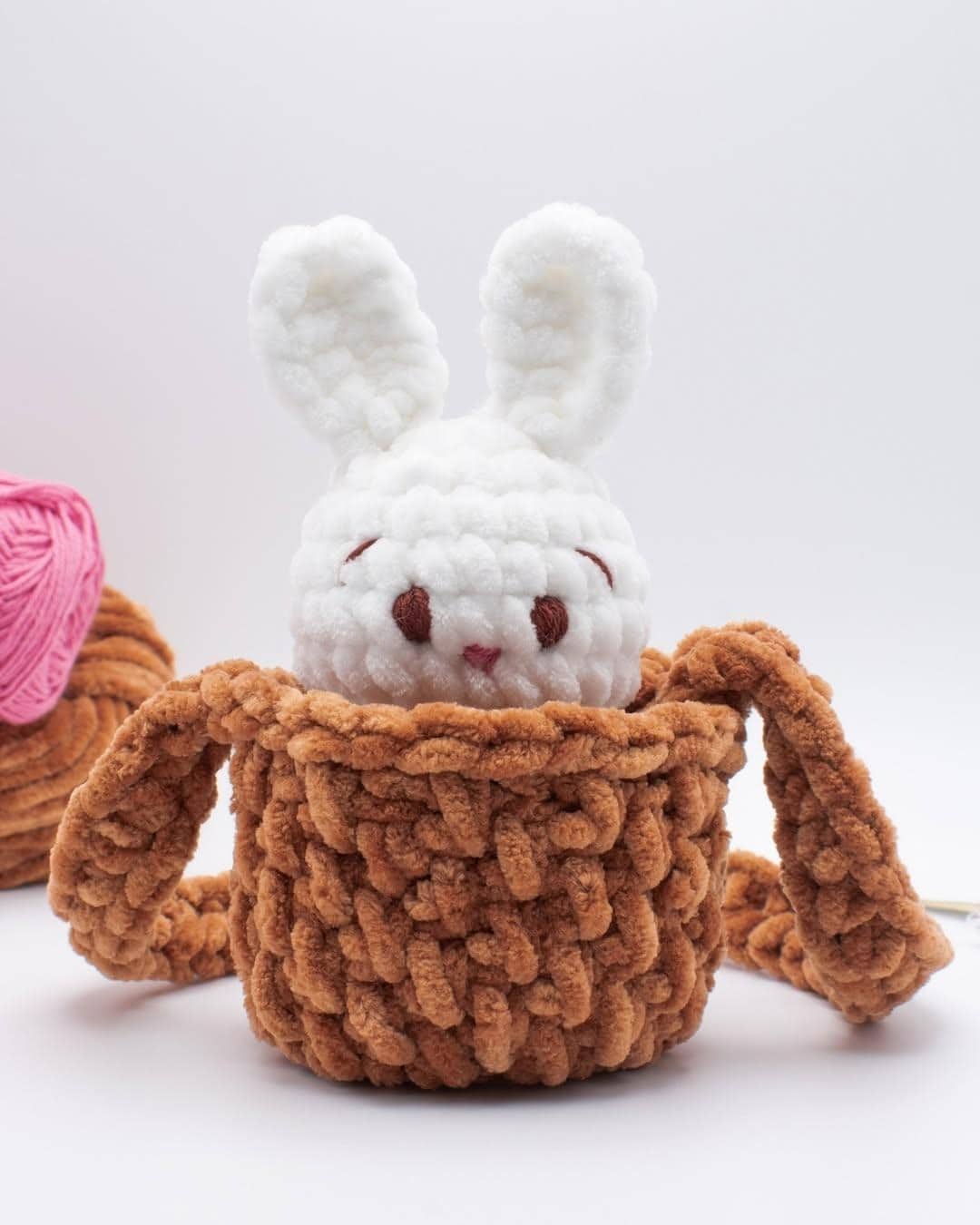
This is where many patterns fail — and where good ones shine.
A bunny basket only works if the basket itself is solid.
What makes a good bunny basket
- tight stitches
- sturdy base
- subtle bunny details
If the structure is weak, the cuteness won’t save it.
Crochet skills involved
These usually require:
- working tightly
- understanding stitch density
- sometimes holding two strands together
They’re not hard — but they do require patience.
Why people keep making them
Because they’re useful:
- egg hunts
- table decor
- spring storage
They don’t get packed away immediately.
8. Crochet Easter Wreath

(For Makers Who Enjoy Building a Composition, Not Just a Shape)
Crochet wreaths are one of those patterns people underestimate until they see one done well.
Unlike floral wreaths, crochet wreaths aren’t about realism. They’re about texture, rhythm, and balance.
What a crochet Easter wreath usually consists of
Instead of one large piece, wreaths are built from components:
- a base ring (foam, metal, or crocheted)
- small motifs (eggs, flowers, bunny heads, leaves)
- filler elements (bows, twine, neutral yarn accents)
This modular approach is why wreaths appeal to experienced crocheters — you’re composing, not just stitching.
Why this pattern works long-term
The best part?
You don’t have to remake it every year.
You can:
- swap colors
- remove or add motifs
- soften it for spring
It evolves instead of expiring.
9. Mini Crochet Egg Plushies

(The Quiet Fillers That Make Everything Else Look Better)
These don’t get enough credit.
Mini egg plushies are rarely the star — and that’s exactly their role.
Why they’re so popular
They’re:
- extremely quick
- unintimidating
- ideal for using scraps
But more importantly, they solve a decorating problem.
Empty bowls, trays, baskets, shelves — these eggs complete a display without dominating it.
Pattern simplicity
Most involve:
- basic egg shaping
- simple increases and decreases
- no complicated finishing
If you’re new to shaping, this is one of the safest places to practice.
10. Crochet Bunny Lovey

(Sentimental Craft Disguised as a Simple Pattern)
This pattern sits at the emotional center of Easter crochet.
While often associated with babies, bunny loveys are really about:
- softness
- memory
- handmade connection
Even adults understand that instinctively.
Construction-wise
Loveys combine:
- a simple plush head
- a flat or lightly textured body (often square or circular)
They’re repetitive, calming projects — the kind you work on slowly.
Why people keep making them
Because they become keepsakes.
These aren’t seasonal clutter. They’re the things people remember.
11. Crochet Easter Table Runner
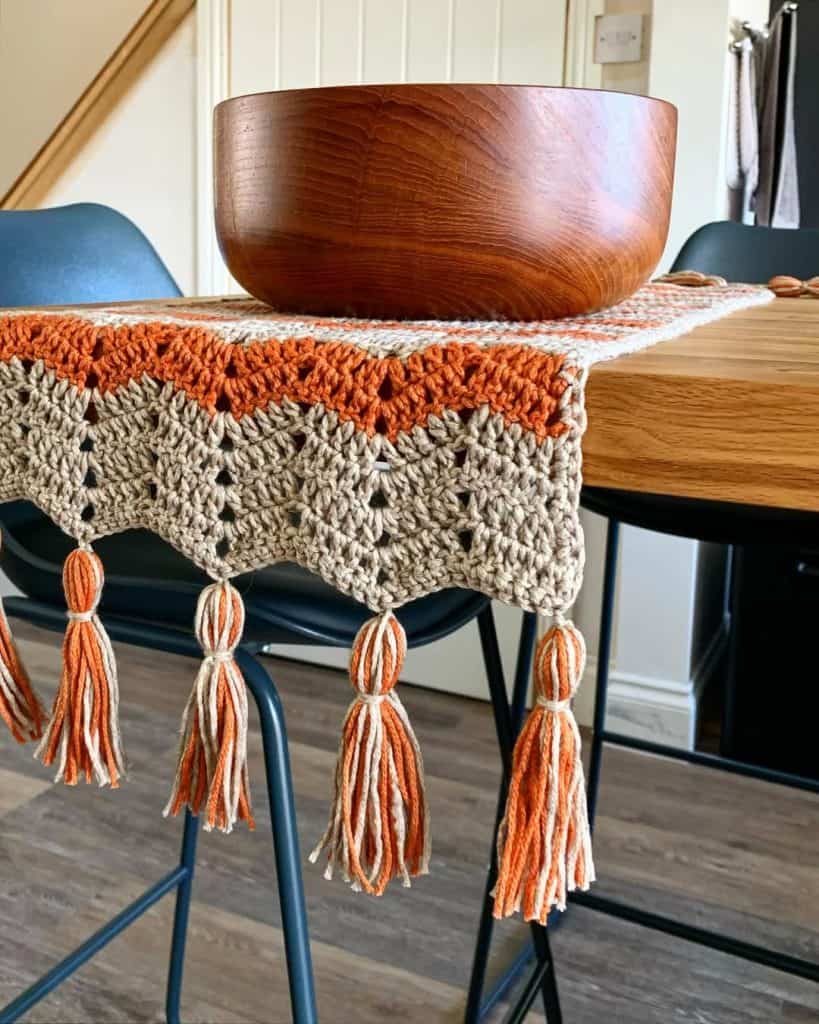
(Slow Craft for People Who Like Process Over Speed)
This is where Easter crochet becomes meditative.
Table runners are not fast. They’re not trendy. And that’s exactly why they last.
What makes a good Easter table runner
- spacing between motifs (eggs, flowers, bunnies)
- muted or natural color palette
- breathable design (not overly dense)
A runner shouldn’t shout “holiday.”
It should quietly frame a table.
Skill level
Moderate — not because stitches are complex, but because:
- consistency matters
- patience matters
- finishing matters
This is the kind of project you come back to year after year.
12. Crochet Carrot Decorations
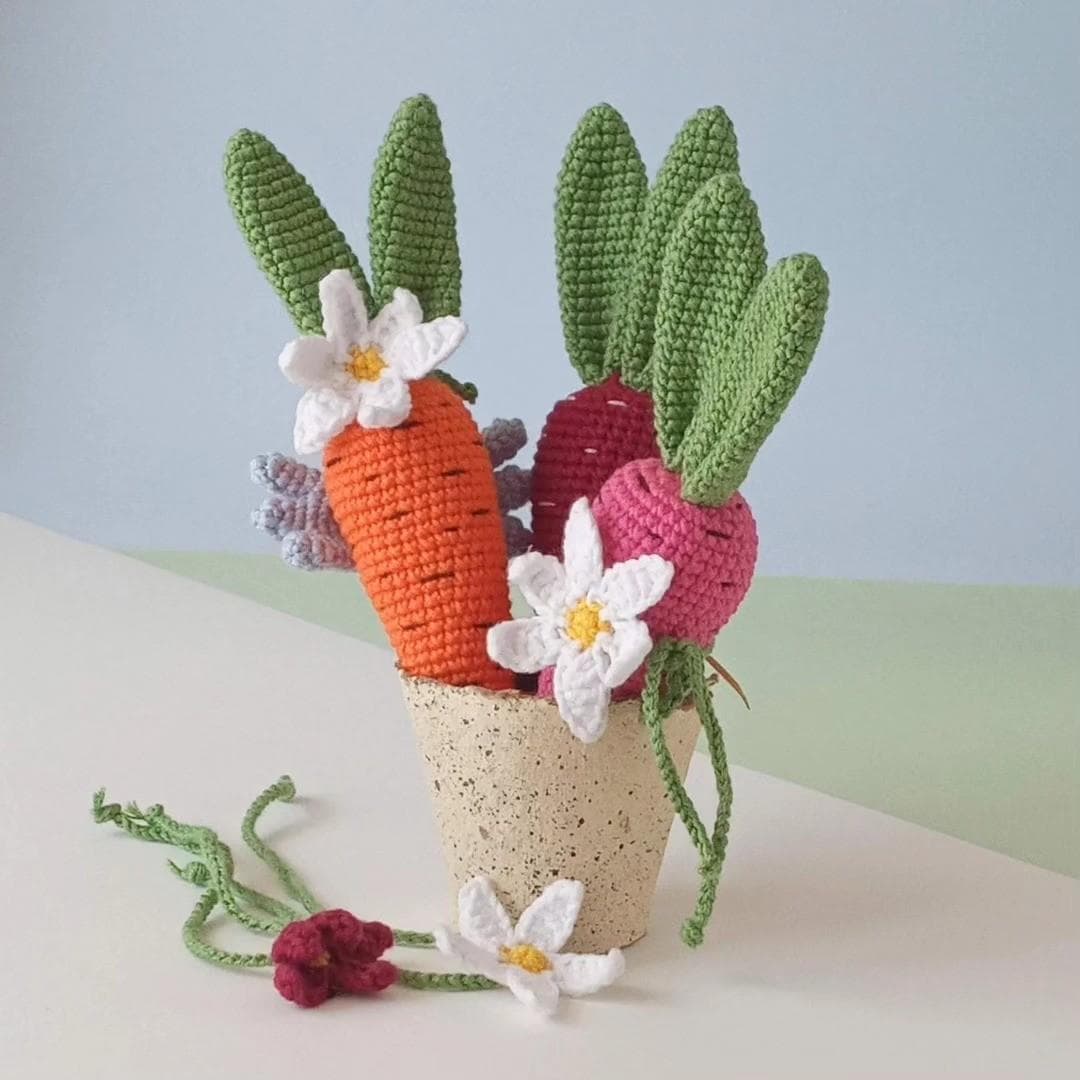
Carrots are risky. Let’s be honest.
They cross into novelty fast — unless they’re handled carefully.
What makes crochet carrots work
- softer, earthy orange tones
- slightly oversized shapes
- minimal greens (not fluffy, not cartoonish)
Used well, carrots act as visual contrast among eggs and bunnies.
Used poorly, they take over.
Best use
Never alone. Always paired.
- baskets
- wreath accents
- table displays
Think accent, not theme.
13. Crochet Bunny Wall Hanging

Wall hangings are about silhouette, not detail.
The most successful bunny wall hangings:
- use one clear shape
- avoid faces entirely
- rely on negative space
They often combine crochet with:
- wooden dowels
- linen backing
- neutral fibers
This makes them feel more like art than decor.
14. Crochet Easter Mug Cozies

These are really the Easter crochet things people like to make, though.
- They aren’t fussy.
- They won’t show up your work.
- They won’t require a ton of time to create
The reason folks go on making them is simple:
- Good presents.
- Good for using bits of yarn.
- Simple to make your own.
Also good for those starting out, as errors don’t show in small pieces.
15. Crochet Basket Fillers

These are the patterns that don’t shout – and, really, are the most vital.
Basket fillers are things like:
- little eggs
- simple shapes
- neutral accents
They aren’t meant to be used on their own.
They help the rest of it.
Displays seem empty if they’re absent, but with them, all of it seems deliberate.
How These Patterns Actually Work Together
What a lot of people don’t realise is that Easter crochet isn’t about doing a single, faultless thing. It is about building up things in layers.
| Role | Pattern Type |
|---|---|
| Focal point | Bunny plush, wreath |
| Supporting decor | Garlands, baskets |
| Fillers | Eggs, mini plush |
| Functional | Coasters, runners |
Once you get this, picking patterns is simpler – and gives you much more enjoyment.
Conclusion – Crochet Easter Patterns
Easter crochet has never been about what’s popular with me. It’s about the speed that makes things less hurried, the calm feel which at last is like spring, and the little care you put in each stitch.
The things I really end up finishing – and the ones I get out again every March – are the ones that meet these three calm needs:
- They feel peaceful and relaxing in my hands while I make them.
- They look like they can stay out even after the holiday season is over.
- They remain relevant when I get them out next year.
If a pattern checks all three elements above, it is never wasted yarn or time for me!
That is how I pick what to crochet at the moment… and it’s why these fifteen designs have become my peaceful little Easter customs, year after gentle year.
Thank you for crocheting with me. Now go get your hook – spring is already hinting at being here.
Until then,
Keep well,

I’m Katerina Lithopoulou, co-creator of DIY Cozy Living. I’ve always loved the little things that make a space feel special. With a background in language and a passion for photography and cozy design, I enjoy turning everyday inspiration into simple ideas people can actually use.
My motto: “Cozy isn’t a trend — it’s a feeling.”

I love the idea of adding a touch of antique or rustic lace and twine bow and maybe a small flower to the crocheted eggs. Last year I crocheted eggs and them embroidered vines and flowers on them. They went over really well, when added to baskets and wooden egg crates. Thank you for the new idea to add to my older ones.
Thank you for your kind words, Roberta. So happy, we may have helped you even a little bit!