
Christmas Decor That Still Looks Good in January (So You Do Not Have to Redecorate Immediately)

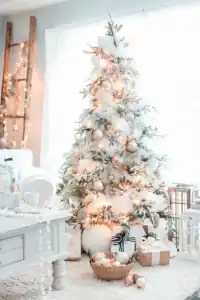
Every year on December 26th I stand in the living room looking at the Christmas decorations and feel two things simultaneously. The first is the mild relief that comes after any big event is over. The second is a kind of low-level dread at the prospect of boxing everything up and returning the house to the blank, slightly sad state it was in before November.
The problem is not the taking down. It is what comes after. January in a stripped-back home feels punishing in a way that December never does. The lights are gone, the greenery is gone, the warmth is gone, and what replaces it is the same furniture you looked at in October, now somehow looking more tired than it did before you decorated around it.
The solution is not to leave the Christmas decorations up until February, which is its own particular problem. It is to choose Christmas decorations that earn their place in January on their own terms. Decorations that are beautiful enough, natural enough, or neutral enough to stay out without reading as “Christmas.” You just stop calling them Christmas decorations.
These are the ones that survive the transition.
Seasonal Not Specific
The Christmas decorations that work after Christmas are the ones that belong to winter broadly rather than Christmas specifically. A wreath made from dried eucalyptus and white berries is a Christmas wreath in December and a winter wreath in January. A cluster of white pillar candles is festive at Christmas and cosy through February. A bowl of pinecones is seasonally appropriate from October through March.
What does not survive the transition: anything explicitly Christmas. Red and green colour combinations, Santa figures, reindeer, snowmen, baubles on a tree, stockings on the mantel. These read as Christmas regardless of context and look wrong from December 27th onward.
What survives beautifully: natural materials, neutral colours, warm textures, candlelight, and anything that belongs to the idea of winter rather than the specific holiday.
Use this as the filter before you buy anything new this Christmas. Ask: does this belong to Christmas or does it belong to winter? If it belongs to winter, it is worth buying. If it belongs only to Christmas, it goes in the box in January and you will not see it for eleven months.
21 Christmas Decorations That Work in January Too
1. Dried Eucalyptus Arrangements
Fresh eucalyptus is a Christmas staple. Left to dry in place it becomes a winter arrangement that looks beautiful through February and beyond. The colour shifts from blue-green to a softer sage and grey as it dries, which is actually more suited to January’s quieter palette than the bright green of the fresh version. A dried eucalyptus wreath on the door or a eucalyptus arrangement in a vase needs no adjustment between Christmas and the new year.
After Christmas: Keep it exactly where it is. Remove any Christmas-specific additions like red berries or baubles and it reads as a winter botanical arrangement.
2. White Pillar Candles
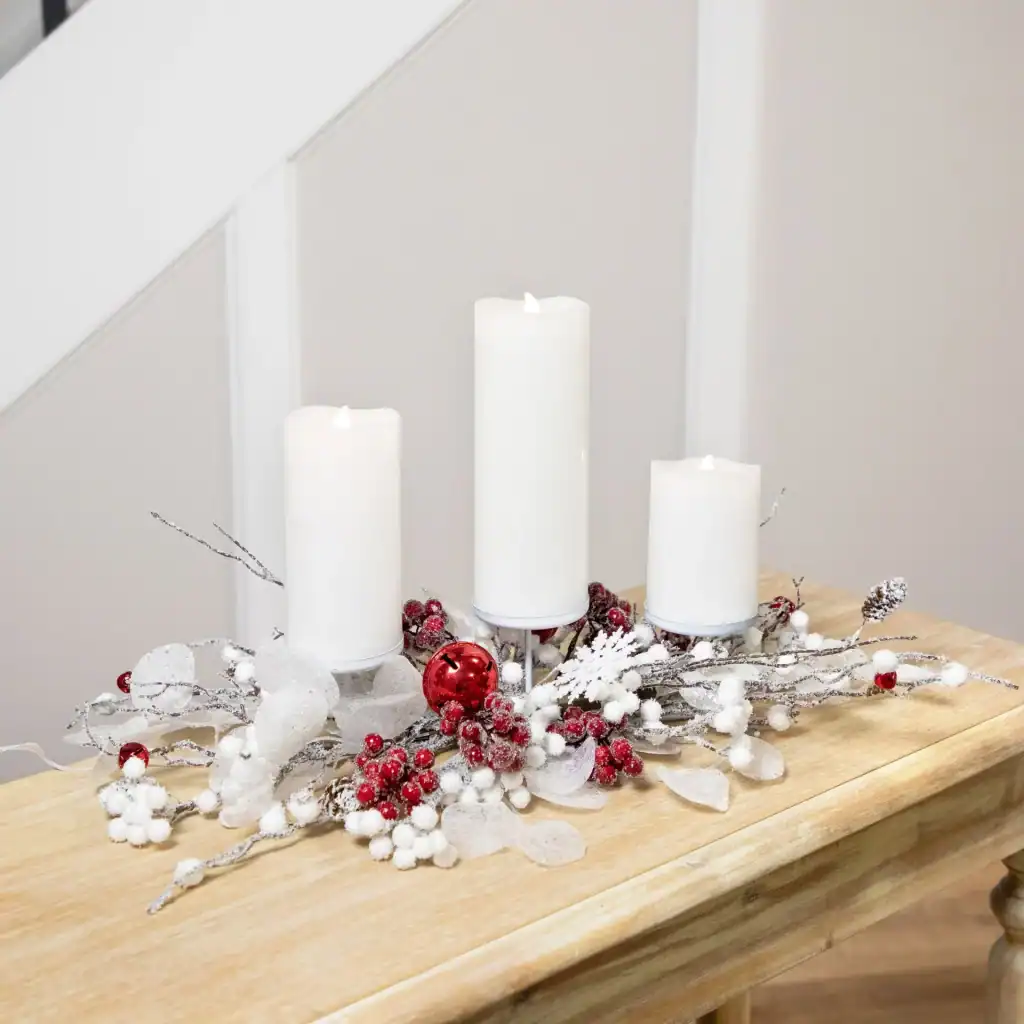
White pillar candles grouped at different heights on the mantel or coffee table are Christmas decor in December and hygge-inspired winter decor in January.
They require nothing Christmas-specific about their display. The warmth they generate and the light they cast is welcome in any cold month.
After Christmas: Remove any Christmas holders or greenery around the base and replace with simple objects: a few smooth stones, a small dried arrangement, a stack of books.
3. Pinecone Arrangements
A bowl of pinecones, a basket of pinecones, pinecones arranged along a shelf with some dried botanicals.
Pinecones belong to autumn and winter broadly and look completely appropriate in January without any Christmas association at all.
After Christmas: If you added red berries or gold spray paint for Christmas, swap the bowl for one without those additions. Natural unpainted pinecones need no adjustment.
4. Faux Fur and Knit Throws
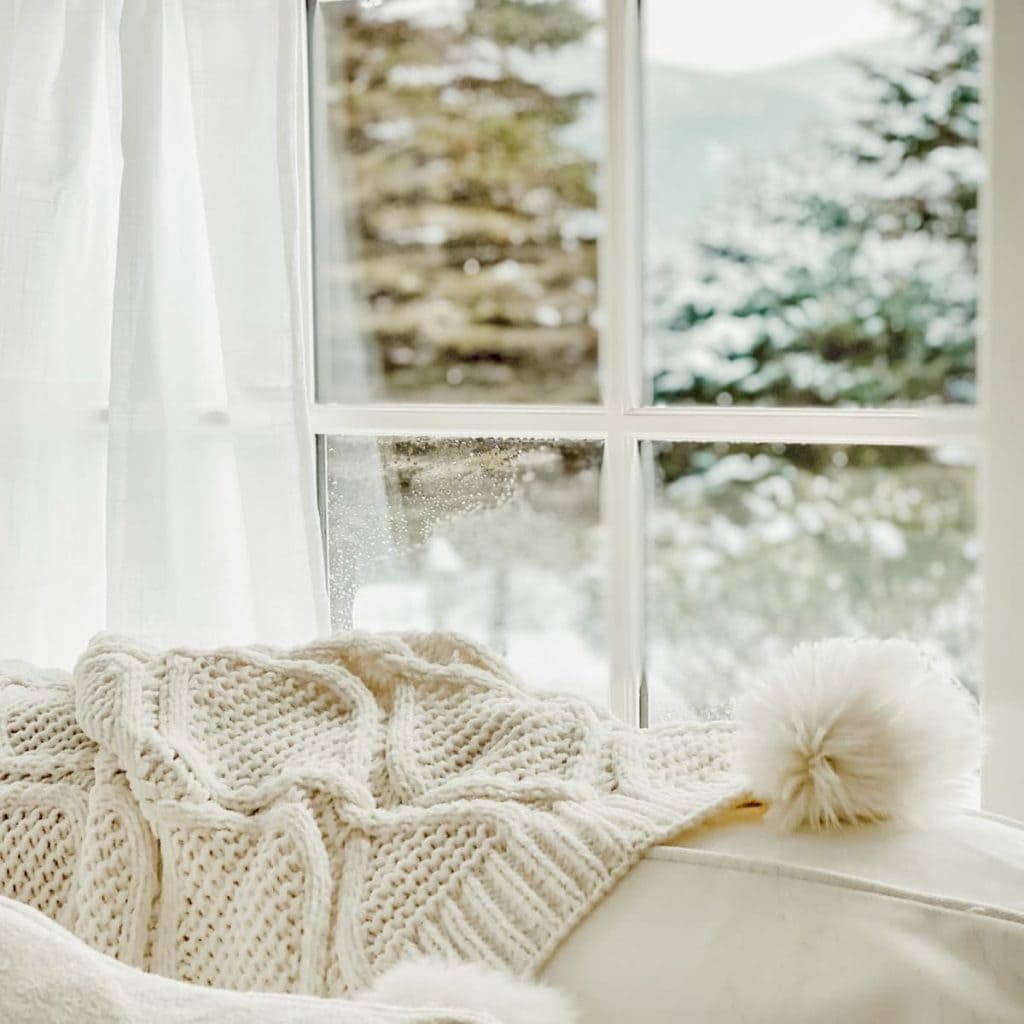
The throws and blankets you brought out for Christmas, the faux fur, the chunky knit, the heavy flannel, are winter comfort items that stay on sofas and chairs until March. They are not Christmas decorations technically but they are part of the seasonal warmth that makes a home feel different in December and they earn their place just as easily in January.
After Christmas: Nothing changes. Leave them exactly where they are.
5. Dried Orange Garlands
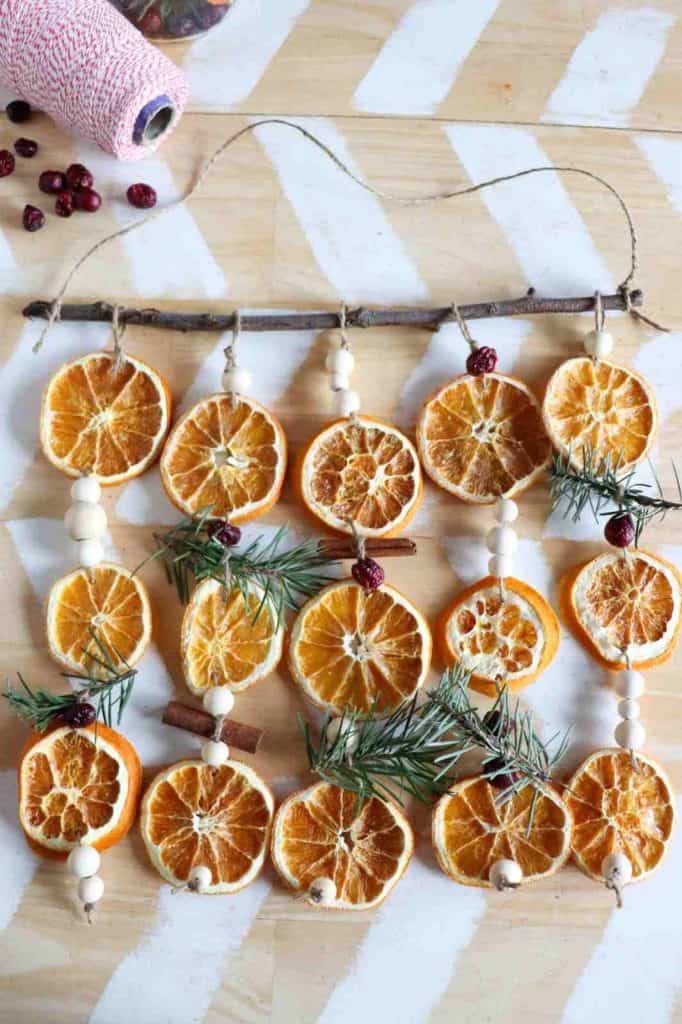
A garland of dried orange slices, cinnamon sticks, and star anise is a Christmas garland in December and a winter botanical garland in January.
The warm citrus tones of dried orange belong to the whole winter season, not just the holiday. Hung across a mantel or draped on a bookshelf it looks intentional and beautiful through the coldest months.
After Christmas: Remove any specifically Christmas additions like holly or baubles and the garland works as a winter arrangement.
6. Lanterns With Candles
A large lantern or a cluster of lanterns with pillar candles inside belong to winter atmosphere rather than Christmas specifically.
They provide the same warm glow in January as they do in December without reading as seasonal. A lantern on the front step, on the porch, or on the coffee table is as at home in January as it is in December.
After Christmas: Swap any Christmas-coloured candles (red, dark green) for white or cream. Remove any Christmas greenery tucked around the base.
7. Bare Branch Arrangements
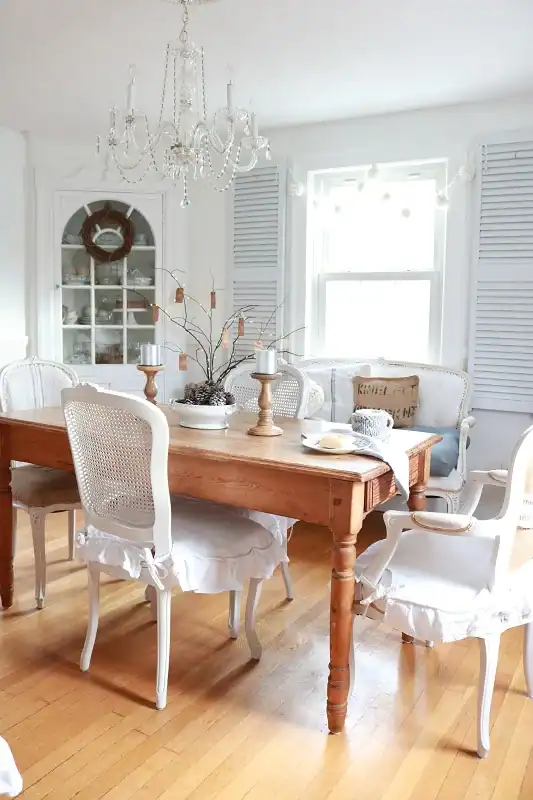
Tall bare branches or birch stems in a floor vase look dramatic and intentionally minimal in January in a way that is completely appropriate for the post-holiday period.
They are not Christmas decorations exactly but they fill the tall corner that a Christmas tree previously occupied and they do it with a January-appropriate austerity.
After Christmas: Place tall bare branches in the spot the tree occupied. They require nothing else.
8. Sheepskin and Wool Rugs
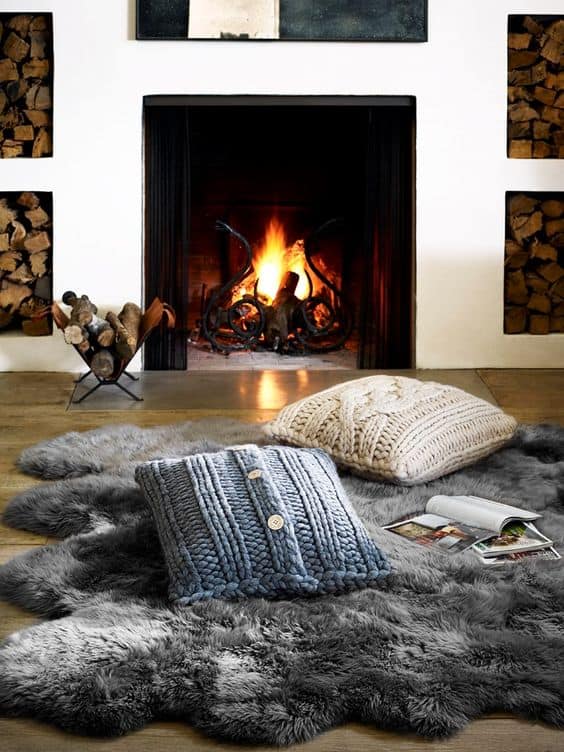
A sheepskin rug in front of the fireplace or beside the sofa is a Christmas comfort piece that belongs to winter entirely. It will look as appropriate in February as it did in December.
After Christmas: Nothing changes.
9. Beeswax or Cream Church Candles
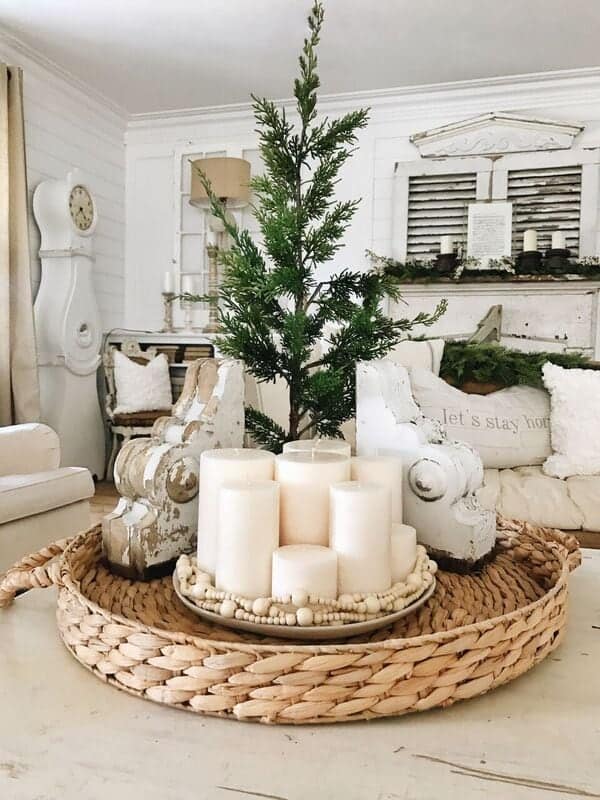
Tall cream or beeswax tapered candles in simple holders look elegant rather than festive.
They carry none of the colour associations of Christmas and belong to the idea of candlelit evenings in winter generally. A pair on the dining table in January is completely at home.
After Christmas: Replace red or green candles with cream or beeswax versions. The holders can stay.
10. Dried Botanical Wreaths

A wreath made from dried lavender, pampas grass, cotton stems, eucalyptus, or other dried botanicals has no Christmas association.
It is a winter wreath that looks as appropriate in January as it does in December, arguably more so since its palette is quieter and more suited to the post-holiday mood.
After Christmas: If you added Christmas-specific elements like holly or red berries, remove them. The underlying botanical wreath stays.
11. Woven and Textured Baskets
Wicker baskets filled with firewood, blankets, pinecones, or simply left as decorative objects belong to winter interiors throughout the season. They are not Christmas-specific and need no adjustment between December and January.
After Christmas: Swap out any Christmas-coloured contents for natural materials.
12. White Fairy Lights
Warm white fairy lights strung along a shelf, around a mirror, or draped over a bookshelf are not exclusively Christmas. They are winter lighting that creates warmth in the dark months. Many homes keep fairy lights year-round and they are completely at home in January.
After Christmas: Remove specifically Christmas-positioned lights (along a mantel garland, on a tree) and reposition more casually: around a mirror frame, along a bookshelf, in a large glass vase.
🔥 Would you like to save this?
13. Linen and Neutral Stockings
A linen or neutral-toned stocking made from natural fabric without specific Christmas imagery (no reindeers, no Santa, no bold red) belongs to winter decor rather than Christmas specifically. Hung on a hook or a peg rail it reads as a winter textile rather than a Christmas prop in January.
After Christmas: Leave simple fabric stockings in place. Remove any obviously Christmas-specific ones.
14. Wooden Stars and Geometric Ornaments
Wooden star decorations, geometric ornaments in natural wood or brass, and simple carved shapes belong to Scandinavian winter decor generally rather than Christmas specifically. They can be displayed throughout the winter season without reading as Christmas decorations.
After Christmas: Remove from the tree and display as standalone objects on a shelf or windowsill.
15. Moss and Lichen Arrangements
A tray of preserved moss, lichen, and small stones creates a winter terrarium or nature table that belongs to the whole season. It is quiet, organic, and completely appropriate from November through March.
After Christmas: Nothing changes.
16. Plaid Blankets and Cushions
Buffalo check and tartan cushions and throws are winter textiles that belong to the cold months generally. They do not read as exclusively Christmas in January and they keep the home feeling warm and layered without the specifically festive associations of red and green together.
After Christmas: Swap any deeply red-and-green tartan for a more neutral plaid. Blue, green, and cream plaid reads as winter rather than Christmas.
17. Taper Candle Holders in Brass or Black
Simple brass or black taper candle holders are year-round objects that earn their place in winter particularly. They are not Christmas-specific and look at home on a dining table or mantel in January with none of the seasonal associations.
After Christmas: Nothing changes. Keep them exactly where they are.
18. Dried Hydrangea Arrangements
Dried hydrangea heads in neutral tones, white, cream, blush, pale green, look beautiful in winter arrangements and belong to the whole cool season. A vase of dried hydrangeas with some eucalyptus and bare branches is a winter arrangement that has nothing specifically Christmas about it.
After Christmas: Leave in place or rearrange slightly to feel fresh.
19. Star Anise and Spice Bowls
A decorative bowl of star anise, cinnamon sticks, and dried orange slices is a Christmas scent object that becomes a winter botanical display in January. The warm spice tones belong to cold months generally and the arrangement looks intentional and beautiful without any Christmas association.
After Christmas: Leave exactly as is or move to a different surface for a fresh arrangement.
20. Neutral Velvet Cushions
Deep neutral velvet cushions in forest green, navy, charcoal, or dusty pink belong to winter interiors throughout the season. They are not Christmas-specific despite their richness and they stay on sofas and armchairs through the coldest months looking as intentional in January as they did in December.
After Christmas: Nothing changes.
21. The Simmering Pot in Winter Scents
The simmering pot you used throughout December to make your home smell like Christmas transitions easily into January with different ingredients. Swap the orange and cinnamon combination for something quieter: rosemary and lemon, vanilla and cedarwood, or eucalyptus and mint. The ritual stays, the scent changes with the month.
After Christmas: Change the ingredients. Our full simmering pot recipe guide has the winter variations.
The January Edit: What Comes Down and What Stays

When you take down your Christmas decorations, sort everything into three boxes rather than one.
Box 1: Christmas only (tree, baubles, explicitly Christmas figures, red and green combinations, stockings with Christmas imagery). These go into storage until November.
Box 2: Winter transitional (the items from this list). These stay out through January and February.
Box 3: Year-round (quality candle holders, baskets, throws, rugs, brass objects). These were always out. Put them back where they were.
This three-box system means January does not feel stripped bare. You keep the warmth and the layers while removing the specifically Christmas elements. The room looks curated rather than abandoned.
What to Add in January That Is Not Christmas
If the room still feels emptier than December without the Christmas elements, add these specifically winter objects that have no Christmas association at all.
Amaryllis: The most dramatic winter flowering plant and completely post-Christmas in its associations. A large amaryllis bulb in a plain terracotta pot on a windowsill is a January decoration that costs almost nothing and flowers for weeks.
Forced hyacinth bulbs: Planted in November they flower in January and February and fill a room with scent. Place them on a windowsill or a side table where the fragrance carries into the room.
A stack of books with winter spines: January is reading season. A deliberately arranged stack of books with beautiful covers or spines on the coffee table is a winter decoration that asks nothing of you except to pick one up.
A large simple mirror: If Christmas had a lot of light and texture, January benefits from reflection. A large mirror leaned against a wall or hung above the fireplace catches winter light and makes the room feel larger and less sparse.
Frequently Asked Questions
When should Christmas decorations come down? Traditionally Twelfth Night, January 5th or 6th depending on which tradition you follow. Practically, whenever feels right after the holiday. The argument for leaving transitional decorations up longer is that January is the coldest and darkest month and warmth in the home is genuinely beneficial.
Is it bad luck to leave Christmas decorations up after January 6th? This depends entirely on your tradition and your beliefs. The practical answer is that the items on this list are winter decorations rather than Christmas decorations so the question does not apply to them.
What is the best way to transition from Christmas to winter decor? Remove the specifically Christmas items first (tree, baubles, explicitly festive figures). Keep the natural and neutral items in place. Add one or two new winter-specific elements like an amaryllis bulb or forced hyacinth to signal the change. The room should feel edited rather than emptied.
How do I make my home feel cosy in January without Christmas decorations? Layers of texture (throws, cushions, rugs), warm lighting (candles, floor lamps, warm-toned bulbs), natural elements (dried botanicals, branches, pinecones), and scent (a simmering pot, a diffuser, beeswax candles) all create winter warmth without any Christmas association. Our how to keep your house warm in winter post covers the practical side of this.
What do I do with the space where the Christmas tree was? A tall arrangement of bare branches in a floor vase fills the vertical space. A large floor plant like a fiddle leaf fig or a tall snake plant takes the position permanently. A comfortable reading chair moved into the spot uses the space actively. The tree corner does not have to be empty in January.
December 26th in our house now involves two things: a long walk and a very selective undecorating. The tree comes down. The Santa figurines go in the box. The children’s Christmas drawings come off the fridge. But the dried orange garland stays on the mantel. The lanterns stay on the hearth. The eucalyptus wreath stays on the door. The thick knit blankets stay on every sofa.
January does not feel like subtraction. It feels like a quieter version of the same warmth.
That is the whole idea.

I’m Katerina Lithopoulou, co-creator of DIY Cozy Living. I’ve always loved the little things that make a space feel special. With a background in language and a passion for photography and cozy design, I enjoy turning everyday inspiration into simple ideas people can actually use.
My motto: “Cozy isn’t a trend — it’s a feeling.”
