
17 Beautiful Christmas Window Boxes That Will Make Your Home the Prettiest on the Street


There’s something about a well-dressed window box in winter that stops me in my tracks every single time.
I remember walking through our neighborhood last December with my daughters Maria and Marina kept pointing at every house with greenery spilling out of window boxes, saying “Mama, why don’t ours look like that?” That was the year I decided to actually figure it out.
And honestly? It’s so much easier than it looks. You don’t need a landscaping background or a massive budget — you just need a few good materials, a little inspiration, and maybe a Saturday afternoon while Tasos keeps the kids busy inside.
I’ve pulled together 17 of my favorite Christmas window box ideas below.
Some are lush and classic, some are rustic and simple, and a few are a little unexpected. Whatever your home’s style, I think you’ll find something here that feels like you.
What You Need Before You Start
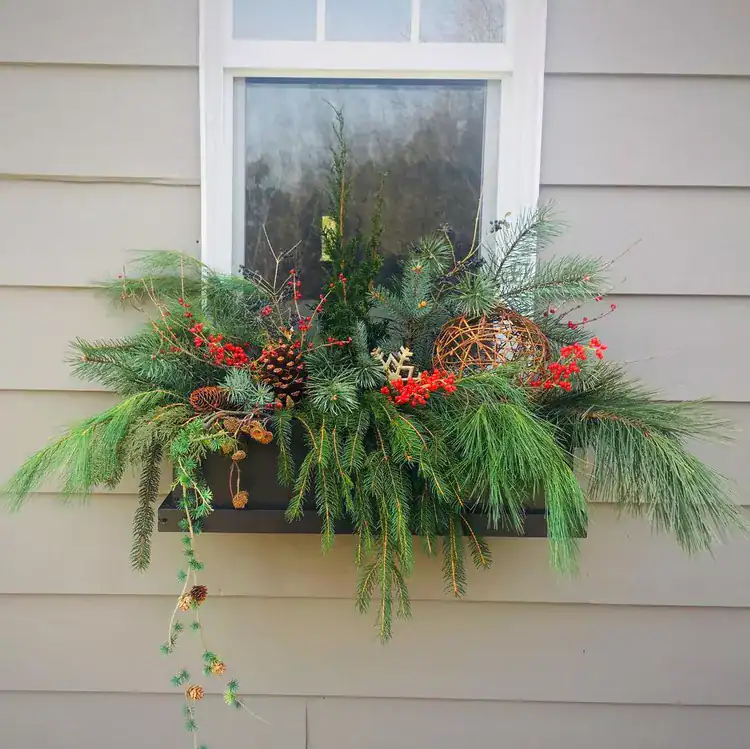
Before we get into the actual ideas, let me share a quick overview of what most of these window box styles call for. I’ve made the mistake of impulse-buying materials without a plan, so this table should save you a trip back to the store.
| Style Direction | Key Materials | Best For |
|---|---|---|
| Classic & traditional | Pine boughs, red berries, plaid ribbon | Colonial, craftsman, or brick homes |
| Natural & rustic | Birch logs, burlap, pinecones, twine | Farmhouse, cottage-style homes |
| Elegant & glam | Gold ornaments, magnolia leaves, tinsel | Modern or contemporary homes |
| Cozy & whimsical | Nutcrackers, gingerbread men, fairy lights | Families with kids |
| Fresh & botanical | Eucalyptus, herbs, dried hydrangeas | Natural aesthetic, boho homes |
Most window boxes work best when you layer heights — tall sprigs or logs at the back, medium greenery in the middle, and trailing or shorter elements at the front. Keep that in mind as you browse these ideas.
Evergreen and Pine Cones
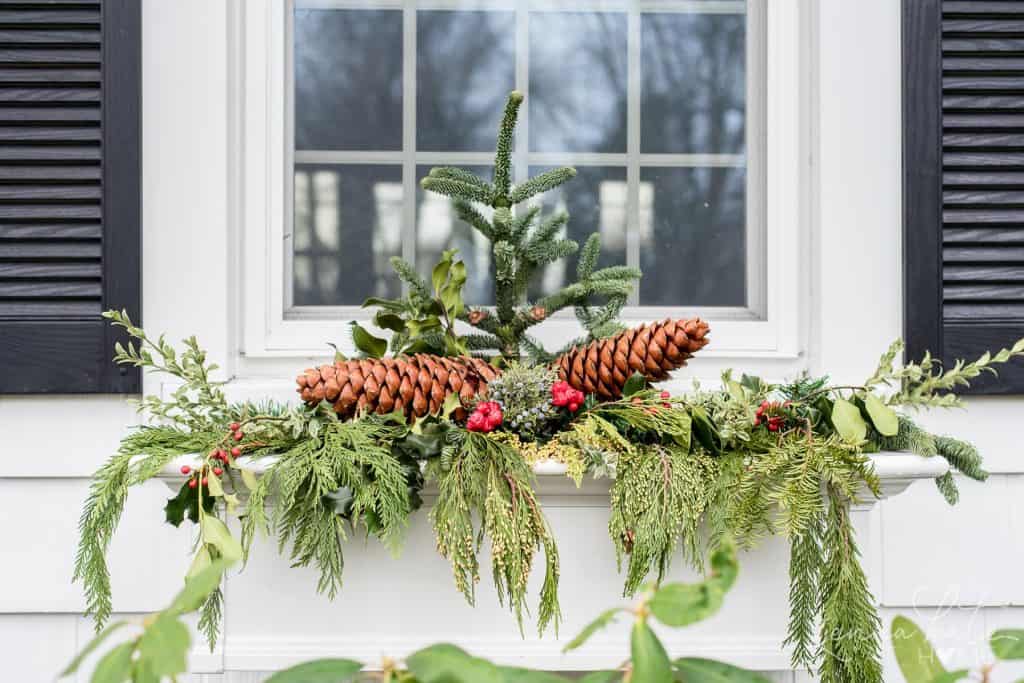
If you’re new to window boxes, start here. Evergreen and pine cones is the most classic Christmas window box combination there is — and for good reason. It works on every home style, it lasts the entire season without wilting, and it smells absolutely incredible every time you walk past.
I use fresh-cut pine or spruce boughs as the base, packed tightly so there are no gaps. Then I tuck in pine cones at different heights — some flat on the soil, some propped up against branches. A simple white or kraft bow at one corner pulls it all together without overcomplicating things.
People always ask: Do pine cones stay looking good all winter?
Yes — in fact, they often look better as the weeks go on. Cold air keeps them from drying out too fast, and a light dusting of snow makes them look magical.
Variations to try:
- Spray some pine cones white or silver for a frosted look
- Add a small string of battery-operated lights woven through the greens
- Mix in some cedar for a different texture and scent
Red Berries and Pine Branches
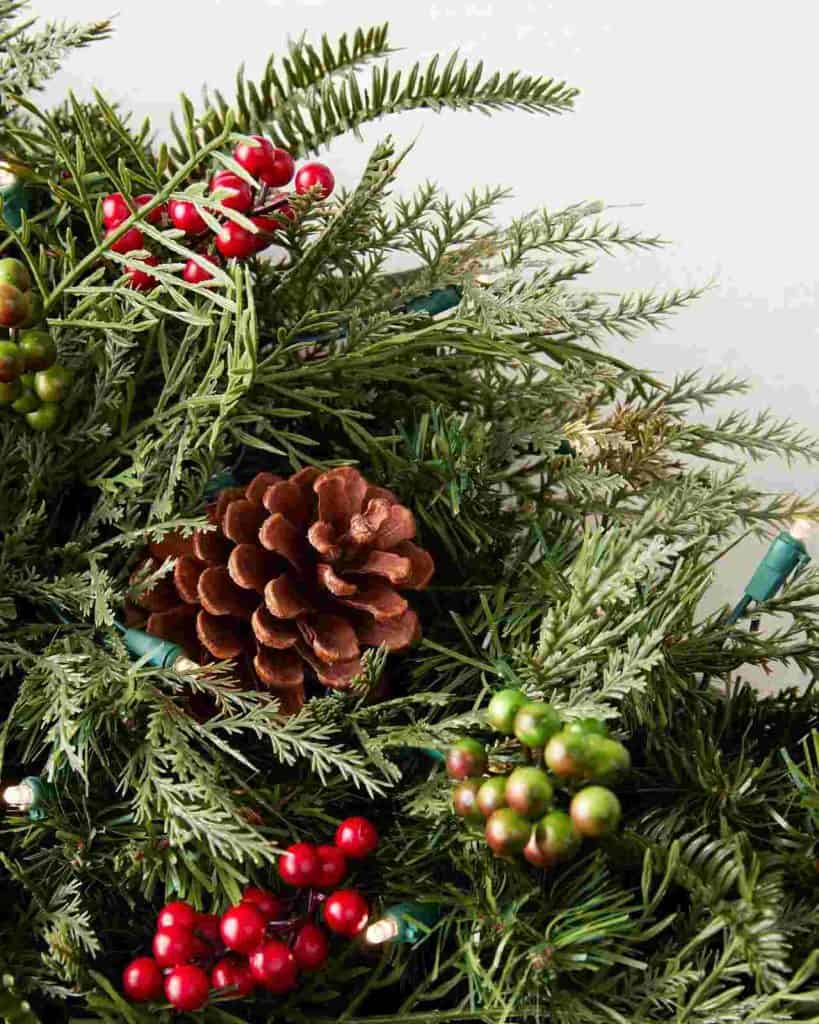
Red berries against dark green pine is one of those combinations that just feels like Christmas. My mom Zina has had a version of this in her own window boxes for as long as I can remember, and I grew up thinking it was the most festive thing in the world.
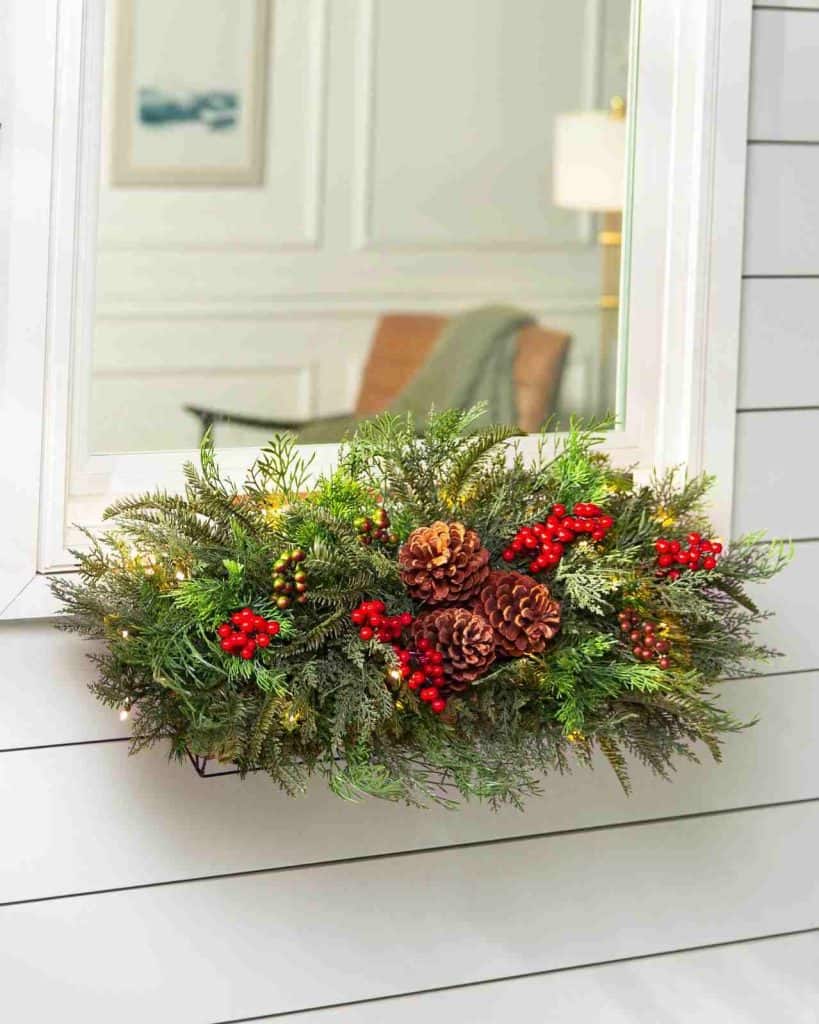
You can use real holly (though the leaves are sharp — gloves on!), faux berry picks from a craft store, or even cotoneaster branches from the garden. Layer your pine branches in first, then push the berry stems in at angles so they catch the eye from the street.
People always ask: Are real holly berries safe to use in window boxes?
They’re gorgeous, but keep in mind they’re toxic if eaten — so if you have little ones or pets who might grab at them, go for the faux version. Nobody will know the difference from the outside.
Variations to try:
- White berries instead of red for a more subtle, wintry palette
- Add a red velvet bow to pick up the berry color
- Mix in some rosehip stems for a more foraged, natural feel
Birch Logs, Boughs, and Lanterns
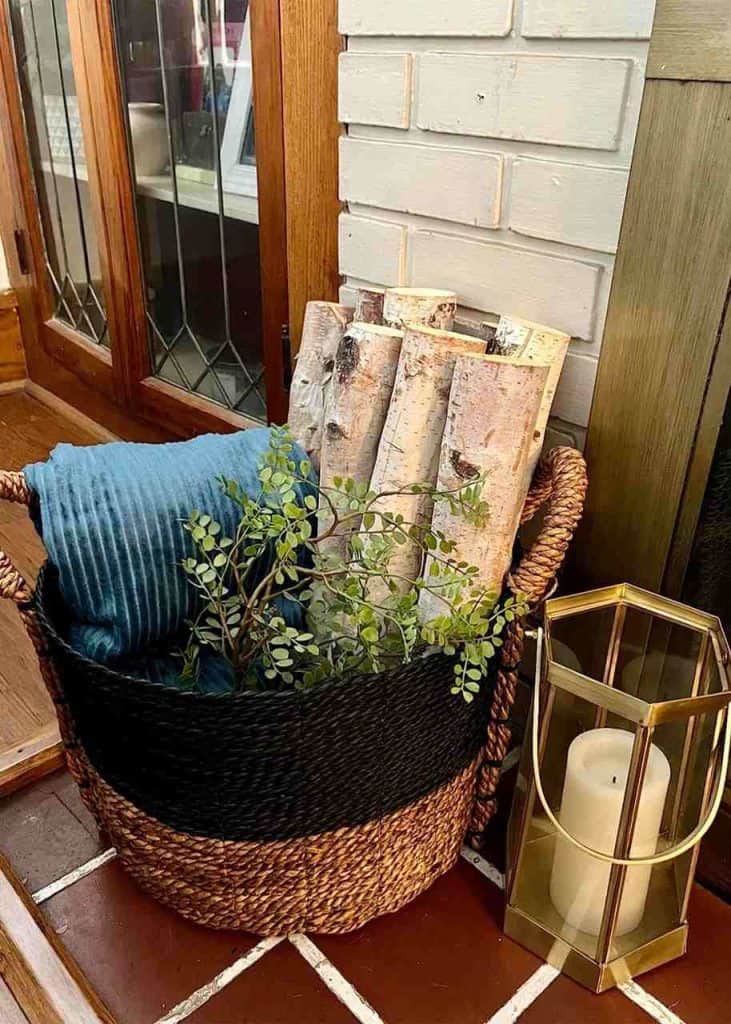
This is one of my personal favorites and probably the one I get the most questions about when people see it in person. The birch logs give height and structure, the boughs fill everything out, and a small lantern tucked in the middle adds a glow that looks absolutely magical once it gets dark.
You can find birch logs at craft stores, garden centers, or even cut your own if you have birch trees nearby. Stand two or three logs vertically at the back of your box — they become the anchor for everything else. Pack greenery in around them, then nestle a small battery-operated lantern in the front or slightly off-center.
People always ask: What kind of lantern works best outdoors in winter?
I always go battery-operated with a timer function. Real candles are a fire risk, and you don’t want to be outside in the cold every night fiddling with matches. A timer that turns on at 5pm and off at 11pm is a game-changer.
Variations to try:
- Use a dark metal lantern for a more dramatic look
- Wrap the birch logs with a bit of twine or ribbon for extra texture
- Add some small faux mushrooms at the base for a woodland fairy-tale feel
Plaid Ribbons With Fir Leaves
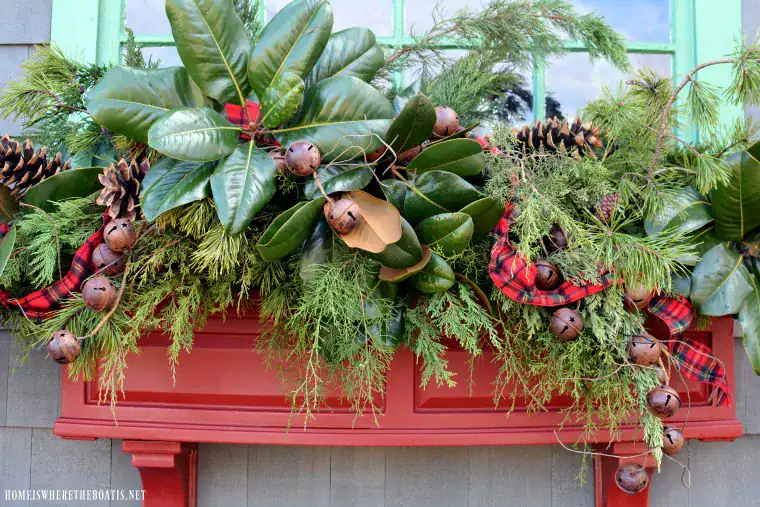
Plaid ribbon is having a real moment right now, and honestly, it deserves it. There’s something so warm and cozy about buffalo check or tartan woven through a window box full of fir. It instantly makes a home look pulled-together, like someone who actually has their holiday act together — which, some years, I am decidedly not!
Use wired ribbon so you can shape and position the loops exactly how you want them. Work the ribbon through the fir branches rather than tying a bow at the front — it looks more intentional and like the ribbon is growing out of the arrangement.
People always ask: What’s the difference between buffalo check and tartan for ribbon?
Buffalo check is that classic two-color large grid (usually red and black). Tartan is more complex, with multiple colors in a crisscross pattern — it feels a bit more traditional Scottish. Both look stunning in window boxes; it really just comes down to your existing décor colors.
Variations to try:
- Try navy and green plaid for a less expected look
- Mix two different plaid scales — one large, one small
- Add gold-tipped pinecones to glam it up slightly
Glittery Pinecones and Tinsel
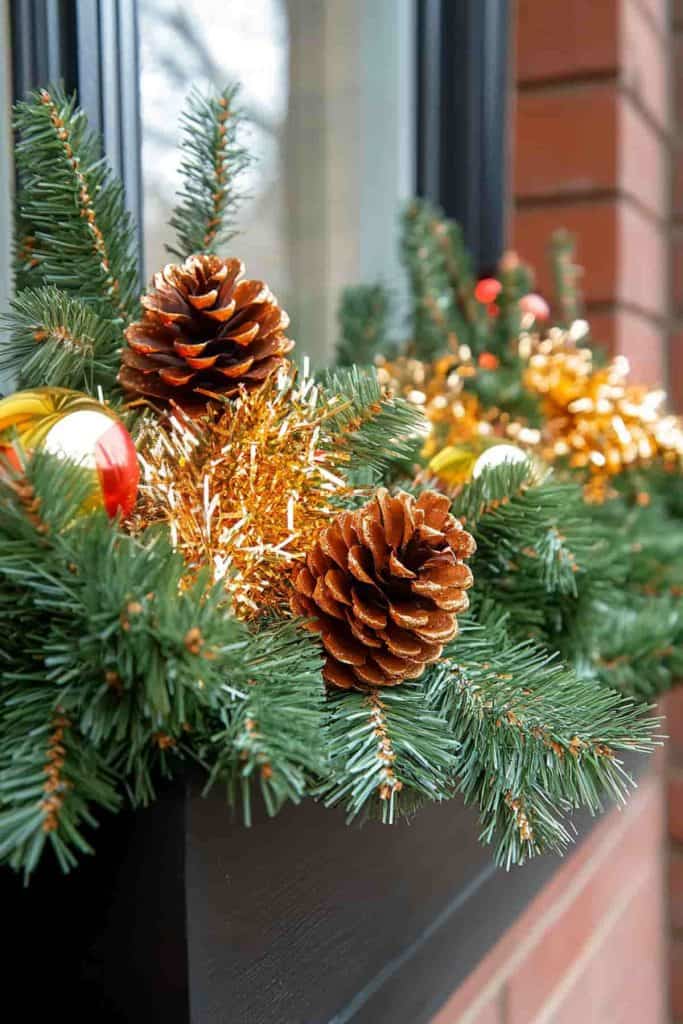
Sometimes you want sparkle, and there is absolutely nothing wrong with that. This combination is unapologetically festive — the kind of window box that makes kids press their noses against the car window as you drive past.
I make my own glittery pine cones every year with my girls. We dip the tips in craft glue, roll them in chunky gold or silver glitter, and let them dry on a piece of parchment. It takes about an afternoon and the kids love it. Then I layer them into a bed of fresh greenery with some silver or gold tinsel picks tucked throughout.
People always ask: Does glitter on pine cones hold up in rain and snow?
Craft glue will wash off eventually, so if you want them to last the full season, use outdoor Mod Podge instead. It seals much better and gives the same effect.
Variations to try:
- Mix gold and silver glitter cones rather than sticking to one metallic
- Add a few clear glass ball ornaments nestled among the cones
- Use tinsel in champagne or rose gold for a more modern palette
Poinsettias and Gold Leaves
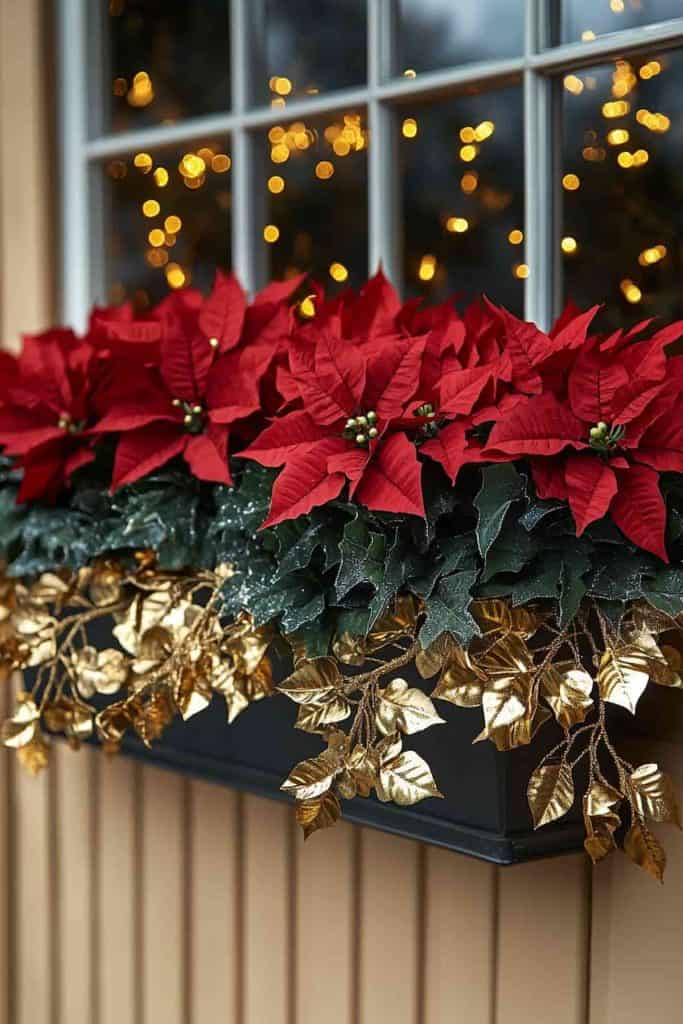
Poinsettias are classic for a reason, but using them in a window box rather than a pot makes them feel so much more intentional. Paired with gold leaf sprays or gold-tipped greenery, this combination feels genuinely elegant.
Use potted poinsettias set directly into the window box, or cut poinsettia stems and arrange them in water picks so they stay fresh. Tuck in gold leaf sprays, gold ball picks, or even just gold-painted magnolia leaves around them. The contrast between the deep red blooms and the metallic gold is absolutely stunning against a dark front door.
People always ask: Can poinsettias survive outdoors in winter?
Briefly, yes — but they’re tropical plants and don’t love the cold. Keep them out for display during mild days, but if temps drop below freezing, bring them in overnight. Or use high-quality faux poinsettia stems if you live somewhere that gets genuinely cold winters.
Variations to try:
- White poinsettias with gold accents for an ice-queen aesthetic
- Add small white twinkle lights for evening glow
- Pair with cream ribbon and greenery for a more muted, elegant version
Holly Wonders
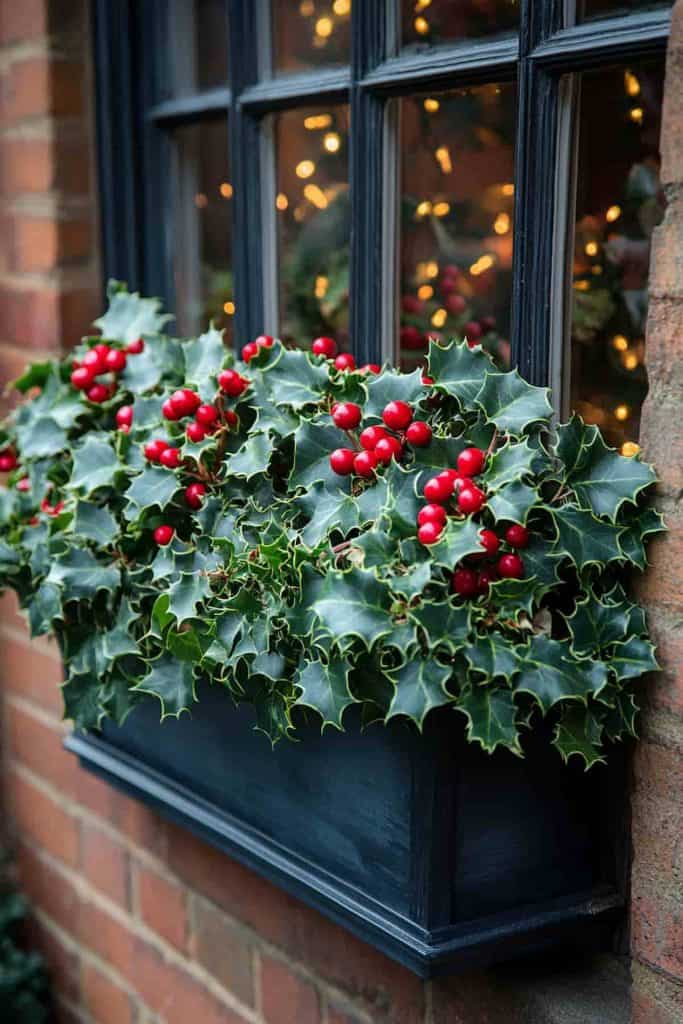
There’s a reason holly has been a Christmas symbol for centuries — it’s bold, it’s graphic, and those red berries against dark glossy leaves just scream winter celebration. A window box that leans fully into holly, really committing to it, can be one of the most striking on the block.
Layer in holly branches generously so the whole box feels full and lush. Mix different sizes of stems — some with heavy berry clusters, some that are mainly foliage. You can fill in gaps with plain evergreen or keep it entirely holly for maximum impact.
People always ask: Where can I get enough real holly for a window box?
Garden centers often sell holly by the bundle in December. You can also check local flower markets or order online. If your garden has a holly shrub, December is a perfectly good time to take cuttings.
Variations to try:
- Variegated holly (green and white leaves) for a lighter look
- Mix in some eucalyptus for a softer texture
- Add a simple white bow to balance the boldness of the red and green
Eucalyptus and Red Apples
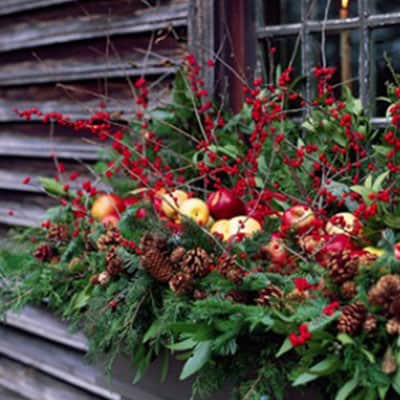
This one might be my most-photographed window box idea, and for good reason — it’s unexpected, it’s beautiful, and it smells amazing. Eucalyptus has that wonderful cool, fresh scent, and when you add real or faux red apples, it looks like something straight out of a fairy tale.
Use seeded eucalyptus or silver dollar eucalyptus for the most visual texture. For the apples, small crabapple-sized ones look best — too large and they overpower the arrangement. You can use real apples (they’ll last a few weeks in the cold) or craft store faux ones on picks.
People always ask: Will real apples freeze and look bad?
In very cold climates, real apples can freeze and thaw repeatedly, which makes them mushy. If you’re in a climate that dips below -5°C regularly, stick to faux. In milder winters, real ones hold up beautifully.
Variations to try:
- Pears instead of apples for a more muted, sophisticated look
- Add cinnamon sticks tied in small bundles throughout
- Try silver eucalyptus with gold apples for a different palette entirely
Pine Needles, Pinecones, and Burlap
🔥 Would you like to save this?
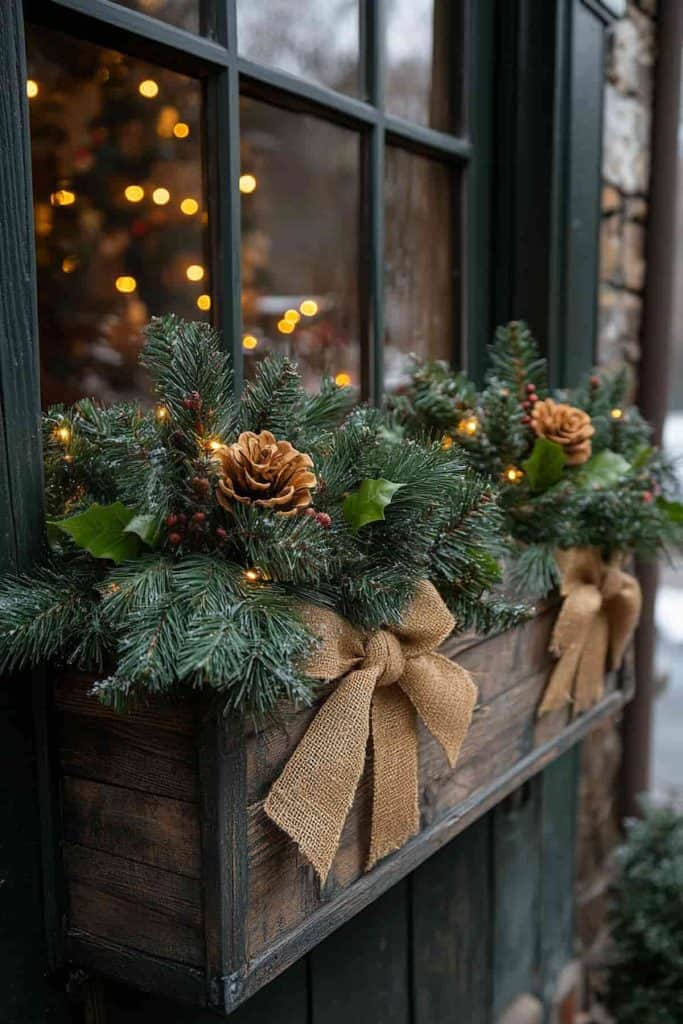
This is the window box for the farmhouse lovers — and I mean that as the highest compliment. It’s unpretentious, warm, and genuinely beautiful without trying too hard.
Pine needle branches packed tightly give you a full, fluffy base. Pinecones add texture and depth. And then burlap ribbon or a simple burlap bow softens everything and adds that rustic warmth. This is the arrangement that looks like it belongs on a December morning with steam rising from a mug of coffee on the windowsill.
People always ask: How do I keep burlap ribbon from looking scraggly in wet weather?
Look for wired burlap ribbon — the wire helps it hold its shape even when wet. A quick fluff after rain or snow keeps it looking intentional.
Variations to try:
- Add some dried cotton stems for extra farmhouse charm
- Use a red burlap ribbon instead of natural for a pop of color
- Tuck in some small galvanized stars for a Texan-farmhouse feel
Berries and a Winter-Themed Birdhouse
This one is so charming it almost hurts. A small decorative birdhouse nestled among berry-laden branches and winter greenery turns a window box into a tiny scene — a little world unto itself.
Use a small wooden birdhouse (craft stores and garden centers have them in all styles — you can leave it natural or paint it red, white, or even a dusty blue). Set it slightly off-center in the box, then build the arrangement around it: berry stems arching over, greenery below and behind, maybe a tiny bird perched on the roof if you can find one.
People always ask: Should I use a real birdhouse or a decorative one?
Decorative is better for window boxes — real birdhouses are sized for nesting and tend to be heavier and deeper. Decorative versions are lighter, prettier, and come in winter-appropriate finishes.
Variations to try:
- A red-painted birdhouse for a traditional Christmas look
- Hang a tiny wreath on the birdhouse door
- Use white berry branches for a snowy, ethereal feel
Magnolia Leaves and Gold Ornaments
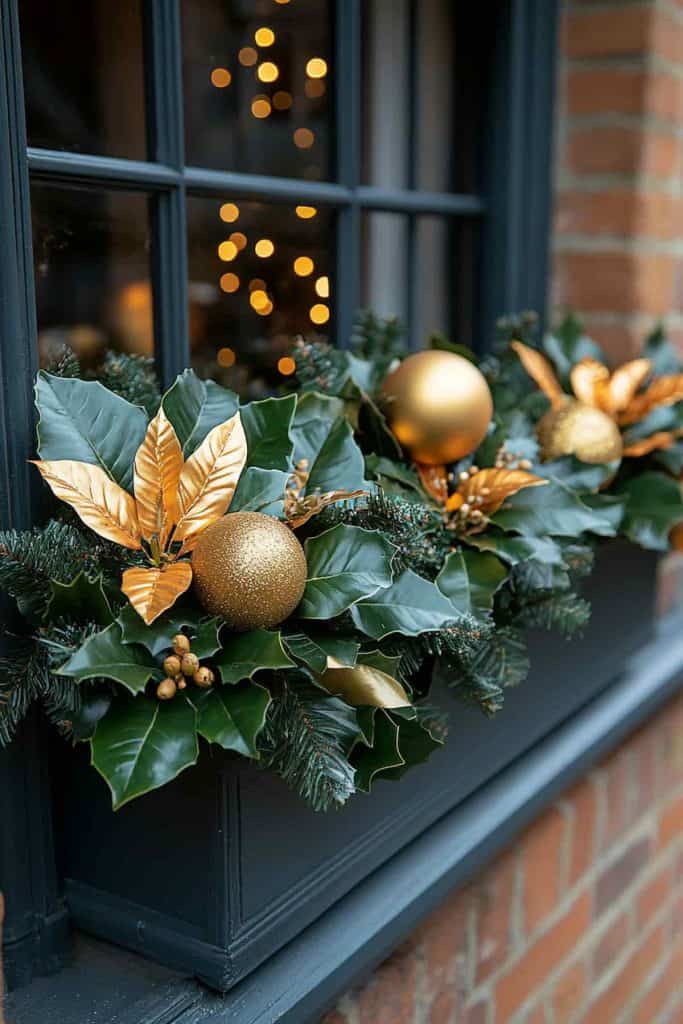
If your home leans toward the sophisticated and elegant, this is your window box. Magnolia leaves are large, waxy, and have that gorgeous silver-green underside that catches the light beautifully. Pair them with matte gold ball ornaments and you have something that looks genuinely luxurious.
You can use fresh magnolia (if you have access to a magnolia tree, a few cuttings go a long way), or high-quality faux magnolia stems that look almost identical in photographs. Wire the ornaments onto picks or bamboo skewers so you can push them in at the right depth.
People always ask: How many ornaments is too many for a window box?
For a typical 24-inch window box, 3-5 ornaments looks intentional. More than that and it can look cluttered. Vary the sizes — a couple of larger ones and a few smaller — for the most balanced look.
Variations to try:
- Silver ornaments with magnolia for a cooler, winter-moon palette
- Add some ivory ribbon and pearl picks for a bridal-winter aesthetic
- Pair with white poinsettias for a fully monochromatic white-and-gold box
Cedar and Nutcrackers
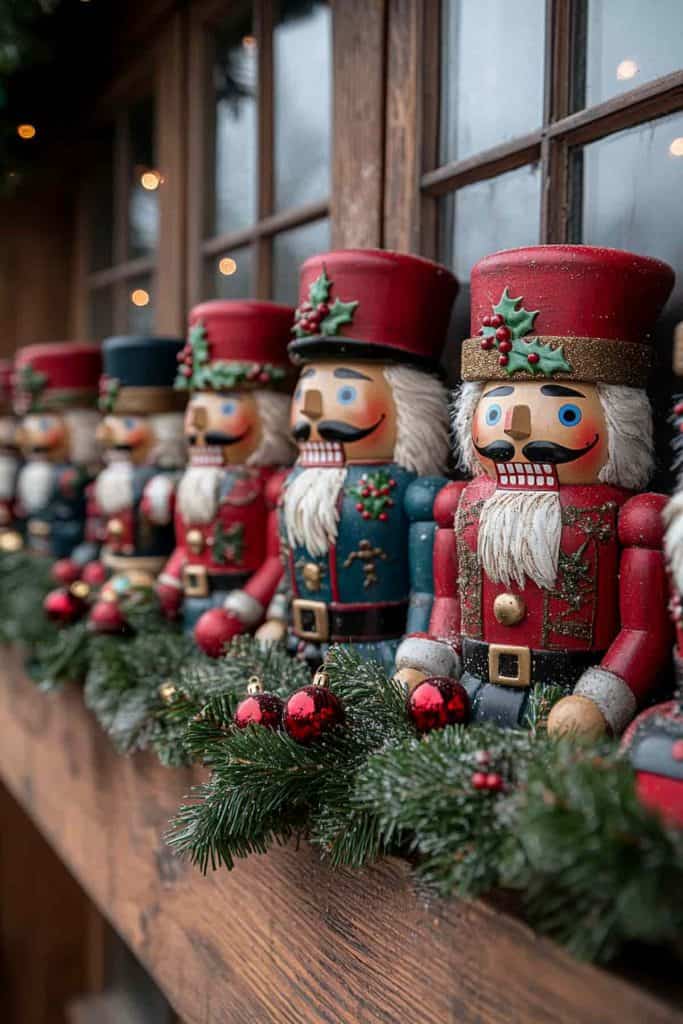
I love this one for families. Cedar branches have the most beautiful, soft, feathery texture — totally different from pine or spruce — and they fill a window box with incredible lushness. Add some decorative nutcracker figures and you’ve got a window box that the kids will talk about all season.
Nutcrackers come in every size now — from tiny ornament-sized ones to quite large statement pieces. I’d suggest two or three small-to-medium ones rather than one giant figure. Position them like they’re guarding the box, standing tall among the cedar branches.
People always ask: Won’t nutcrackers get damaged by rain and snow?
Traditional painted nutcrackers will eventually get damaged outdoors. Look for ones specifically labeled as outdoor-safe, or coat them with a clear outdoor sealant spray before putting them outside. Alternatively, bring them in during heavy weather.
Variations to try:
- A mix of nutcracker styles (soldier, king, musician)
- Add a red or gold bow at the base of each nutcracker
- Use blue spruce instead of cedar for a more silvery backdrop
Candles
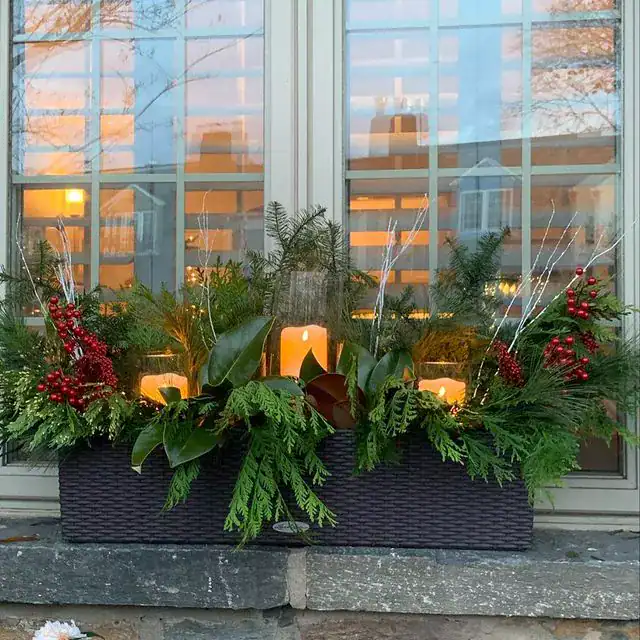
There’s a version of a window box that stops being just décor and becomes something almost atmospheric — and this is it. The combination is simple: evergreen boughs, thin white branches, a few sprigs of red berries. But then you add tall glass candleholders with golden candles glowing inside, and the whole thing transforms. It’s the kind of window box that makes guests stop on your doorstep before they even knock.
I love this look especially for the weeks around Christmas when we’re having people over. The candlelight at dusk, visible from the street, creates a warmth that no fairy light quite replicates. For everyday use, large pillar candles in glass holders can be lit for the few hours people are coming and going — they’ll last several evenings before needing replacing.
People always ask: Is it safe to have real candles in a window box?
It can be done safely with the right setup — tall glass holders that fully enclose the flame, and keeping the candles away from dry foliage that could catch a spark. That said, if you have children or simply don’t want to think about it, battery-powered flickering candles in glass holders look remarkably similar from a distance and are completely worry-free. Always extinguish real flames before going inside.
Variations to try:
- Use mercury glass holders for a vintage, frosted look
- Try cream or ivory candles instead of white for a warmer glow
- Mix heights — one tall, two shorter — for a more dynamic arrangement
Bright Berries
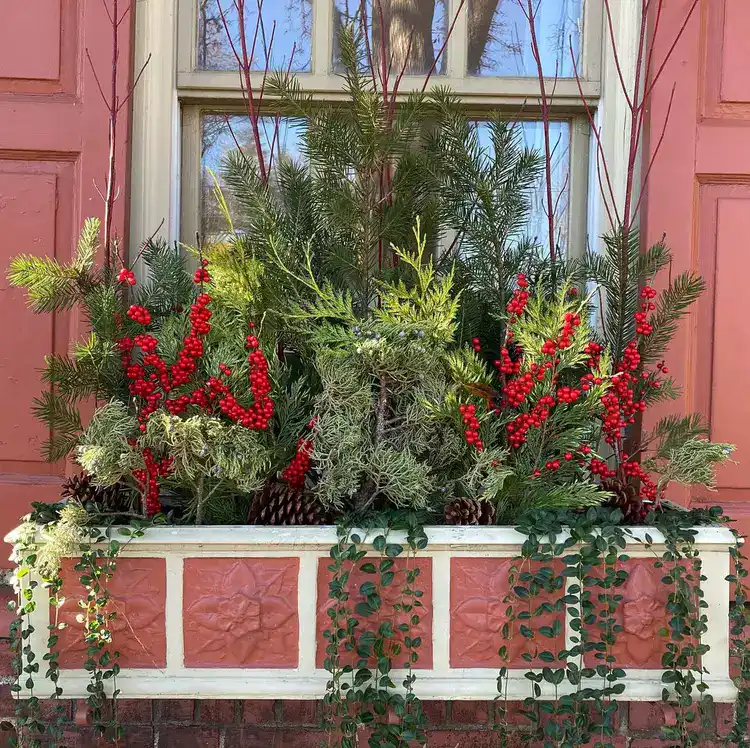
If your neighborhood tends toward the tasteful and understated in December, this is how you make your window box impossible to ignore. Bright, vivid red is the hero here — not just a touch of it, but a full commitment. Winterberry stems (also called holly berry or Ilex verticillata) in deep crimson, red dogwood twigs with their almost neon coral-red color, and a bed of mixed evergreens to anchor it all.
What makes this work is layering different kinds of red. Winterberry stems are covered in small round berries that cluster in dense groups. Red dogwood twigs are bare and graphic, almost like brushstrokes.
My neighbor has a version of this every year and it genuinely makes me stop every time I walk past. In a winter landscape where everything else is grey and brown, that much red is simply joyful.
People always ask: Where do I find winterberry stems?
Garden centers stock them in November and December, usually sold as cut stems by the bunch. You can also find them at farmers’ markets and some florists. If you have a Ilex verticillata shrub in your garden, December is exactly the right time to cut some — the berries are at their peak after the first frost.
Variations to try:
- Add a cream or ivory ribbon bow so the red really pops against it
- Tuck in a few stems of bare white birch for contrast against all that color
- Mix in some arborvitae or boxwood for a denser, more textured green base
Dried Hydrangeas and Juniper Boughs
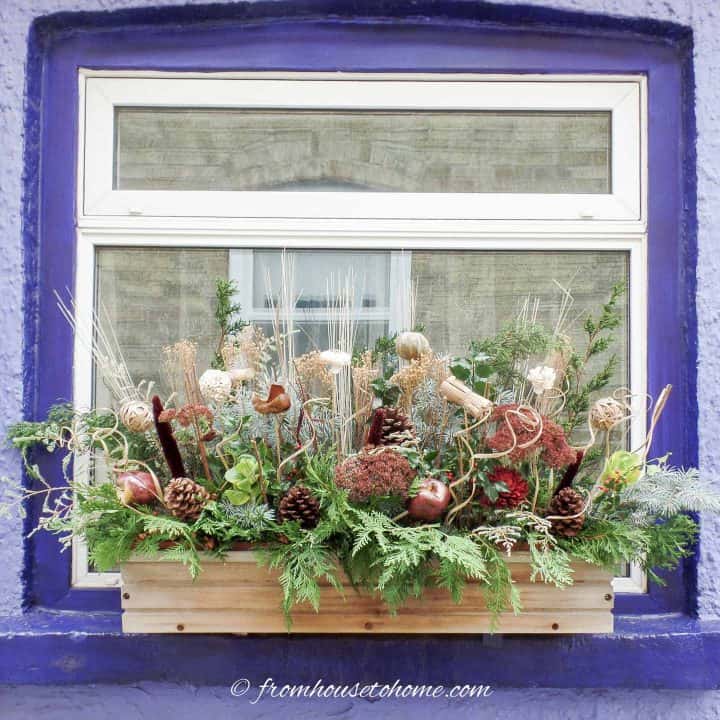
Dried hydrangea heads have such an incredible texture — papery, delicate, and almost snowball-like. Paired with the deep blue-green of juniper, you get a combination that feels like proper winter countryside. This is the window box for someone who appreciates the slower, quieter beauty of the season.
You can dry your own hydrangeas from summer blooms (they air-dry beautifully if you hang them upside down in a cool, dark spot) or buy pre-dried ones from craft stores. The pale pink, beige, and cream tones of dried hydrangeas are so elegant against dark juniper.
People always ask: Will dried hydrangeas fall apart in rain?
They can get soggy in heavy, persistent rain. If you’re in a very wet climate, use dried hydrangeas sparingly — tuck them toward the back under a roof overhang if possible, or use faux dried-look hydrangeas which hold up in all weather.
Variations to try:
- Add some dried bunny tails grass for extra delicate texture
- Tuck in some small mercury glass ornaments for a silvery, frosted effect
- Mix with baby’s breath for an even more delicate, romantic look
Spruce and Gingerbread Men
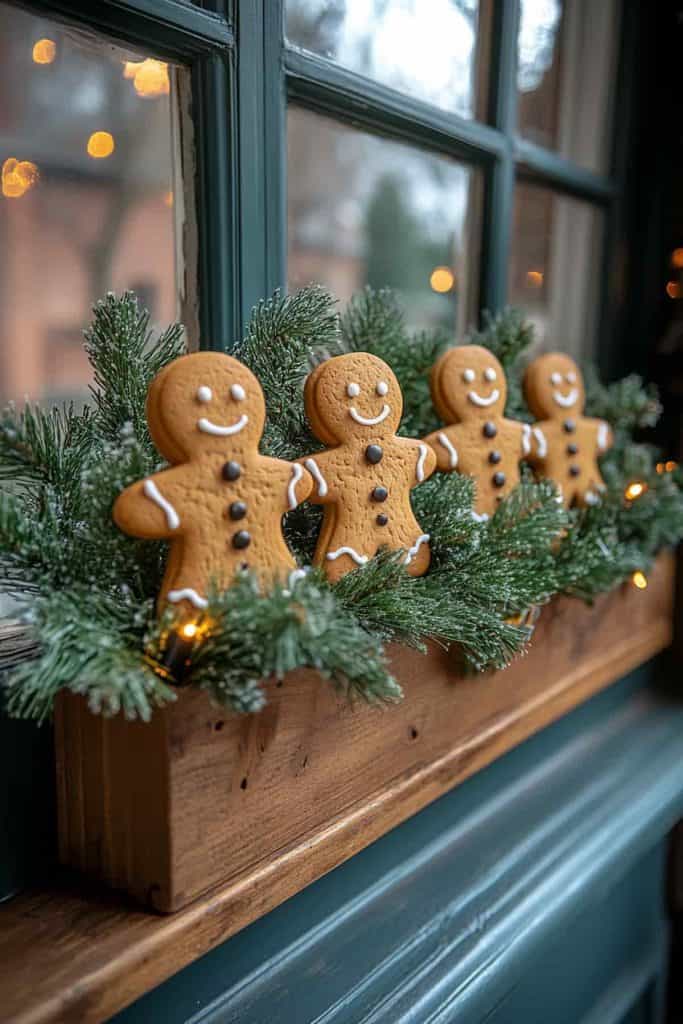
My daughters helped me with this one two years ago and it is now completely non-negotiable in our house — it has to happen every December. Spruce boughs, fluffy and full and gorgeous, with little gingerbread man ornaments tucked throughout. It’s the coziest, most joyful window box imaginable.
Use full, dense spruce branches as your base and really pack the box so it overflows slightly. Then hang gingerbread man ornaments on the branches — they can be ceramic, wooden, felt, or even actual baked gingerbread (though baked ones will eventually get soggy outside). Red and white ribbon bows here and there complete the look.
People always ask: Where do I find good gingerbread man ornaments?
Target, Michaels, and TJ Maxx all stock them every Christmas season. I like the ceramic ones best for outdoor use — they hold up much better than fabric or paper. For the most charming look, mix a few different sizes.
Variations to try:
- Use mini candy cane ornaments alongside the gingerbread men
- Add a few small red ball ornaments for extra color
- Try a red and white striped ribbon bow for the most festive version
Red Amaryllis and Evergreen Boughs
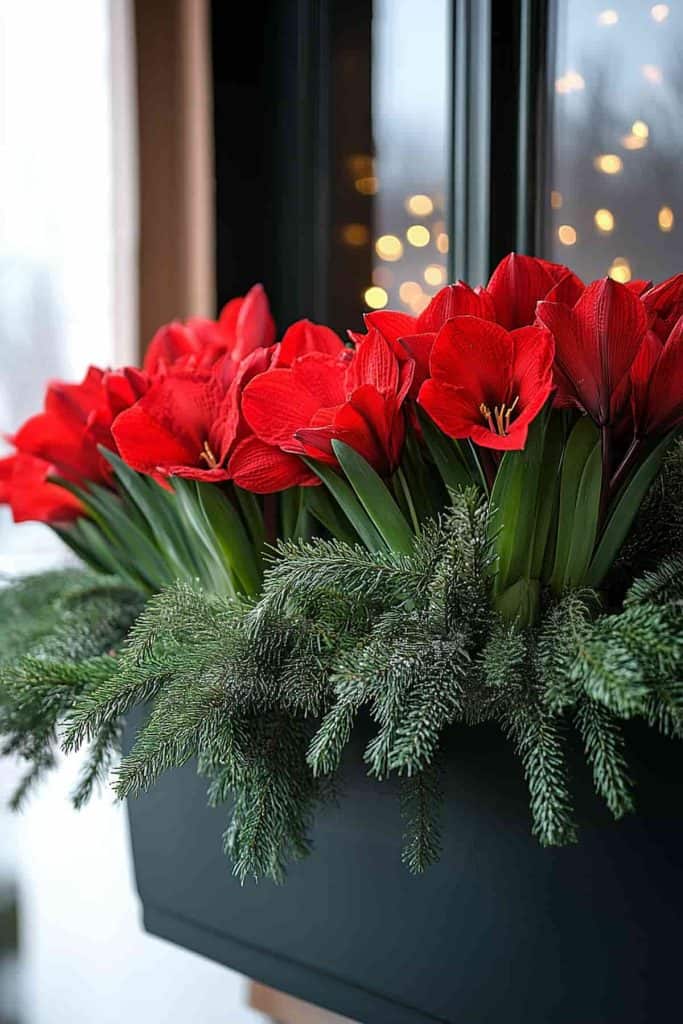
Amaryllis is the queen of Christmas flowers, and using it in a window box rather than just a pot makes such a statement. The blooms are large, dramatic, and deeply beautiful — and against a backdrop of rich, dark evergreen, they’re absolutely spectacular.
Because amaryllis stalks can be fragile, I recommend either using potted plants set into the box or using cut stems in water picks so they stay hydrated. Position them slightly set back from the front edge of the box so wind can’t snap them. Pack evergreen boughs generously all around to protect and frame the blooms.
People always ask: When do amaryllis bloom? Will they actually be out at Christmas?
Amaryllis can be coaxed to bloom exactly when you want with a bit of timing — they generally take 6-8 weeks from potting to bloom. So plant in late October for Christmas blooms. You can also buy them pre-forced and already budding from November onwards in most garden centers.
Variations to try:
- White amaryllis with evergreen and silver accents for a snow-white palette
- Pair with red berries to double down on the bold red theme
- Add gold ribbon and gold-tipped pinecones for a regal, formal look
Final Thoughts
Whatever combination speaks to your home and your style, I hope you feel inspired to try something this winter. Window boxes are one of those things that look incredibly impressive from the outside but are honestly so much more achievable than people think.
My biggest piece of advice?
Don’t overthink it. Grab some fresh greenery as your base, add one or two accent elements, and stop before you feel like you’ve added enough. That restraint is what separates a window box that looks intentional from one that looks messy.
And if Maria and Marina are anything to go by, even a simple evergreen-and-berry arrangement is enough to make your kids insist on walking past your own house on the way home from school.
Thanks for reading,


I’m Katerina Lithopoulou, co-creator of DIY Cozy Living. I’ve always loved the little things that make a space feel special. With a background in language and a passion for photography and cozy design, I enjoy turning everyday inspiration into simple ideas people can actually use.
My motto: “Cozy isn’t a trend — it’s a feeling.”
