
My Favourite Faux Stems for Spring (And Why I Stopped Feeling Guilty About Them)

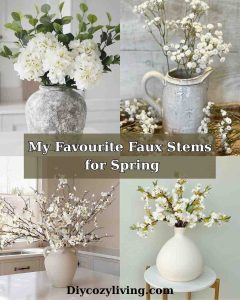
I have a complicated history with faux flowers.
For years I was firmly in the real-plants-only camp. The kind of person who looked at a silk flower arrangement and thought: why bother. Real flowers have a smell, a life, an impermanence that makes them mean something. A faux peony is just a peony-shaped object.
I have since changed my position.
Here is what happened. I bought a bunch of real tulips from the market in March — the kind of pale yellow tulips that make you feel like spring has actually arrived regardless of what the weather is doing outside. I arranged them in a vase on the coffee table. They were perfect for four days. On the fifth day they started drooping. By day seven they were gone and I was back to an empty vase and the distinct feeling that the room had lost something.
I did this three weeks in a row before Tasos, very gently, suggested that perhaps there was a more practical solution.
He was right.
I now have a collection of faux stems that I rotate through the vases in our home from late February until June, and the coffee table has looked like spring for the past two months without me buying, arranging, wilting, and replacing a single real flower. Maria has started adding to the collection without asking — she brought home a bunch of faux anemones from a market last month and put them in the kitchen without saying anything, which I discovered the next morning and which made me unreasonably happy.
These are my favourites. The ones I come back to every year, plus a few I’ve recently added.
Why Faux Stems Are Worth Taking Seriously
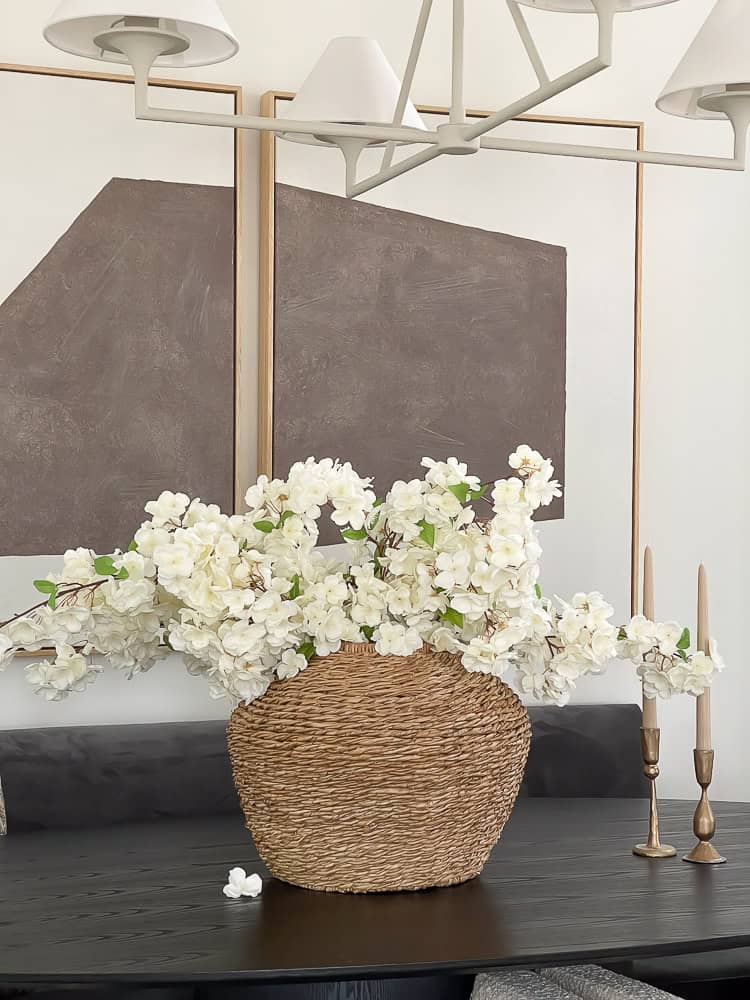
The quality has changed completely in the last few years. The faux stems that used to look obviously artificial — the too-perfect petals, the uniform colour, the plastic shine — have been replaced by options that are genuinely difficult to distinguish from real at anything less than close inspection.
The key is in the details. Good faux stems have variation in the colour of the petals, slightly imperfect edges, realistic leaves that aren’t all the same shade of green. The stems bend and can be repositioned. The flowers have a weight to them that cheap ones don’t.
I’ve learned to be selective. A bad faux stem is worse than no stem at all. A good one changes a room.
The Ones I Already Own and Love
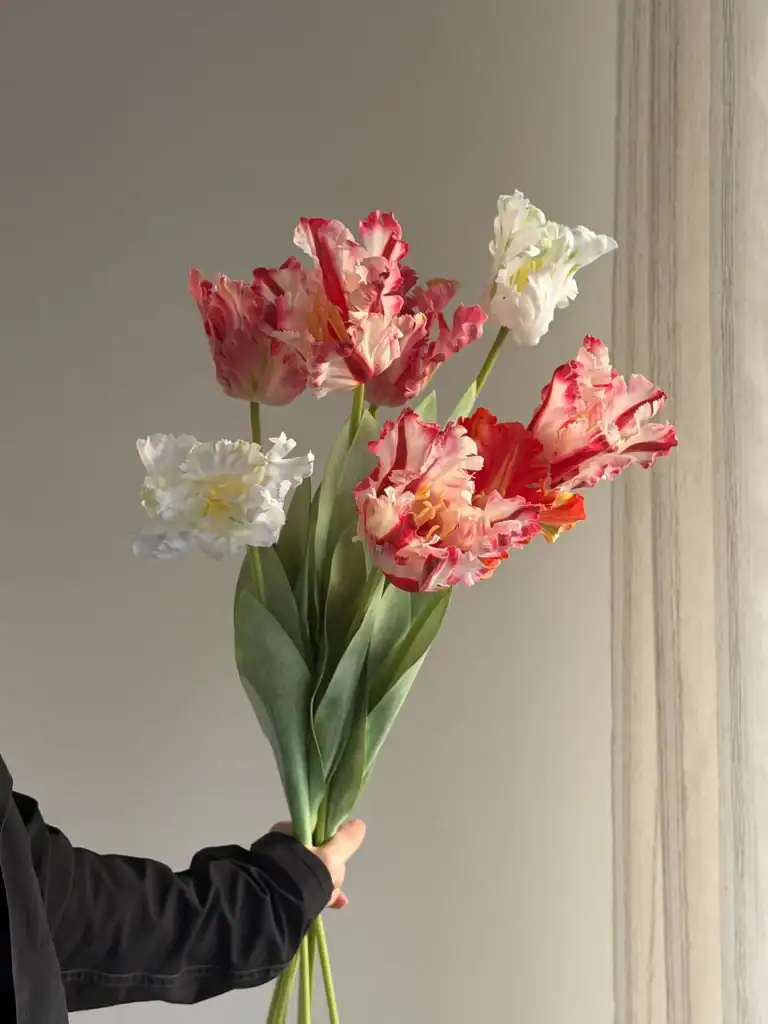
Faux Tulips
My starting point and still my favourite. Every year, without fail, a bunch of faux tulips goes into the tall white vase on the living room shelf in late February and stays there until May.
The key is buying them slightly open rather than tight-budded — the open ones look more natural and settle into a vase the way real tulips do, slightly drooping at the tips in that particular way that is somehow both imperfect and exactly right. I have them in pale yellow and soft white. Marina wanted pink. We have pink too now.
Faux Peonies
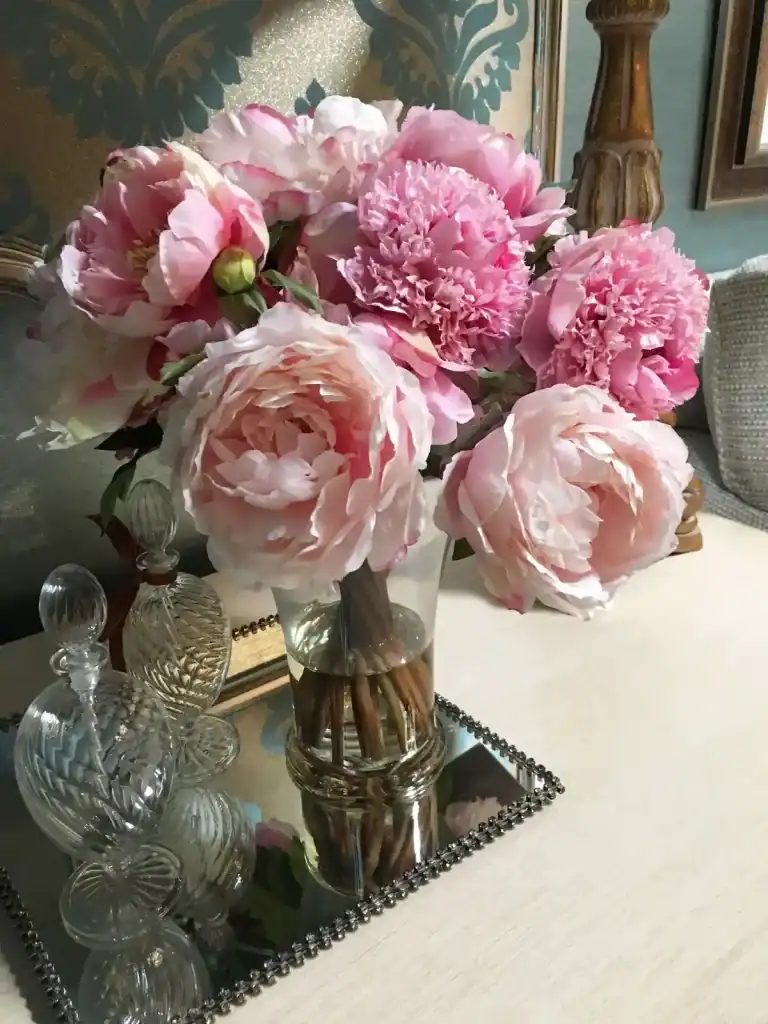
If tulips are the beginning of spring, peonies are the middle of it — the point where everything is fully open and lush and slightly excessive in the best possible way. A faux peony in a wide-mouthed vase is one of the easiest ways to make a room look like someone put thought into it.
The large-headed varieties are the most convincing. The smaller budget ones tend to look thin and flat. Spend a little more on peonies specifically — they’re the statement piece of a spring arrangement and they need to be able to hold that role.
I have mine in blush pink and cream. They live on the dining table from April onward.
Faux Ranunculus
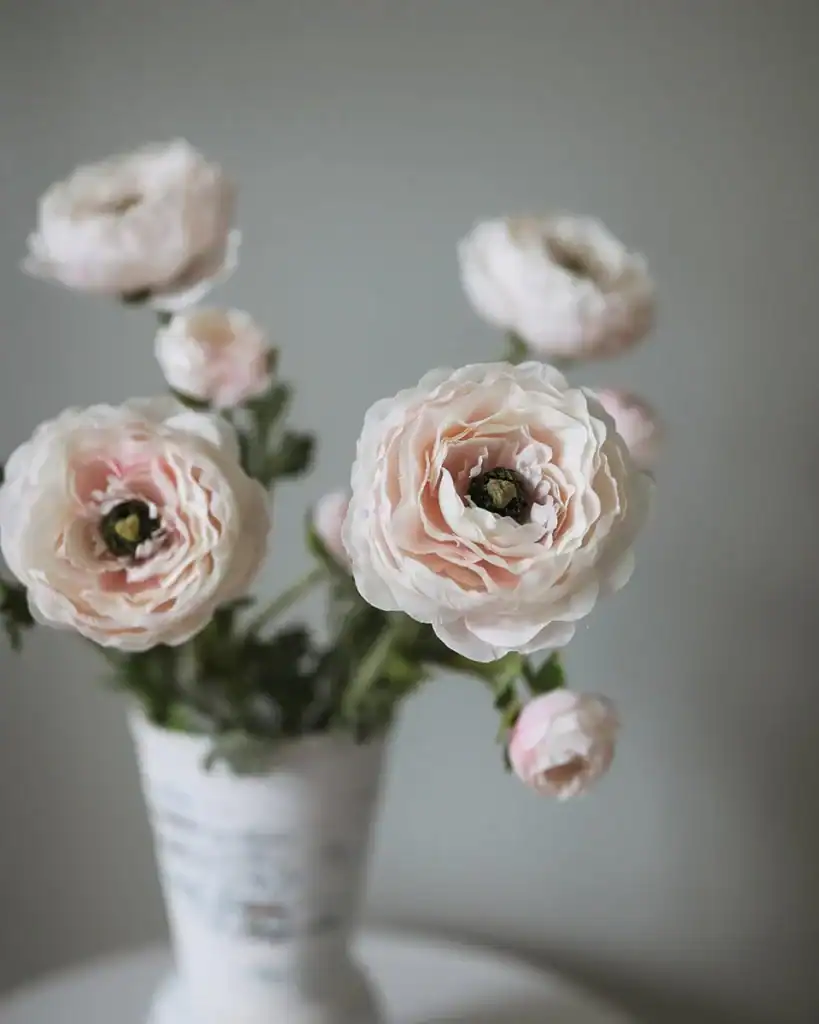
These are Maria’s contribution to my faux flower education.
She showed me ranunculus on her phone — the layered, tightly-packed petals that look like a rose crossed with a peony — and asked why we didn’t have any. I didn’t have a good answer. We now have a bunch of faux ranunculus in terracotta and dusty rose that goes in a small vase on the kitchen windowsill and makes the whole kitchen look more considered than it has any right to given the state of the counters on a weekday morning.
What makes a good faux ranunculus: the petals need to be tightly layered and slightly varied in shade from the outside to the centre. If they’re all the same colour throughout, they look flat. The variation is what makes them read as real.
Faux Cherry Blossom Branches
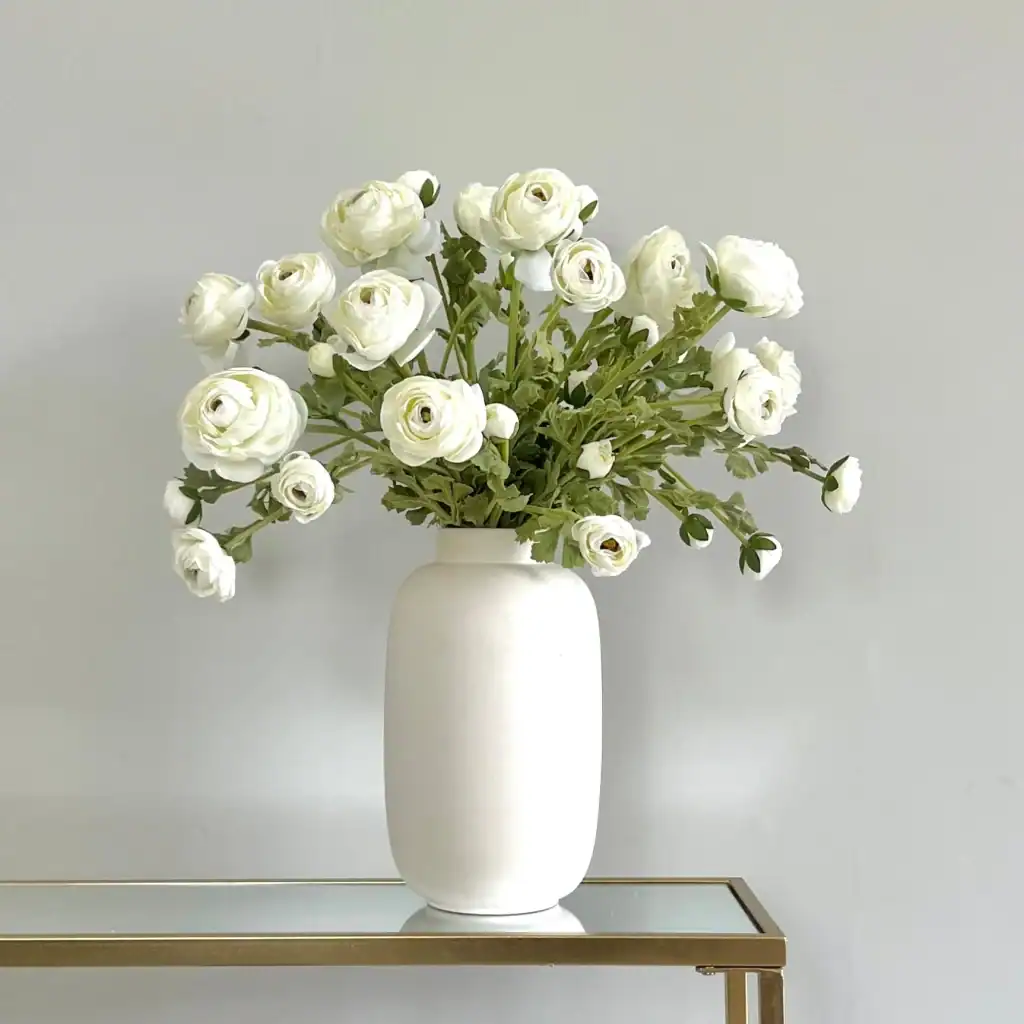
Long stems. Pale pink blossoms. The kind of thing that looks architectural when placed in a tall narrow vase rather than just decorative.
Cherry blossom branches do something that smaller faux flowers don’t — they add height and movement. A tall vase with two or three cherry blossom branches in it in early March makes a room feel like spring has arrived before anything outside has decided to agree. They work particularly well in an entryway where you want the first impression of the space to feel considered and seasonal.
Faux Eucalyptus
🔥 Would you like to save this?
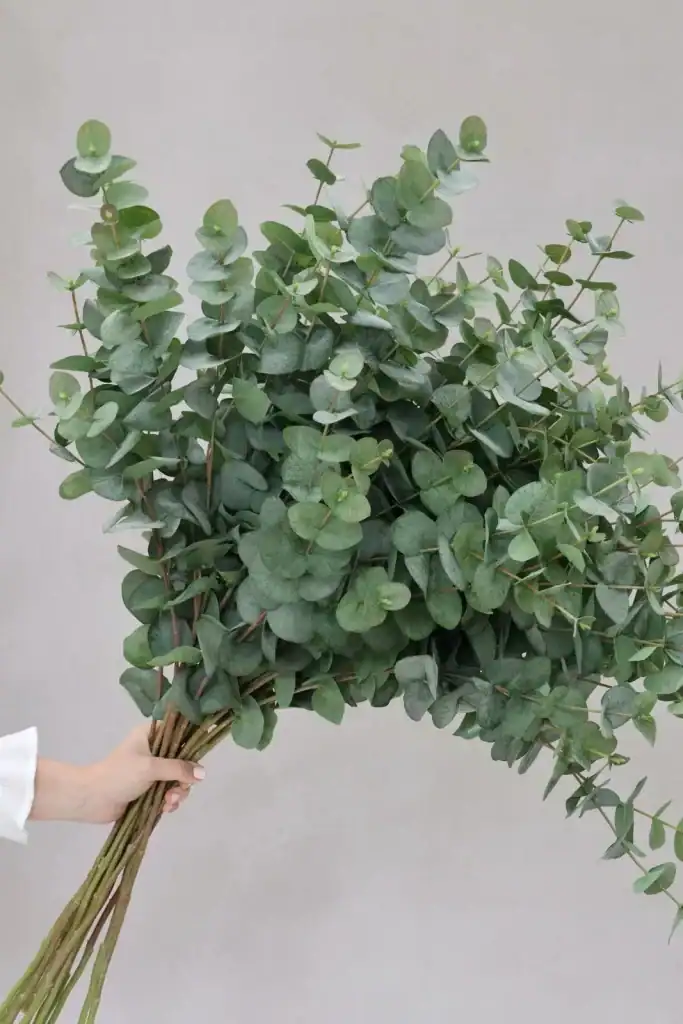
Not technically a spring flower. Doesn’t matter. Eucalyptus goes with everything and belongs in every season.
A few stems of faux eucalyptus tucked alongside a floral arrangement makes the whole thing look more natural — like the flowers came from a garden rather than a shelf. On its own in a small vase it looks minimal and intentional. It’s the one stem I keep in the vases all year and swap the flowers around it seasonally.
The silver-green variety is more versatile than the darker green. Both are worth having.
Faux Hydrangeas
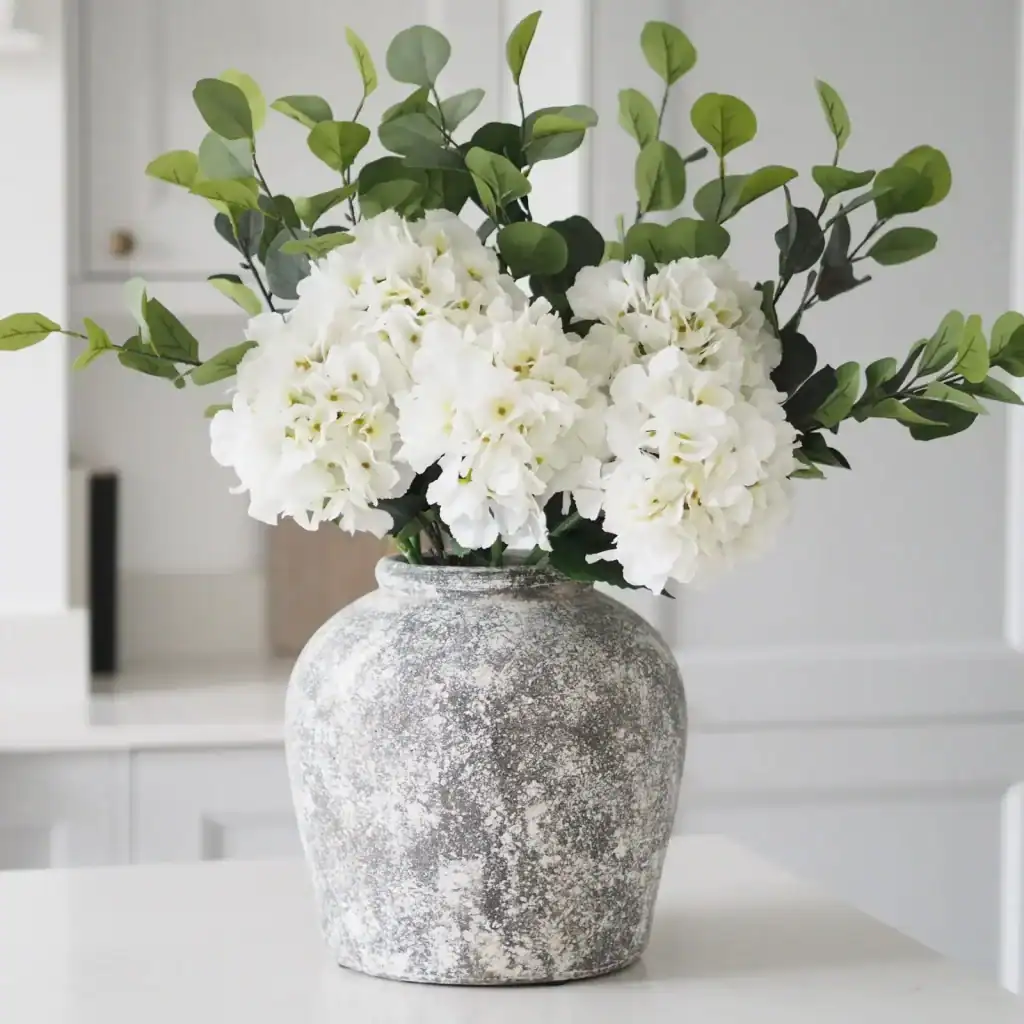
Full, round, generous. One large faux hydrangea head in a wide low vase is a complete arrangement on its own — you don’t need to add anything else. It fills the vase naturally and sits the way real hydrangeas do, with a slight weight that makes the stem curve downward in a way that looks lived-in rather than arranged.
I have mine in a dusty blue that works with the colour of the walls in our living room. Tasos noticed them and said they looked nice. This is a significant endorsement.
A Few I’ve Just Added
Faux Anemones
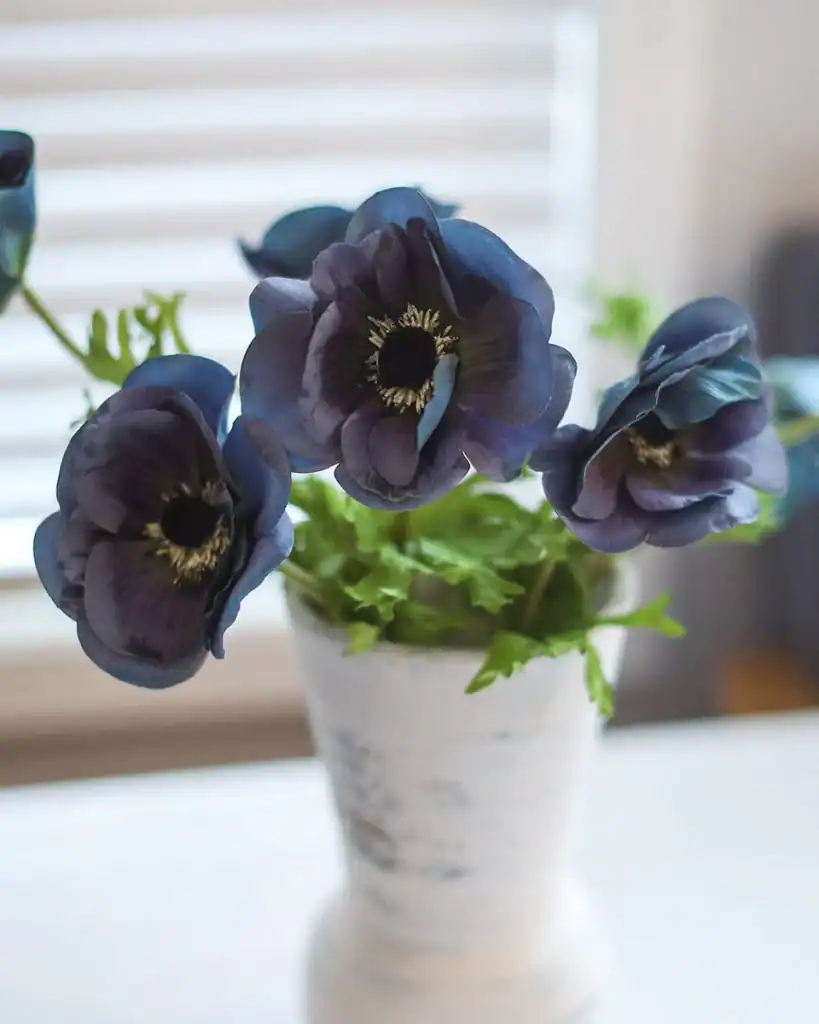
The ones Maria brought home from the market. Dark centres, white or purple petals, the kind of wildflower look that doesn’t try too hard. They work differently from peonies and tulips — less obviously decorative, more like something that might have been picked from a field somewhere. Which is, of course, exactly the impression you want.
They look beautiful mixed with eucalyptus in a casual arrangement and they photograph exceptionally well, which I mention only because if you’re documenting your home they’re worth having.
Faux Baby’s Breath
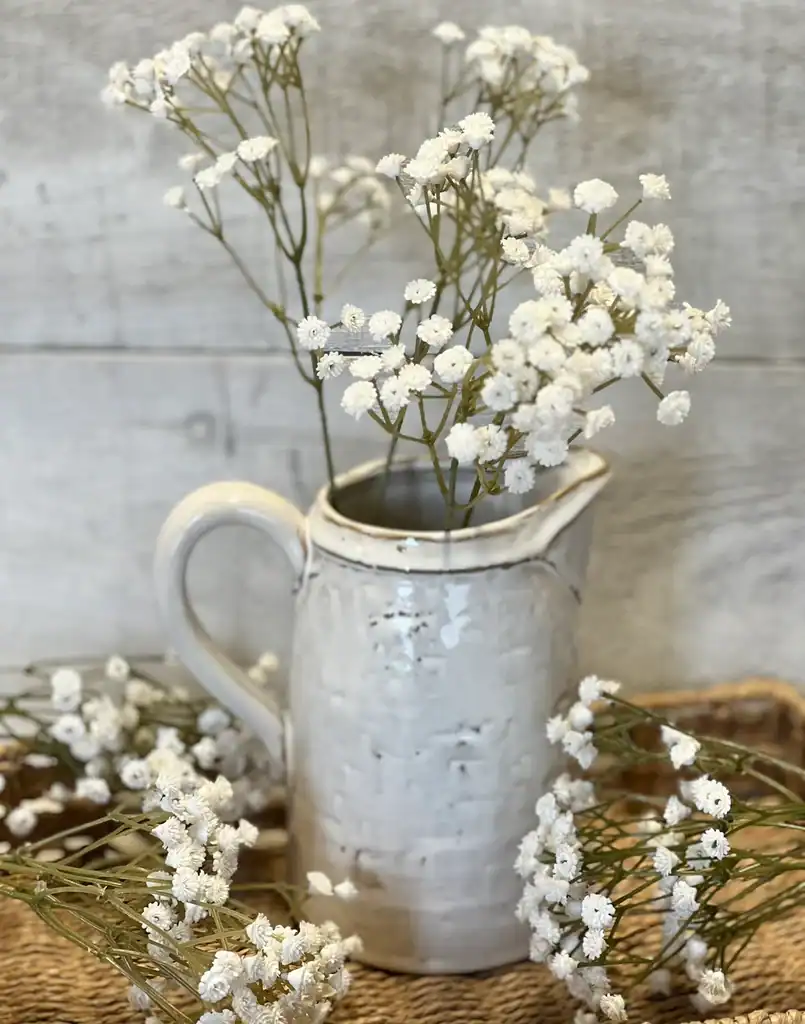
Underrated. Completely underrated.
On its own it looks sweet and simple — the kind of arrangement that belongs on a bedside table or a small shelf. Mixed with larger flowers it fills gaps and adds a softness that makes everything else look more natural. I put a small bunch of faux baby’s breath in the bathroom vase in spring and it’s the one room decoration that every single person who visits comments on. It costs almost nothing and takes up almost no space and it shouldn’t work as well as it does.
It works very well.
Faux Wisteria Stems
New this year. Long trailing stems of purple flowers that drape over the edge of a tall vase in a way that looks genuinely dramatic. I put them in a vase on the floor in the corner of the living room and they look like something from a design magazine.
Marina looked at them for a long moment and said they were her favourite thing in the room.
She does not say this lightly. I’m keeping the wisteria.
How I Arrange Them (The Only Rule I Follow)
I don’t follow many rules about faux flower arrangement. Life is too short.
The one thing I do consistently: vary the heights. A vase with everything at the same height looks like a product display. Step the stems so the tallest ones are at the back, the medium ones in the middle, the shortest at the front. It takes thirty seconds and makes the arrangement look like it came from a florist rather than being stuck into a vase all at once.
Everything else — colour, quantity, which flowers go together — I do by feel. If it looks right from across the room, it’s right. If it looks busy or stiff, I remove one thing. The answer is almost always to remove one thing rather than add another.
A Final Thought
There is a vase of faux tulips on the coffee table as I write this. Pale yellow, slightly open, leaning gently to one side the way tulips do.
They’ve been there for three weeks. They’ll be there for another month. Nobody who comes to our home has asked whether they’re real. They just make the room feel like spring, which is the only thing a vase of flowers needs to do.
That’s all I have for today. I’d love to know which faux stems you keep coming back to every spring — or if you have a variety I haven’t mentioned that you think I need in my life. Leave it in the comments. My collection is clearly still growing and I have no intention of stopping.
Until next time,
Stay safe,


I’m Katerina Lithopoulou, co-creator of DIY Cozy Living. I’ve always loved the little things that make a space feel special. With a background in language and a passion for photography and cozy design, I enjoy turning everyday inspiration into simple ideas people can actually use.
My motto: “Cozy isn’t a trend — it’s a feeling.”
