
How to Create a Cozy Japandi Home Like No Other!


Japandi is one of those rare interior styles that instantly makes a space feel calm, warm, and sophisticated without feeling fussy.
I first fell in love with it because it combines the warm minimalism of Scandinavian design with the elegant simplicity of Japanese interiors. If you’re looking for a home that feels natural, cozy, and intentional, this guide is for you.
Below, I’ll walk you through 10 hacks to bring Japandi into your home, with actionable tips, styling advice, and references to furniture or décor that can help make it happen.
I’ll also share a bit of my personal approach — what I like, what I avoid, and how to make this style feel personal instead of staged.
Key Principles of Japandi Design
Before jumping into hacks, it helps to understand the foundational principles of Japandi:
| Principle | Why It Matters | My Take |
|---|---|---|
| Neutral & Natural Colors | Creates calm and timeless spaces | I love muted earth tones with just one accent color — never more than two. |
| Minimalism with Warmth | Avoids clutter while staying inviting | I avoid stark white walls; layering textures makes it feel cozy. |
| Natural Materials | Wood, bamboo, linen, rattan bring life | I always pair light wood furniture with natural textiles. |
| Functionality | Everything should serve a purpose | I prefer multipurpose furniture over purely decorative items. |
| Harmony & Balance | Spaces feel intentional and serene | I balance furniture and décor so nothing feels overbearing. |
Understanding these principles makes it easier to apply each hack without losing the essence of Japandi.
How to Keep Your Japandi Space Calm and Cozy
Japandi looks beautiful in photos, but maintaining the calm vibe in real life can be tricky. Here’s how I do it:
- Easy-to-clean surfaces: Protect wood and bamboo under plants or decor. Smooth countertops hide crumbs better than glossy ones.
- Daily decluttering: Spend 5–10 minutes each day putting items back in their place. Use baskets and trays to contain small clutter.
- Simple cleaning routine: Microfiber cloths and gentle, natural cleaners keep surfaces warm and inviting.
- Rotate seasonally: Swap throws or small decor each season to keep the space feeling fresh without breaking the neutral palette.
- Minimal accessories: One or two meaningful objects per area is enough — too many knick-knacks ruin the serenity.
Tip from me: Japandi is about effortless calm, not perfection. Even small daily habits make a huge difference.
Top 10 Japandi Hacks and Ideas
1. Layer Natural Textures
Japandi is all about texture as much as color. Smooth lacquered surfaces meet raw wood, linen pillows, and woven baskets. Layering textures instantly adds warmth.
How I do it:
- Mix rattan chairs with soft wool throws
- Use linen curtains and bamboo blinds
- Layer natural fiber rugs over wooden floors
Products I Recommend:
- IKEA RÅVAROR bamboo trays
- H&M Home linen cushion covers
- Muji rattan baskets for storage
Pro Tip: Don’t overdo it — 2–3 layers per area feel balanced.
2. Neutral and Muted Color Palette
Think beiges, soft greys, warm whites, and muted greens. Japandi is very restrained, and colors should enhance calm, not distract.
How I apply it:
- White or soft cream walls
- Light oak furniture
- Small accents in muted green or clay
Mini Table Example of Palette:
| Base | Accent | Natural Touch |
|---|---|---|
| Warm white walls | Soft sage cushions | Oak furniture |
| Beige sofa | Terracotta vase | Bamboo tray |
| Light grey rug | Dusty green throw | Linen curtains |
Pro Tip: Stick to 3 main tones maximum per room to maintain serenity.
3. Minimalist Furniture with Clean Lines
Japandi favors furniture that’s functional, elegant, and understated. Avoid ornate details — focus on clean silhouettes.
How I do it:
- IKEA NORDEN folding table for a small dining area
- Low-profile sofas with wooden legs
- Simple coffee tables in light oak
Tip: Functionality comes first — choose pieces that serve multiple purposes or have hidden storage.
4. Add Greenery Thoughtfully
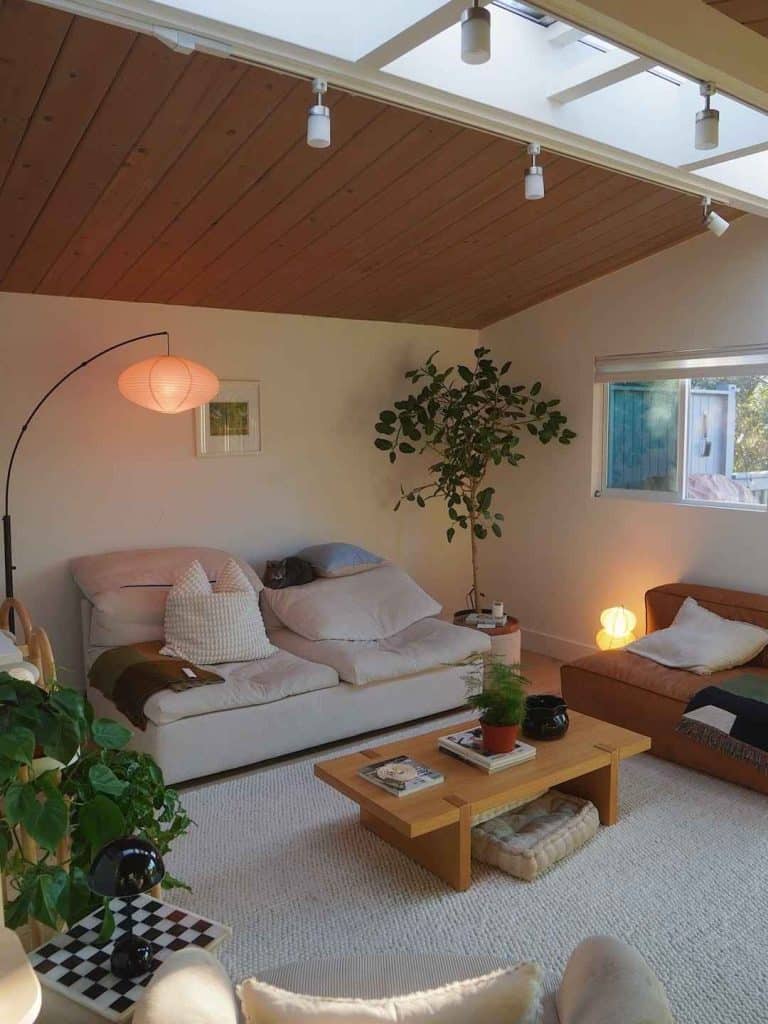
Plants are key for a natural, cozy feel, but they need to feel curated, not cluttered.
How I do it:
- One bonsai on a console table
- A large leafy plant in the corner (like a fiddle leaf fig)
- Small succulents in handmade ceramic pots on shelves
Product References:
- IKEA FEJKA artificial plants (for low-light areas)
- Muji ceramic planters
- Real plants from local nurseries for authenticity
Tip: Choose plants with simple lines — no overly bushy or fussy greenery.
🔥 Would you like to save this?
5. Soft, Layered Lighting
Lighting sets the mood. Harsh overhead lights kill the cozy Japandi feel, while soft layers create warmth.
How I implement it:
- Paper lanterns or lampshades for diffused light
- LED strips under shelves or furniture edges
- Candles for evening ambiance
Products:
- IKEA SINNERLIG bamboo pendant lamp
- LED strip lights for subtle under-cabinet glow
- Soy or beeswax candles for natural scent and warmth
Tip: Mix ambient, task, and accent lighting — all three are necessary for a balanced space.
6. Natural Flooring & Rugs
The foundation of any Japandi space is natural material under your feet. Wood floors are a classic, but bamboo or even neutral tiles work beautifully too. I personally like wide light oak planks — they instantly warm a room and provide the perfect backdrop for layered rugs.
For rugs, I mix textures: a flat-weave jute rug under the dining table, then a soft wool runner in a hallway. It creates depth without feeling cluttered. IKEA’s LOHALS rug is one of my go-tos — neutral, affordable, and durable.
Tip: Avoid overly patterned rugs. Simple textures echo the calm, restrained vibe Japandi is all about.
7. Declutter with Style
Clutter kills Japandi. But here’s the trick — decluttering doesn’t mean empty. It means purposeful organization.
I love using baskets, open shelves, and trays to hide the necessary chaos. For instance, in my living room, a rattan basket holds magazines and throws, while a low shelf displays only my favorite ceramics.
- Hidden storage in low-profile sideboards is key
- Avoid filling every surface; leave negative space
- Rotate seasonal items so things never feel static
Personally, I feel a sense of calm just walking into a space where everything has a home — and you can achieve that with IKEA baskets and Muji boxes.
8. Mix Japanese and Scandinavian Decor
This is my favorite — the actual “Japandi” fusion. You don’t need to split the room into zones. Instead, I randomly mix elements:
- A Japanese ceramic tea set on a Scandinavian oak shelf
- A minimalist Scandinavian lamp next to a bamboo plant stand
- Linen cushions in muted colors with a small bonsai centerpiece
Some items get longer stories: I have a handmade Norwegian wooden bowl that looks perfect next to a small ikebana display. Small, meaningful pieces make the room feel curated but not staged.
Tip: Don’t overthink symmetry. Human imperfection is what makes Japandi feel natural.
9. Use Statement Pieces Sparingly
A Japandi room can feel calm even with one eye-catching item. I prefer a single standout rather than multiple competing pieces.
For example:
- A black ceramic vase on a coffee table
- A sculptural Japanese lamp
- A handwoven Scandinavian throw draped over a sofa
Personal rule: One statement per room. Anything more, and the subtle harmony disappears.
Mini Table Idea:
| Statement Type | Placement | Effect |
|---|---|---|
| Ceramic vase | Coffee table | Focuses eye, adds personality |
| Sculptural lamp | Sideboard | Provides height, interest |
| Handmade textile | Sofa | Adds texture and warmth |
10. Create Cozy Corners
Japandi isn’t just about minimalism — it’s about comfort in simplicity. Cozy corners are my favorite hack.
I usually dedicate a small nook for reading or meditation:
- A low Scandinavian armchair with a soft wool throw
- A bamboo floor lamp for soft light
- A small tray table for tea or books
Sometimes, I just layer a floor cushion, a plant, and a small blanket — and that tiny corner feels like the heart of the home.
Tip: Keep it small. Japandi doesn’t need a giant library nook. Even a 2x2m space can feel immersive if styled well.
Wrapping It Up — Japandi in Action
If I had to summarize my approach:
- Mix textures freely (wood, linen, bamboo)
- Keep the palette neutral and calming
- Add statement pieces sparingly
- Think about how you actually use the space, not just how it looks
- Let each room feel human, imperfect, and intentional
The beauty of Japandi is that it adapts to your lifestyle, your budget, and your personal taste. You can start small: a neutral throw here, a bamboo tray there, and suddenly the whole room feels balanced and serene.
Until next time,
Stay safe,


I’m Katerina Lithopoulou, co-creator of DIY Cozy Living. I’ve always loved the little things that make a space feel special. With a background in language and a passion for photography and cozy design, I enjoy turning everyday inspiration into simple ideas people can actually use.
My motto: “Cozy isn’t a trend — it’s a feeling.”
