
How to Add Privacy to Your Balcony (Ideas for Every Budget and Space)

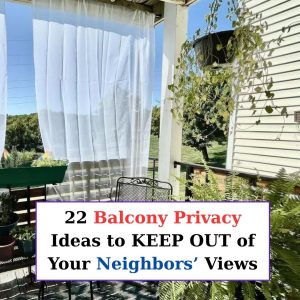
Our Thessaloniki apartment balcony faces directly onto the street and onto the balcony of the building opposite.
For the first year we lived there we used it mostly as a place to dry laundry and occasionally stand with a coffee and immediately feel watched. It was not the outdoor retreat I had in mind when we moved in.
Adding privacy changed everything.
The balcony went from a functional afterthought to the room we actually spend time in, and most of the solutions cost very little and required no drilling into the building structure. Whether you rent or own, have a large terrace or a narrow juliet balcony, there is a privacy solution here that works for your space.
The ideas below are organised by method so you can find the approach that suits your balcony, your budget, and your landlord’s tolerance.
Before You Start
Check your lease or building rules. Some buildings restrict what can be hung on or attached to balcony railings. If you rent, check before you buy anything. Most of the plant and freestanding solutions below are universally acceptable. Anything attached to the building structure may need permission.
Think about what you actually need privacy from. Eye level from the street is different from eye level from a neighbouring balcony one floor up. Overhead visibility from above is a different problem again. Knowing which direction the sight line comes from tells you how high your screening needs to go and where to concentrate it.
Consider airflow. A solid screen blocks wind as well as sight lines, which can be a benefit or a problem depending on your climate and balcony orientation. Slatted screens, plants, and curtains all allow more airflow than a solid panel.
Measure your railing height and balcony dimensions before buying anything. Balcony privacy products come in standard sizes that may or may not match your space. Knowing your measurements before you shop saves a lot of returning.
Privacy Through Plants
Plants are the most beautiful privacy solution and the one that feels least like a screen because it is a living thing rather than a barrier.
They work on any balcony, require no drilling, and most can be moved when you leave.
Tall Potted Plants as a Living Screen
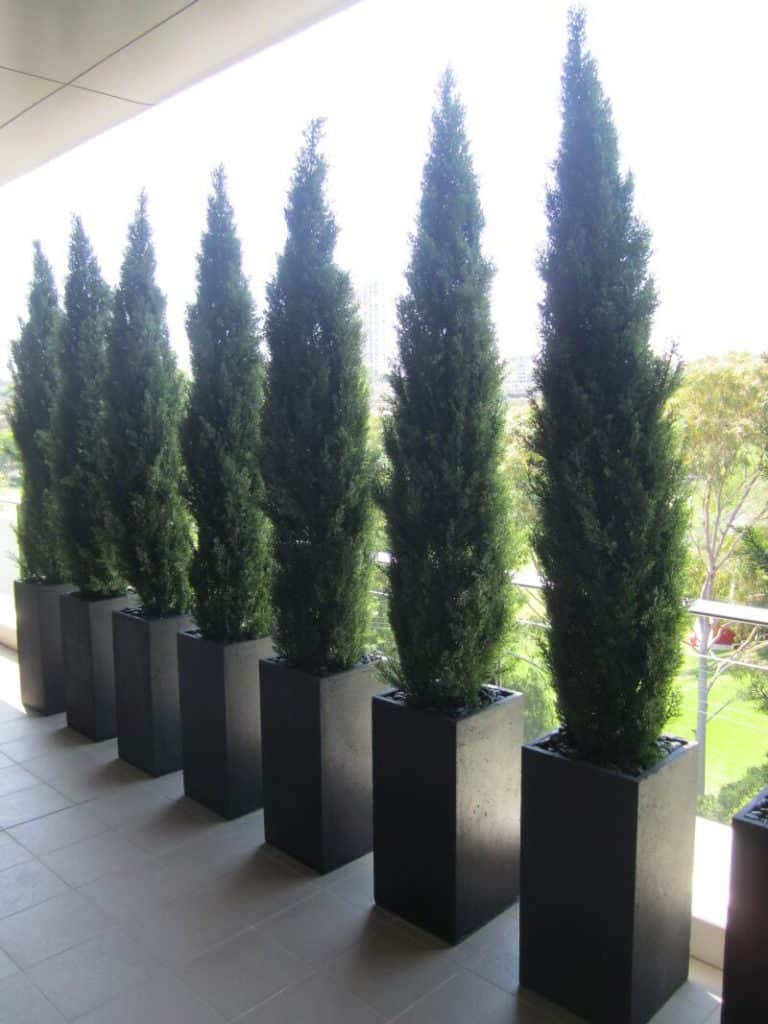
The simplest plant privacy solution: large pots with tall, dense plants placed along the railing or the edge of the balcony.
Bamboo in tall planters is the classic choice and grows quickly into an effective screen.
Ornamental grasses, tall ferns, and clumping grasses all work well. For a flowering option, tall hydrangeas or climbing roses in large pots create both privacy and colour.
The key is pot size. Tall plants need substantial pots to stay stable in wind and to give the roots enough room to thrive. Underpotted tall plants fall over and decline quickly. A pot at least forty centimetres wide and deep for anything over a metre tall is the starting point.
Renter note: Freestanding pots require no permission and move with you. Homeowner note: For more permanent screening, planting in built-in planters or in the ground at deck level allows for larger, more established plants.
A Vertical Plant Wall
A series of pocket planters or a modular vertical garden system attached to the balcony wall or railing creates a green wall that blocks sight lines while adding lush planting even in a small space. Trailing plants like ivy, sweet potato vine, and nasturtium fill in quickly and cascade downward for a full, layered effect. Herbs work well here too: a privacy wall that also provides fresh basil and mint is a very good use of a small balcony.
Railing-mounted planter systems hook over the top of the railing without drilling and can be repositioned or removed completely. Wall-mounted systems need fixings but create a fuller, more established look.
Best plants for a vertical privacy wall: Boston ivy, climbing hydrangea, star jasmine (for scent), sweet potato vine, trailing nasturtium, thyme, mint, and rosemary.
Climbing Plants on a Trellis
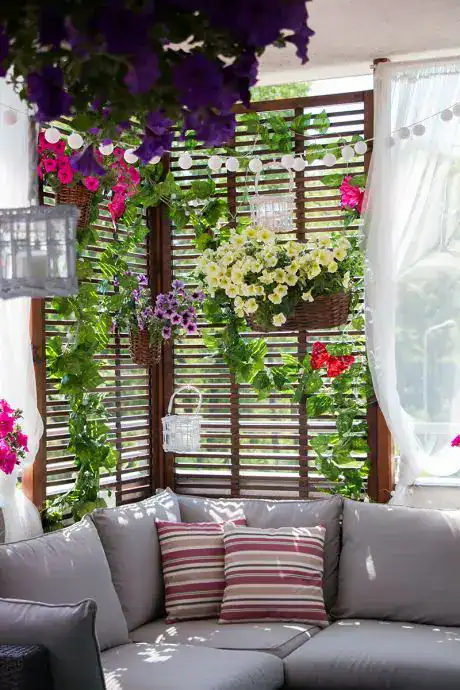
A trellis panel leaned against the railing or wall, or freestanding in a planter, gives climbing plants something to grow along. Once established, a climbing plant on a trellis creates the most natural-looking privacy screen on a balcony. Jasmine, clematis, honeysuckle, and passion flower all grow quickly and fill a trellis densely. In a good summer a trellis planted in spring can provide reasonable screening by midsummer.
A freestanding trellis panel placed in a large planter base requires no drilling and no wall fixings. Secure it with a heavy pot and it stands without any structural attachment.
Renter note: Freestanding trellis planters are one of the most landlord-friendly solutions on this list. Seasonal note: Many climbing plants lose their leaves in winter, which reduces screening when you may want it most. Evergreen climbers like star jasmine and ivy maintain coverage year-round.
A Herb and Privacy Garden Combination
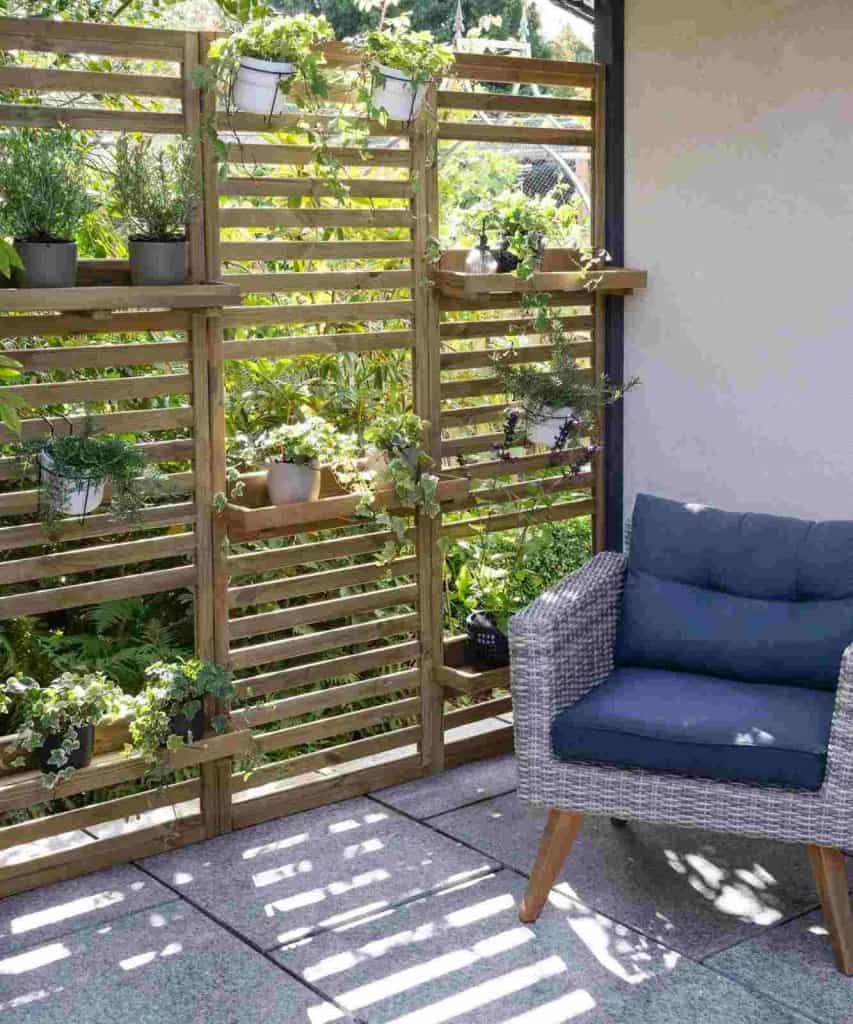
A row of large planters along the balcony railing, planted densely with a mix of tall herbs and ornamental plants, creates casual privacy that reads as a kitchen garden rather than a screen.
Tall rosemary, flowering lavender, large basil plants, and ornamental alliums all reach a height that blocks a casual sight line while remaining clearly a garden rather than a barrier.
This approach works best on balconies where partial rather than total privacy is needed, blocking the view from across the street without completely closing off the outlook.
Privacy Screens and Panels
Screens and panels are the most effective solution when you need a defined level of privacy on a specific section of your balcony.
They come in a wide range of materials, attachment methods, and opacity levels.
Bamboo Roll Screens
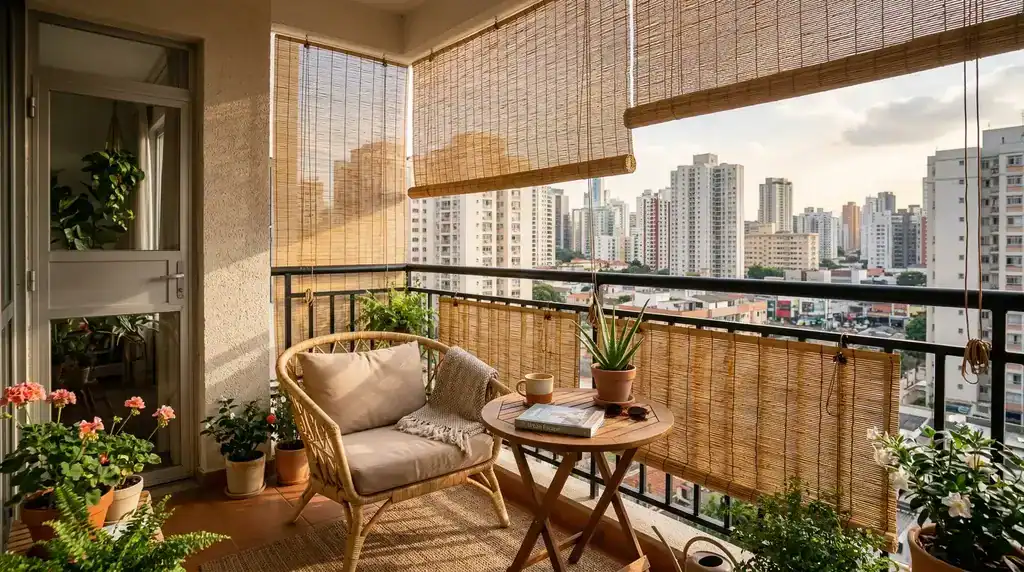
Bamboo roll screens are one of the most widely used balcony privacy solutions for good reason. They are affordable, available in standard railing heights, natural-looking, and attach easily to most railings with cable ties or wire.
The density of the weave determines how much light and sight line they block, from a loose weave that obscures without darkening to a dense roll that creates near-complete privacy.
They are not the most durable option and fade in direct sun over two to three seasons, but at the price point they are easily replaced. For a rented balcony they are particularly practical since they attach and detach without leaving any marks.
Renter note: Attach with cable ties through the railing rather than screws for a fully reversible installation.
Willow or Reed Hurdle Panels
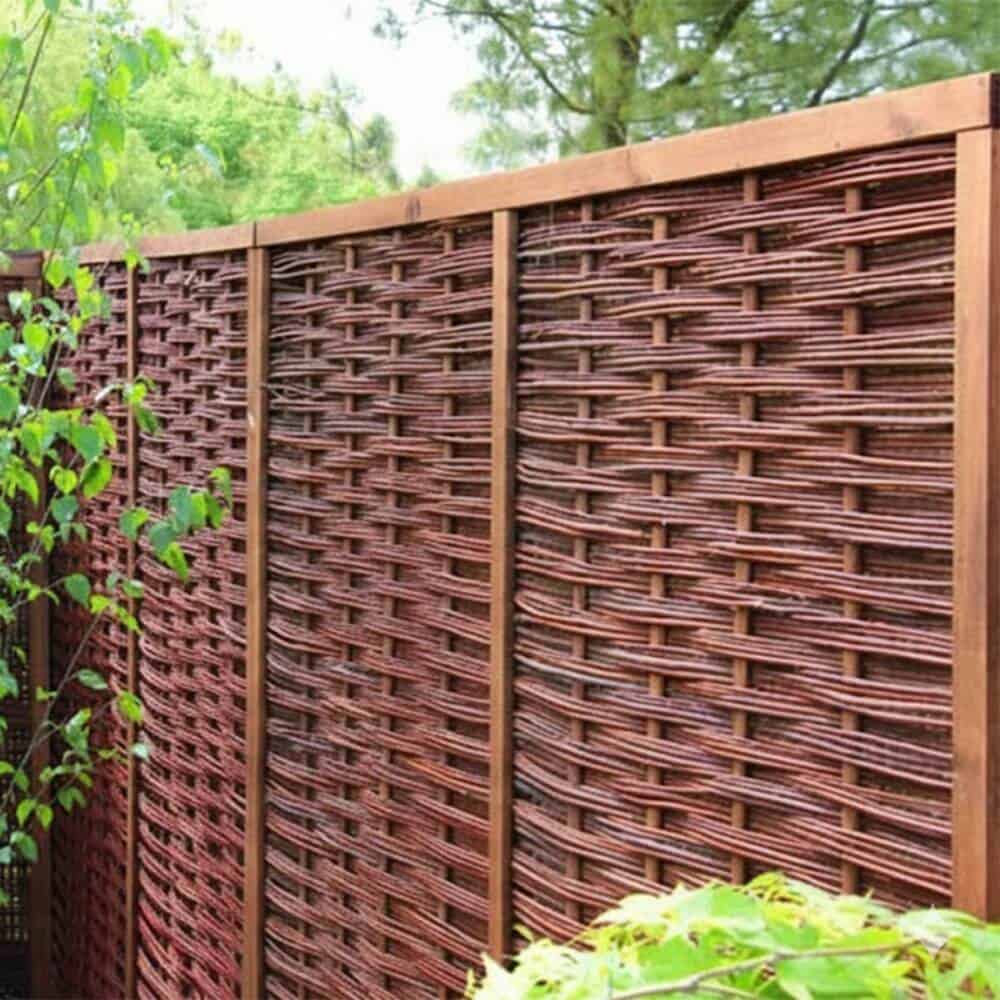
Willow hurdles and woven reed panels have a more rustic, garden-like quality than bamboo rolls and tend to be sturdier.
They stand upright as panels rather than rolling flat, which makes them easier to handle and position. A series of hurdle panels placed along a railing or stood in planter bases creates an organic-looking screen that suits a cottage or natural garden aesthetic.
Freestanding hurdle panels in planter bases require no attachment to the balcony structure at all, which makes them an excellent option for renters or for balconies where railing attachment is not practical.
Slatted Wood Privacy Panels
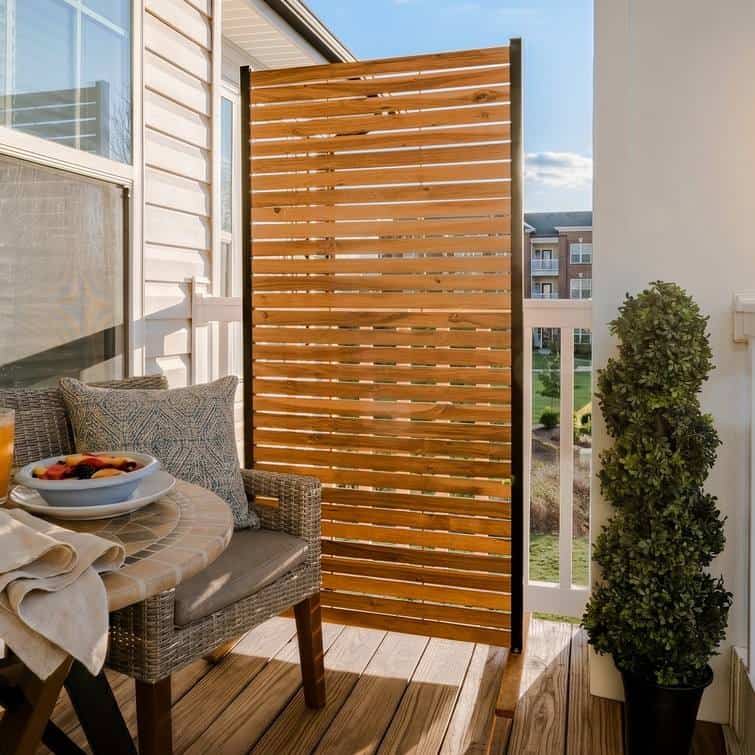
Horizontal or vertical slatted wood panels create a more architectural, contemporary look than woven or bamboo options.
The gap between the slats allows airflow and filtered light through while blocking direct sight lines, which is the ideal combination for most balconies. Ready-made slatted panels are available in cedar, pine, and composite materials, and they attach to most railings with brackets or cable fixings.
For a premium version, cedar slatted screens weather beautifully to a silver-grey over time and are naturally resistant to rot and insects. For a budget version, painted pine panels achieve a similar look at a fraction of the cost.
Homeowner or long-term note: Slatted panels fixed permanently to the railing or to posts set in planters create the most polished and durable balcony privacy screen. This is a weekend project with lasting results.
Metal or Laser-Cut Panels
Decorative metal screens with geometric or botanical cut-out patterns are the most design-forward privacy option on a balcony.
They block sight lines while allowing light to filter through in an attractive pattern, and they add a strong architectural element to the space. Cor-ten steel, powder-coated aluminium, and galvanised steel are the most common materials, and all are weather-resistant.
These are at the higher end of the budget range but they are genuinely beautiful and essentially permanent once installed.
🔥 Would you like to save this?
For a rental they are not practical, but for a homeowner or condo dweller looking for a design statement, a laser-cut metal screen on a balcony railing is one of the most striking things you can add to an outdoor space.
Artificial Hedge Panels
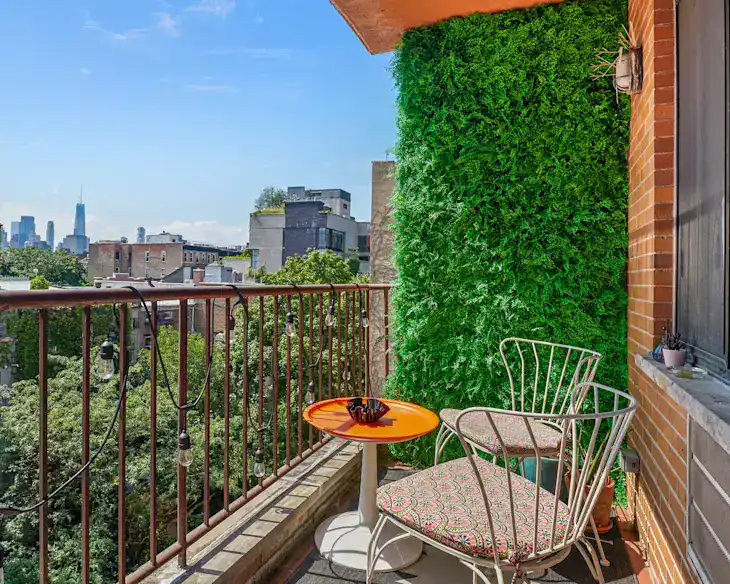
Fake boxwood panels and artificial ivy screens have improved significantly in quality in recent years and now look convincingly real from a distance. They attach to most railings with cable ties and provide immediate, year-round coverage with zero maintenance. No watering, no seasonal die-back, no mess.
They are a practical choice for balconies with poor growing conditions (too much shade, too exposed, too windy for real plants) or for anyone who wants green coverage without the care commitment.
The best quality panels are UV-stabilised so they do not fade or become brittle in sun exposure.
Renter note: Attach with cable ties rather than screws and they come off completely cleanly.
Privacy Through Curtains
Curtains on a balcony create a softer, more intimate look than a screen or panel, and they allow you to open or close the privacy depending on the time of day or how you are using the space.
Outdoor Curtains on a Tension Rod
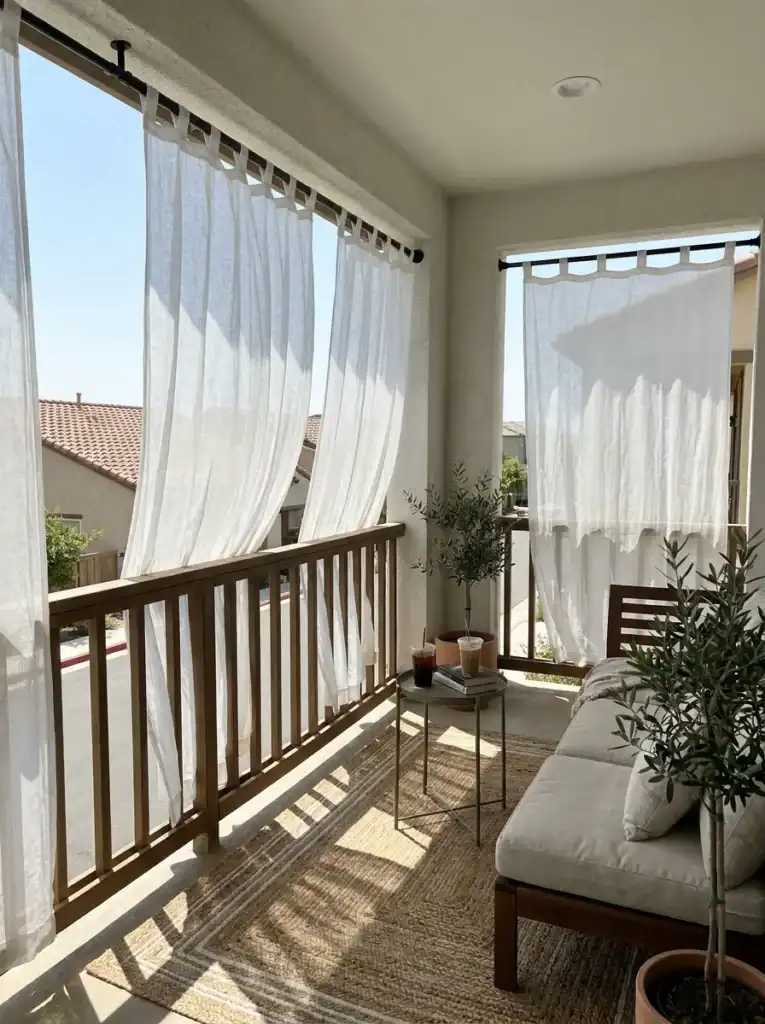
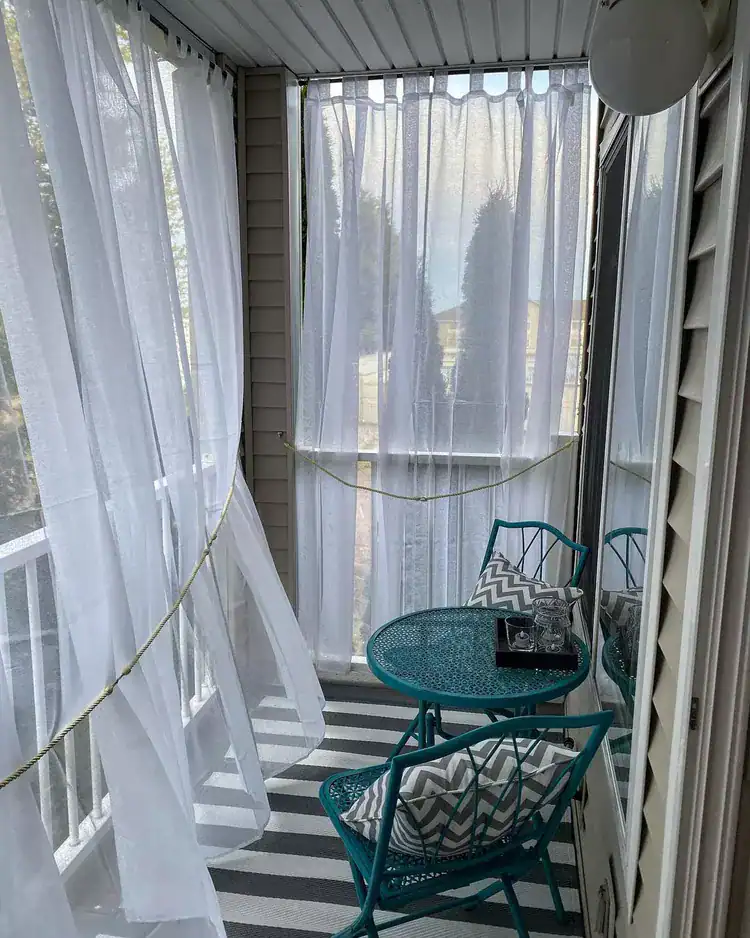
Tension rods across the balcony opening or between two posts support outdoor curtains without any drilling into the wall or ceiling.
Outdoor fabric curtains in canvas, linen, or weather-resistant polyester hang from the rod on rings and can be pushed back when you want the open view or pulled closed for privacy.
This works best on balconies with a defined opening, either between two walls, between a wall and a post, or across a covered balcony section. For an open railing with no overhead structure, the curtains need something to hang from, which usually means a freestanding curtain rod system or posts set in planter bases.
Renter note: Tension rods leave no marks and cost almost nothing. This is one of the most universally landlord-friendly privacy solutions.
Privacy Through Dividers and Partitions
Dividers are particularly useful on shared balconies or on large terraces where you want to create a defined zone rather than privacy from the outside world.
Freestanding Room Dividers
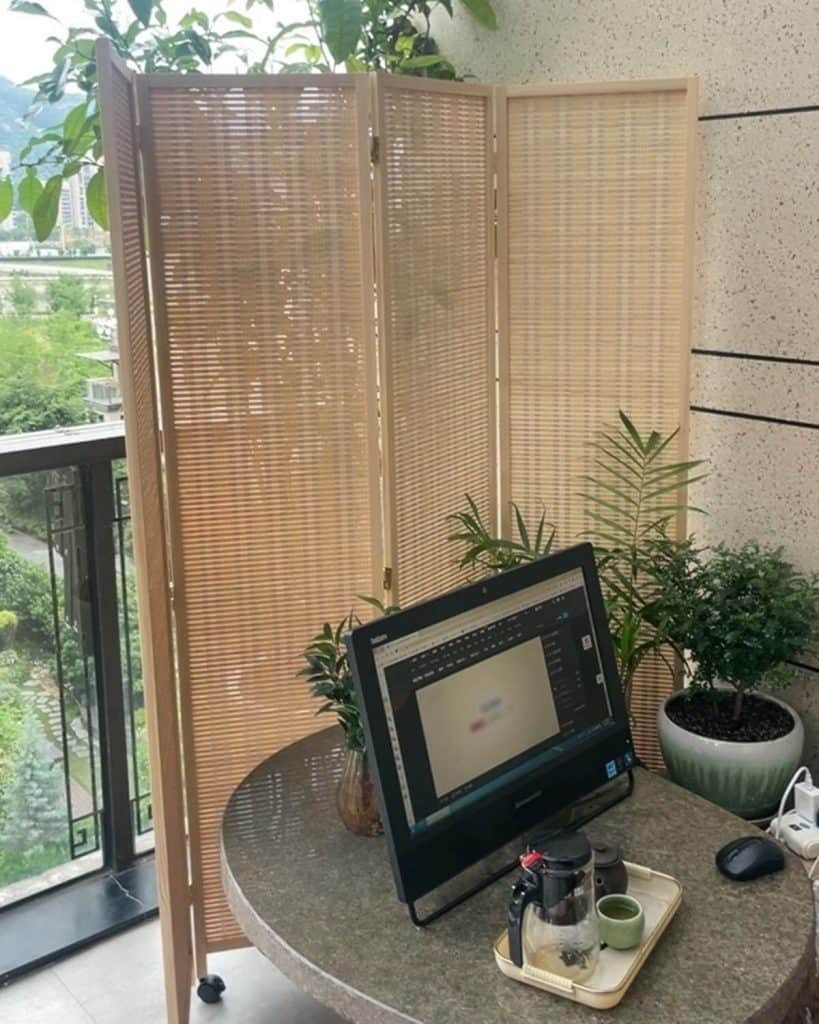
Folding room dividers designed for outdoor use, typically in wood, bamboo, or rattan, can be placed on a shared balcony to create visual separation between your space and your neighbour’s. They fold flat for storage and require no installation, which makes them uniquely flexible.
Choose a divider rated for outdoor use or bring it inside in wet weather. Indoor folding screens used outdoors deteriorate quickly in sun and rain.
Planter Box Dividers
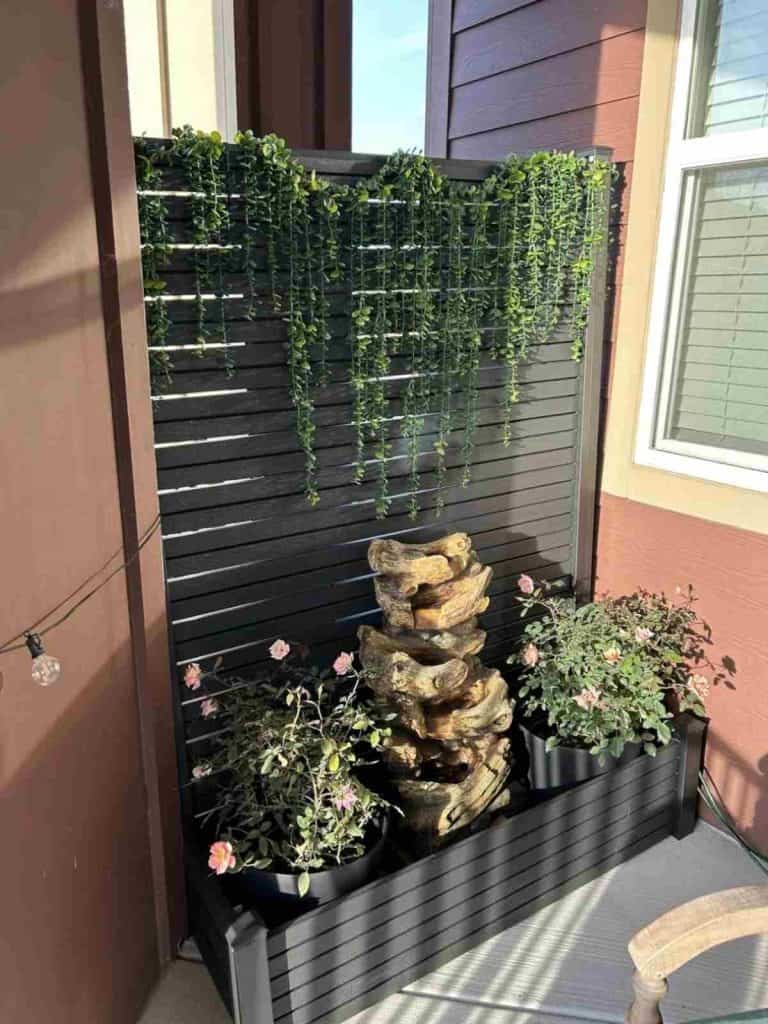
A row of planter boxes along the boundary between balconies, planted densely with grasses or low shrubs, creates the softest and most neighbourly divider possible.
Nobody objects to a planter box the way they might object to a screen. Planted well, a row of boxes along a shared boundary reads as a garden feature rather than a barrier.
This requires some coordination with neighbours in buildings where balconies share a structural divider, but on open terraces where the boundary is just a convention rather than a wall, it is the most elegant solution.
Privacy Through Furniture Placement
Sometimes privacy is less about what you add to a balcony and more about how you arrange what is already there.
Strategic Furniture Arrangement
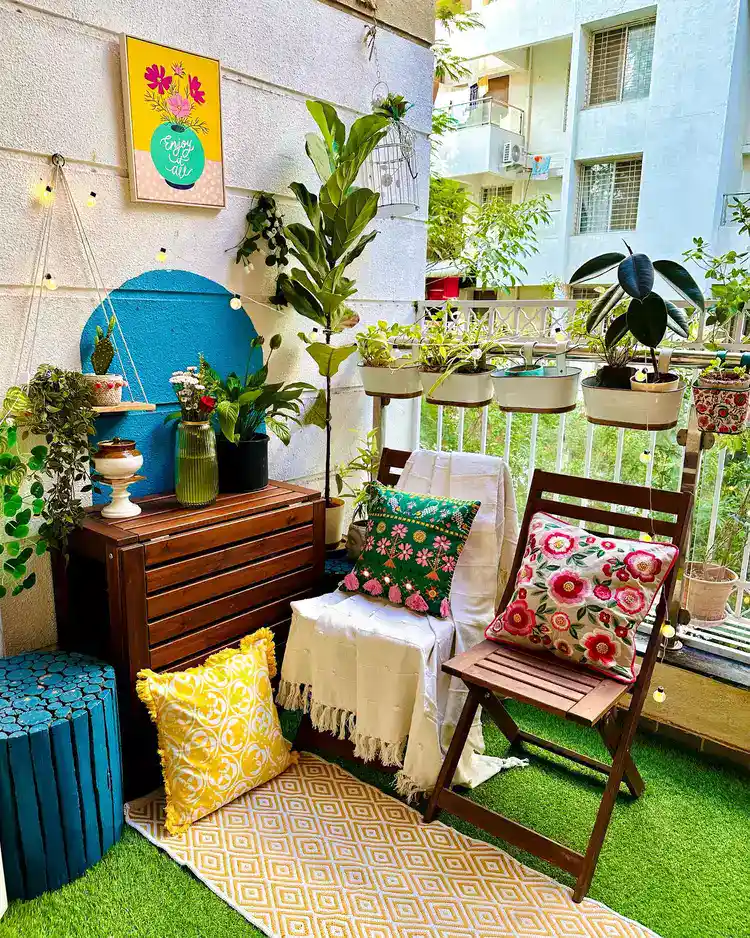
Placing your seating against the wall rather than at the railing means you are naturally set back from the sight line.
Turning chairs inward to face the wall or a focal point rather than outward to face the street creates a sense of enclosure without any additional screening.
A tall sideboard, a bar cart, or a large planter placed at the front of the balcony blocks the view from below without blocking anything from the sitting area.
This costs nothing and requires no installation. It is also the first thing to try before spending money on screens or plants.
A Pergola or Canopy Structure
A freestanding pergola or shade sail over part of the balcony creates overhead privacy and frames the space as a defined outdoor room.
This is particularly effective for balconies that are overlooked from above.
A fabric shade sail stretched diagonally across the balcony opening filters the view from above while allowing light through from the sides.
Combining Methods: What Works Together
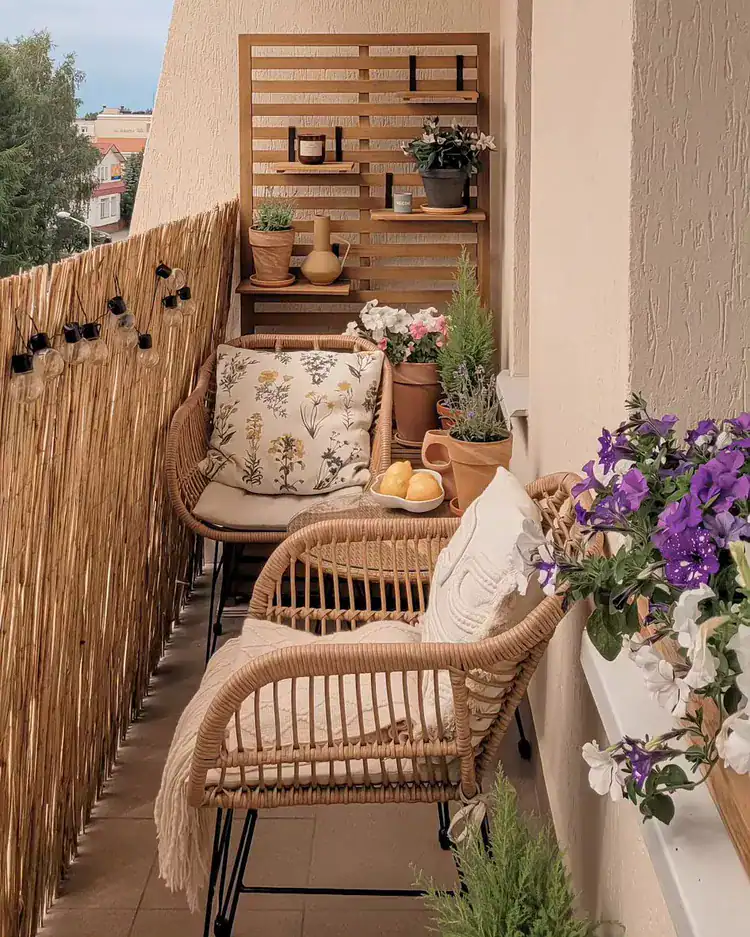
The best balcony privacy setups usually combine two or three approaches rather than relying on one. A typical combination that works well:
Plants plus curtains: A row of tall plants along the railing filters the view from the street while curtains pulled across the balcony opening create enclosure when needed. The plants are always there, the curtains go on and off depending on use.
Screen plus plants: A bamboo roll screen on the railing gives immediate privacy while climbing plants on a trellis grow alongside it. In two or three seasons the plants do the work and the screen can be removed.
Furniture plus screen: Strategic seating placement reduces the exposed feeling, and a screen panel fills in the specific sight line that furniture placement cannot fix.
Divider plus planter: A partition between shared balconies with a planter box system along the boundary creates both privacy and a softening green element.
Frequently Asked Questions
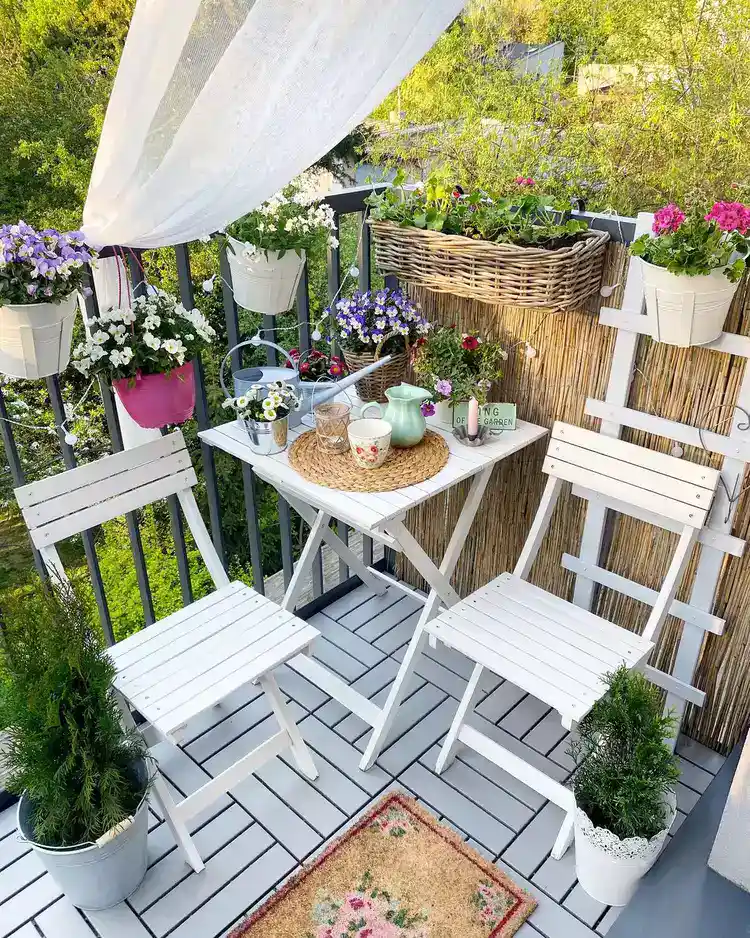
How do I add privacy to a balcony without drilling? Tension rods for curtains, cable ties for bamboo or reed screens on railings, freestanding trellis panels in weighted planter bases, and freestanding room dividers all create balcony privacy without drilling into any surface.
What plants give the most privacy on a balcony? Bamboo in tall planters grows the fastest and densest. Tall ornamental grasses, climbing plants on a trellis, and dense trailing plants in vertical planters all create good screening. For year-round coverage choose evergreen options: star jasmine, ivy, or box.
How do I add privacy to a shared apartment balcony? Freestanding room dividers, a row of planter boxes along the shared boundary, or a bamboo screen panel placed perpendicular to the railing all create visual separation on a shared balcony without requiring any structural changes.
Can I add balcony privacy if I rent? Yes. Freestanding plants in pots, bamboo roll screens attached with cable ties, tension rod curtains, freestanding trellis planters, and freestanding divider panels all create real privacy without attaching anything permanently to the building. Everything on this list marked with a renter note can be done in a rental.
What is the fastest privacy solution for a balcony? Bamboo roll screens are the fastest solution since they can be attached to most railings in under an hour and provide immediate coverage. Artificial hedge panels are equally fast and require no maintenance afterward.
How do I get privacy on a balcony that is overlooked from above? A shade sail stretched across the balcony opening, a pergola structure with a solid or fabric roof, or a dense overhead plant canopy on a horizontal trellis are the options for overhead privacy. Most railing-height solutions do not help with sight lines from above.
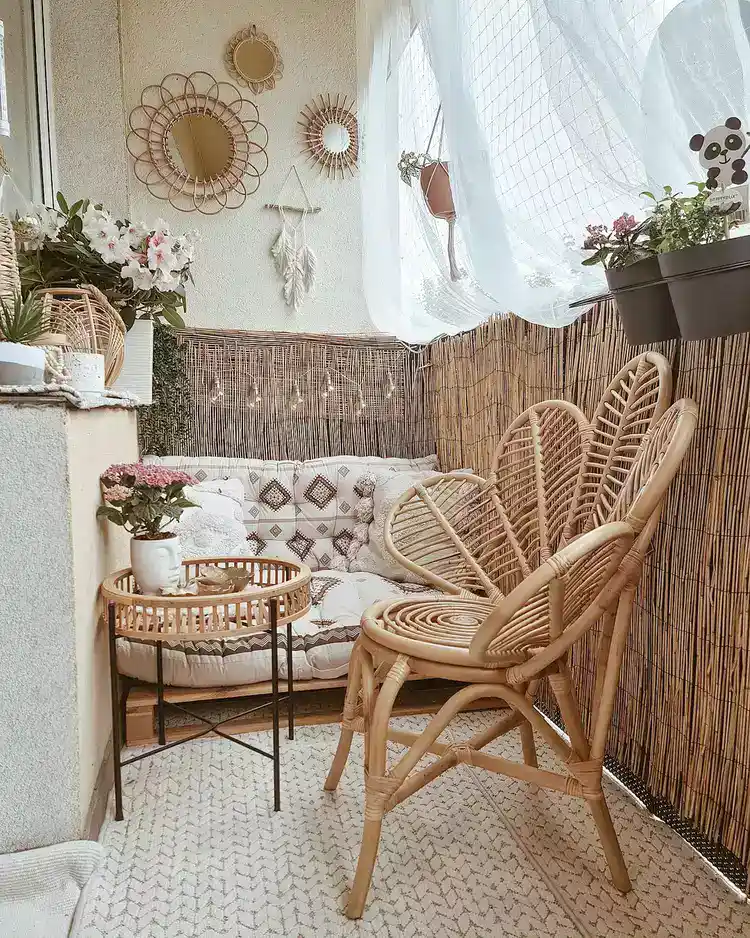
Our balcony now has a row of tall rosemary and jasmine in pots along the railing, a bamboo roll screen filling the gaps between pots, and a pair of outdoor curtains on a tension rod across the opening that we pull closed in the evenings.
It cost less than a hundred euros in total, took one weekend to set up, and completely changed how we use the space.
The street is still there. We just cannot see it anymore, which turns out to be exactly what we needed.
Until next time,
Stay safe,


I’m Katerina Lithopoulou, co-creator of DIY Cozy Living. I’ve always loved the little things that make a space feel special. With a background in language and a passion for photography and cozy design, I enjoy turning everyday inspiration into simple ideas people can actually use.
My motto: “Cozy isn’t a trend — it’s a feeling.”
