The 13 Best Plants and Feeders to Attract Hummingbirds to Your Garden

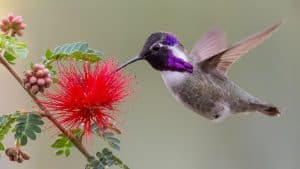
You can’t really overlook hummingbirds, or just dismiss them after you’ve spotted one. After you’ve seen their unbelievably fast wings, how they seem to float in the air as if gravity isn’t real, and that shimmering burst of color that’s here and then gone before you’ve even quite seen it, you’ll start to design your garden hoping for another glimpse.

That’s how gardens for hummingbirds begin. They aren’t usually from careful planning, but from the desire to have that experience again.

Luckily, to get hummingbirds to come to your yard regularly you don’t need a complicated garden or to spend a lot of money.

You simply need to know what they require—nectar, water, somewhere to hide, and protection—and give them those things in a way that suits your own outdoor area. In fact, many of the best ideas for a hummingbird garden are very inexpensive, some even free.

And here are thirteen of those ideas that really do the trick.


What Hummingbirds Are Actually Looking For

It’s a good idea to learn what gets hummingbirds into a garden and what makes them stay, before you start buying plants and bird feeders. They continually require three things: food, water and somewhere safe to rest.

By food, we mean nectar from flowers or a feeder. Water should be a source for both drinking and bathing, and ideally it’s moving, as hummingbirds love the sound of flowing water. As for resting, they’re looking for bushes or trees to sit on securely in between meals – and they do a lot of just sitting, more than you might think!

They are both very protective of their space and do the same thing over and over. Once a hummingbird finds a garden with a dependable supply of food and water, it will go back to it again and again, and will drive other hummingbirds away from it.

So, after you’ve managed to get one to come, being sure to keep the garden as it is is much more important than adding lots of new features.

Actually, the biggest error people make is simply putting up a feeder and hoping for the best. A feeder by itself, in a garden that’s otherwise empty of flowers and water, isn’t going to attract hummingbirds as easily as a garden with the correct plants, even without a feeder. Plant the flowers first.


The Plants — Where to Start and What to Choose

1. Trumpet Vine

birdsandblooms.com

Trumpet vine is often free for the asking, and it’s a very enthusiastic grower, quickly covering a fence or trellis within a single year if you don’t do anything about it. This is really what’s best and worst about it at the same time.

It’s a benefit because from summer to early fall it is covered in loads of long, orange-red flowers, and hummingbirds absolutely adore them.

In fact, a trumpet vine growing on a fence is one of the surest ways to get hummingbirds to your yard and you won’t have to spend much (or anything!) for it as people who have it for a while are usually very happy to share pieces of their plant.

However, you have to be prepared to deal with it. Late winter requires serious pruning. You’ll have to make sure it doesn’t get onto things it could harm, and absolutely don’t plant it by a tree it can climb up. With the right care it’s spectacular. If you do nothing, it will become a nuisance.


2. Salvia

phoenixperennials.com

If you’re trying to create a hummingbird garden without spending a lot of money, salvias should be your top priority. Lots of salvias don’t cost much, are easy to find, and, once they’ve settled into their place in the garden, don’t need a lot of water.

What’s more, they have long, tube-shaped blooms that hummingbirds are perfectly equipped to get food from. Red ones (Salvia coccinea, Salvia splendens) will get them coming right away, though purple and blue salvias, such as Salvia guaranitica, are almost as good at bringing in these little birds.

They like to be planted in sunshine and will need regular watering to start with. After their first big display of flowers, give them a trim to encourage another round of blooms.

And a single salvia plant will quickly become many as it grows and spreads. A line of salvias down the edge of your garden won’t be expensive to put in, and will be a dependable source of hummingbirds from late spring until the first frost.


3. Bee Balm (Monarda)

theplantnative.com

Bee balm is a great plant for a lot of reasons, as it brings in hummingbirds, bees and butterflies all at once. Because it’s originally from North America, it’s used to the climate here.

Also, it will multiply, so a single plant you buy now will become a group of plants you can split up and move around your garden next year for free.

Hummingbirds really like the red types of bee balm best. It likes damp soil and a bit of shade, so it’s helpful for spots in your garden where plants needing lots of sun don’t do so well.

In very humid weather it can get a white, powdery disease called powdery mildew, so if mildew is a problem where you live, get kinds of bee balm that don’t get it as easily.


4. Lantana

jenstlouisphotography.com

Lantana is a really good, cheap plant to attract hummingbirds and most garden stores have it for only a few dollars in a pot.

It makes lots of little tube-shaped flowers in shades of red, orange, yellow, and pink (you can even get a single plant with all of those colors!) and will bloom all the time from late spring until the first freeze.

Lantana loves hot weather, can handle not getting much water after it has been planted, and in warmer areas it will come back every year.

Even if you live somewhere cold and have to treat it like a yearly plant, it will bring hummingbirds to your yard for the whole season for very little money. It is important to know though, that lantana is poisonous to cats, dogs and farm animals, so you should plant it in a place where they can’t get to it.


5. Fuchsia in Hanging Baskets

Courtesy Tanmoy Ganguly
Male ruby-throated hummingbird hovering at a fuchsia plant

Fuchsia is one of the few plants that works specifically because of how it’s displayed rather than just what it is.

A hanging basket of fuchsia at eye level — near a window, on a porch, visible from where you sit outside — positions hummingbird activity exactly where you can watch it. Fuchsia’s pendant flowers are perfectly shaped for hummingbird feeding and the plant produces them continuously if kept deadheaded and watered consistently.

It needs shade or partial shade — direct afternoon sun will stress it. Keep it moist. Feed it regularly through the growing season. In return it provides a hummingbird feeding station that you can watch from a chair, which is ultimately the point of all of this.


6. Zinnias From Seed

epicgardening.com

The most budget-friendly flower on this list by a significant margin.

A packet of zinnia seeds costs almost nothing and produces dozens of plants that bloom from midsummer through frost in every colour including the reds and oranges that hummingbirds prefer. They grow quickly, require minimal attention once established, and reseed themselves in mild climates so the initial purchase becomes self-sustaining.

Zinnias are not as immediately effective as trumpet vine or salvia for hummingbirds — they’re not tubular flowers — but they provide nectar that hummingbirds will visit, especially in gardens where they’re already established. Plant them in masses for the best effect. A drift of red and orange zinnias is both beautiful and functional.


The Feeder — What Works and What Doesn’t

7. A Simple Glass Feeder Over an Elaborate One

The hummingbird feeder industry produces increasingly complex and expensive products that are, for the most part, unnecessary.

A simple glass feeder — a bottle with feeding ports, a perch, an ant moat — does everything a hummingbird needs. The glass is easier to clean thoroughly than plastic, which matters because dirty feeders grow mold that can harm hummingbirds. Avoid feeders with yellow parts if possible, as yellow attracts bees.

Position the feeder in a spot that gets morning sun but afternoon shade — this keeps the nectar fresh longer in hot weather. Place it near the plants rather than isolated from them, because hummingbirds that find the plants will find the feeder, not necessarily the reverse.

8. Make Your Own Nectar

treehugger.com

There is no reason to buy commercial hummingbird nectar. Ever.

The correct recipe: one part white granulated sugar dissolved in four parts hot water. Stir until completely dissolved. Cool completely before filling the feeder. Store unused nectar in the refrigerator for up to two weeks.

Do not use honey — it ferments quickly and can cause a fatal fungal infection in hummingbirds. Do not use brown sugar, turbinado sugar or artificial sweeteners. Do not add red food colouring — the feeders themselves provide enough red to attract hummingbirds and the dye is unnecessary and potentially harmful.

Change the nectar every two to three days in hot weather, every five days in cooler conditions. Clean the feeder thoroughly each time with hot water and a bottle brush. A dirty feeder is worse than no feeder.


Water — The Element Most Gardens Miss

9. A Misting System or Drip Fountain

Hummingbirds bathe differently from other birds. They don’t sit in a birdbath and splash — they fly through fine mist or sit under a gentle drip and let the water run over them.

A simple misting attachment connected to a garden hose and set on a timer costs very little and transforms an ordinary garden into a place hummingbirds actively seek out. Position it near the plants so hummingbirds already visiting for nectar discover the water easily.

If a misting system isn’t practical, a small solar fountain in a shallow dish achieves a similar effect. The movement of the water is what attracts them — a still birdbath is significantly less effective than moving water of any kind.

10. A Solar Fountain in a Shallow Container

thebirdhousechick.com

Any shallow waterproof container — a wide terracotta dish, a plastic tub, a repurposed bowl — with a small solar fountain placed inside becomes a hummingbird water feature for minimal cost.

The fountain runs when the sun hits the solar panel, which is also when hummingbirds are most active. Add a few flat stones to the container so hummingbirds can perch while bathing. Change the water every few days to prevent mosquito breeding. Place it in a partially sunny spot — enough sun to run the solar panel, enough shade to keep the water from evaporating too quickly.


Making the Garden Work as a Whole

11. Plant in Layers

A hummingbird garden that works well has plants at different heights — something tall and vertical like trumpet vine or a tall salvia at the back, medium-height plants like bee balm and lantana in the middle, lower plants like zinnias at the front.

The layering provides feeding opportunities at different levels and makes the garden more visually complex, which means hummingbirds can move through it naturally rather than visiting a single plant and leaving.

It also creates the resting spots they need — a hummingbird that feeds, then moves to a nearby perch to rest, then feeds again, is a hummingbird that has decided your garden is worth staying in.


12. Create a Dedicated Hummingbird Corner

rethinkrural.raydientrural.com

Rather than scattering hummingbird plants throughout a large garden, concentrate them in one area — a corner, a section of a fence, a specific border.

A concentrated planting is more visible to hummingbirds scouting from the air, creates a denser nectar source that’s worth defending and returning to, and makes it easier for you to watch the activity from a fixed point. Position a comfortable chair with a view of this corner before you plant it. The whole point is to be able to watch what happens.


13. Think About Bloom Succession

laidbackgardener.blog

The most common reason a hummingbird garden stops working mid-season is that everything flowers at once and then stops.

Plan for continuous bloom from late spring through first frost by choosing plants that flower at different times. Early season: salvia and bee balm. Midsummer: lantana, trumpet vine, zinnias. Late season: late-blooming salvias, cardinal flower. The feeder fills the gaps when nothing is in peak flower.

A garden that offers reliable nectar across the whole season will have reliable hummingbird activity across the whole season. A garden that peaks in July and has nothing left by September loses its visitors and has to re-attract them the following year.


A Final Thought

Creating a cheap hummingbird garden isn’t about buying particular things, it’s about knowing what hummingbirds require and then reliably giving it to them. Plants won’t be expensive, and you might even get some for free. Making the nectar is incredibly cheap, and a birdbath could simply be a solar fountain in a dish that isn’t too deep.

It does need you to pay attention, to regularly clean the feeder, to water the flowers and to observe what the birds like in your garden and then change things if you have to. Hummingbirds are unusual among garden guests in how they respond to things you do regularly. If you get the right mix and stick with it, they’ll come back to the very same garden, even the same spot to sit on, every year.

And that’s all I have to say on the matter. If you’ve had great success with a plant, or a group of plants, for attracting hummingbirds, please share it in the comments. The best advice about hummingbirds almost always comes from people who are really looking at a particular garden in a particular location.

Until next time,

Stay safe,

Katerina Lithopoulou

I’m Katerina Lithopoulou, co-creator of DIY Cozy Living. I’ve always loved the little things that make a space feel special. With a background in language and a passion for photography and cozy design, I enjoy turning everyday inspiration into simple ideas people can actually use. 

My motto: “Cozy isn’t a trend — it’s a feeling.”

Articles: 97

Leave a Reply

Your email address will not be published. Required fields are marked *