
7 Smart Ways to Fix a Long Rectangular Living Room Layout With TV

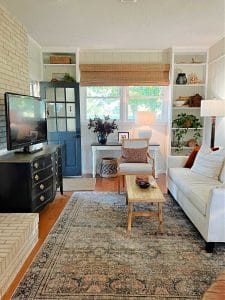
When we moved into our current home, the living room stopped me in my tracks — and not in a good way. It was long. Very long. And narrow.
The kind of room where you feel like you’re standing at one end of a bowling alley, wondering where on earth to put the sofa.
The TV made it worse. We kept moving it around, trying different walls, different angles, and nothing felt right. The room looked stretched, cold, a little awkward — which felt particularly unfair given how much time our family spends in it.
Tasos thought we just needed a bigger rug. Maria thought we needed a new sofa. Marina thought we needed fairy lights everywhere (she thinks this about most problems).
A long rectangular living room is actually one of the most common layouts out there, and once you understand how to work with it, rather than fight it, it transforms into a genuinely lovely space.
Here’s everything I’ve learned.
Why Long Rectangular Rooms Feel “Off”
Before we get into the fixes, it helps to understand the problem. Long rectangular rooms feel uncomfortable because the eye travels straight down the length of the space with nothing to stop it.
This creates what designers call a “tunnel effect” — you feel like you’re in a corridor rather than a room.
Add a TV into the mix and the challenge doubles. Where does it go? On the short wall it can feel too far from the seating. On the long wall it pulls everything to one side and makes the room feel even more lopsided.
The good news: every single one of these problems has a solution.
| Problem | What’s Really Happening | The Fix |
|---|---|---|
| Room feels like a corridor | Eye travels length with no interruption | Create visual “stops” with furniture and rugs |
| TV feels too far away | Seating placed against far walls | Float furniture toward the centre |
| Room feels cold and empty | No defined zones | Create two distinct areas |
| Walls feel oppressive | Long walls draw the eye | Use mirrors and vertical elements |
| Lighting feels flat | Single overhead light source | Layer with floor lamps and sconces |
1. Put the TV on the Short Wall — Not the Long One
This is the single most impactful change you can make, and it’s the one most people get backwards.
When you place the TV on the long wall, you’re encouraging the room to be experienced lengthways, everyone sits in a line, staring down the room.
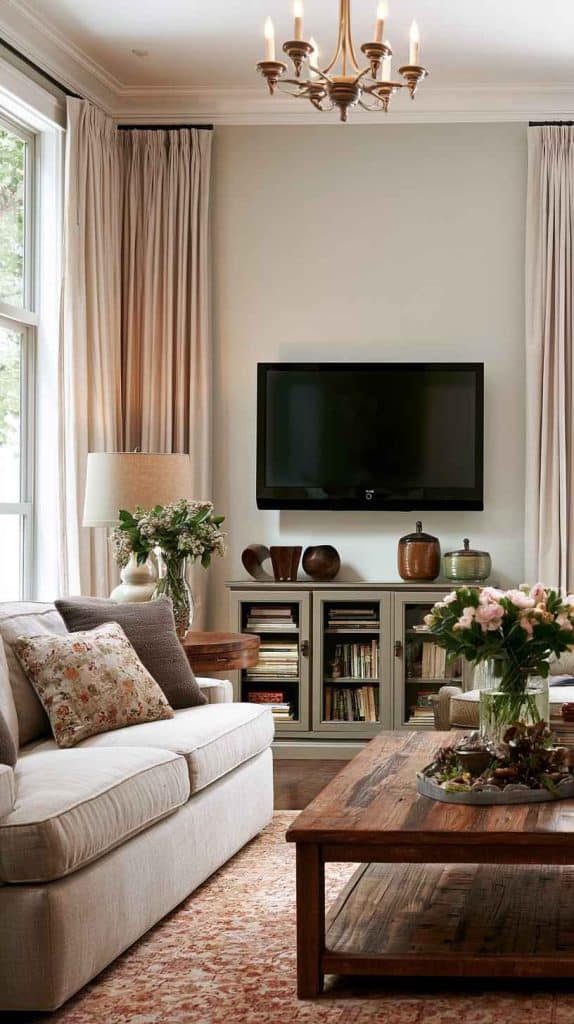
It feels like a cinema, not a living room. When you place the TV on the short wall instead, the seating naturally faces across the width of the room, which makes the space feel wider and more balanced.
This is counterintuitive when the short wall is the first thing you see when you enter, because you worry the TV will be too prominent. In practice, it becomes an anchor — something that gives the room a clear focal point and organises everything around it.
People always ask: What if there’s a window on the short wall?
This is the most common objection, and honestly it’s the one that had us stuck for months.
The solution is to mount the TV on a swivel bracket slightly to one side of the window, or to flank the window with the TV on a console unit positioned at an angle. A small amount of glare is far less of a problem than a room that never feels right.
2. Float Your Furniture Away From the Walls
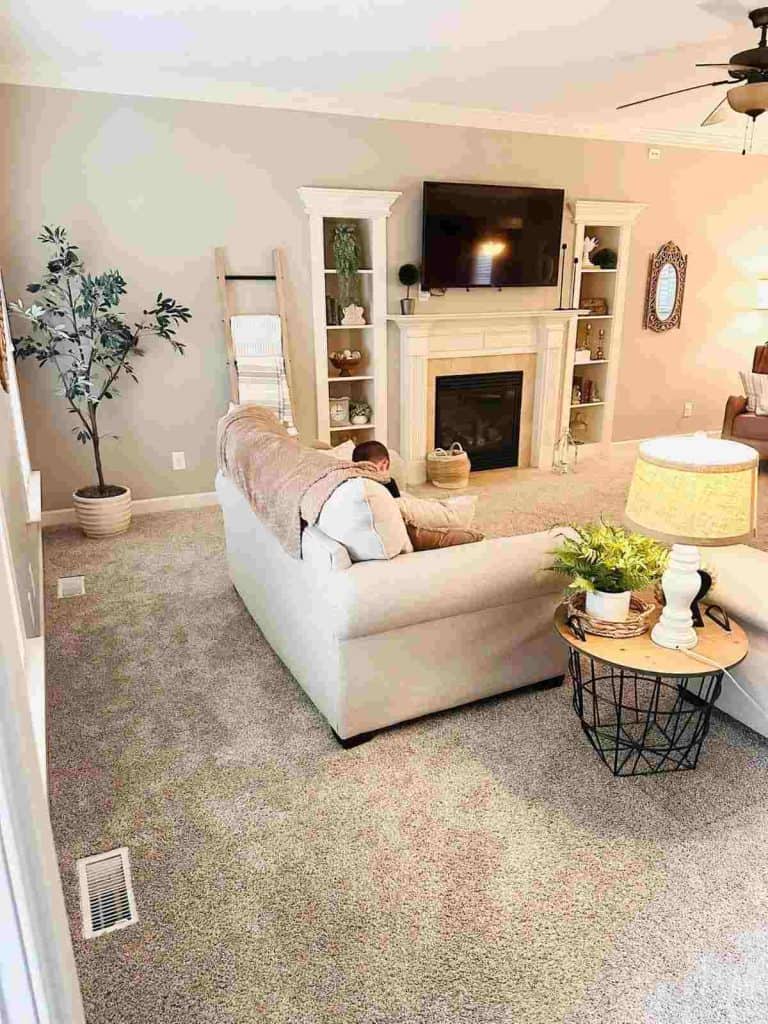
The instinct in a long, narrow room is to push everything against the walls to “open up” the space. This feels logical but it makes things worse.
Furniture hugging the perimeter just emphasises the length and leaves a dead, empty channel down the middle of the room.
Instead, float your sofa and chairs inward — away from the walls by at least 30–45 cm.
This creates a defined, cosy conversation zone in the centre of the room and leaves the walls as breathing space around the edges. The room immediately feels more intentional, warmer, and better proportioned.
People always ask: Won’t it feel cramped if the furniture is in the middle of the room?
Only if you’re overcrowding the space.
The trick is to choose appropriately sized furniture — not oversized pieces — and leave clear walkways around your floating arrangement. A narrow console table behind the sofa (instead of a wall) can act as a subtle room divider and give you a surface for lamps and decorative objects.
3. Use an Area Rug to Define Your TV Zone
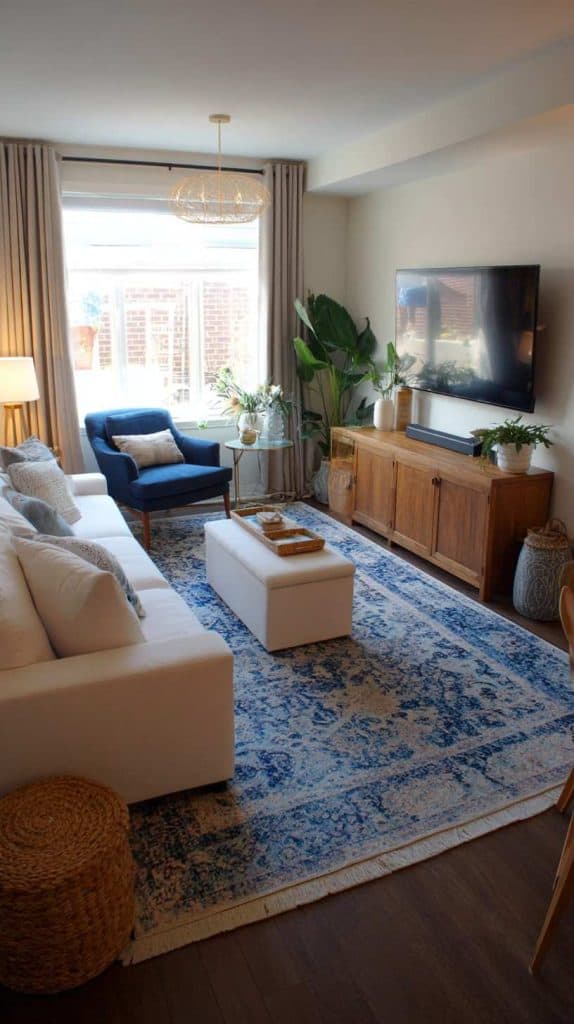
In a long room, an area rug does something remarkable: it tells the eye where a space begins and ends. Place a large rug under your TV seating arrangement — big enough that at least the front legs of all your sofas and chairs rest on it — and you’ve created a room within a room.
This immediately makes the seating zone feel complete and contained, rather than adrift in a long space. The rest of the room (behind or beyond the rug) can then be treated as a separate zone entirely.
People always ask: What size rug should I use?
In a long rectangular room, err on the side of larger rather than smaller.
🔥 Would you like to save this?
A rug that’s too small floats uselessly in the centre and makes the furniture look disconnected. A good rule: the rug should extend at least 20 cm beyond the sofa on either side. For a standard three-seater sofa and two chairs, you’re typically looking at a 200 x 300 cm rug as a minimum.
4. Create Two Distinct Zones
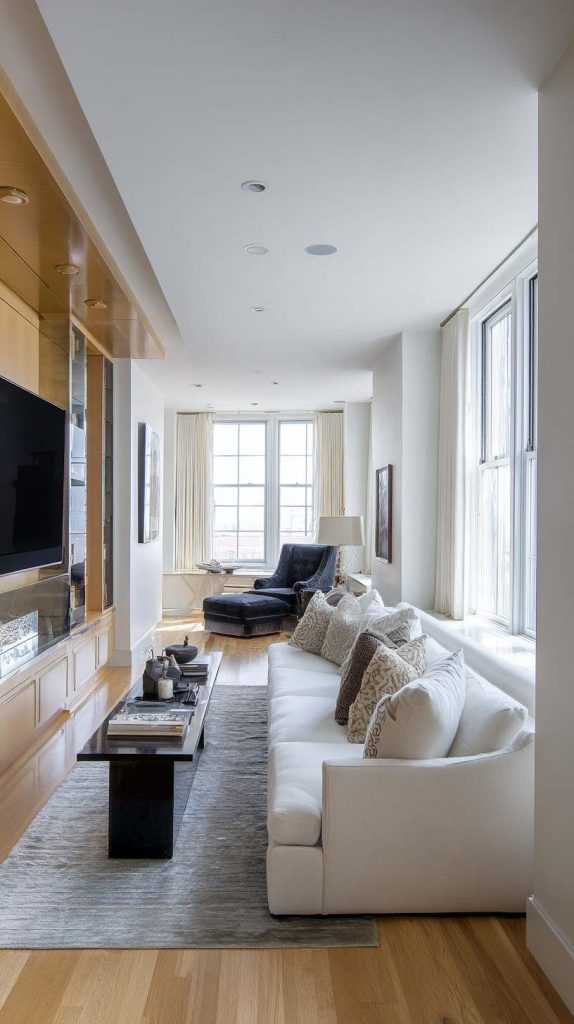
A long rectangular room doesn’t have to be one room.
In fact, treating it as two separate zones — a TV and relaxing area at one end, and a reading corner, games space, or second seating area at the other — is one of the most effective ways to make the space feel intentional and complete.
The zones don’t need a wall between them. A bookcase placed perpendicular to the long wall creates a soft visual divide. A change in rug colour or texture signals the transition. Even a difference in lighting — warm lamplight in the reading nook versus slightly brighter light near the TV — is enough to suggest two distinct purposes.
People always ask: Won’t two zones make a small room feel even smaller?
This feels backwards but it works the other way: defined zones actually make a room feel larger because each area feels purposeful and complete. An undefined long room just feels confusing and underused.
Ideas for your second zone:
- A reading chair, floor lamp, and small side table
- A small desk or writing corner
- A games table for the children
- A plant corner with a bench and trailing greenery
5. Use Mirrors to Add Width
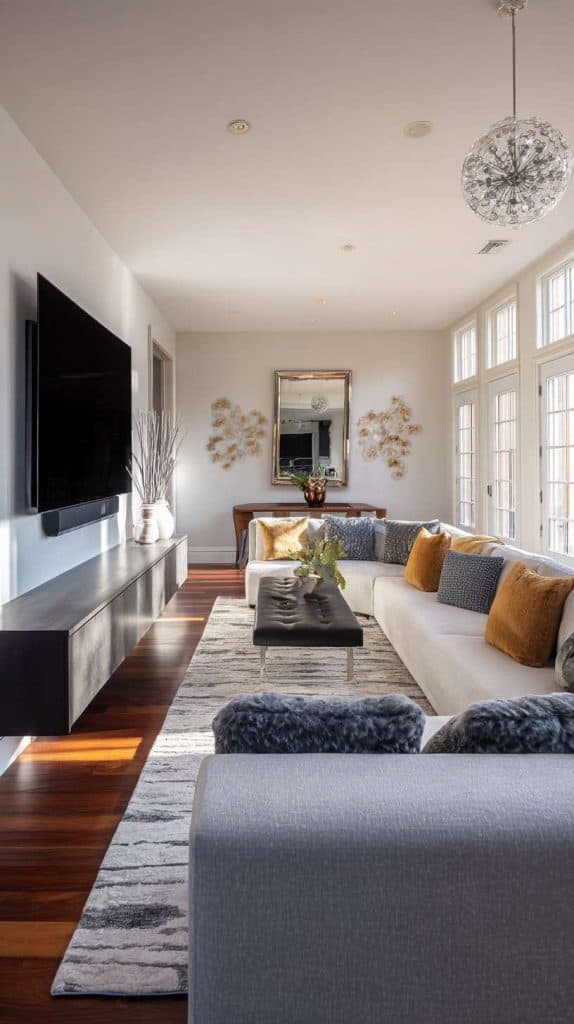
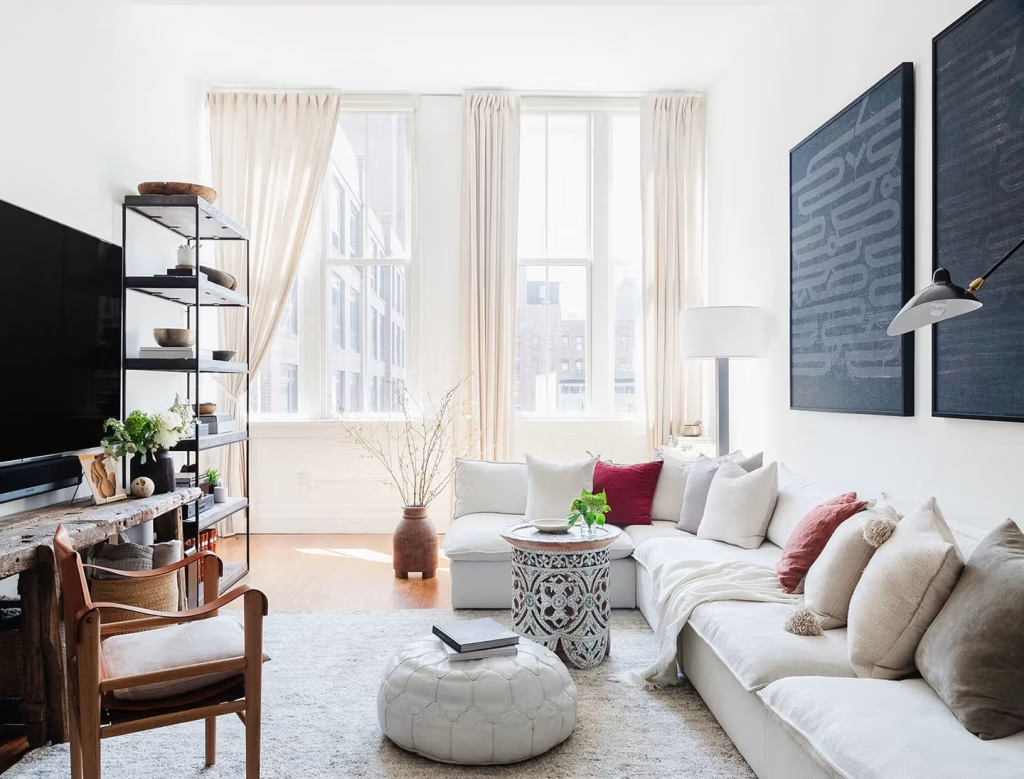
The long walls in a rectangular room are your biggest challenge — they draw the eye along the length and make the room feel narrow. Mirrors placed on these walls bounce light across the width of the room instead, making the space feel significantly wider.
The most effective placement is a large mirror (or a gallery of smaller mirrors) positioned on one of the long walls, facing a window if possible. The reflected natural light opens the space dramatically.
My mother Zina has a single oversized gilt mirror on the long wall of her sitting room and I have genuinely stood in the doorway unable to tell which direction is longer. It’s that effective.
People always ask: Can I use mirrors on both long walls?
Yes, but be strategic — facing mirrors directly opposite each other creates an infinite reflection effect that some people find unsettling. Offset them slightly so they don’t reflect each other directly.
6. Layer Your Lighting
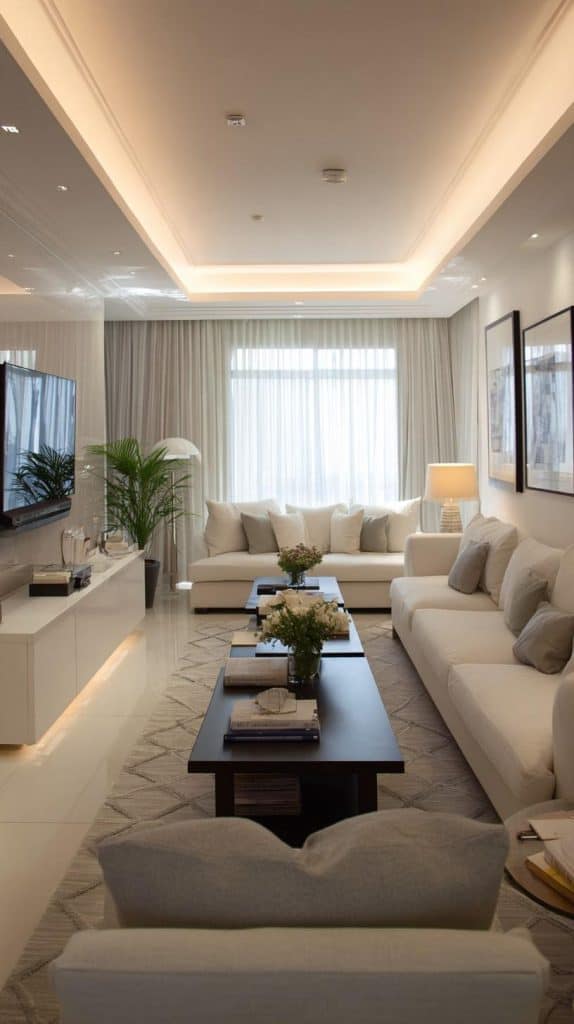
A single overhead light in a long room is the fastest route to that cold, institutional feeling. It casts one flat pool of light and leaves the ends of the room in shadow, which emphasises the length even more.
Layered lighting — multiple light sources at different heights — divides the room visually and creates warm, cosy pockets of light at different points along the space.
A layered lighting plan for a long room:
- Overhead fixture (dimmer-controlled) for general light
- Floor lamp beside the sofa for warm task lighting
- Table lamps at either end of the sofa
- A lamp or pendant in the second zone to give it its own glow
- LED strip lighting behind the TV to reduce eye strain and add ambiance
The difference between a long room with one overhead light and the same room with five layered sources is almost unbelievable. Marina’s fairy lights, I reluctantly admit, were not entirely wrong.
7. Use Vertical Elements to Break the Horizontal Pull
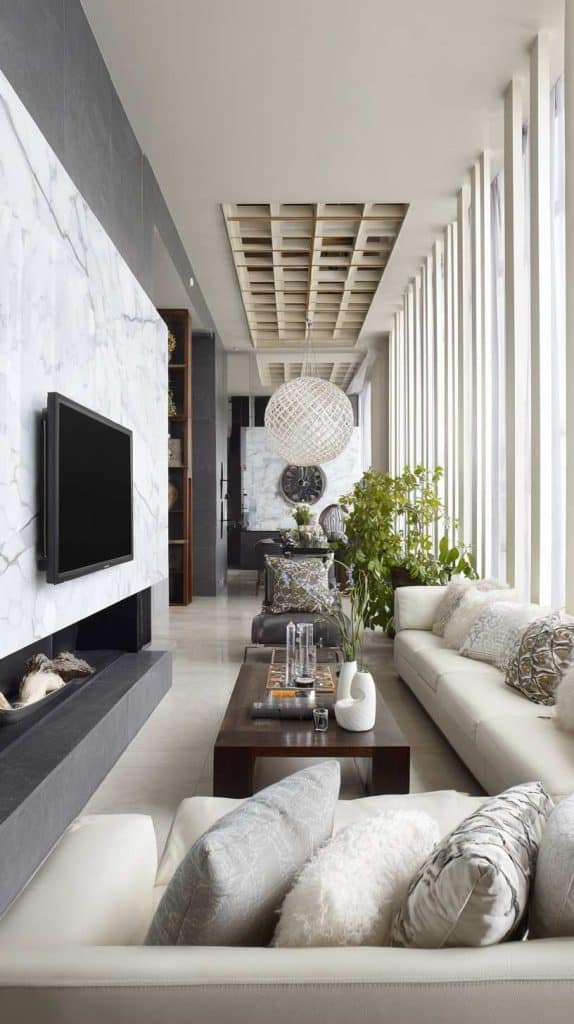
When a room reads as horizontal — long, low, stretched — vertical elements counteract it. Tall bookshelves, floor-to-ceiling curtains, a tall plant, a vertical art arrangement on the short walls — anything that draws the eye upward interrupts the tunnel feeling and gives the room a sense of height rather than length.
Floor-to-ceiling curtains are one of the most powerful tools here. Hang the curtain rod as close to the ceiling as possible, even if the window itself is standard height. The vertical drop of fabric adds enormous visual height and completely changes the proportions of the room.
People always ask: What about low ceilings — do vertical elements still help?
Even more so. In a room with low ceilings AND a long layout, vertical elements are the most important tool you have. They lift the eye upward and prevent the “squashed tunnel” feeling that low ceilings in long rooms can create.
The Real Secret
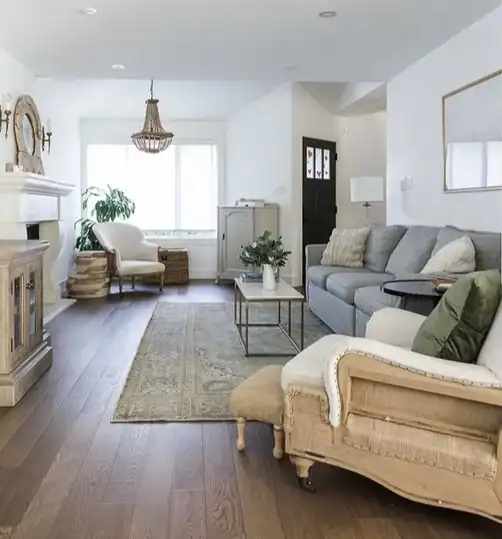
The most important thing I’ve learned about long rectangular rooms is this: they want to be two rooms, not one. The moment you stop fighting the length and start dividing it — with furniture, with rugs, with light, with intention — everything falls into place.
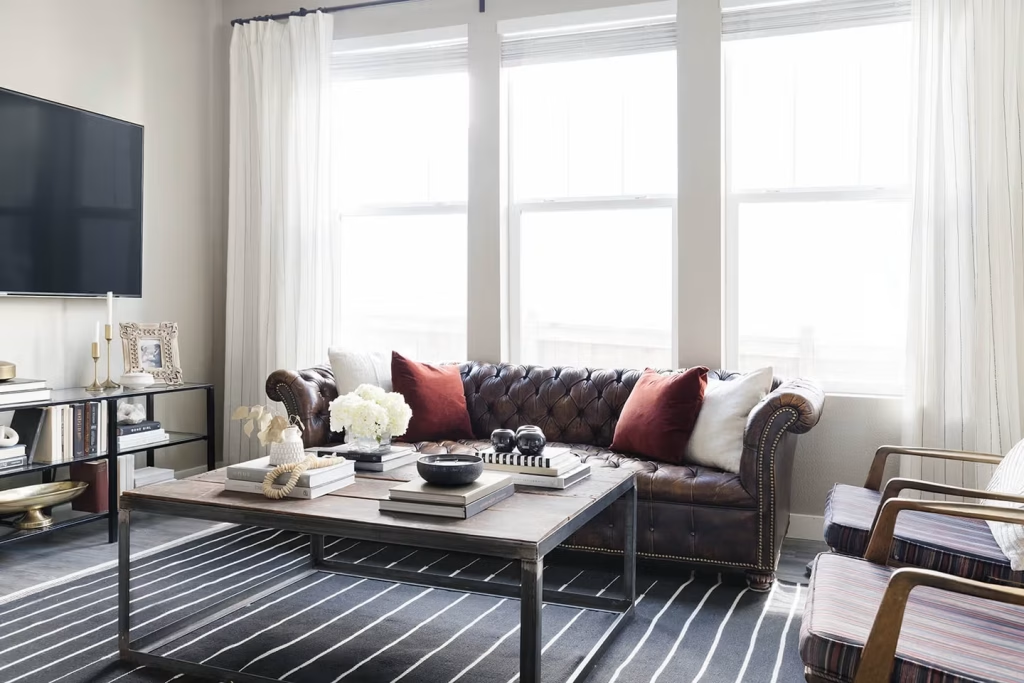
Our living room, the one that once made me want to knock down walls, is now the cosiest room in the house. We have the TV zone at one end where the family piles in for movie nights, and a reading corner at the other end where I drink my tea in peace while the girls do homework.
It took some rearranging, a good rug, and finally listening to what the room was telling us. Sometimes that’s all it takes.

I’m Katerina Lithopoulou, co-creator of DIY Cozy Living. I’ve always loved the little things that make a space feel special. With a background in language and a passion for photography and cozy design, I enjoy turning everyday inspiration into simple ideas people can actually use.
My motto: “Cozy isn’t a trend — it’s a feeling.”
