
10 Best Bedroom Plants That Actually Improve Your Sleep and Air Quality


I added my first bedroom plant two years ago out of stubbornness more than intention. The snake plant was on sale, I had a corner that needed something, and someone had told me it would help me sleep better.
I was sceptical.
Two weeks later I noticed I was waking up less in the middle of the night and the corner looked significantly better than it had with the pile of books I had been avoiding putting away.
I now have four plants in the bedroom and Tasos has been noticeably less vocal about his opinions on plants since the snake plant took hold. This is what I consider a success.
Plants in a bedroom do more than look good. The right ones genuinely improve the air you breathe while you sleep, reduce stress before you get there, and in some cases make a measurable difference to sleep quality.
Here are the 10 best bedroom plants, what they actually do for you, and which one to start with if you have never kept a plant alive for more than a month.
Which Plant Is Right for You?
| Plant | Best for | Light needed | Maintenance | Pet safe? |
|---|---|---|---|---|
| Snake plant | Air purification, night oxygen | Low to bright indirect | Very low | Mildly toxic |
| Peace lily | Air purification, humidity | Low light | Low | Toxic to pets |
| Spider plant | Removing toxins | Low to bright indirect | Very low | Safe |
| Lavender | Sleep, stress relief | Full sun | Medium | Toxic to cats and dogs |
| Aloe vera | Air quality, skin | Bright indirect | Low | Mildly toxic to pets |
| English ivy | Respiratory health, mould | Indirect or artificial | Low | Toxic to pets |
| Golden pothos | Air purification, beginners | Low to bright indirect | Very low | Toxic to pets |
| Boston fern | Humidity, dry skin | Indirect | Medium | Safe |
| Jasmine | Sleep quality, anxiety | Bright indirect | Medium | Safe |
| Rubber plant | Air purification | Bright indirect | Low | Mildly toxic |
10 Bedroom Plants That Are Actually Worth Having
1. Snake Plant (Sansevieria trifasciata)
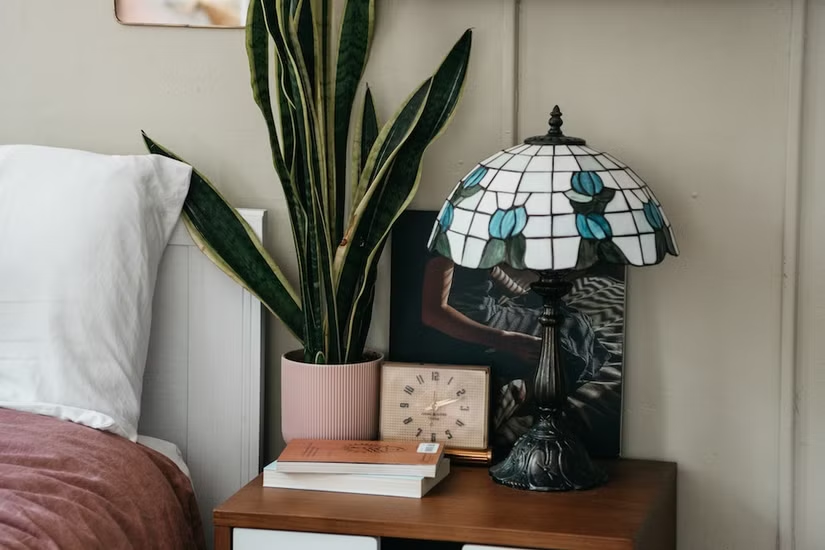
Best for: Air purification and night-time oxygen production
The snake plant is the one I started with and the one I recommend to everyone who tells me they cannot keep plants alive. It is genuinely almost impossible to kill. It tolerates low light, irregular watering, neglect, and a surprising amount of cold. What it does not tolerate is overwatering, which is the single most common way people finish it off.
What makes it specifically good for a bedroom is that unlike most plants, it converts carbon dioxide to oxygen at night rather than during the day. You breathe out carbon dioxide while you sleep. The snake plant turns it back into oxygen in the same room. That is a genuinely useful plant for a bedroom in a way that most are not.
What the science says: Included in NASA’s Clean Air Study as one of the most effective plants for removing benzene, formaldehyde, trichloroethylene, and xylene from indoor air.
Light: Low to bright indirect. Grows in almost any light condition. Water: Every two to six weeks depending on season. Let the soil dry completely between waterings. Honest note: Mildly toxic to pets if ingested. Keep away from cats and dogs who chew on things.
2. Peace Lily (Spathiphyllum)
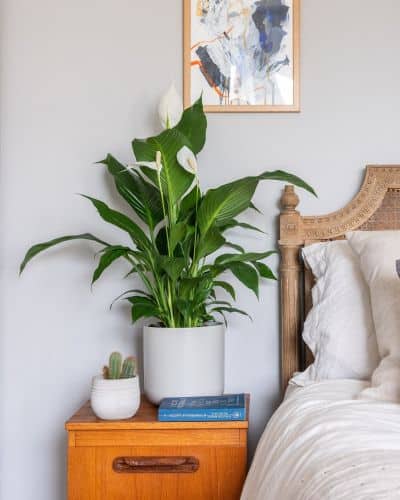
Best for: Air purification in low-light bedrooms
The peace lily is the best-looking air-purifying plant on this list and one of the few that flowers well indoors. The white blooms are elegant in a way that suits a bedroom better than most foliage plants. It also tells you when it needs water by drooping very slightly, which removes the guesswork.
It is one of the best plants for a north-facing bedroom or any room with very little natural light. Most air-purifying plants need at least some indirect sun. The peace lily thrives in genuinely low light.
What the science says: NASA’s Clean Air Study found the peace lily removes acetone, ammonia, benzene, ethyl acetate, formaldehyde, methyl alcohol, trichloroethylene, and xylene from indoor air. One of the most comprehensive air purifiers on the list.
Light: Low to moderate indirect. One of the few flowering plants that tolerates true low light. Water: Once a week in summer, less in winter. Keep the soil evenly moist but not wet. Honest note: Toxic to cats and dogs. Keep out of reach.
3. Spider Plant (Chlorophytum comosum)
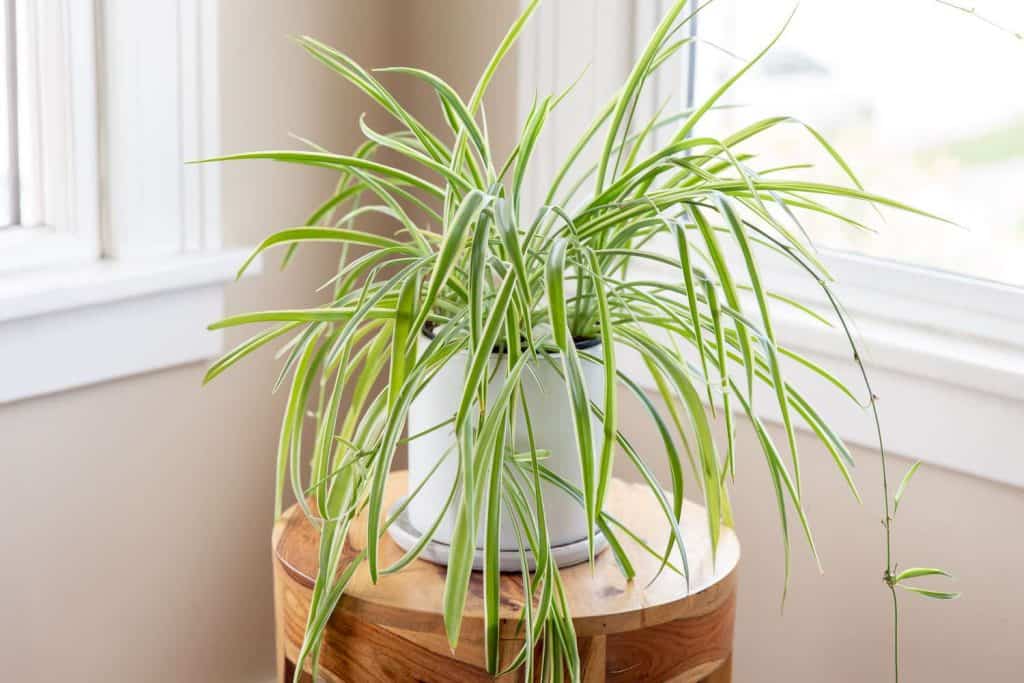
Best for: Removing formaldehyde and carbon monoxide
The spider plant is the one your grandmother probably had, and it turns out she was doing something genuinely beneficial. It is one of the most effective plants for removing formaldehyde from indoor air. Formaldehyde is found in a surprising number of household products including fabric, paper, furniture, and certain paints.
It is also one of the most forgiving plants available. It grows in low or high light, tolerates irregular watering, and produces small offshoots (called spiderettes) that you can pot up and give away or use to fill more corners of the room.
What the science says: Proven to remove formaldehyde and carbon monoxide from indoor air. Studies suggest it can remove up to 95 percent of formaldehyde from a sealed space within 24 hours.
Light: Low to bright indirect. Very adaptable. Water: Occasional. Allow the top inch of soil to dry between waterings. Honest note: Safe for children and pets, though the compounds it contains can cause mild stomach upset if large amounts are eaten.
4. Lavender (Lavandula)
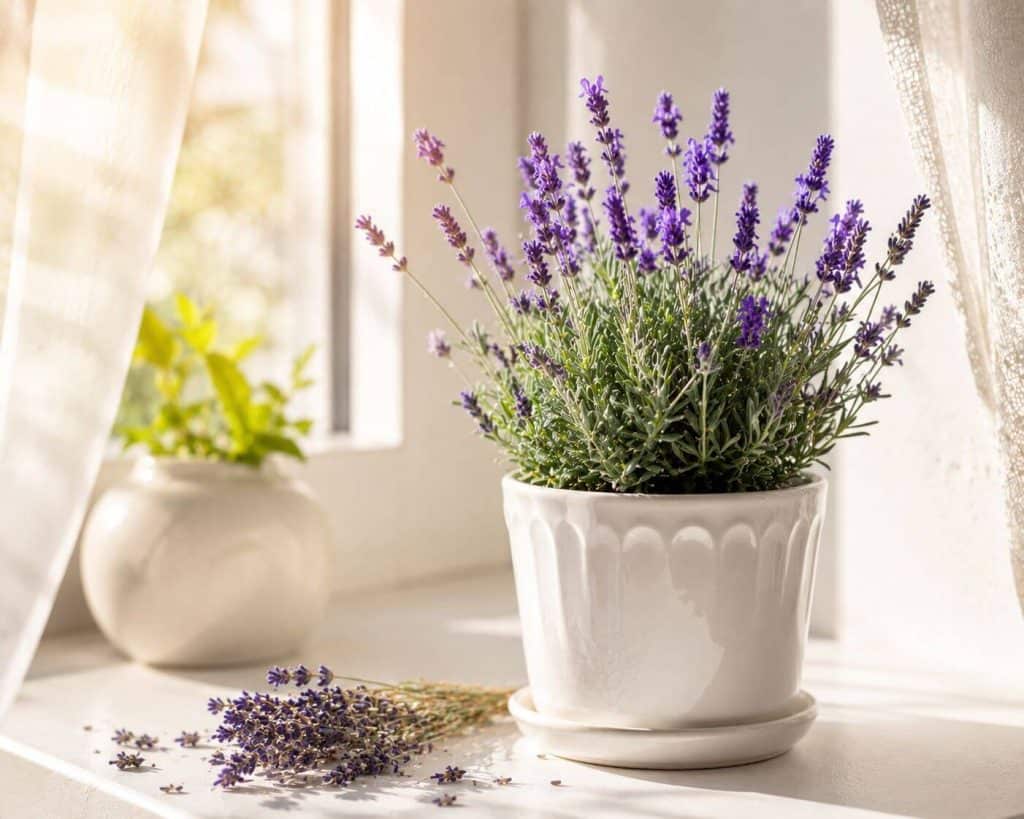
Best for: Sleep quality and stress reduction
Lavender is the only plant on this list that works primarily through scent rather than air purification. The essential oil released by a lavender plant in a warm room has been shown in multiple studies to reduce heart rate and blood pressure, lower anxiety, and improve sleep quality. A study published in the Journal of Alternative and Complementary Medicine found that college students who inhaled lavender essential oil before sleep had significantly improved sleep quality compared to a control group.
This is also the only plant on the list that is genuinely beautiful in a traditional floral way. A pot of flowering lavender on a sunny windowsill looks and smells like summer in a jar.
What the science says: Multiple studies support lavender’s effect on reducing cortisol levels, heart rate, and anxiety. It is one of the most well-researched plants for sleep improvement.
Light: Full sun. Needs a south-facing window to thrive indoors. Water: Frequently in summer, sparingly in winter. Well-drained soil is essential. Honest note: Toxic to cats and dogs if ingested in quantity. The scent alone is safe.
5. Golden Pothos (Epipremnum aureum)
Best for: Beginners, low-light rooms, comprehensive air purification
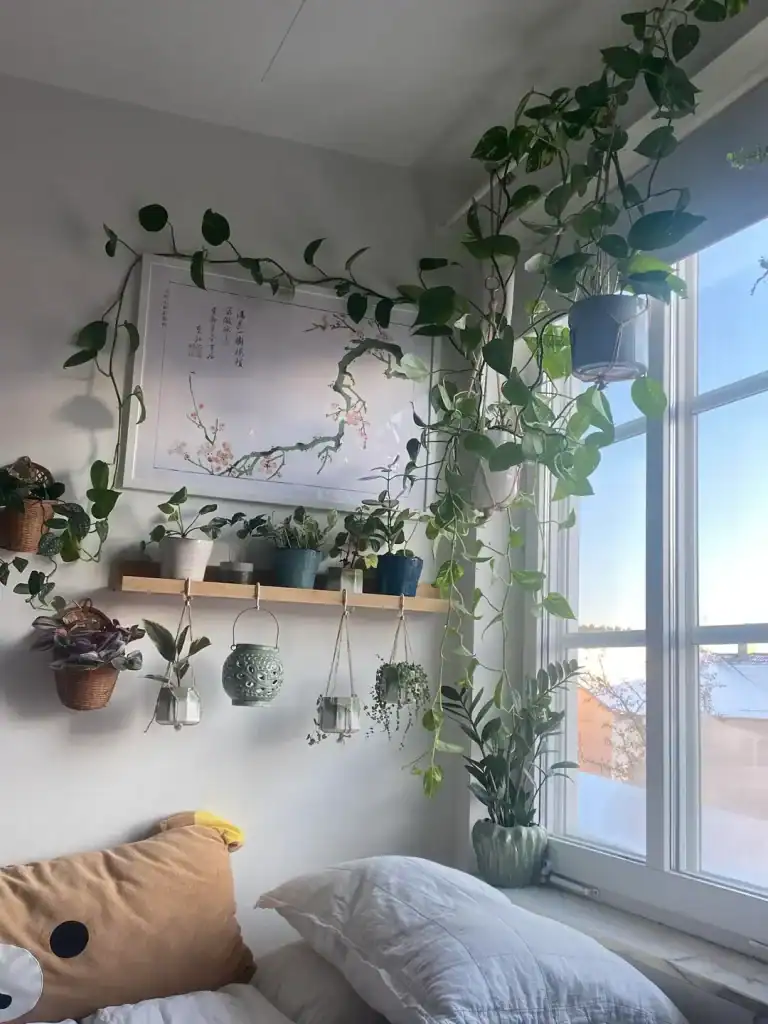
The golden pothos is the plant that belongs on this list but was missing from most similar articles until the comments sections filled up with readers asking why. It is the most reliably unkillable houseplant available. It grows in low light, tolerates irregular watering, thrives in high humidity, and trails beautifully from a shelf or hanging pot. It is also one of the most effective air-purifying plants in NASA’s Clean Air Study.
For a bedroom specifically, the trailing habit works beautifully on a high shelf where it can drape downward, which uses vertical space without taking up surface area.
What the science says: Removes formaldehyde, benzene, xylene, and toluene from indoor air. Highly rated in NASA’s study for comprehensive air purification.
Light: Low to bright indirect. Genuinely thrives in almost any light condition. Water: Every one to two weeks. Tolerates irregular watering better than almost any other plant. Honest note: Toxic to cats and dogs. Keep out of reach of pets who chew plants.
6. Aloe Vera
Best for: Air quality and skin benefits
🔥 Would you like to save this?
Aloe vera is the plant that does double duty. It purifies air at night (another plant that releases oxygen after dark rather than during the day), and the gel inside the leaves treats minor burns, dry skin, sunburn, and irritation. Keeping one on the bedside table is genuinely practical in a way that most plants are not.
It is also one of the most drought-tolerant plants available. Water it every two to three weeks and it will be completely fine. The biggest mistake people make with aloe is overwatering.
What the science says: Releases oxygen at night. Removes formaldehyde and benzene from indoor air. The gel contains over 75 active compounds with anti-inflammatory and antimicrobial properties.
Light: Bright indirect. Avoid direct sun which browns the leaf tips. Water: Every two to three weeks. Allow the soil to dry completely before watering. Honest note: Mildly toxic to cats and dogs if the inner gel is ingested.
7. English Ivy (Hedera helix)
Best for: Respiratory conditions and mould reduction
English ivy is the plant for anyone who struggles with allergies, asthma, or any respiratory condition. Studies have shown it can reduce airborne mould particles by up to 94 percent in a sealed room. Mould spores are one of the most common triggers for respiratory irritation and allergy symptoms, and a plant that removes them passively while you sleep is worth having.
It also grows well under artificial light, which makes it useful in bedrooms with very limited natural light.
What the science says: A study published in the journal Allergy and Asthma Proceedings found English ivy reduced airborne mould by 94 percent and faecal particles from airborne allergens by 78 percent.
Light: Indirect or artificial. One of the few plants that grows well without any natural light. Water: Frequent. Keep the soil consistently moist. Honest note: Toxic to cats and dogs if ingested.
8. Boston Fern (Nephrolepis exaltata)
Best for: Adding humidity, dry skin, and dry airways
The Boston fern acts as a natural humidifier. It releases moisture into the air as it transpires, which raises the humidity level in the room slightly. This matters particularly in winter when central heating dries the air significantly. Dry air contributes to dry skin, irritated airways, and disrupted sleep. A Boston fern in the bedroom quietly counteracts all of that.
It is also genuinely beautiful. The arching fronds work well in a hanging basket near a window or on a high shelf where the fronds can trail.
What the science says: One of the most effective plants for adding moisture to indoor air. Also removes formaldehyde and xylene.
Light: Indirect. Avoid direct sun which scorches the fronds. Water: Keep the soil consistently moist. Mist occasionally in dry weather. Honest note: Non-toxic to cats and dogs. One of the safest plants on this list for pet owners.
9. Jasmine (Jasminum polyanthum)
Best for: Sleep quality and anxiety reduction
Jasmine is the most luxurious plant on this list in terms of what it gives you back. A pot of indoor jasmine in bloom fills a bedroom with one of the most extraordinary scents in the plant world, and studies have found that the compound released (linalool) has a measurable sedative effect that improves sleep quality and reduces anxiety.
It requires a little more attention than the other plants here, primarily a south-facing window and regular watering during the growing season. But a flowering jasmine on a bedroom windowsill in late winter and early spring is worth the effort.
What the science says: A study published in the Journal of Biological Chemistry found that jasmine’s scent had a calming effect equivalent to barbiturates on GABA receptors. Researchers concluded that inhaling jasmine could be as effective as some sedative medications for improving sleep quality.
Light: Bright indirect to direct. South or west-facing window works best. Water: Regular during spring and summer, reduced in winter. Honest note: Non-toxic to humans and generally considered safe for pets.
10. Rubber Plant (Ficus elastica)
Best for: Air purification and low-maintenance elegance
The rubber plant is the most architectural plant on this list. With its large, glossy dark green or burgundy leaves and the potential to grow quite tall, it makes a genuine design statement in a bedroom as well as doing the practical work of purifying the air. It removes formaldehyde from the air more efficiently than almost any other common houseplant.
It is also much lower maintenance than its impressive appearance suggests. It tolerates low light reasonably well, does not need frequent watering, and rarely suffers from pests.
What the science says: Highly rated in NASA’s Clean Air Study for formaldehyde removal. Large leaf surface area makes it particularly effective.
Light: Bright indirect. Tolerates lower light but grows more slowly. Water: Every one to two weeks. Allow the top inch of soil to dry before watering. Honest note: Mildly toxic to pets and can cause skin irritation. Wear gloves when pruning.
How to Style Bedroom Plants Without the Room Looking Like a Garden Centre
Adding plants to a bedroom is a home decor decision as much as a wellness one. A single beautiful plant in the right place does more for a room than five plants scattered around with no visual logic.
The rule of odd numbers: Group plants in threes or fives rather than pairs. Odd numbers look more natural and less formal.
Use height variation: One tall plant (rubber plant or snake plant), one medium plant (peace lily or aloe), and one trailing plant (golden pothos or English ivy) in the same corner creates a layered, lush effect that reads as intentional rather than collected.
Match the pot to the room: A terracotta pot suits a warm, Mediterranean aesthetic. A white ceramic pot suits a minimal or Scandinavian room. A woven basket suits a bohemian or natural bedroom. The pot is part of the decor, not just the container.
One plant on the bedside table: Lavender, jasmine, or a small aloe vera on the bedside table keeps the benefit closest to where you sleep. These are all small enough not to crowd the surface but present enough to matter.
High shelf trailing plants: Golden pothos and English ivy both look beautiful trailing from a high shelf, which uses vertical space and keeps the plants out of reach of children and pets.
Frequently Asked Questions
Which bedroom plant is best for sleep? Lavender is the most well-researched for sleep specifically, with multiple studies showing its scent reduces heart rate, lowers anxiety, and improves sleep quality. Jasmine is a close second for the same reasons. Snake plant and aloe vera help by producing oxygen at night, which may improve sleep quality indirectly.
Can plants in the bedroom be harmful? Most common bedroom plants are safe for adults. The concern is primarily for pets and young children who might chew on them. Peace lily, English ivy, golden pothos, and rubber plant are all toxic to cats and dogs if ingested. Boston fern, spider plant, and jasmine are the safest options for households with pets.
How many plants should I have in my bedroom? There is no fixed number. One well-chosen plant in the right position is more effective and more beautiful than ten plants scattered randomly. For air purification, research suggests approximately one medium-to-large plant per 9 square metres of floor space is meaningful. For most bedrooms, two or three plants is a good starting point.
Do bedroom plants actually improve air quality? The NASA Clean Air Study is real and the plants on this list genuinely remove toxins from indoor air in laboratory conditions. The caveat is that a standard bedroom needs a relatively large number of plants to achieve the same air quality improvement as the sealed chambers used in the study. The benefits are real but modest in a normal bedroom environment. The sleep and stress benefits from scented plants like lavender and jasmine are better evidenced for home use.
Which bedroom plant is easiest to keep alive? Golden pothos and snake plant are the two most forgiving plants on this list. Both tolerate low light, irregular watering, and general neglect far better than most plants. If you have killed every plant you have ever owned, start with one of these two.
Where should I put plants in a bedroom? Near a window for most plants, since the majority need at least indirect natural light. The bedside table is the best position for lavender or jasmine since the scent is most effective closest to where you sleep. High shelves work well for trailing plants like golden pothos. Avoid placing plants directly above the bed where they could drip or fall.
The snake plant is still in its corner. It has not done anything dramatic. It has not transformed my sleep overnight or cleaned every toxin from the air in a way I can measure. What it has done is make the corner look significantly better than the pile of books that was there before, and it has required almost nothing from me in return. For a plant, that is a good deal.
Start with one. Pick the corner that needs something. See what happens when the room starts to breathe a little better.

I’m Anastasios Moulios, co-founder of DIY Cozy Living. I enjoy finding creative, practical ways to make small spaces feel warm, stylish, and lived-in. I started this blog with Katerina to share real ideas that make a home feel a little more personal and a lot more comfortable.
