
How To Plan The Perfect 1-Acre Homestead Layout (Step-By-Step)

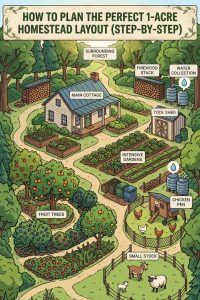
At 43,560 square feet, an acre is a precise measure of land that many consider the ideal size for homesteading.
There is room to put in a small orchard, keep some livestock and grow your food in abundance, all while being compact enough to handle on a weekend without the expense of a $30,000 tractor.
Then again, if one were to go about putting in garden beds and erecting chicken coops with no plan in place, that same acre can turn into an unmanageable jumble in short order.
The difference between a good mini-farm and a bad one is not the amount of hard work put in, but rather the intelligence of the strategy and where things are placed.
What follows is a guide to designing a 1-acre layout that is as efficient as it is productive.
The Golden Rule: The Permaculture Zone System
Before you draw a single line on your property map, you need to understand the Zone System. This is a core permaculture design principle that dictates where things should go based on how often you need to visit them.
Placing a daily chore at the very back of your property guarantees you will eventually start neglecting it.
| Zone | Distance from House | What Goes Here |
| Zone 0 | Inside the home | The house itself, attached greenhouse, root cellar. |
| Zone 1 | Steps from the door | Kitchen garden (herbs, salad greens), rain barrels, daily compost bin. |
| Zone 2 | A short walk | Main vegetable crop rows, chicken coop, tool shed, dwarf fruit trees. |
| Zone 3 | Further out | Small pasture for goats/sheep, main food forest, large grain crops. |
| Zone 4 | Property perimeter | Timber for firewood, foraging areas, heavy windbreaks. |
(Note: Zone 5 is typically “untouched wilderness,” which most 1-acre homesteads do not have the space for).
What Can Actually Fit on 1 Acre?
One can be tempted to put on an overly ambitious plan and attempt to fit a dairy cow, three barns and a sizeable cornfield into one acre.
But in the interest of good space allocation and to prevent overgrazing, it is best to be realistic if you want to maintain healthy land.
Here is a highly efficient way to break down a 1-acre plot:
1. The Living Space (Approx. 15% – 20%)
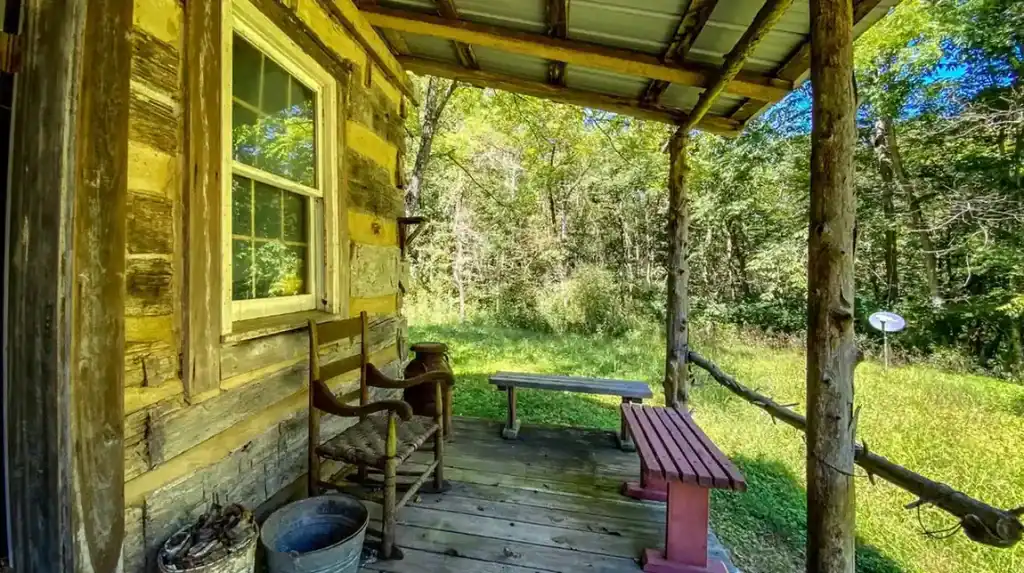
Here you will find the house, the front yard, septic system, driveway and perhaps a modest patio.
Make the driveway as short as possible to leave more room for usable land.
It also makes sense to site the house at the northern end of the property. That way, it will not throw a large shadow across the crops that need the sun.
2. The Kitchen & Crop Gardens (Approx. 20% – 25%)
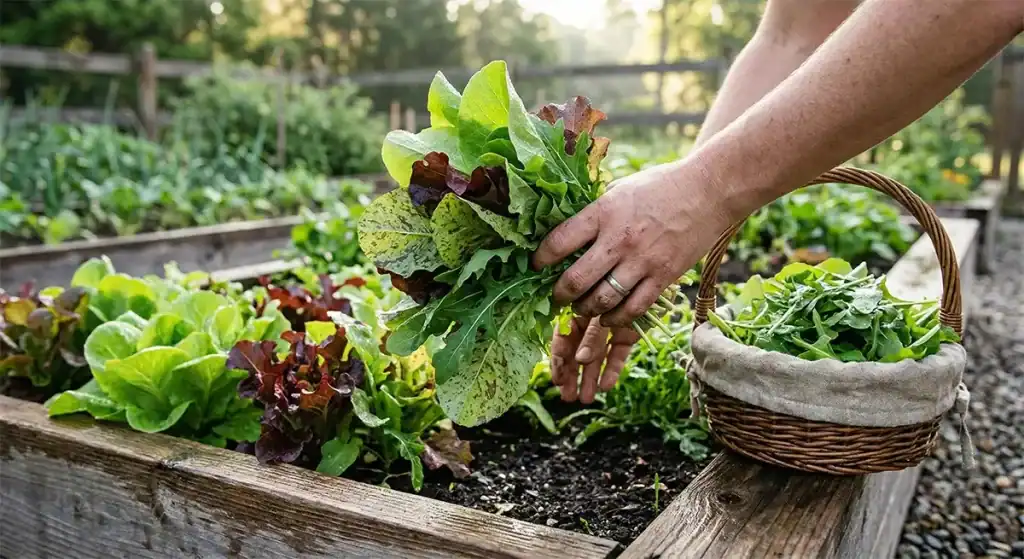
There is no shortage of activity here.
With proper succession planting, a quarter acre of intensive vegetable gardening will put food on the table for a family of four all year round.
Put in some raised beds for your culinary herbs right outside the kitchen door, and lay out long in-ground rows for the staples like tomatoes, squash, onions and potatoes just beyond them.
3. The Mini-Orchard / Food Forest (Approx. 20%)
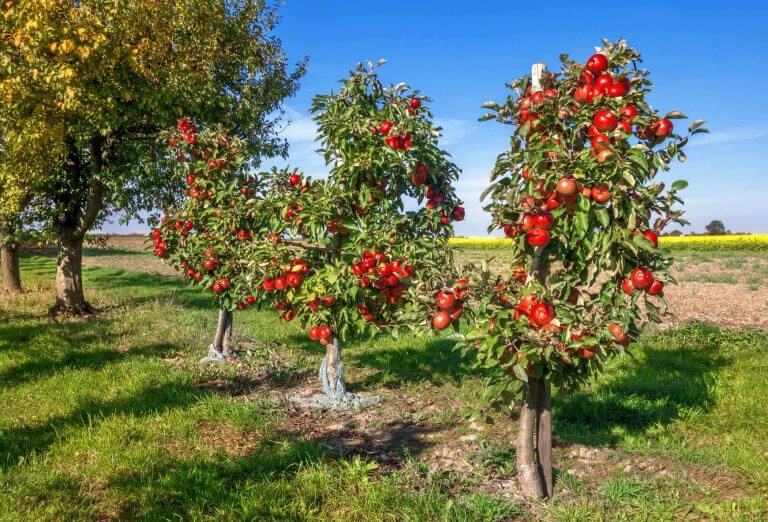
You can’t fit in many standard fruit trees on an acre. They are too big and put up a lot of canopy.
🔥 Would you like to save this?
The answer is to go with dwarf or semi-dwarf varieties and work in a “food forest” manner.
Put down an apple tree, tuck some berry bushes in beneath it, and let strawberries or thyme do the work of a ground cover. It’s a way to build your yields up and make the most of every square foot.
4. Small Livestock Pasture (Approx. 25% – 30%)
An acre won’t do for a cow if you want to be about it ethically and not have to source all its feed. But for smaller stock, it is ideal.
Chickens: A run of 10 to 15 will need a good coop and a fence, or a mobile chicken tractor to move them around.
Goats or Sheep: A couple of Nigerian Dwarfs or Babydoll sheep will do well on a quarter-acre of decent pasture, as long as there is some hay to put out in the colder months.
5. Utility & Infrastructure (Approx. 5%)
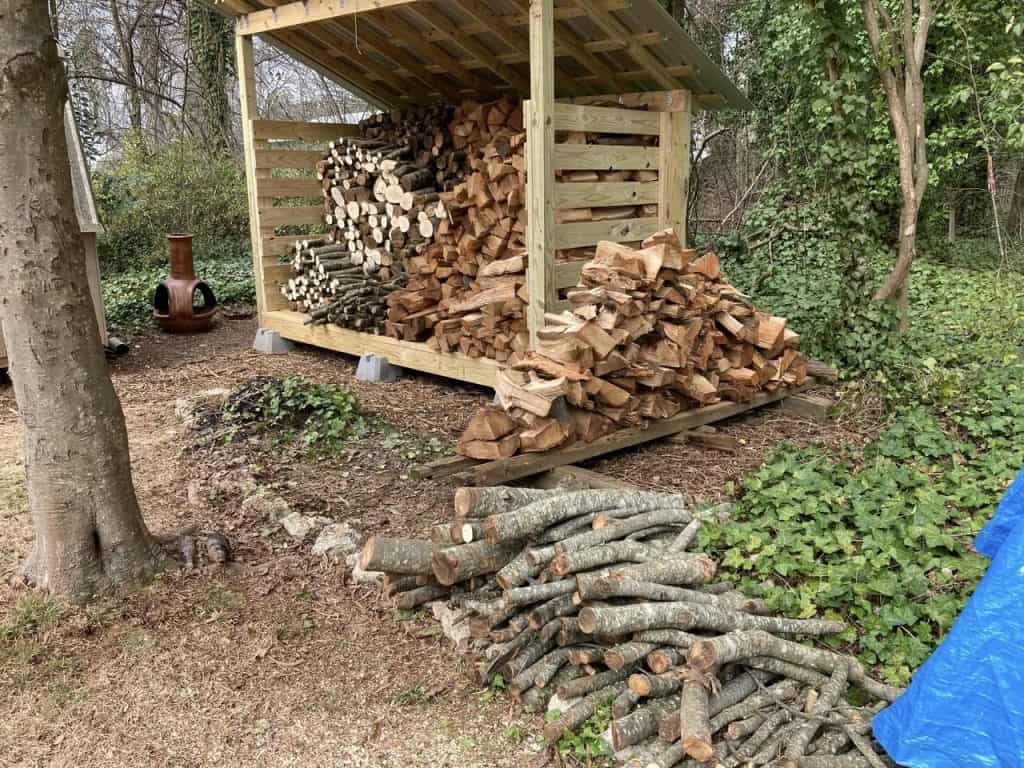
Some room has to be set aside for the less pretty necessities: compost, firewood, a shed for tools, and water tanks.
Design Tip: Always put your compost where it makes sense. Right between the garden and the chicken coop is best, since that is where the green waste and manure are. There is no point in having to heave a full wheelbarrow from one end of the property to the other.
3 Critical Mapping Steps Before You Build
Do not hammer a single fence post until you have mapped out these three invisible forces on your property.
Step 1: Map the Sun (Microclimates)
Any vegetable garden is going to need at least 8 hours of unobstructed sun. It pays to observe the way the light falls on your land through the seasons.
The south side is invariably the warmest and most open, so put the garden there.
The north side of the house or barn, on the other hand, will be in the shade. It’s a fine place for a tool shed, the driveway, or hardy things like mushrooms and some of the leafier greens.
Step 2: Track the Water
Then there is the matter of water. Put in an appearance during the worst of the downpours to see how the property handles it.
- Where does it pool? (Plant thirsty trees like willows or elderberries here, or dig a small pond).
- Where is the high, dry ground? (This is where your chicken coop and house must go to prevent rotting foundations and muddy livestock).
Step 3: Plan for Truck Access
And don’t make the error of walled-off back lots.
There will come a time when a truck has to bring in a few yards of compost, a cord of wood, or some hay.
Make sure there is a 10-foot gate and a path free of plantings to get from the driveway to where you need to be.
The Ideal Sequence for Establishing the Layout
If you try to build everything in year one, you will burn out. Tackle your 1-acre layout in this exact order:
- Infrastructure First: Put in the driveway, water lines, and perimeter fencing.
- Plant the Trees: Fruit and nut trees take 3 to 5 years to produce. Get them in the ground immediately.
- Establish the Garden: Build the raised beds and start improving the soil with compost.
- Add the Animals: Only bring chickens or goats onto the property after their fences and shelters are completely built and secure.

I’m Anastasios Moulios, co-founder of DIY Cozy Living. I enjoy finding creative, practical ways to make small spaces feel warm, stylish, and lived-in. I started this blog with Katerina to share real ideas that make a home feel a little more personal and a lot more comfortable.
